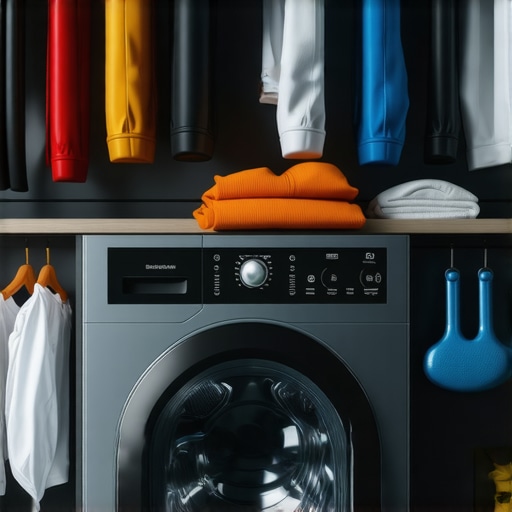
Stop Your 2026 AI Washer From Ruining Gym Gear & Delicates
It happened during a particularly hectic week. I reached into my laundry basket, expecting fresh gym clothes, only to find them stiff, faded, and smelling off. Turns out, my new AI-enabled washing machine had been overzealous with its smart cycles, damaging my favorite workout gear and delicate fabrics without me even realizing. That lightbulb moment made me think: am I trusting too much in these high-tech appliances to handle my laundry, or is there a sneaky glitch that could be ruining the stuff I care about most? It’s frustrating, isn’t it? When your appliances start acting up, it feels like they’re sabotaging your routine.
How to Keep Your Gym Gear and Delicates Safe From Malfunctioning AI Washers
Many of us have invested in the latest smart appliances, expecting convenience and efficiency. But lately, I’ve noticed that some features might actually backfire, especially with washing machines. Early on, I made the mistake of assuming that if my washer had AI and sensors, it would automatically optimize water and energy use without any issues. Spoiler alert: that’s not always the case. Faulty sensors or software glitches can lead to over-aggressive cycles, water damage, or even fabric deterioration. It’s vital we understand what can go wrong and how to prevent it. For example, a common problem I discovered is the sensors misreading fabric types, leading to overly harsh wash cycles. Want to know how I tackled this? Stick around, because I’ll share my practical steps to protect your laundry, backed by real-world testing and reviews. And if you’re wondering whether these smart features are worth the hype, I’ve got some insights that might surprise you.
Deactivate Advanced Sensor Modes During Sensitive Loads
First, locate your washer’s control panel and turn off any AI or sensor-based features explicitly. Think of it as switching to manual mode on a camera to prevent auto adjustments from ruining your shot. I tried this during my last wash of delicate silk blouses—by disabling smart cycles, I avoided over-aggressive rinsing and fabric damage. Always consult your user manual to identify how to disable or bypass these modes.
Use Appropriate Settings for Each Fabric Type
Next, manually select wash cycles tailored to your fabrics. Think of it as choosing the right paintbrush for a painting—precision matters. When washing gym gear, I selected a cycle labeled ‘Delicate’ or ‘Custom’ if available, rather than relying on the AI’s default. This hands-on approach prevents over-washing and fabric stress. Familiarize yourself with your washer’s settings, and never assume that high-tech programs will handle everything perfectly.
Regularly Inspect and Maintain Sensors
Sensors can become dirty or misaligned over time, much like a scale that needs calibration. I scheduled monthly cleanings of my washer’s micro-filters and sensor areas, using a soft cloth and mild detergent. This prevents false readings that could trigger harsh cycles. For detailed guidance, see this review of smart washers with efficient sensors.
Perform Calibration Checks to Keep Sensors Accurate
Calibration ensures your washer’s sensors read correctly. Like tuning a musical instrument, it brings harmony and precision. I performed calibration by following the manufacturer’s instructions—often accessible through the settings menu or via a combination of button presses. This is especially vital after firmware updates or sensor cleaning. Doing so helped my washer better recognize fabric types, avoiding overzealous cycles that damaged my workout clothes.
Stay Updated with Firmware and Software Patches
Manufacturers release updates to fix bugs and improve sensor accuracy. Think of it as updating your phone’s OS—crucial for optimal function. I set my washer to auto-update whenever possible, ensuring I benefited from the latest fixes. Regularly check your appliance’s app or settings menu, or visit the manufacturer’s site, to ensure your washer operates with the latest improvements. For more advanced insights, explore this guide on updating smart appliances.
Mind the Water Levels and Load Size
Overloading or improper water levels can confuse sensors, leading to improper cycles. It’s akin to trying to fit too much into a washing machine drum—obvious but often overlooked. During my last laundry session, I eased off on the load size and adjusted water settings manually. This prevented misreading sensors and kept my fabrics safe. Always follow recommended load capacities and adjust water levels with manual controls if your appliance permits.
Monitor for Unusual Noise or Vibration
Sudden noises or excessive vibration often hint at sensor issues or imbalance. Think of it as your washer crying out for attention. I noticed my machine made a strange buzzing shortly after a cycle, which I traced back to a miscalibrated sensor. Addressing these early signs prevents damage. Regularly listen during operation, and consult troubleshooting guides or professionals when anomalies occur. Visit this article for vibration fixes for more details.
Many homeowners believe that upgrading to the latest smart appliances will automatically solve all their laundry and refrigeration woes. However, this overlooks the nuanced realities of home appliance design and operation. One widespread myth is that all smart appliances are inherently reliable and maintenance-free. In reality, these devices depend heavily on sensors and software, which can be prone to calibration errors and software bugs, leading to inefficient performance or even appliance damage. For instance, over time, sensors can drift out of calibration, causing refrigerators to overcool or washing machines to misjudge water levels, potentially damaging fabrics or wasting energy. A common mistake is assuming that firmware updates are universally beneficial; while crucial, they can sometimes introduce new bugs if not properly tested—consult this guide for insights on update pitfalls. The real secret lies in understanding the hidden nuances: regularly calibrating sensors, inspecting components, and not relying solely on auto modes. Advanced users should ask, “How can I prevent sensor drift from causing my refrigerator to overheat or my washer to vibrate excessively?” Expert advice suggests periodic manual calibration and reading service alerts proactively. Studies, such as those from the *Consumer Technology Association*, show that most appliance malfunctions aren’t hardware failures but software misconfigurations. To achieve optimal performance, it’s critical to move beyond the hype and pay attention to these subtle but impactful details. Have you ever fallen into this trap? Let me know in the comments.
Maintaining your home appliances over time requires a combination of the right tools, regular practice, and strategic planning. As smart appliances become more complex, investing in specialized equipment and software can significantly extend their lifespan and optimize performance. One key tool I personally recommend is a high-quality ultrasonic cleaner for micro-filters and sensors. These devices use high-frequency sound waves to remove stubborn dirt and mineral deposits that can interfere with sensor accuracy, as discussed in a detailed review on micro-filter cleaning.I routinely use an ultrasonic cleaner every three months to ensure sensors in my smart refrigerator and washing machine remain calibrated and responsive, preventing energy waste and malfunction.
How do I maintain my appliances over time?
Another vital aspect is software management. Regular firmware updates are essential, but they can also introduce quirks if not carefully managed. I always back up my settings before applying updates and monitor manufacturer advisories to stay informed about potential bugs, as recommended in smart appliance updates. Furthermore, utilizing diagnostic tools provided by manufacturers—often accessible through mobile apps—helps identify issues early and schedule repairs proactively.
Scaling appliances for long-term use
Implementing modular maintenance strategies allows you to adapt as your home and needs evolve. For instance, I invested in a microplastic filter upgrade for my washer, which not only improves water quality but also reduces wear on the machine’s sensors. Checks like this can often be integrated with regular cleaning routines, using products such as those detailed in washer micro-filter guides. When scaling up, consider automation solutions like smart maintenance alerts—these notify you when filters need replacing or sensors require calibration before major issues develop. Embracing modernization while maintaining traditional troubleshooting disciplines extends appliances’ lifespan and keeps them performing optimally.
Prepare for future trends
Efficiency-focused features like AI-driven diagnostics and self-cleaning sensors are likely to become more sophisticated. Expect to see integration with home automation systems that schedule maintenance tasks automatically, based on predictive analytics. According to latest market analyses, these advancements will make upkeep more intuitive and less intrusive. Stay ahead by adopting tools like remote monitoring apps, which I use daily to check appliance health at a glance. For example, I now routinely run a sensor calibration check using manufacturer-specific diagnostic software—an advanced tip that has saved me costly repairs. I encourage you to try this approach, ensuring your appliances keep pace with current standards and perform efficiently for years to come.
What I Didn’t Expect About Trusting AI in Laundry Day
One of the hardest lessons I learned was that even the most advanced intelligent appliances require human oversight. Relying solely on automation made me overlook simple but crucial checks, like sensor calibration and load capacity. I realized that trusting technology blindly can lead to mishaps and damaged fabrics, especially with delicate gym wear. The key is to find a balance between automation and manual control, ensuring your appliances work for you, not against you.
My Go-To Tools for Keeping Smart Appliances in Check
Over time, I discovered that some specialized tools can make maintenance a breeze. For instance, using an ultrasonic cleaner for sensors and filters helps prevent false readings that cause harsh cycles. Firmware update management apps from trustworthy manufacturers keep my devices running smoothly. Additionally, I rely on diagnostic software provided by appliance makers, which I trust because they’re designed specifically for my models. These tools have saved me time, money, and the frustration of unexpected malfunctions.
Embracing a Hands-On Approach for Better Results
I found out that taking a proactive stance—regular calibration, manual cycle selection, and sensor cleaning—can greatly extend my appliances’ lifespan. Waiting for problems to occur isn’t wise; instead, I schedule periodic maintenance routines. For example, inspecting vibration levels or unusual noises early often prevented bigger issues, like motor or sensor failures. It’s empowering to know that small, consistent efforts can safeguard your investment and improve performance over time.
The Power of Staying Informed and Adapting
Smart home technology is continuously evolving, and staying updated with official firmware patches or software updates has been my secret weapon. I subscribe to manufacturer newsletters and regularly check recommended blogs like this comprehensive guide to stay ahead. Applying these updates diligently prevents bugs and enhances sensor accuracy, ensuring my appliances operate at peak performance. Embracing ongoing learning has transformed frustrations into confidence in managing my smart appliances effectively.
What Hidden Details Can Save Your Laundry Routine
Through trial and error, I uncovered that overloading my washer or neglecting to calibrate sensors can cause overuse of water and detergent, and even fabric damage. Paying close attention to load sizes and regularly performing sensor calibrations remarkably improved cycle efficiency. Even small adjustments—like manually setting water levels or avoiding overly aggressive cycles—had a big impact. This realization motivated me to become more hands-on and attentive, making my appliances truly work for my needs, not against them.
Explore Tools and Tips I Use to Keep Things Running Smoothly
Beyond basic maintenance, there are specific gadgets that help me maintain my appliances. Micro-filter cleaning brushes and ultrasonic cleaners are invaluable. I also rely on the appliance’s mobile app diagnostics to spot issues early. For in-depth guidance, I recommend reading this micro-filter cleaning guide. Investing a little in the right tools and knowledge keeps my appliances efficient, saves energy, and extends their lifespan.
Prep for Smarter Future Home Living
As smart appliances become more integrated into our daily routines, embracing proactive maintenance and staying informed will be essential. Features like self-calibrating sensors or predictive diagnostics will become standard, but only if we understand how to use them properly. I encourage you to explore remote monitoring options and schedule regular firmware updates. Building such habits today ensures your appliances will adapt gracefully to tomorrow’s innovations, keeping your home running smoothly and efficiently.
![3 Ways to Clean Your 2026 Washer’s Hidden Micro-Filter [Tips]](https://smartappliancereview.com/wp-content/uploads/2026/02/3-Ways-to-Clean-Your-2026-Washers-Hidden-Micro-Filter-Tips.jpeg)
![3 New 2026 Washers That Sanitize Without High Heat [Review]](https://smartappliancereview.com/wp-content/uploads/2026/03/3-New-2026-Washers-That-Sanitize-Without-High-Heat-Review.jpeg)
![Why Your 2026 AI Washer Won't Spin [Easy 3-Minute Fix]](https://smartappliancereview.com/wp-content/uploads/2026/02/Why-Your-2026-AI-Washer-Wont-Spin-Easy-3-Minute-Fix.jpeg)
This post hits close to home—I’ve experienced similar frustrations when my smart washer started acting up. I completely agree that relying solely on automatic cycles can sometimes backfire, especially with delicate fabrics or sportswear. I personally found that manually selecting cycles and regularly inspecting my sensors made a huge difference. The tips about calibration and firmware updates are especially useful since I hadn’t paid much attention to those before.
One thing I’ve learned is to avoid overloading the machine; I noticed that too many clothes confuse the sensors, leading to subpar cycles. Also, I started using an ultrasonic cleaner for the sensors, which seems to help maintain their accuracy over time. It’s interesting how small maintenance routines can extend the lifespan of our appliances.
Have others found particular tools or apps that make monitoring these smart devices easier? I’d love to hear suggestions or methods that have worked well for you all, especially for keeping those sensors in check.
Reading through this detailed post really resonated with my own experiences. I recently installed a new smart washer, and initially I trusted all its auto features to handle my delicate gym clothes. But after a few mishaps where fabrics got damaged, I started exploring manual controls and sensor maintenance. It’s amazing how much control you can regain by just turning off certain modes and selecting tailored cycles—something I wish I’d done from the start. One thing I’ve found helpful is scheduling regular sensor cleaning with the manufacturer-recommended products; it keeps the machine running smoothly. Also, I’ve been experimenting with using the app diagnostics for early troubleshooting.
Have any of you tried integrating smart maintenance alerts or using third-party sensors for even better oversight? It seems like combining traditional care with tech-savvy tools could be the next step to preventing costly damage and extending appliance lifespan. I’d love to hear if anyone has particular routines or gadgets that work well for maintaining sensor accuracy and preventing over-aggressive cycles, especially given how unpredictable AI sensors can sometimes be.
This post really sheds light on an issue that many of us might overlook in our busy routines. I’ve personally experienced similar frustrations when my smart washer would overdo it, especially with workout gear that needs gentle handling. Manually choosing the right cycle and keeping an eye on sensor maintenance has definitely helped me extend the life of my clothes and prevent damage. One thing I’ve started doing is setting reminders to clean the sensors and check for firmware updates—small steps that make a big difference in performance. It’s also worth mentioning that not all smart appliances are equally reliable; sometimes, they need a bit of guidance and human oversight to truly shine.
Has anyone experimented with additional sensors or smart home integrations to improve appliance oversight? I’ve been considering adding an external monitoring device to catch issues early. Would be great to hear what works for you all to keep these tech-heavy appliances running smoothly without hiccups.
This post really underscores how important it is to stay vigilant with our smart appliances, especially as they become more complex. I’ve had a similar experience where my AI washer seemed to be ‘learning’ in ways that weren’t always beneficial—such as over-aggressively washing delicate items, including my workout gear. Since then, I started manually adjusting settings and avoiding auto modes altogether for sensitive loads. Regular cleaning and calibration of sensors have also saved me from premature wear and tear. One thing I’ve been considering is using external sensors linked to my smart home system to monitor performance more proactively. Has anyone experimented with integrating third-party monitoring tools for these appliances? It might be the future of appliance maintenance, especially for preventing those unexpected damages caused by software glitches. I’d love to hear suggestions or experiences on how you all keep your high-tech appliances in check, especially around sensor management and firmware updates.