
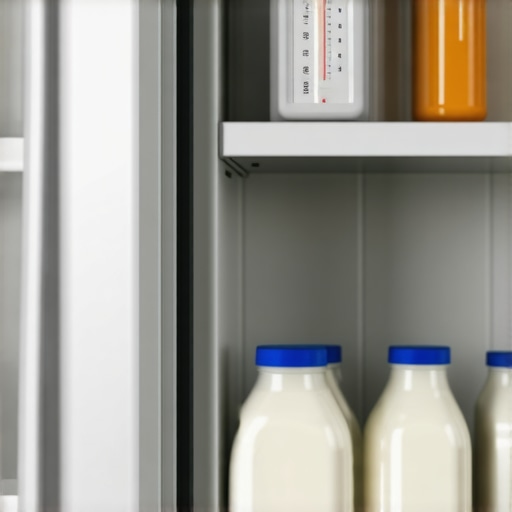
Have you ever opened your fridge, reached for your favorite bottle of milk, only to find it frozen solid—despite the temperature setting indicating it’s at the right level? I can’t tell you how many mornings I spent fussing over the top shelf of my fridge, trying to thaw out milk that had turned into a mini ice block. That moment, when I realized my milk was practically a popsicle, was a real eye-opener. I knew something wasn’t right, and I had to find a solution that wouldn’t involve replacing my entire refrigerator.
Why Milk Freezing on the Top Shelf Isn’t Just Annoying—It’s a Sign of Underlying Issues
Understanding why your milk is freezing can save you a lot of frustration and prevent wasting money on new groceries. It turns out, a variety of factors—from improper temperature settings to door seal problems—can cause the top shelf to become an unsolicited freezer zone. Interestingly, studies show that cold spots in your fridge are often due to uneven cooling patterns, which can be affected by how your appliance circulates air. According to a report by the Department of Energy, proper airflow within your refrigerator is essential for maintaining consistent temperatures across all compartments—so why does your milk freeze when others don’t?
Early on, I made the mistake of just turning down the fridge temperature without investigating further—big mistake. It made my energy bill skyrocket, and my milk persisted in freezing on the top. That’s when I realized that a deeper understanding of my refrigerator’s design and settings was crucial.
If this sounds familiar, don’t worry. We’re going to explore the key reasons behind this chilly predicament and how you can fix it. From adjusting temperature controls to checking door seals, the solutions are simpler than you might think. Want to discover the exact steps to prevent your milk from becoming a frozen nightmare? Keep reading, and I’ll walk you through everything.
Adjust Your Refrigerator’s Temperature Settings
Start by setting your fridge to the optimal temperature, usually between 37°F to 40°F (3°C to 4°C). I once accidentally cranked mine down to 32°F (0°C), and within hours, my milk on the top shelf was ice-cold—literally! Use a reliable thermometer to verify the actual temperature, as built-in displays can be inaccurate. Consistently maintaining this range prevents cold spots that cause freezing.
Properly Load and Organize Your Fridge
Imagine your fridge as a well-orchestrated symphony—airflow is key. Place items so that air can circulate freely around them; avoid overpacking or blocking vents. I learned this the hard way when stacking bottles against vents, causing uneven cooling. Keep your milk and other sensitive items away from the back wall or near vents, especially on the top shelf, to avoid direct cold air hitting them.
Check and Service the Door Seals
Your fridge door seals act like traffic controllers, ensuring cold air stays inside while preventing warm air from sneaking in. When seals are damaged or dirty, cold air can rush in at unintended spots, especially on the top shelf. I regularly clean my seals with mild soap and have replaced them when they showed signs of wear, which improved cooling consistency. For detailed guidance, see how to test and replace door seals.
Improve Air Circulation With Fan and Vents
Many modern refrigerators include fans or vents that distribute cold air evenly. If yours has adjustable vents, ensure they are open and directed appropriately. Consider cleaning or replacing the fan filter if it’s clogged—like cleaning a dusty filter in a home HVAC system, it improves airflow. I cleaned my fridge fan’s dust buildup, and the even cooling prevented my milk from freezing unexpectedly.
Level Your Refrigerator Correctly
If your fridge isn’t perfectly level, cold air vents or evaporators may not work properly, causing temperature inconsistencies. Use a bubble level to check your appliance’s balance, adjusting feet as necessary. I struggled with uneven temperatures on my top shelf until I leveled my fridge, resulting in a more uniform climate.
Reduce Excessive Opening and Closing
Every time you open the door, a blast of warm air enters, forcing the fridge to work harder to restore temperature. Minimize unnecessary door openings, especially during hot days or when the fridge is already cooling unevenly. When I started planning my grocery trips more thoughtfully, my fridge maintained stable temperatures, and my milk stayed unfrozen.
Consider Upgrading to Smart Appliances
Many new refrigerators feature smart technology that monitors and adjusts internal temperature automatically, preventing cold spots. For example, smart models can send alerts if they detect temperature anomalies. If you’re planning an upgrade, check out the latest smart fridge options.
” alt=”Smart refrigerator displaying temperature controls” title=”Smart fridge with adjustable temperature controls”/>Many homeowners assume that all appliances are equally efficient and maintenance-free, but in my experience, this is far from true. One widespread myth is that smart appliances automatically optimize their performance without user intervention. While smart technology offers convenience, it often requires regular firmware updates and proper calibration—neglecting these details can lead to subpar performance or unexpected issues, like a refrigerator freezing your groceries or a washing machine not sensing the load correctly. According to a 2022 study by the Consumer Technology Association, nearly 60% of smart appliance users fail to perform regular updates, which diminishes their devices’ effectiveness.
Another misconception is that larger or more feature-rich appliances always deliver better value. In reality, choosing appliances with features you rarely use can lead to unnecessary expenses and complexity. For instance, an overly sophisticated dishwasher with multiple AI-driven cleaning modes may seem appealing but can become confusing or malfunction if not properly maintained or understood. It’s often better to opt for appliances that suit your actual needs and that you can operate intuitively—this reduces the risk of misuse and costly repairs.
Are Energy Ratings Truly Reliable Indicators of Savings?
Many consumers rely heavily on energy labels, assuming that appliances with top ratings won’t increase their utility bills. However, appliance performance also depends on proper installation and usage habits. An energy-efficient refrigerator, for example, won’t perform optimally if it’s overpacked or placed in a poorly ventilated spot. Experts from the Department of Energy suggest that routine maintenance, like cleaning coils and sealing doors, plays a crucial role in realizing expected savings. Thus, while energy ratings are helpful, they are not the sole factor to consider when choosing appliances. Proper operation and maintenance often matter more than just specifications. Want to learn more about smart appliance choices? Check out the ultimate guide to smart home appliances.
Many homeowners also overlook the importance of correct installation and initial setup, which can significantly affect appliance longevity and efficiency. For example, improper leveling of a refrigerator can cause uneven cooling, leading to increased energy consumption and premature wear. Similarly, failing to calibrate smart devices can result in inaccurate readings or malfunctioning features. Investing time in understanding your appliance’s settings and consulting expert advice can prevent costly mistakes and extend their lifespan. For detailed tips on choosing and managing appliances, visit tips from industry experts.
Ensuring your home appliances operate smoothly over the years demands the right tools and consistent maintenance routines. Personally, I rely on a combination of digital diagnostics and manual inspections to keep systems like washing machines and refrigerators in top shape. For example, I use a digital refrigerator thermometer to verify temperature accuracy monthly, aligning with industry recommendation to prevent issues like freezing or spoilage. Regular firmware updates for smart appliances are equally crucial; I set reminders to check for updates via manufacturer apps, which often include performance improvements and security patches. These practices help me avoid unexpected breakdowns and extend appliance lifespan.
How do I maintain my appliances over time?
Investing in specialist tools can dramatically simplify your maintenance routine. For example, a refrigerant leak detector ensures your fridge isn’t silently losing coolant—prolonging its lifespan and saving energy. Similarly, I use a high-quality ultrasonic cleaner for dishwasher spray arms to remove mineral deposits that can cause poor cleaning performance. Not only does this prevent costly repairs, but it also ensures optimal efficiency, reducing utility bills. Additionally, subscribing to professional maintenance services for essential appliances like HVAC units and high-end smart refrigerators provides expert care and peace of mind. As technology advances, integrated diagnostic tools in smart appliances are expected to become more prevalent, enabling even users to perform basic self-diagnostics. According to a recent report from Smart Appliance Review, appliance manufacturers are increasingly embedding predictive maintenance features, which will likely lead to easier long-term care in the coming years.
Furthermore, staying informed through detailed user manuals and online forums helps troubleshoot issues early. For maintenance, I personally keep a set of precision screwdrivers, leak-proof replacement gaskets, and a multimeter handy—tools I use regularly to diagnose and fix minor problems before they escalate. For instance, checking electrical connections with a multimeter can reveal loose wires in washing machines or dishwashers, preventing complete breakdowns.
To maximize your appliances’ performance, consider automating routine checks. Setting calendar reminders for tasks like cleaning refrigerator coils or lubricating dishwasher hinges ensures nothing slips through the cracks. Also, exploring advanced features such as smart diagnostics and remote monitoring can prevent failures before they occur. As the trend points toward increased automation and AI integration, I recommend trying to connect your older appliances to smart home hubs, which allows for remote diagnostics and scheduling. Visit here to learn more about integrating your appliances seamlessly.
After navigating the puzzling experience of frozen milk on the top shelf, I uncovered a series of personal lessons that transformed my understanding of home appliances. One of the most valuable insights I gained was that appliance issues often stem from seemingly minor missteps—like overpacking the fridge or neglecting door seal maintenance—and these can be easily overlooked. Additionally, I learned that relying solely on default settings or quick fixes without understanding the underlying design can lead to persistent problems. Finally, I discovered that blending technology with simple habits—such as regular cleaning and proper arrangement—yields long-term benefits that no generic advice can offer.