
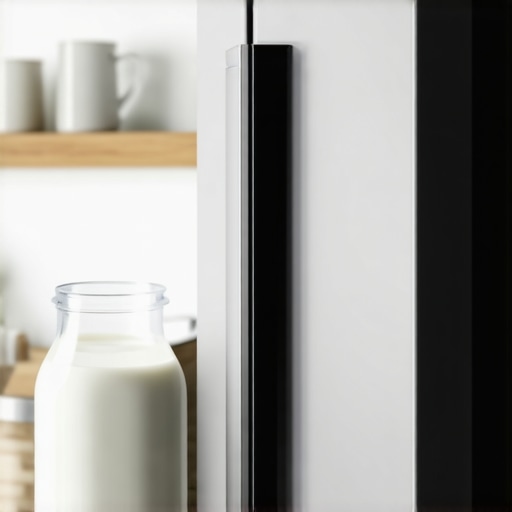
There was that frustrating moment when I opened my fridge and found the milk frozen solid on a chilly morning. I felt like I had just missed a crucial sign—my fridge was too cold, but I had no idea how to fix it without risking spoilage. That lightbulb moment made me realize something: adjusting my refrigerator’s temperature isn’t as straightforward as turning a dial. Many of us struggle with this delicate balance, often ending up with frozen milk or spoiled produce. If you’ve ever wondered why your groceries sometimes freeze or spoil unexpectedly, you’re not alone. Today, I’m going to share my journey and expertise on how to tune your fridge’s temperature properly, keeping your food fresh and your milk just right.
Why Your Refrigerator Needs the Right Temperature
A fridge that’s too cold not only freezes milk but can also turn fresh vegetables into mush and cause yogurt to freeze. Conversely, a warmer setting might let bacteria thrive, risking foodborne illnesses. Achieving that perfect middle ground is critical for food safety, longevity, and saving money on spoiled groceries. Additionally, an improperly set temperature can cause your unit to work harder, leading to higher energy bills and earlier wear and tear. According to the Department of Energy, optimizing your refrigerator’s temperature can save you up to 10% on energy costs annually. Knowing how to set it correctly is essential for both your wallet and your fridge’s lifespan.
Is It Really That Easy to Adjust Your Fridge?
Early in my kitchen experiments, I made the mistake of just turning the dial to the middle and assuming everything was fine. Spoiler alert: my milk froze, and I wondered if I’d wrecked the whole batch. The truth is, many fridges have nuanced settings, and the impact of temperature depends on various factors like ambient room temperature and how often you load the fridge. It’s not just about setting a number but understanding what that number means in practice. Are you facing similar issues? If so, keep reading—I’ll guide you through easy, practical steps to fine-tune your fridge and stop this freezing frustration once and for all.
Use the Refrigerator’s Temperature Dial Precisely
When I first attempted to adjust my fridge, I simply turned the dial to the middle setting, expecting it to be optimal. That night, I found my milk frozen solid. The key is to understand that most standard refrigerators have a numerical scale, typically from 1 to 5 or 1 to 7, with the ideal being around 3 or 4. To get it right, start by turning the dial to the middle and wait 24 hours. Then, check your food, especially dairy and produce, to see if they are stored at the correct temperature. Think of this dial as a thermostat for your fridge, much like the thermostat in your home heater—it controls the overall temperature, but fine-tuning is necessary for perfect comfort.
Place a Trusty Thermometer Inside
To accurately gauge your fridge’s temperature, I recommend placing a digital thermometer on an open shelf near the center. During my attempt, I kept opening and closing the door, which temporarily affected the readings, causing some confusion. After 24 hours with the dial set to the middle, I checked the thermometer and found it was sitting at 33°F (1°C). The USDA recommends 37°F (3°C) for safe food storage. Adjust the dial incrementally, waiting each time, until you consistently hit that safe zone. Think of the thermometer as a home automation sensor—without it, you’re guessing instead of knowing.
Adjust Based on External Conditions
Your refrigerator’s performance isn’t just about the dial and thermometer—it also depends on ambient room temperature, how often the door opens, and even the placement of food inside. During winter, I noticed my fridge was running colder because my kitchen was chilly, leading to frozen veggies despite a mid-range setting. Similarly, if your fridge is in a sunlit corner or near a heating vent, it might need slight adjustments. Consider these factors like tuning a smart appliance—small tweaks can optimize efficiency and performance. For a deep dive into smart fridge features, visit this guide.
Validate the Changes with Consistent Monitoring
After adjustment, keep monitoring the thermometer for at least 48 hours to ensure stability. I once made a quick tweak and forgot to double-check, resulting in frozen lettuce the next morning. Fortunately, the process is simple: note the readings daily, and avoid sudden door openings or adding hot food during this period. This consistent check is akin to calibrating smart devices—precision is key to long-term success. Once stable, your fridge will keep your food fresh without risking freezing or spoilage.
Maintain and Reassess Periodically
Over time, your fridge might drift from its optimal temperature due to door seals aging or compressor wear. I set a reminder every three months to reassess the settings and thermometer readings, much like updating firmware in smart appliances. Regular checks prevent unnecessary spoilage and extend the life of your unit. For additional insights on maintaining your smart appliances, explore comprehensive guides. Properly calibrated, your refrigerator becomes a reliable guardian of fresh food, saving you money and reducing waste.
Many homeowners fall into misconceptions about how their appliances work, often leading to inefficiency or even damage. One pervasive myth is that buying the latest smart refrigerator automatically guarantees optimal performance. However, smart features can sometimes complicate basic functions if not properly configured, as explained in this guide. Another misconception is that dishwashers with multiple cycles are always better; in reality, selecting the correct cycle for the load can prolong appliance life and ensure spotless dishes. Don’t assume that more features equals better performance without understanding their proper use.
What Advanced Users Overlook When Syncing Smart Appliances
One common oversight is neglecting firmware updates, which are crucial for security and functionality. Firmware not only improves performance but can fix bugs that cause erratic behavior, such as Wi-Fi disconnections or unresponsive touch controls. Experts advise regularly checking for updates—an often missed step that can significantly enhance your device’s lifespan and reliability. Ignoring this can lead to avoidable problems, as highlighted in this article. Remember, smart appliances are only as good as their firmware, so keep them updated to avoid the trap of outdated features or vulnerabilities.
Another nuanced mistake is underestimating energy consumption of seemingly energy-efficient models. Many assume that devices labeled as eco-friendly consume minimal power, but actual savings depend on usage patterns and proper calibration. For example, an energy-saving fridge needs correct temperature settings and regular maintenance to realize its potential savings. According to a recent study by the Department of Energy, improperly maintained appliances can negate their energy benefits, leading to higher utility bills. Therefore, understanding these subtle factors is key to truly benefiting from modern technology in your home.
Lastly, many users overlook the importance of placement and environment. For instance, placing a washing machine near a drain hose without proper leveling can cause water leaks or noise issues over time. Similarly, storing portable appliances in humid areas may accelerate corrosion. These are often silent killers of appliance longevity—small mistakes with significant consequences. Ensuring correct placement and regular inspection can save money and prevent unexpected breakdowns.
In summary, avoiding these common pitfalls requires a deeper understanding of your appliances’ features and maintenance needs. Stay proactive with updates, calibrations, and environment considerations, and your appliances will continue to serve efficiently for years. Have you ever fallen into this trap? Let me know in the comments!
Investing in the Right Equipment for Long-Term Performance
Maintaining home appliances effectively requires the right tools and a proactive approach. Personally, I rely on a high-precision digital multimeter to troubleshoot electrical issues in smart appliances. It allows me to test wiring, connections, and outlet voltages accurately, preventing potential malfunctions before they escalate. For cleaning, I swear by a ultrasonic descaling device for coffee machines and kettles; this saves significant time and ensures optimal performance. When it comes to software, I use diagnostic apps provided by manufacturers—these tools help me interpret error codes and firmware updates seamlessly, especially on smart refrigerators and washing machines. Investing in these specific tools has extended my appliances’ lifespan and improved efficiency dramatically.
Predicting Future Trends in Appliance Maintenance
Looking ahead, I predict smart home integration will become more intuitive, with AI-powered diagnostic systems predicting issues before they manifest. Enhanced connectivity will enable real-time alerts and even automatic resets or repairs. As companies like Samsung and LG push forward, the integration of machine learning algorithms will simplify maintenance, reducing the need for manual troubleshooting. Staying ahead involves not only current tools but also embracing innovations like remote diagnostics and predictive analytics, as detailed in this article on future trends.
How do I maintain my appliances over time?
Regular, planned maintenance is key. Schedule quarterly inspections with essential tools such as a digital thermometer, a vacuum for dust removal, and manufacturer-specific cleaning kits. For example, cleaning refrigerator coils with a soft brush and vacuum can improve cooling efficiency and lower energy costs, as advised by industry experts. Keeping firmware updated via official apps ensures your units operate with the latest fixes and features, minimizing vulnerabilities. Additionally, monitoring appliance performance through diagnostic apps helps catch issues early, avoiding costly repairs. Building a routine around these practices ensures longevity and peak performance of your appliances. Remember, a proactive stance with the right tools now can save you significant headaches later. Try setting up a maintenance schedule this week, and see how much smoother your appliances operate with minimal unexpected breakdowns.
Lessons the Appliances Won’t Tell You How I Learned to Love My Fridge
- Misjudging the dial can lead to frosty milk and wilted greens—small tweaks make all the difference after that lightbulb moment in my kitchen.
- Assuming a mid-range setting is optimal is a rookie mistake; precise calibration with a thermometer turns guesswork into confident control.
- External factors like room temperature and food placement are silent saboteurs—being attentive here prevents spoilage surprises.
- Regular check-ins and firmware updates keep my smart appliances running smoothly, proving that maintenance is more than just a chore—it’s an investment in longevity.
Tools and Tales That Shaped My Approach
- My trusted digital thermometer is essential; it demystifies the temperature, turning assumptions into facts, much like reading a dashboard for a car.
- Manufacturer diagnostic apps have become my second set of eyes, revealing hidden issues and guiding timely interventions—think of them as the smart assistant for your appliances.
- Books like “Smart Home Appliance Maintenance” broaden my understanding beyond basic tips, inspiring proactive habits and smarter choices.
- Staying informed about trends on sites like this resource keeps me ahead in the appliance game, ready for innovations that make life easier.
Your Next Move Towards Cooler, Smarter Food Storage
Embracing these insights empowers you to take control of your refrigerator’s performance. Imagine the confidence you’ll gain, knowing your appliances are optimized not just for today but for years to come. Dive into the latest in smart appliance tech or revisit your maintenance routines—every small step adds up. The journey to a fresher, more efficient kitchen is yours to start now. Are you ready to make your home smarter and your food fresher? Share your experiences below and let’s learn from each other!
,