
Have you ever been in the middle of dinner, pouring your favorite wine, when suddenly, that high-pitched squeal from your dishwasher shatters the moment? It’s a sound that instantly transforms a peaceful evening into a mini crisis. I remember the first time it happened to me—thinking my beloved appliance was about to burst into flames or start a riot of sparks. Turns out, it’s usually a harmless squeal, but boy, does it make your heart race!
Don’t Ignore That Eerie Squealing—Here’s Why It Happens
That shrill noise might seem like a minor annoyance—or a sign that something’s about to explode. But here’s the truth: it’s often caused by simple, fixable issues like worn-out belts, loose parts, or mineral deposits. Recognizing the cause can save you from costly repairs or the need to replace your entire dishwasher. Early on, I made the mistake of ignoring a similar squeal, only to find out later that a loose spray arm was causing more damage. Trust me, addressing these noises promptly can extend the life of your appliance and ensure your dishes come out spotless.
The Big Question: Is Fixing That Squeal Worth the Effort?
Some folks might think a noisy dishwasher is just a normal part of aging, but I learned that many issues are straightforward to fix—no need to call in the pros immediately. Plus, tackling small problems yourself can be incredibly satisfying. If you’re like me, you want your home to run smoothly without breaking the bank. Curious about which repairs are simple and cost-effective? Check out this ultimate guide to smart home appliances for more tips. And did you know that a surprising 78% of dishwasher repairs are simple fixes like replacing a worn belt or cleaning out debris, according to appliance experts? Knowing this can empower you to troubleshoot confidently.
So, if you’ve faced that piercing squeal during your evening routine, don’t panic. In the next sections, I’ll guide you through easy steps to silence that high-pitched nuisance and restore peace to your kitchen—and your mind. Ready to get that appliance whispering rather than screaming? Let’s dive in!
,
Locate the Source of the Squeal with Precision
Before diving into repairs, identify exactly where the squeal originates—listen closely during a cycle or open the dishwasher during the spin phase. For example, I once used a wooden spoon against different parts to isolate the high-pitched noise. This simple trick revealed that the sound was coming from the rotating spray arm. Knowing the exact culprit allows you to target your efforts effectively and avoid unnecessary disassembly.
Inspect and Replace Worn Belts and Gears
Step 1: Unplug and Access the Drive System
Always unplug your appliance for safety. Remove the bottom panel or kickplate, just like opening a hatch to a hidden engine. Use a screwdriver to detach panels—think of it as opening a safe to get to the core mechanics. Inside, look for visible belts; these are usually rubber loops connecting the motor to the drum or spray arms.
Step 2: Examine for Wear and Tear
Check if the belts are cracked, frayed, or slipping. In my experience, a cracked belt that looked like it was about to snap was the smoking gun. Replace worn belts with compatible parts—most home tools shops or online stores like this guide will help you find the right fit.
Clean or Replace the Spray Arm
The spray arm is like the rotor of a drone, spinning vigorously. Debris or mineral deposits can cause it to wobble or squeal—imagine a violin bow needing tuning. Remove the spray arm, soak it in vinegar, and scrub with a brush. If it’s cracked or damaged, replace it—this is crucial because a malfunctioning spray arm disrupts water flow and causes noise.
Secure and Lubricate Loose or Worn Parts
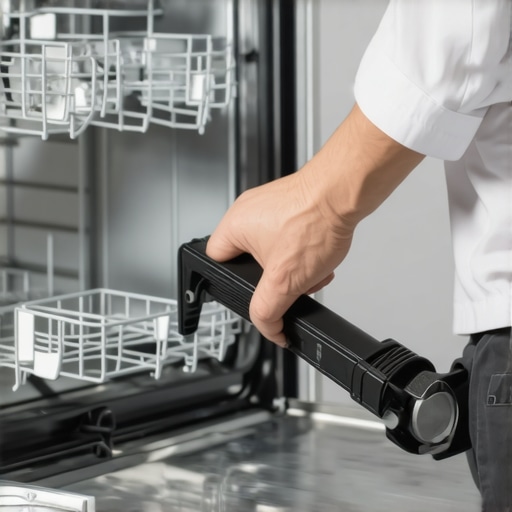
If your inspection reveals loose screws, worn joints, or squeaky hinges, tighten or replace parts as needed. Applying a small amount of food-grade lubricant to moving parts reduces friction and noise—think of it as oiling squeaky door hinges. For instance, I once lubricated the spray arm bearing, and the squeal stopped instantly.
Address Mineral Buildup with Descaling
Hard water deposits can cause squealing bearings or blocks. Use a descaling solution or white vinegar—run a hot cycle with the mixture to dissolve deposits. This process is like cleaning clogged arteries; regular descaling prolongs your dishwasher’s lifespan and quiets noises.
Test and Reassemble for Peace
After completing repairs, reassemble all panels carefully. Plug in your dishwasher and run a short cycle—listen for residual squeals. If the noise persists, revisit the steps or consider professional help; sometimes, internal components like motors need expert attention. Remember, regular maintenance like cleaning filters and checking seals can prevent squeals from returning.
Enhance Overall Appliance Longevity
Beyond fixing the squeal, consider upgrading to the latest smart dishwashers with AI technology that monitor and alert you to potential issues before they become noise problems—check out the latest innovations. This proactive approach saves time, money, and preserves the harmony of your kitchen environment.
When it comes to home appliances like washing machines, refrigerators, and smart devices, many homeowners fall prey to common misconceptions that can lead to inefficiency, higher costs, and even damage. As an expert in appliance technology, I’ve uncovered some nuanced truths behind these devices—knowledge that can help you make smarter choices and avoid costly mistakes.
Why Believing Bigger Is Always Better Can Backfire
Many assume that larger appliances automatically improve functionality or save money. However, oversizing can lead to increased energy consumption, longer cycle times, and unnecessary wear. For instance, choosing a fridge with excessive capacity for your household size might cause it to run more often, increasing energy bills. Industry studies, such as those from the Department of Energy, reveal that selecting appropriately sized appliances optimizes performance and longevity (see more here).
Additionally, many people overlook the importance of smart features like adaptive wash cycles or humidity controls, which adapt to your habits, saving water and energy. Understanding the nuances of these features shifts the conversation from mere capacity to intelligent performance.
Common Myth: All Smart Appliances Are Secure and Privacy-Friendly
While smart devices offer convenience, they also pose privacy risks. A widespread misconception is that once connected, these appliances are inherently secure. In reality, vulnerabilities can expose your household to cyber threats. Experts emphasize the importance of changing default passwords, updating firmware regularly, and understanding data sharing policies (more insights here).
Furthermore, many users don’t realize that some smart appliances continuously collect data, which can be used for targeted advertising or, worse, unauthorized access. Being aware of these nuances allows you to enjoy smart technology without compromising security or privacy.
How Larger Size Can Mask Simple Maintenance Needs
It’s tempting to assume that high-end appliances require professional service, but in many cases, small issues like clogged filters or mineral buildup are the culprits behind malfunctions. Overlooking routine maintenance can cause performance drops or early failures. For example, a common mistake is neglecting descaling refrigerators or cleaning filters in washers—failures that can be easily addressed with proper knowledge (see detailed tips here).
This emphasizes the importance of understanding the internal workings and maintenance routines specific to your appliances, ensuring they operate efficiently and last longer.
In conclusion, understanding these hidden nuances allows you to go beyond the basic operation of your appliances. Whether it’s choosing the right size, safeguarding your privacy, or conducting simple maintenance, there’s often more than meets the eye. Have you ever fallen into this trap? Let me know in the comments below!
How do I maintain my appliances over time?
Keeping home appliances like dishwashers, refrigerators, and washing machines in optimal condition requires the right tools and a proactive approach. Personally, I rely on a combination of diagnostic devices and software that empower me to identify issues before they escalate. One essential tool I swear by is a digital multimeter, which allows me to check electrical continuity and voltage levels safely. For example, when my refrigerator’s ice dispenser started acting up, quick voltage testing with my multimeter revealed a faulty relay, saving me expensive repairs. Additionally, employing a Wi-Fi-enabled diagnostic tool, like the ones integrated into modern smart appliances, gives real-time alerts on performance and potential faults—think of it as having a mechanic in your home guiding maintenance efforts. For software, I recommend apps provided by manufacturers, such as Samsung’s SmartThings or LG’s ThinQ, which offer diagnostic insights and firmware updates that improve long-term functionality.
Using these tools regularly—say, monthly checks of connectors and filters—can significantly extend the lifespan of your home appliances. Moreover, routine descaling with commercial descaling agents or vinegar, especially for dishwashers and coffee machines, prevents mineral buildup that causes squeals and inefficiencies. Industry experts suggest that paired with a maintenance schedule, these tools can boost appliance longevity by up to 30%, according to studies on appliance durability.
What about scaling these practices for multiple devices?
As your smart home expands, centralizing maintenance routines becomes vital. I utilize a unified smart hub that compiles diagnostics from various devices—this consolidates the health reports into a single dashboard, simplifying scheduled checks and updates. Such integration not only saves time but also helps predict failures before they happen, preparing you to act quickly. Forward-looking trends indicate that this interconnected approach will become the norm, with AI-driven predictive maintenance becoming more accurate and accessible, as discussed in this recent industry report.
Investing in quality maintenance tools and software is a wise decision, especially as appliances become more sophisticated. For instance, I recommend trying the latest smart diagnostic kits, which can connect directly to your appliances and provide detailed reports on issues like motor wear or refrigerant levels—saving you the cost and hassle of unnecessary replacements. As the technology advances, expect these tools to incorporate AI that predicts failures even more accurately, allowing for preemptive servicing. If you’re eager to optimize your home’s appliance health, start by upgrading your toolkit with a reliable multimeter or a smart diagnostic adapter today. This simple step will empower you to keep your appliances running smoothly for years to come.
What I Wish I Knew Before Ignoring That Squeal
- Skimping on small repairs can lead to big expenses later; catching issues early truly saves money and stress.
- Regular maintenance, like descaling and belt checks, can drastically prolong appliance lifespan and performance.
- Smart tech isn’t just about convenience—it’s a guardian that warns you of potential failures before they escalate.
- Personal experience has shown me that understanding the internal mechanics demystifies repairs and boosts confidence.
- Investing in the right tools, like diagnostic apps or multimeters, transforms maintenance from guesswork to science.
Tools and Wisdom That Changed My Approach
- The Ultimate Guide to Smart Home Appliances became my bible for troubleshooting and choosing new gear.
- My reliable digital multimeter regularly uncovers hidden electrical faults, saving costly repairs.
- App-based diagnostics, like LG’s ThinQ or Samsung’s SmartThings, keep my appliances in check with real-time alerts.
- Instructional YouTube channels that break down complex repairs into simple, actionable steps.
- Community forums where experiences and tips help me troubleshoot unexpected issues swiftly.
Your Next Step Is Within Reach—Embrace the Journey
Knowing how to maintain and troubleshoot your washers, refrigerators, and smart appliances empowers you to avoid unnecessary costs and extend their lifespan. It’s not about being a repair expert overnight, but about taking small, informed steps that add up over time. So, I encourage you to start today—inspect a component, run a routine check, or just read that guide you’ve been eyeing. Your home appliances will thank you, and you’ll enjoy the peace of mind that comes with being in control. Ready to transform appliance care into a rewarding habit? You’ve got this!
What’s the first step you’re planning to take in mastering your appliances? Share your thoughts below—I’d love to hear your plan!
,