
I stood there in my laundry room last Tuesday, staring at a mountain of towels that smelled—well, let’s be honest—less like ‘Spring Breeze’ and more like a damp basement. My first instinct? Reach for that giant plastic bottle and pour a massive, overflowing cup of neon-blue detergent into the tray. I figured if a little soap was good, a lot of soap would be a miracle worker. Ten minutes later, I heard a frantic beeping and saw a ‘Suds’ error flashing on the screen. My high-end machine was literally choking on bubbles, and I was left mopping up a mess. It was my ‘aha!’ moment. I realized I’d been throwing money down the drain—literally—for years. Today, I’m going to show you why your machine actually hates that full cup of soap and how you can get cleaner clothes while spending half as much on supplies.
Stop Dumping Your Money Down the Drain
If you are using the full cap provided by the manufacturer, you are likely using ten times more soap than necessary. Most people don’t realize that modern washing machines that save water are highly specialized instruments. They don’t operate like the old-school top loaders our grandmas had that filled to the brim with forty gallons of water. When you dump in a whole cup of detergent, there simply isn’t enough water to wash it away. This leads to a nasty buildup inside the drum, which is often why your front-load washer always smells like a damp locker room. I made this mistake for months, wondering why my athletic gear felt sticky even after a heavy cycle.
Won’t my clothes stay dirty if I use less soap?
It feels counterintuitive, I know. We’ve been conditioned by commercials to believe that more bubbles equal more clean. However, too much soap actually traps dirt against the fabric. When the water can’t rinse the detergent out, the soap remains in the fibers, acting like a magnet for dust and skin cells. This is a common culprit why your high-efficiency washer is leaving white streaks on dark clothes. According to the experts at Energy Star, modern HE washers use about 25% less energy and 33% less water than regular washers, meaning that concentrated detergent goes much further than you think. Have you ever noticed a weird, slimy residue on your clothes after a wash? If so, you’re definitely overdoing it. We’re going to fix your laundry routine and save your machine from an early grave. It all starts with understanding why your high-efficiency washer doesn’t fill all the way to the top and how that limited water volume changes everything.
The Two-Tablespoon Rule for Every Load
The secret to a perfect wash isn’t in the brand of soap you buy; it’s in the measuring spoon you probably aren’t using. I call it the Shot Glass Method. For a standard-sized load in a high-efficiency machine, you really only need two tablespoons of liquid detergent. That is roughly the size of a standard shot glass. If you’re doing a small load or using soft water, you can often get away with just one tablespoon. When I first tried this, I felt like a rebel. I was convinced my husband’s gym shirts would come out smelling like a locker room, but the opposite happened. They came out smelling like… nothing. Just clean fabric. That’s because the machine could actually do its job and rinse the sweat away rather than just burying it under a layer of soapy film. 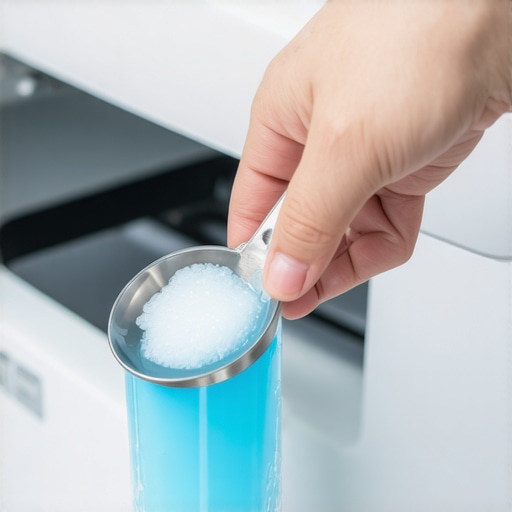
Trust Your Machine More and Your Measuring Cup Less
Think of your washing machine like a professional chef. It needs exactly the right ratio of ingredients to create a masterpiece. If you double the salt in a recipe, you ruin the meal. In the same way, when you double the soap, you ruin the chemistry of the wash. High-efficiency detergents are formulated to be incredibly powerful in small doses. If you see mountains of bubbles through the glass, you’ve already lost the battle. Excessive suds actually act as a cushion, preventing the clothes from rubbing against each other. This friction is what physically knocks the dirt loose. Without it, your clothes just float in a soapy bath. This is also a primary reason why your high-efficiency washer takes so long to complete a load. The sensors detect the suds and keep adding extra rinse cycles, dragging your laundry day out for hours while wasting electricity. It is much more efficient to let how smart washing machines can simplify laundry day by allowing their internal sensors to dictate the water levels without fighting a sea of foam.
Scrub Away the Slime to Restore Your Machine
If you’ve been overusing soap for years, your machine likely has a coating of ‘scrud’—a waxy buildup of soap and fabric softener. You need to purge the system to get back to zero. Start by running a cleaning cycle with a dedicated washing machine cleaner or a cup of white vinegar on the hottest setting. I remember the first time I pulled back the rubber seal on my front-loader; it looked like a science experiment gone wrong because I had used too much ‘Spring Breeze’ for too long. Learning the best way to clean a moldy front-load gasket is a game changer for the actual smell of your laundry. While you’re at it, don’t ignore the mechanical parts. If you have noticed water pooling, you should also learn how to clean a front-load washer filter without flooding the room. A clogged filter traps soapy water, which then recirculates back onto your ‘clean’ clothes. If your dispenser is a mess and won’t stop dripping, take the time to figure out how to fix a leaking detergent drawer in your washer to ensure the soap is actually going into the drum at the right time. By reducing the soap and cleaning the hardware, you’re essentially giving your appliance a second life and ensuring those washing machines that save water can actually perform as designed.
Forget Everything You Heard About Eco Mode
Most people I talk to avoid the ‘Eco’ setting like the plague. The common complaint? ‘It takes three hours! How is that saving energy?’ It sounds like a marketing scam, but here is the contrarian truth: time is the trade-off for heat. Heating water is the most energy-expensive part of any cycle. By extending the time, the machine can use lukewarm water and smarter mechanical action to achieve the same result as a 140-degree blast. According to data from the Association of Home Appliance Manufacturers (AHAM), using sensor-heavy cycles actually prevents the ‘baked-on’ grime that results from high-heat drying. If you’ve been avoiding it, you’re missing out on the truth about eco mode on modern dishwashers and how it actually preserves the seals and gaskets of your expensive machine.
The Rinse Aid Trap That Ruins Your Glassware
I see this mistake constantly in the comments: someone buys expensive 3-in-1 pods and thinks they can skip the rinse aid dispenser. This is a massive ‘oops’ moment for your kitchenware. Those pods release their ingredients at fixed intervals, but your machine’s sensors might trigger a rinse at a completely different time. Without a dedicated liquid in the dispenser, the surface tension of the water never breaks. This is exactly why your dishwasher leaves a chalky film on your coffee mugs. Even the best innovative dishwashers with AI technology can’t physics their way out of needing a surfactant. If you want bone-dry plastic, you have to get your dishwasher to finally dry your plastic tubs by refilling that blue liquid once a month. 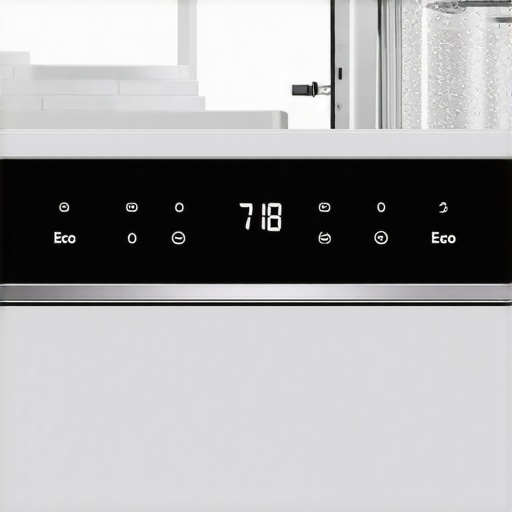
Why Does My Machine Take Twice as Long to Clean Half the Load?
It feels like a glitch when your 2025-model washer takes 90 minutes for a handful of shirts. Advanced readers often ask if the sensors are broken, but usually, it’s the opposite. The machine is struggling to balance the drum. In older machines, a small load would just rattle the house; in modern living with smart home appliances, the computer will keep adding water and re-spinning to find a perfect balance. This is why your high-efficiency washer takes so long to complete a load when it’s under-filled. My advice? Only run full loads. It’s better for the suspension and your sanity.
Check the Secret Filter Before You Buy a New Fridge
Before you panic about a warm crisper drawer, you need to look where most people never do. We all know about the water filter, but many high-end units have a secondary internal drain filter or an air-flow vent that gets clogged with stray onion skins or frozen peas. If you don’t keep these clear, you’ll end up with a repair bill for a ‘broken’ compressor that was actually just suffocating. This is a common culprit for why your fridge is freezing everything on the top shelf. While you’re back there, take five minutes to find the secret drain filter at the bottom of your fridge you never knew existed. It could save you three hundred dollars in technician fees. Have you ever fallen into this trap of over-complicating a simple fix? Let me know in the comments.
Speaking of simple fixes, I used to be terrified of opening up my machines. I assumed that if a ‘smart’ appliance stopped working, it required a computer scientist to fix it. That changed the day I bought a ten-dollar digital multimeter. If you want to stop being at the mercy of expensive repair schedules, this is the one tool you need. Most appliance failures aren’t the ‘brain’ (the control board) dying; they are simple mechanical switches or fans failing. For instance, knowing how to tell if your refrigerator’s fan motor is failing is often just a matter of checking for continuity with those two little metal probes. I’ve personally saved a washing machine from the scrap heap just by learning how to diagnose a faulty lid switch on your top loader. It takes five minutes, and the replacement part is usually less than twenty bucks.
Stop Guessing and Start Testing Your Hardware
The reality is that we live in an era where people wonder why modern refrigerators don’t last as long as your grandma’s. The answer isn’t just ‘cheap parts’; it’s that modern machines are built with much tighter tolerances. According to technical documentation from the International Electrotechnical Commission (IEC), specifically standard 60335, the durability of modern electronic control units is highly dependent on consistent voltage and thermal management. This means that if you let dust clog your fridge coils or your dryer vent, the internal heat rises, and the ‘smart’ chips literally cook themselves. I make it a habit to vacuum my appliance rears every six months—it’s the single most effective way to scale the lifespan of your kitchen. #IMAGE_PLACE_HOLDER_D#
How do I keep my smart sensors accurate over the long haul?
Maintenance for a smart home isn’t just about grease and gears anymore; it’s about software and sensors. If your machine starts acting erratic, the first thing I check isn’t the belt—it’s the Wi-Fi signal and the firmware version. A ‘glitchy’ dishwasher is often just a dishwasher that missed a critical update. If you find why your smart fridge isn’t updating its software, you might find that a simple router reboot solves your cooling issues. I recommend checking your manufacturer’s app once a month to how to update the firmware on your smart kitchen appliances. It sounds tedious, but these updates often include ‘patch notes’ that actually recalibrate how the sensors detect water hardness or soil levels, directly impacting your utility bills.
Predictive Maintenance Is the Future of Your Kitchen
Looking ahead, the future of home appliances trends to watch in 2025 suggest we are moving toward a ‘self-healing’ model. We are already seeing high-end units that can detect a microscopic leak in a supply line and shut off the water valve before your floor is ruined. My prediction? Within the next three years, your washing machine won’t just tell you it’s broken; it will have already analyzed the vibration patterns of its own bearings and pre-ordered the replacement part to arrive at your door before the failure even happens. This shift from reactive repair to predictive maintenance will finally bridge the gap between the longevity of old-school tech and the efficiency of modern AI. I challenge you to try one thing tonight: pull your fridge out, vacuum the coils, and check the app for a firmware update. You might just add three years to its life in fifteen minutes.
The Hardest Lessons My Smart Appliances Taught Me the Hard Way
After years of tinkering, I’ve realized that less really is more when it comes to detergents and additives. My biggest mistake was treating my high-end front-loader like an old bucket, thinking it could handle any amount of soap. In reality, the most expensive top smart appliances for a seamless home experience in 2025 are delicate ecosystems that require precision. I also learned that if your detergent isn’t clearing out, it’s usually a water temperature or filter issue, which is often why your dishwasher pod isnt dissolving completely. Lastly, don’t wait for a breakdown. Most “dead” appliances are actually just dirty or out-of-date machines waiting for a simple how to fix a dishwasher that wont drain completely 2 moment.
The Essential Toolkit Every Modern Homeowner Needs
I don’t recommend a massive garage full of tools, but these three are non-negotiable for me. First, a simple digital multimeter; it’s the only way to truly know if a component is dead or just not getting power. Second, I always keep the official manufacturer’s service app on my phone to monitor health. Third, I highly suggest reading choosing the right refrigerator tips from industry experts to understand how airflow and placement affect your unit’s longevity. These resources have saved me thousands in unnecessary service calls. #IMAGE_PLACEHOLDER_E#
Reclaim Control of Your Modern Kitchen
Your home appliances should work for you, not the other way around. By taking ten minutes a month to check a filter or update firmware, you move from being a frustrated user to an empowered owner. Don’t be afraid to pull that fridge away from the wall or unscrew a filter—it’s the best way to ensure your kitchen stays efficient for a decade or more. Have you ever been shocked by what you found hiding in your appliance filter? Let me know in the comments below!