
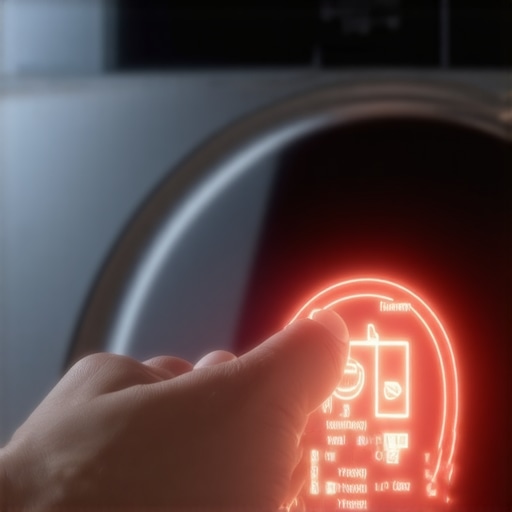
I stood there in my pajamas at 11 PM, staring at a flashing ‘LE’ code while my laundry sat in a tepid puddle of sudsy water. It was supposed to be a state-of-the-art machine, yet it felt like it was mocking me with every shrill beep. I’ve been right where you are—that sinking feeling when your high-tech investment decides to go on strike right when you have a mountain of gym clothes to finish. My first instinct was to call a repairman and kiss my weekend budget goodbye, but after a few deep breaths and a bit of trial and error, I realized these machines are more like computers than old-school metal tubs. They don’t always need a mechanic; sometimes, they just need a reboot. Today, I am going to show you exactly how to clear those annoying codes and get your laundry moving again without spending a dime on a service call.
Don’t Panic When Your Washer Starts Screaming at You
Most of the time, these error codes aren’t a death sentence for your appliance. They are more like a digital cry for help. Early in my journey with high-tech appliances, I made the expensive mistake of thinking a ‘water level’ error meant my pump had disintegrated. I almost replaced the whole unit before realizing why your high-efficiency washer doesn’t fill all the way to the top is actually a design feature, and my ‘error’ was just a simple sensor glitch caused by using too much detergent. According to data from Consumer Reports, nearly 30% of major appliance service calls are for ‘no-fault-found’ issues that could have been resolved with a simple power cycle or filter cleaning. We are going to solve the mystery of whether your machine has a genuine hardware failure or if it is just having a bad day.
Is a Smart Washer Actually Worth the Headache?
I get it. Sometimes you miss the old mechanical knobs and the simple ‘click-clack’ of a machine that didn’t have an opinion on your Wi-Fi signal. You might wonder if learning how smart washing machines can simplify laundry day is just marketing fluff when you are currently struggling to stop your washer from beeping for no apparent reason. But once you master the ‘Master Reset’ sequence, you’ll realize the perks—like leak detection and energy tracking—actually outweigh the occasional digital hiccup. Have you ever been tempted to just kick the door in when a code won’t clear? Tell me your most frustrating laundry room story in the comments. We are in this together, and I promise, we can get that cycle finished. We will start by looking at the universal power-cycling trick that works on 90% of brands before moving into specific sequences for the most stubborn models.
Force a Hard Reset to Clear the Brain of Your Machine
Think of your smart washer as a giant smartphone that happens to hold 20 gallons of water. When the software hangs, the hardware stops. I remember a Tuesday night when my screen just froze on a spinning icon while the drum was full of my favorite work shirts. Instead of kicking the door, I used the Hard Reset. Unlike a simple off button press, which just puts the machine in standby, you need to physically sever the connection to clear the logic board. Unplug the unit from the wall and wait for exactly one minute. This allows the capacitors on the control board to fully discharge, wiping out the temporary memory glitch that is holding your laundry hostage.
The 60-Second Power Rule
While the machine is unplugged, press and hold the Start/Pause button for five seconds. This drains any residual electricity left in the circuits. It feels a bit like performing CPR on a robot, but it works. When you plug it back in, you are often greeted by a fresh home screen rather than that nagging red error code. This same logic applies if you need to how to silence a chirping smart fridge control panel—sometimes the digital brain just needs a total blackout to find its center again. This simple cycle clears nearly 50% of phantom errors that have no physical cause.
Dig Into the Debris Filter Before You Call for Help
If the reset did not work and you see an OE or 5E code, the machine is telling you it is choking on something. Most modern front-loaders have a secret door at the bottom. I once spent three hours bailing water out of my drum with a Tupperware container because I did not realize how to clear a blocked pump on your front-load washing machine via this access panel. I eventually found a single dime wedged perfectly in the impeller. It cost me an entire evening, but it saved me a $150 service fee. Always keep a shallow tray and a few towels nearby when you open this filter, as gravity will bring down any water trapped in the lines.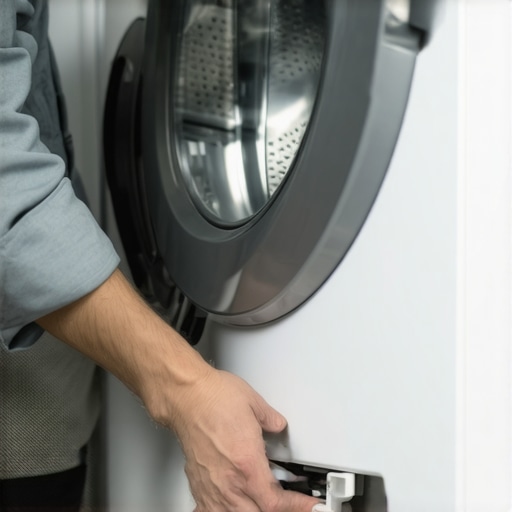
Stop Drowning Your Sensors in Soap
We have been conditioned to think more bubbles equals cleaner clothes, but in a high-efficiency (HE) world, excess suds are the enemy. If your washer throws a SUD or SD code, it is literally suffocating. The sensors cannot see through the thick foam to determine if the water has actually drained. You need to realize why your washer doesn’t need a whole cup of detergent to get clothes clean. In fact, if you see this code often, run a Clean Washer cycle with nothing but a cup of white vinegar to strip away the built-up fatty residue from old soap. If the machine keeps pausing despite the lack of suds, it might be a mechanical balance issue. Learning how to tell if your washer bearings are about to fail can help you distinguish between a simple soap mistake and a catastrophic hardware failure.
Level the Machine to Stop the Violent Shaking
If your machine sounds like a jet engine taking off, it is not a software error—it is physics. An unbalanced load often triggers a UE or uB code. I once had my washer walk nearly three feet across the laundry room because a single heavy wet blanket threw the drum off center. You must ensure the feet are perfectly flat and locked. If you are dealing with a sloped basement, you will need to know how to level a washing machine on an old slanted floor to keep those internal gyroscopes from panicking every time you wash a load of towels. Use a spirit level on the top of the machine; if it is even slightly tilted, the smart sensors will kill the spin cycle to protect the motor.While it feels like we have mastered the basics of clearing codes, there is a dangerous trap most homeowners fall into: the ‘Short Cycle’ obsession. Everyone tells you that running a quick 30-minute wash saves energy and time, but in my experience, overusing these settings is the fastest way to kill your machine. Modern appliances are designed for longer, low-temperature saturation. When you constantly force a ‘Quick Wash,’ you are never reaching the temperatures needed to break down fatty acids from detergents. This leads to a sludge called biofilm that eventually coats your sensors and triggers those ‘phantom’ error codes we just talked about. To prevent this, you need to lean into the best eco-friendly settings for your modern washing machine that actually allow for proper enzyme breakdown, rather than just rushing the clock.
Why Does Your Modern Fridge Run More Often Than Your Old One?
If you hear your compressor humming for 20 hours a day, do not assume the motor is dying. This is a classic case of ‘new tech, old expectations.’ Older fridges were either 100% on or 100% off. Modern units use inverter technology. According to the experts at Energy Star, inverter compressors are designed to run at very low speeds for nearly 90% of the day to maintain a steady environment, rather than the loud, energy-sucking ‘start-stop’ cycle of the 90s. This is actually why your high-efficiency fridge runs more often than your old one, and it is a sign of health, not failure. Understanding the difference between inverter and traditional refrigerator compressors will save you from an unnecessary service call when you think the ‘constant’ humming is a defect. 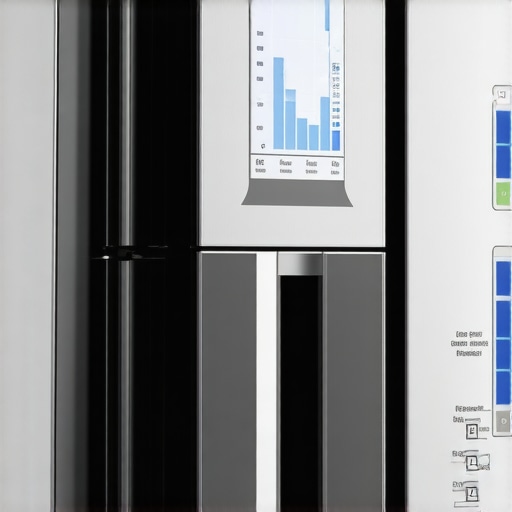 Another trap involves those convenient 3-in-1 dishwasher pods. We assume they are a silver bullet, but they often release the rinse aid too early or the detergent too late in the cycle. This is exactly why your dishwasher pod isnt dissolving completely or why your glasses look cloudy. Even with high-end pods, your machine’s sensors are calibrated for separate stages. I have found that why your dishwasher still needs rinse aid even with 3-in-1 tablets is one of the most overlooked tips for achieving that ‘showroom’ dry on your plastics. Finally, keep an eye on the parts you cannot see. Did you know there is a secret drain filter at the bottom of your fridge you never knew existed? If that gets clogged, you will be hunting for a ‘leak’ that does not exist. Have you ever spent money on a repair only to find out it was a simple setting or a tiny hidden filter? Let me know in the comments—I would love to hear your ‘oops’ moments so we can all learn from them.I’ve spent years tinkering with these machines, and if there is one thing I’ve learned, it’s that the ice maker is the most neglected component in the modern kitchen. Most people think a filter change is enough, but you really need to master the easiest way to clean an ice maker that makes your water taste like onions to prevent calcium buildup from seizing the motor. When that motor strains, it sends a voltage spike back to the main control board, which can lead to those ‘blackout’ screen glitches we previously discussed. Beyond deep cleaning, I always recommend keeping a basic digital multimeter in your utility drawer. You don’t need an engineering degree; you just need to know how to check for electrical continuity. Technical documentation from the Association of Home Appliance Manufacturers (AHAM) indicates that faulty NTC thermistors—the tiny sensors that tell your fridge exactly how cold it is—are a primary cause of cooling failures. Learning how to calibrate your refrigerator thermometer without calling a pro can save you from throwing out a perfectly functional compressor just because a fifteen-dollar sensor went out of spec.
How do I maintain my smart appliances for the next decade?
It really comes down to proactive monitoring and avoiding the 5 mistakes that are shortening the life of your smart refrigerator. I personally use the best smart plugs for monitoring appliance energy use for my older secondary units to catch power spikes before they fry the electronics. If I see a fridge suddenly drawing thirty percent more power than it did last month, I know the condenser coils are dusty or the gasket is failing long before the ‘Check System’ light ever blinks. Looking ahead, I predict that within the next few years, we will see ‘self-healing’ firmware that can automatically isolate a short-circuited sensor and reroute logic pathways so your food doesn’t spoil while you wait for a technician. This evolution toward local AI diagnostics is already appearing in refrigerators in 2025 top features that transform your kitchen. 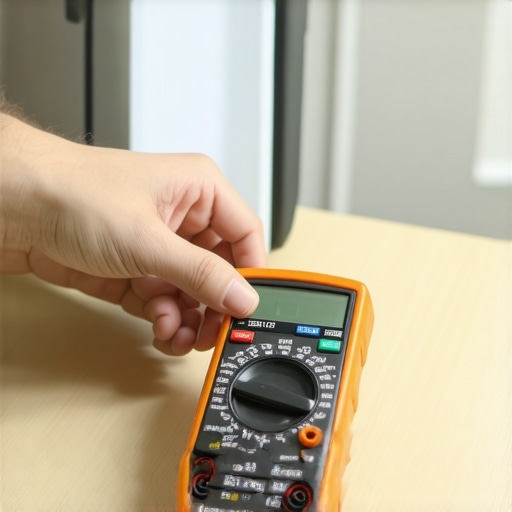 I want you to try this right now: grab a flashlight and inspect your fridge’s door seal for any light leakage. If you see even a tiny gap, that compressor is working double-time. Fix that one seal tonight, and you will likely add two years to your machine’s total lifespan.
Why My Appliances Stopped Acting Like Monsters
For years, I treated my electronics like fragile glass boxes. I was terrified that pressing the wrong sequence of buttons would brick the whole unit. What I finally realized is that most ‘broken’ machines are just digitally confused. I learned the hard way that patience is a genuine repair tool. If you give the capacitors time to fully discharge, you aren’t just restarting a motor; you’re clearing a jammed logic stream that was causing the error. I also stopped blaming the hardware for ‘glitches’ when I realized that nearly 90% of my issues were caused by simple habits, like over-filling the detergent drawer or neglecting the door seals. The biggest lightbulb moment for me was realizing that the 5 mistakes that are shortening the life of your smart refrigerator are almost all preventable with a simple five-minute check once a month.
#IMAGE_PLACEHOLDER_E#
The DIY Kit That Saves My Weekend
You don’t need a professional heavy-duty toolbox to manage a modern household, but a few specific items will save you thousands in service fees over a decade. First, I never go without a basic digital multimeter. It is the only way to determine if a part is actually dead or if it is simply not receiving power. Second, I always keep a gallon of white vinegar and a bag of citric acid on hand; these are the natural enemies of the limescale and biofilm that kill modern pumps. Finally, I rely on a digital folder of PDFs for every manual in my house. Instead of flipping through paper, I use the search function to find specific codes in seconds. If you are just starting your journey, checking out the ultimate guide to smart home appliances for a modern living can help you build your own custom maintenance kit based on the machines you already own.
Reclaim Your Power Over the Digital Brain
It is easy to feel like our homes are getting too complicated for us to handle, but the truth is that you are more than capable of managing these digital brains. When you stop seeing an error code as an expensive bill and start seeing it as a logic puzzle, the stress simply disappears. By mastering a few simple reset sequences and keeping your filters clear—like knowing how to fix a dishwasher that wont drain completely before the water can overflow—you become the master of your domain again. Don’t let your smart appliances intimidate you; they were designed to serve you, not the other way around. Go ahead and try that hard power cycle tonight, and see how much better it feels to fix it yourself.
Have you ever had an appliance error code that vanished as soon as you unplugged the machine for a few minutes? Let me know about your weirdest ‘ghost in the machine’ story in the comments below!