
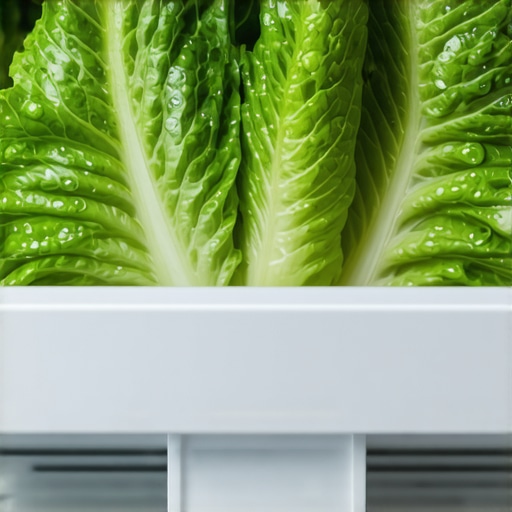
There I was on a Tuesday night, heart set on a crisp Caesar salad after a long day. I reached into the crisper drawer, grabbed the head of Romaine I’d just bought, and—*snap*. It didn’t bend the way fresh greens should; it shattered like a delicate piece of emerald glass. My beautiful, expensive organic produce had been transformed into a jagged block of green ice. It’s a specific kind of frustration, watching your hard-earned grocery budget literally freeze and die because your appliance decided to go rogue. I’ve been there more times than I care to admit, staring at a frozen cucumber like it’s some kind of unwanted popsicle, wondering why on earth my “state-of-the-art” machine is failing at its one job. It makes you want to give up on salads entirely and just live on canned soup.
Stop Turning Your Crisper Into a Deep Freezer
Believe me, I learned the hard way that “colder isn’t always better” when it comes to delicate greens. Early in my home-owning journey, I thought if the milk was borderline slushy, then my food was definitely safe from bacteria. I made the classic mistake of cranking my temperature dial to the absolute max setting during a particularly brutal July heatwave, only to find my eggs frozen solid in their cartons the next morning. It was a slimy, icy mess, and it was entirely avoidable. We aren’t just looking for a cold box to shove things into; we are looking for a perfectly balanced ecosystem that respects the biology of a leaf. Today, I’m going to walk you through exactly why your fridge is acting like an Arctic tundra and how you can reclaim your produce. We are going to look at everything from air circulation to the secret settings you probably ignored when you unboxed the thing. [image_placeholder]
Does a smart fridge actually prevent this?
You might be sitting there wondering if you need to drop three grand on a new unit just to keep your spinach from wilting into a frozen blob. The truth is, even the most advanced models can fail if you don’t understand how the air actually moves inside that stainless steel box. According to the FDA, keeping your refrigerator at exactly 40°F (4°C) or below is vital for food safety, but internal micro-climates often drop much lower near the cooling elements. If your lettuce is touching that back wall or sitting directly under a vent, it’s game over regardless of the price tag on the door. Have you ever opened your drawer only to find a frozen puddle at the bottom or heard your unit making a weird sound? Understanding the best refrigerator temperatures is the absolute first step toward saving your salads. You also need to take a long, hard look at those little plastic tabs on your drawers that most of us just slide back and forth for fun. If you aren’t sure how to use your humidity slides, you’re basically leaving your veggies out in the cold—literally. Sometimes the issue isn’t even the overall temperature; it’s just a matter of why your fridge is freezing everything on the top shelf instead of circulating the air properly. Have you ever felt like your refrigerator was actively working against your healthy eating goals by turning your kale into ice chips? Let’s dig into the physics of your kitchen and get this fixed once and for all.
Fix the Ghost in the Machine
First things first, stop trusting that digital readout like it is the gospel truth. Most refrigerators are like older cars with shaky speedometers; they give you a general idea, but they are rarely spot-on. If you really want to stop the ice, you need to learn how to calibrate your refrigerator thermometer without calling a pro. I used to think my fridge was a steady 37 degrees because the screen said so, but a ten-dollar manual thermometer revealed a terrifying five-degree swing depending on which shelf I checked. This inconsistency is one of the major 5 mistakes that are shortening the life of your smart refrigerator because it forces the compressor to work in chaotic, freezing bursts.
Don’t Let Your Groceries Suffocate
Think of your refrigerator as a set of lungs. It needs to inhale and exhale cold air to stay healthy. When you pack that top shelf with milk cartons and juice jugs right against the back wall, you are effectively putting a pillow over its face. The cold air comes out of the evaporator vents—usually located at the top or back—and if it hits an object immediately, it pools there. This is exactly why your fridge is freezing everything on the top shelf. You need to keep a two-inch ‘no-fly zone’ around every vent to ensure the air can actually circulate down to the bottom drawers where your delicate greens are waiting.
My Orange Ice Pick Disaster
I remember one Sunday afternoon when I decided to ‘optimize’ my storage by shoving every single vegetable bag right against the back panel. I thought I was being tidy and efficient with space. Two days later, I pulled out a bag of carrots that had literally fused to the plastic and turned into orange ice picks. I had accidentally created a thermal bridge between the cooling coils and my dinner. By keeping items at least an inch away from the walls, you prevent that direct heat transfer that turns moisture into ice. If you have been struggling with this, you might also need to look at how to stop your refrigerator from freezing the milk on the top shelf by rearranging your heaviest items to the middle sections where the air is more stable.
Tame the Arctic Blast with Better Organization
Your crisper drawers aren’t just plastic bins; they are meant to be controlled environments. If you find your spinach is consistently crunchy with frost, you likely have the humidity settings completely wrong. Learning how to use your fridges humidity slides is the difference between a fresh salad and a frozen mess. Generally, things that rot, like apples, need a low-humidity setting with the vent open, while things that wilt, like leafy greens, need high humidity with the vent closed. Also, consider the best way to organize a side-by-side fridge for maximum visibility so you can see when items are getting pushed too close to the danger zones near the freezer wall. If your unit is particularly stubborn, it might even be time to check the hidden settings on your fridge that can save you money on utilities while keeping the temp from dipping into the sub-zero range.
Stop Keeping Your Fridge Half-Empty to Save Power
Here is a piece of advice that usually gets me some strange looks: stop trying to save energy by keeping your refrigerator empty. We have been conditioned to think that more ‘stuff’ means the machine has to work harder, but the physics of thermal mass says otherwise. When you open that door, all the cold air spills out and is replaced by warm room air. If your fridge is moderately full of cold items—like water bottles or glass jars—those items act as a ‘cold battery,’ helping the unit recover its temperature much faster and preventing those wild temperature swings that freeze your lettuce. Understanding the difference between inverter and traditional refrigerator compressors is key here, as modern units are designed to maintain a steady hum rather than turning on and off in aggressive, freezing bursts. This constant state of operation is actually why your high-efficiency fridge runs more often than your old one, but it is doing so at a much lower energy draw.
Why do modern appliances take three times longer to finish?
It is the number one complaint I hear: ‘My 1995 washer finished in thirty minutes, but my new one takes two hours!’ It feels like a downgrade, right? However, according to the Association of Home Appliance Manufacturers (AHAM), these longer cycle times are a deliberate engineering trade-off. To meet strict energy standards, machines use less water and lower temperatures, which means they need more *mechanical* action—aka time—to get the job done. If you try to ‘hack’ this by adding more soap to a high-efficiency washer, you are walking into a trap. I have seen countless people ruin their machine seals because they did not realize why your washer doesn’t need a whole cup of detergent to get clothes clean. Excess suds actually cushion the clothes, preventing the very friction needed to lift dirt, and can lead to expensive drainage repairs later.
The Software Update Trap
We need to talk about the ‘Smart’ in your kitchen. Everyone loves the idea of a fridge that tracks expiration dates, but the hidden nuance is that these are essentially computers with compressors attached. I have dealt with several ‘bricked’ appliances simply because a firmware update failed mid-stream. If you are currently wondering why your smart fridge isn’t updating its software, it might be a simple signal block from your microwave or router, but it can lead to massive glitches like the internal thermostat resetting to factory ‘ice’ settings without you knowing. Have you ever fallen into this trap of trusting the tech more than your common sense? Let me know in the comments. We have to treat these machines like the delicate instruments they are, or we will keep finding frozen salads in our future. For more on where these machines are headed, keep an eye on the future of home appliances so you can stay ahead of the next big tech shift.
Get Under the Hood of Your Kitchen
It is one thing to know your temperature is off, but it is another thing entirely to fix the mechanical drag that causes it. Every six months, I pull my fridge out and attack the condenser coils with a long-handled brush and a vacuum. If you have pets, those coils look like a sweater made of golden retriever fur in no time. Neglecting this is a top reason why your high-efficiency fridge runs more often than your old one, as it simply can’t shed heat efficiently. This isn’t just about electricity; it’s about saving the life of your compressor. While you are back there, check the water lines to ensure you don’t need to learn how to stop your fridge water dispenser from dripping all night. According to the Service Manual for LG Inverter Linear Compressors, maintaining a clearance of at least two inches is vital for the PCB cooling fan to operate correctly and prevent logic board failure.
Clean the Filter You Didn’t Know Existed
The same logic applies to your laundry room. People complain about odors, but they rarely look at the debris filter. There is usually a small door at the bottom of your front-loader. Inside, you will find a treasure trove of coins, hair ties, and gray sludge. This is exactly the reason your high-efficiency washer smells like old gym socks—it’s stagnant water trapped by hair and lint. I make it a habit to drain this every month. It’s a messy job, but it has saved me from at least two service calls for a washer that won’t drain. You should also check the secret drain filter at the bottom of your fridge that most owners don’t even know exists until it starts leaking on the floor.
Don’t Ignore the Spray Arms
When it comes to the dishwasher, the culprit for poor performance is almost always the spray arm. I take mine out once a quarter and use a toothpick to poke out the tiny bits of plastic or seeds that have lodged in the water jets. It sounds tedious, but it is the only way to ensure your wash actually reaches the top rack. I have found that using a simple multimeter to check for continuity on the heating element can save you from replacing the whole unit when the dishes come out wet. Most of the time, it is just a loose connection from the heavy vibrations of daily cycles. If the machine feels sluggish, it is worth checking for physical blockages before assuming the software is at fault.
How do I keep these smart units from dying early?
You have to treat them like a car, not a toaster. You wouldn’t drive a car for five years without an oil change, so why do we expect a dishwasher to run daily without a deep clean? If you see puddles, you need to understand why your dishwasher bottom is full of standing water before the drain pump burns out completely. I also recommend a monthly run with a high-quality descaler, especially if you have hard water, to keep those internal sensors from getting clouded with lime. Looking ahead, I suspect we will see more predictive maintenance features in the future of home appliances, where the machine actually texts you when its filter is 90% clogged. My challenge to you: Go to your washer right now, find that tiny access door at the bottom, and drain the filter. You might be shocked at what has been living in there.
Hard Truths About Your High-Tech Kitchen
After years of tinkering with everything from leaky gaskets to glitchy touchscreens, I’ve realized that modern machines are far more sensitive than the ‘dumb’ appliances our parents owned. A temperature swing of even three degrees is the difference between a crisp salad and a rock-hard block of ice. I’ve also learned that the ‘Eco’ mode on your dishwasher isn’t always your friend; sometimes it leads to more gunk buildup because the water never gets hot enough to melt grease properly. Don’t be afraid of the hard reset either; sometimes unplugging the unit for ten minutes is better than trying to navigate a laggy menu when your Wi-Fi drops and the internal clock gets confused. Most importantly, trust your senses over the digital display—if the milk feels too cold, it probably is.
[image_placeholder]
My Must-Have Maintenance Arsenal
To keep my kitchen ecosystem from descending into chaos, I rely on a few specific tools that I’ve come to trust. I always keep a manual analog thermometer inside my fridge to double-check the digital sensor’s accuracy. For cleaning, a long-handled condenser brush is non-negotiable for reaching the coils where pet hair and dust collect. I also highly recommend diving into an ultimate guide to smart home appliances for a modern living to see how different sensors can work together to prevent these issues. If you are planning an upgrade, look for washing machines that save water while still providing enough mechanical action to prevent that stagnant smell we all dread.
The Future of Your Kitchen Starts Today
It’s easy to feel like our homes are becoming too complicated, but once you understand the physics behind the frost and the filters, you are back in the driver’s seat. Whether you are hunting for the top smart appliances for a seamless home experience in 2025 or just trying to keep your current unit from eating your grocery budget, a little proactive maintenance goes a long way. Don’t wait for a breakdown to start paying attention to how your home appliances are breathing. If you ever feel stuck or need a specific walkthrough, feel free to reach out via our contact page. Your kitchen should work for you, not the other way around. What is the most frustrating thing your smart fridge has ever done to your groceries? Let me know in the comments below!