
I still remember the screeching sound of my brand-new, standard-sized washer scraping against the doorframe of my first studio apartment. It was a 27-inch beast trying to squeeze into a 25-inch hallway closet. I was stubborn, convinced I could ‘make it work’ with a bit of elbow grease and a lot of cursing. Spoiler alert: I couldn’t. I ended up with gouged drywall, a bruised ego, and a washing machine sitting in the middle of my kitchen for three weeks. If you are currently staring at a measuring tape with a look of despair, I have been exactly where you are. Finding the best narrow-width washing machines for small laundry nooks isn’t just about aesthetics; it is about reclaiming your sanity and your floor space. We are going to look at the machines that actually fit without compromising on performance or cleaning power.
Stop Fighting Your Closet and Start Measuring for Real
The biggest mistake I made early on—besides the drywall incident—was assuming ‘compact’ was a universal term. In the appliance world, ‘narrow’ usually means a width of 24 inches or less. This is standard in European homes, but in North America, it often feels like searching for a needle in a haystack. When you are dealing with a tight squeeze, you really need to look at the best stackable washer dryer sets for small apartment closets to maximize your vertical footprint. I spent years thinking I had to settle for a wobbly portable unit that hooked up to my kitchen sink, but the reality is that narrow-width technology has finally matured. Today, we are going to solve the puzzle of your tiny laundry nook once and for all, focusing on reliability and a snug fit. Have you ever bought a beautiful new appliance only to realize it was just one agonizing inch too wide for the space? It is a heartbreaking moment that I want to help you avoid.
Does a Slim Machine Actually Wash a Full Load?
This is the big fear that keeps most of my neighbors from pulling the trigger on a smaller unit. You worry you’ll be doing laundry every single day because the drum looks like it was designed for a dollhouse. However, many 24-inch units now feature high-efficiency drums that hold much more than they appear to at first glance. According to the Energy Star program, compact front-load washers can actually be more efficient with water and detergent than their traditional top-loading cousins. You can find the best energy efficient washing machines for small households that don’t sacrifice cleaning power for their small footprint. I once thought I needed a commercial-sized machine for my heavy towels, but a well-designed narrow washer handles them just fine if you understand how to balance the drum. It is also worth learning how to fit a full-sized washer and dryer into a hallway closet if you have just an extra few inches to spare. It’s all about the engineering inside the box, not just the width of the metal shell. We want to make sure your clothes come out fresh without the machine vibrating through the floor. Trust me, nothing ruins a quiet evening faster than a machine that sounds like it is trying to escape. I’ve learned the hard way that knowing how to stop your washing machine from jumping during the spin cycle is essential when your laundry ‘room’ is actually just a closet three feet from your sofa. Let’s get into the specifics of which models actually stand up to the test.
Look Beyond the Front Panel Width
You have confirmed the machine is exactly 24 inches wide. That is a great start, but measuring the width is only half the battle. When you are working with narrow-width technology, you have to think in three dimensions. Depth is often the silent killer of laundry room dreams. Just as when you are hunting for the best narrow refrigerators that do not sacrifice shelf space, you must realize that if a machine is slim on the sides, it usually compensates by growing deeper. I once tried to slide a slim unit into a hallway niche that was technically deep enough, but I forgot about the thick rubber drain hose and the power cord. As I shoved the machine back, the hose bent like a kinked garden pipe. Ten minutes into the first cycle, the pressure built up until the connection popped, sending gallons of soapy water into the floorboards. It was a mess that could have been avoided if I had accounted for the ‘breathing room’ required for the plumbing.
Account for the Hidden Inches Behind the Drum
Always add at least four to six inches to the manufacturer’s depth specification to allow for the hoses and the vent if you are using a vented dryer. If you are extremely tight on space, look for ‘elbow’ adapters for your hoses that allow them to turn at a 90-degree angle, saving you about two inches of precious real estate. Also, consider the door swing. A front-loading narrow washer needs space to open fully so you can actually get your laundry in and out. If the door hits a wall halfway open, you will spend every laundry day fighting your own appliance. 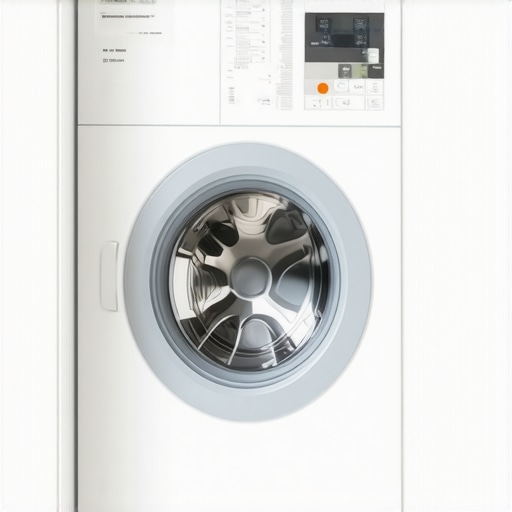
Stop the Vibration Before it Damages Your Walls
In a small nook or a converted closet, your washing machine is literally inches away from your living space. This means every vibration is amplified through the studs of your home. You need to know how to stop your washing machine from jumping during the spin cycle before you hit the start button on your first load. These compact machines are like endurance athletes; they spin at incredibly high RPMs to compensate for their smaller drum size. If the machine isn’t perfectly level, it will sound like a jackhammer is trying to escape your closet.
The Leveling Leg Trick for Tight Spaces
Most people try to level their machine by eye, but that is a recipe for disaster. Use a bubble level on top of the machine, checking both side-to-side and front-to-back. If you cannot reach the back legs because the nook is too narrow, tip the machine forward slightly and adjust the back legs first, then walk it into place and fine-tune the front. When you are choosing washing machines that save water expert advice for 2025, remember that high-efficiency models use very little water, which makes them lighter and more prone to ‘walking’ across the floor during a heavy spin. Use rubber vibration pads under the feet to create friction against the floor.
Maintain Your Narrow Unit to Prevent the Swamp Smell
Because narrow units often live in enclosed, poorly ventilated closets, they are prone to moisture buildup. This leads to a specific, pungent odor. You need to understand why your front load washer smells like a swamp and how to fix it before the scent transfers to your clothes. After every load, leave the door cracked open to allow the drum to dry—even an inch of airflow makes a difference. Additionally, because these pumps are more compact, they can be finicky. Make sure you know how to clean the debris filter on your front load washer effectively. A single stray coin or a clump of pet hair can clog a narrow-width machine much faster than a full-sized industrial unit.
The Great Soap Lie: Why More Suds Mean Dirtier Clothes
Common wisdom suggests that if your clothes are extra sweaty or your machine is half the size of a standard unit, you should compensate with extra detergent. I am here to tell you that this is the fastest way to ruin your new appliance. In a narrow-width, high-efficiency (HE) machine, the water levels are precisely calibrated. When you over-pour, the machine cannot physically rinse the excess suds away. This is exactly why your energy efficient washer leaves your clothes feeling crunchy and grey. I have seen countless neighbors complain that their compact units ‘don\’t clean,’ when the reality is they are essentially marinating their clothes in a concentrated soap film that traps dirt against the fibers instead of flushing it away.
Why Does Your 30-Minute Cycle Suddenly Turn Into Two Hours?
It is the most frustrating experience in the world: the timer says one minute remaining, but the machine keeps spinning for twenty. This isn’t a software glitch; it’s a physics problem. According to a study by the American Cleaning Institute, modern sensors are designed to protect the motor from ‘unbalanced load’ errors. If you have stuffed three heavy towels into a 24-inch drum, the machine will repeatedly try to redistribute the weight to prevent it from shaking itself apart. This is why your washing machine takes much longer than the timer says. The machine is essentially ‘thinking’ and attempting to save its own bearings. If it can’t find a balance, it might even stop entirely, leaving you with a soggy mess. I’ve found that why your washing machine keeps getting an unbalanced load error often comes down to trying to do one single heavy item alone—always add a few smaller shirts to help the drum balance the weight. 
The Smart Technology Trap You Must Avoid
Many people think that ‘smart’ features are just expensive bells and whistles for people who can’t be bothered to turn a dial. However, in a small apartment or a hidden closet, top smart appliances for a seamless home experience in 2025 are actually essential safety tools. I once had a small leak in a hallway closet that I didn’t notice for three days because the door was closed. A smart sensor would have pinged my phone the second water touched the floor. If you are investing in a narrow unit, prioritizing how smart washing machines can simplify laundry day through remote monitoring is a move that protects your floorboards as much as it saves you time. But here is the nuance: don’t ignore the updates. I’ve seen machines act possessed simply because the owner skipped three firmware versions. It sounds ridiculous, but keeping your machine updated is now as important as cleaning the lint trap.
Master the Art of the Half-Load
The ‘oops’ factor I see most often with professional-grade narrow units is the ‘stuffing’ habit. Because the drum is smaller, the temptation to pack it tight is overwhelming. You must resist. High-efficiency machines need air and water to circulate through the clothes to lift stains. You should always be able to fit a closed fist between the top of the laundry pile and the top of the drum. Learning the secret to using less detergent in your high efficiency washer combined with proper load sizing will extend the life of your machine by years. Have you ever fallen into this trap of overstuffing or over-soaping? Let me know in the comments below, because I’ve certainly been there, staring at a mountain of bubbles leaking out of the detergent drawer.
After fighting with the physical fit of your appliance, you have to tackle its mechanical longevity. I personally swear by a set of heavy-duty rubber vibration pads. They are not just for noise; they stop the internal components from rattling loose over time in those high-RPM cycles. If you have ever wondered about the trick to stopping a vibrating washing machine during the spin, it is about creating a friction barrier between the machine and the floor. I also recommend using a simple laser level. Placing it on the top of the machine while it is empty versus while it is filling will show you exactly how much your floor flexes—a common issue in older apartments that leads to premature bearing failure if the machine is not perfectly stabilized.
One thing I learned from a lead technician at a high-end appliance firm is that narrow-width machines are built with much tighter tolerances than their standard-sized counterparts. This means any residue buildup is catastrophic for the drainage pump. If you notice why your high efficiency washer leaves white streaks on dark clothes, it is often a sign that the drum outer casing is caked in undissolved detergent. To combat this, I run a service wash at the highest possible temperature once a month with a specialized descaler. It breaks down the limescale and biofilm that standard cleaners miss in these smaller, high-precision drums.
How Do I Keep My Narrow Machine Running Like New?
Consistency is the secret sauce for long-term reliability. You need to proactively learn how to prevent mold growth in your washing machines door seal by wiping down the rubber gasket after every single use. It takes ten seconds, but it saves you from the inevitable swamp smell that haunts small laundry closets. According to technical bulletins from the International Association of Certified Home Inspectors (InterNACHI), you should also replace your rubber inlet hoses with braided stainless steel ones every five years. In tight laundry nooks, hoses are often bent at sharp angles, and standard rubber can fatigue and burst much faster than you would expect under constant pressure.
I am seeing a massive shift toward modularity in the future of home appliances trends to watch in 2025. We are moving away from disposable, unserviceable machines. Brands are starting to design 24-inch units where the pump and the heater element are accessible from a front-access panel. This means you will not have to drag the whole unit out of a cramped closet just to fix a minor drain clog. This is a total game-changer for urban dwellers where every square inch of floor space is already spoken for.
Don’t Fear the Software Update
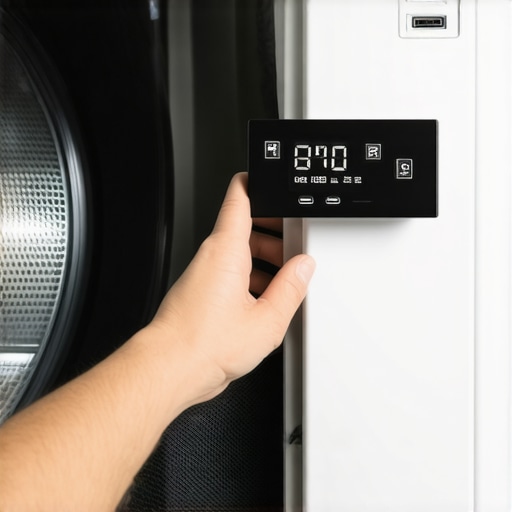
Finally, let us talk about the digital brain of your unit. We have discussed how smart washing machines can simplify laundry day, but they only remain efficient if you keep them updated. I make it a habit to check my appliance app once a month. These updates often include refinements to the load-balancing algorithms, which help the machine manage those tricky unbalanced loads more effectively. It is the easiest maintenance task you will ever perform. I challenge you to go into your washer settings right now and check for a pending firmware update—it is the quickest way to ensure your machine stays as quiet as the day you bought it.
The Hard Lessons My Small Laundry Nook Taught Me
After years of living in tight quarters, I have realized that the physical dimensions of the machine are only the beginning of the journey. One of the most vital steps you can take is learning how to stop your washing machine from walking during the spin cycle before those high-RPM rotations chip your baseboards or damage your walls. I also discovered that if you are optimizing a small home, you shouldn’t stop at the laundry room; finding the best narrow refrigerators for galley kitchens under 30 inches wide follows many of the same spatial measurement principles. Finally, never ignore a slight leak—in a small, enclosed nook, a single teaspoon of water can turn into a floor-warping disaster in just a few hours.
Tools I Keep in My Tiny Laundry Cabinet
I do not just rely on the machine’s internal sensors to tell me something is wrong. I keep a high-quality torpedo level handy to check the balance every few months, as floors in older buildings tend to settle over time. I also made the decision to swap all my standard rubber hoses for braided stainless steel versions to prevent high-pressure bursts in that cramped space. For those looking to fully automate their small home and avoid manual monitoring, I highly recommend checking out the ultimate guide to smart home appliances for a modern living. These tools are not just gadgets; they are the ultimate insurance policy for your urban apartment.
#IMAGE_PLACEHOLDER_E#
Stop Measuring and Start Living
Choosing one of the best narrow-width washing machines is more than just a technical purchase; it is an investment in your daily peace of mind. You no longer have to settle for the inconvenient ‘laundromat shuffle’ or a machine that sticks out awkwardly into your hallway. By focusing on the granular details of depth, vibration control, and smart maintenance, you can turn even the smallest closet into a high-performance cleaning center. You have done the research, you have the exact measurements, and now it is time to take back your floor space once and for all. What is the biggest obstacle you are facing in your current laundry setup? Let me know in the comments below!