
I walked into my laundry room last Tuesday and honestly thought a damp basement had moved in overnight. It was that unmistakable, sour funk of old gym socks that have been sitting in a plastic bag for a week. I looked at my high-efficiency washer, the one I spent a small fortune on because I wanted to be part of the future of home appliances, and I felt betrayed. My clothes were supposed to come out smelling like “spring breeze,” but they were coming out smelling like “stagnant swamp.” It is a common frustration, and if you have ever found yourself sniffing the rubber gasket and recoiling, you are definitely not alone.
My High-Tech Washer Smelled Worse Than a Locker Room
I will be the first to admit I made a massive mistake early on. I grew up with an old-school top-loader where more soap meant more clean. When I got my HE machine, I kept dumping in the detergent, thinking I was doing myself a favor. I was not. I was actually feeding the monster. You see, these machines use so little water that the excess soap does not wash away; it turns into a slimy residue called biofilm. This sludge sticks to the outer drum where you cannot see it, becoming a literal buffet for mold and bacteria. It is one of the primary reasons your energy efficient washer smells like damp. I even tried to hide the smell with more scented softener, which only made the gunk thicker. Have you ever opened your washer door and been hit by a wall of wet dog smell? Drop a comment below if you have ever been tempted to just throw the whole machine away! I remember a specific Saturday when I had guests over and the smell was so bad I had to keep the laundry room door locked. It was embarrassing to admit that my high-end appliance was basically a petri dish. I finally realized that learning how smart washing machines can simplify laundry day isn’t just about the apps; it is about the maintenance.
Is this just a design flaw we have to live with?
Some people think HE washers are just fundamentally broken, but that is not the case. The truth is that why your front load washer always smells like a damp locker room usually comes down to a few habits we need to break. According to research from the American Cleaning Institute, nearly 50% of consumers use more detergent than recommended for HE loads, which is the leading cause of odors. Today, I am going to share the secret to odor-free laundry in a high efficiency machine that I learned through months of trial and error. We are not just going to mask the smell; we are going to eliminate the source, starting with the hidden spots you have been ignoring, like cleaning a front load washer gasket properly. It is time to stop holding your breath and start actually cleaning your clothes again.
Scrub the Gasket Where the Sludge Hides
The rubber seal around the door is the most common hiding spot for the gray, slimy gunk that causes odors. Because washing machines that save water use so little liquid to rinse, hair and lint get trapped in the folds of the gasket. I spent an entire afternoon with a microfiber cloth and a spray bottle, and I was horrified at what I pulled out. You need to pull the folds back and wipe down every inch of that rubber. Learning how to clean a front load washer gasket without using bleach is a game-changer if you want to avoid harsh chemicals while still killing the spores. I found that a simple mixture of white vinegar and water worked wonders, but the real trick is the physical scrubbing. If you leave even a small patch of biofilm, it will grow back faster than you can say “laundry day.”
Empty the Filter You Did Not Know Existed
Most people do not realize their front-loader has a drain pump filter hidden behind a small panel at the bottom. This filter catches coins, buttons, and a massive amount of hair and sludge. I remember the first time I tried to find the drain pump filter; I had not read a guide and just twisted the cap open. A literal gallon of gray, stagnant water rushed out, soaking my rug and smelling like a sewer. Now, I always keep a shallow tray and a stack of old towels ready before I even touch that dial. You must learn how to clean a front load washer filter without flooding the room to avoid my messy mistake. Once the filter is out, scrub it in the sink with a soft brush. This is often the source of that “rotten egg” smell that lingers even after a cleaning cycle. 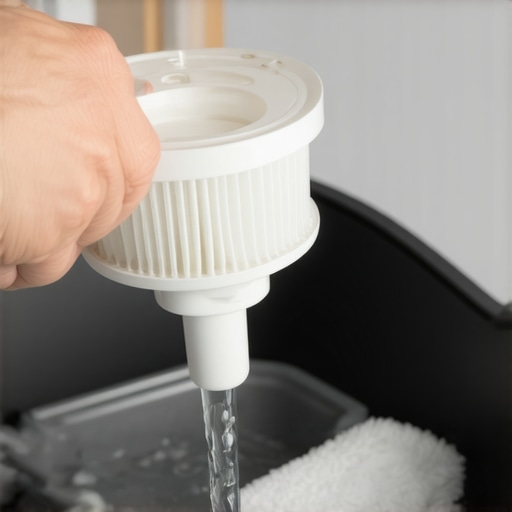
Stop Overdosing Your Laundry with Detergent
The biggest favor you can do for your machine is to stop using so much soap. High-efficiency machines are incredibly sensitive to suds. When you use too much, the machine cannot rinse it all away, leading to why your high efficiency washer is leaving white streaks on dark clothes. That white streak is not just undissolved soap; it is a signal that your machine’s internals are being coated in a layer of grime. Use only two tablespoons of HE detergent at most. It sounds like a tiny amount, but these machines are designed to work with that concentration. Over time, this habit shift is the secret to odor-free laundry in a high efficiency machine because it starves the bacteria of the soap-scum buffet they thrive on.
Let Your Machine Breathe Between Loads
The tight seal that makes front-loaders water-efficient is also their biggest weakness when it comes to mold. If you close the door immediately after a load, you are essentially creating a humidor for bacteria. I make it a strict rule in my house to leave the door ajar at least four inches whenever the machine is not in use. It allows the drum to dry out completely. Additionally, if someone in the house has been sick, you should know the best way to sanitize a washing machine after a stomach bug, which usually involves a high-heat cycle with a dedicated cleaner. Keeping the dispenser drawer open is just as important, as water often pools in the softener compartment and turns sour. A dry machine is a fresh machine.I used to think that the “Heavy” cycle on my dishwasher was the only way to get plates truly clean. Most people treat their appliances like hammers—if it’s not working, just hit it harder or use more heat. But here is the contrarian truth: that two-hour “Eco” setting is actually your machine’s best friend. I’ve found that the truth about eco mode on modern dishwashers is that it relies on a longer soak time rather than high-pressure blasting, which preserves the delicate seals and plastic components inside. Using high heat every single time is one of the 5 mistakes that are shortening the life of your smart refrigerator and other kitchen units because it stresses the heating elements and compressors unnecessarily.
Don’t Trust Your Dishwasher Pods Blindly
There is a common trap regarding those convenient little pods. We’re told they are “all-in-one” solutions, but if you live in a region with even slightly hard water, they often fail. I spent weeks wondering why your dishwasher leaves a chalky film on your coffee mugs despite using premium detergent. The nuance here is that modern machines are so efficient they don’t always generate enough initial heat to dissolve the pod’s outer membrane in the first 10 minutes. This leads to why your dishwasher pod isn’t dissolving completely, resulting in gritty residue on your “clean” dishes. A study by the Association of Home Appliance Manufacturers (AHAM) highlights that modern sensor technology works best when the water temperature entering the machine is at least 120°F (49°C). If your kitchen sink takes two minutes to get hot, your dishwasher is likely starting its cycle with cold water, rendering that expensive pod useless.
Why is my smart appliance acting like it’s broken?
When a high-tech fridge or washer starts glitching, our first instinct is to blame the hardware and wonder why modern refrigerators don’t last as long as your grandma’s. But the nuance often lies in the “brain,” not the “body.” I’ve seen countless neighbors nearly call a repairman because their touchscreen was freezing, only to realize they just needed a software patch. Learning how to update the firmware on your smart kitchen appliances is the new version of changing a lightbulb. Sometimes, why your smart appliance app gives you wrong notifications is simply a matter of a cluttered home Wi-Fi network or an outdated app version, not a mechanical failure. 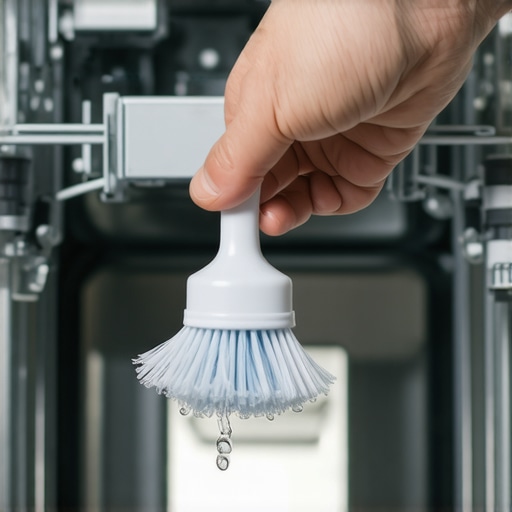
The Hidden Danger of Over-Maintenance
There is such a thing as loving your appliances too much. I once knew a guy who scrubbed his stainless steel with a heavy-duty abrasive every week. He thought he was being thorough, but he was actually stripping the protective coating. This is the ultimate “oops” factor: treating modern, sensitive tech with 1950s cleaning methods. Whether you are troubleshooting why your high efficiency washer takes so long to complete a load or trying to fix a fridge seal, remember that these machines are built for precision, not brute force. Have you ever fallen into this trap of over-cleaning or over-using the “Heavy” settings? Let me know in the comments.I’ve spent more time than I care to admit staring at my phone, wondering why your smart home hub keeps dropping the washer connection. It usually isn’t a hardware failure; it’s signal interference. I’ve started using a dedicated 2.4GHz guest network just for my appliances. This prevents the fridge from fighting with my Netflix stream for bandwidth. If you want to scale up your home tech, this is the ultimate guide to smart home appliances for a modern living foundation you need. Beyond the digital connection, you have to look at the physical strain your home puts on these machines.
Stop Your Hub from Ghosting Your Appliances
If your dishwasher or washer is acting like it has a mind of its own, the first tool I recommend isn’t a screwdriver—it’s a Wi-Fi analyzer app. I use one to check the signal strength behind the heavy metal casing of the refrigerator. Often, how to update the firmware on your smart kitchen appliances becomes impossible if the signal is dipping in and out. I also recommend picking up a few of the best smart plugs for monitoring appliance energy use. These allow you to see if your fridge is pulling an unusual amount of power, which is a massive red flag for a failing compressor.
The One Brush Every Fridge Owner Ignores
Most people wonder why your refrigerator compressor is cycling too often, and the answer is usually hiding underneath the unit. I keep a long, flexible condenser coil brush in my utility closet. According to technical documentation from Master Samurai Tech, a leading appliance repair academy, modern inverter compressors are significantly more sensitive to heat buildup caused by dusty coils compared to old-school reciprocating ones. If those coils are caked in pet hair, the brain of the fridge thinks it’s in a desert and works itself to death. I make it a habit to vacuum these out every six months—it’s the difference between a five-year lifespan and a fifteen-year one. 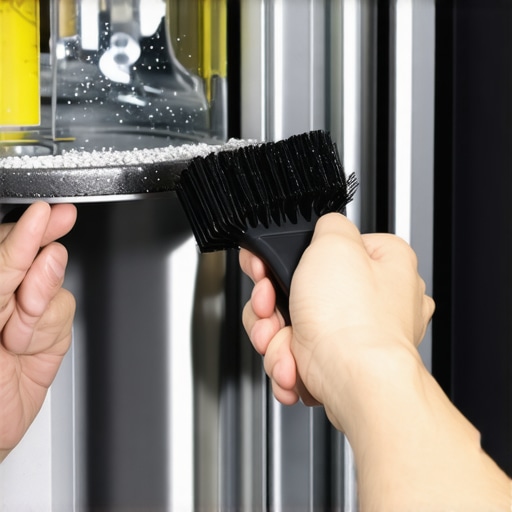
How do I keep my high-tech kitchen running for a decade?
Staying ahead of the curve means you have to be proactive about calibration. I don’t just trust the digital readout on the door; I’ve learned how to calibrate your refrigerator thermometer without calling a pro using a simple glass of ice water. This ensures your leafy greens stay crisp and your milk doesn’t spoil early. Regarding the future of home appliances, I predict we are moving toward ‘self-healing’ tech where the machine will automatically adjust its own cycles based on component wear. Until that day comes, we are the primary line of defense against the mechanical decay that makes people think why modern refrigerators don’t last as long as your grandma’s is an unbreakable rule. It isn’t. It’s just a matter of who is doing the maintenance. I challenge you to pull your fridge out this weekend and check those coils—you might be surprised at what you find lurking back there.
The Hardest Lessons My High-Tech Home Taught Me
After years of wrestling with sensors and software, I have realized that the ‘set it and forget it’ promise of modern tech is a bit of a myth. First, more technology often means more places for mold to hide, especially in deep gaskets. Second, your Wi-Fi router is just as important as your wrench when it comes to a functional kitchen. Third, we have to stop treating these machines like the heavy-duty tanks of the 1980s; they are precision instruments that require a gentle touch. Finally, I have learned that the most reliable washing machine brands for durability are almost always the ones where the owner actually sticks to the manual’s maintenance schedule.
My Go-To Maintenance Kit for a Smooth Home
If you want to keep your sanctuary running without a hitch, you need a few specific tools in your utility closet. I swear by a long-reach condenser coil brush to keep my fridge from overheating and driving up the electric bill. I also recommend using the best smart plugs for monitoring appliance energy use because they act like an early warning system for failing motors by showing spikes in power draw. For your dishwasher, keep a bottle of citric acid or a specialized cleaner on hand to fight hard water before it ruins your spray arms. I personally trust these tools because they have saved me from at least three expensive service calls in the last year alone. #IMAGE_PLACEHOLDER_E#
Taking Back Control of Your Daily Chores
It is easy to feel overwhelmed by blinking lights and cryptic error codes, but remember that you are the boss of your home, not the other way around. By spending just ten minutes a month on simple tasks—like wiping a gasket or checking a Wi-Fi signal—you ensure your investment lasts for the long haul. We are all living in the future of home appliances, and it is a bright one if we just keep things clean and calibrated. You deserve a home that works for you, giving you back the time to enjoy what actually matters. Have you ever discovered a hidden filter or a secret maintenance trick that totally changed how your machine runs? Let me know in the comments below!