
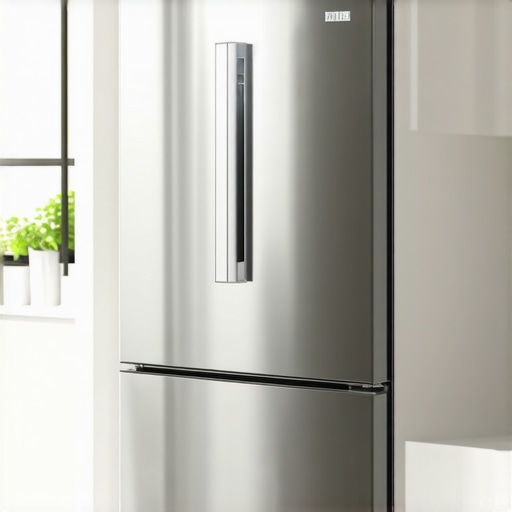
I remember standing in my kitchen at 2 AM, holding a glass of water, and glaring at my brand-new French door refrigerator. It was humming. Again. My old 1998 top-freezer model used to kick on with a satisfying clunk, roar for a few minutes, and then fall into a deep, silent slumber. But this new, high-efficiency marvel? It felt like it hadn’t stopped running since the delivery guys plugged it in. I was convinced I’d bought a lemon or that the coolant was leaking onto my hardwood floors. I felt that specific type of buyer’s remorse where you think you’ve traded reliable simplicity for expensive, broken complexity.
The Humming That Nearly Drove Me Mad
The transition from a decades-old appliance to a modern one is jarring. I actually made the mistake of calling out a repair technician in the first week because I was so sure something was wrong. I paid a $120 service fee just to have him tell me that why your new refrigerator is making a loud humming sound is actually a sign of it doing its job perfectly. It’s a humbling moment when you realize you don’t know how your own kitchen works. If you’re currently staring at your power bill and wondering why that motor is still spinning, you aren’t alone. Today, I want to clear up the confusion so you don’t waste money on service calls like I did. We are going to look at why these machines operate so differently than the ones we grew up with.
Does a fridge that never stops running mean it’s breaking?
It’s the most common fear: if it’s always on, it’s going to burn out, right? We’ve been conditioned to think that “on” equals “wearing out.” However, the difference between inverter and traditional refrigerator compressors is everything here. While old compressors were binary—either 0% or 100% power—modern ones are more like a dimmer switch. According to data from Energy Star, variable-speed compressors can run at speeds as low as 15% of their maximum capacity, maintaining a much steadier temperature than old models that swung wildly between cold and warm. This shift is a huge part of choosing the right refrigerator tips from industry experts who prioritize food preservation. Have you found yourself obsessively checking the door seals because your fridge just won’t shut up? Tell me I’m not the only one who spent a Friday night listening to a compressor!
We also have to face the hard truth about longevity. Many people ask why modern refrigerators dont last as long as your grandmas, and while the constant running isn’t the culprit, the thin-gauge materials and complex electronics certainly play a role. Let’s dive into the physics of why staying “on” is actually better for your groceries and your wallet than the old stop-and-start cycle.
Think of your compressor as a dimmer switch rather than a light switch
The biggest hurdle in accepting a modern refrigerator is rethinking how power is consumed. In the old days, your fridge operated like a simple light switch: it was either 100% on or 100% off. When the internal temperature rose a few degrees, the compressor kicked in with a roar to drive it back down. Modern units utilize inverter technology, which functions more like a dimmer switch. They stay on at a very low, whisper-quiet level to maintain a rock-steady environment. I once tried to ‘fix’ this by unplugging my unit for an hour every night, thinking I was saving the motor. All I actually did was force the fridge to work ten times harder to cool back down once I plugged it back in, nearly blowing a fuse in the process. This is one of the 5 mistakes that are shortening the life of your smart refrigerator because it forces cycles the machine wasn’t designed for.
Stop the top-shelf freeze by managing airflow
If your fridge is running constantly and you notice your yogurt has turned into a brick of ice, you likely have an airflow problem rather than a mechanical failure. Modern refrigerators rely on precise air paths to move cold air from the evaporator. If you jam a giant Costco-sized milk carton right against the back vent, the sensors get confused. They think the rest of the fridge is warm because the air isn’t circulating, so the compressor stays on indefinitely. To fix this, you need to learn how to stop your refrigerator from freezing the milk on the top shelf by leaving at least two inches of breathing room around all vents. I remember a particularly messy Saturday morning spent chipping frozen orange juice out of a glass pitcher because I’d blocked the return air duct with a head of lettuce. It’s a simple fix that stops the ‘never-ending’ hum almost instantly.

Clean the parts you usually forget exist
A refrigerator that runs 24/7 is often just a refrigerator that is gasping for air. If the condenser coils—those black snakes of metal usually hidden behind a plate at the bottom—are coated in pet hair and dust, they can’t release heat. The fridge has to run longer to achieve the same cooling effect. While you are down there, you should also look for the secret drain filter at the bottom of your fridge you never knew existed. A clog here can cause moisture buildup that forces the defrost heater to work overtime, adding even more run-time to your appliance’s daily schedule. I spent years ignoring my coils until I realized my fridge was running for 22 hours a day just to keep my butter soft.
Calibrate your sensors before calling a pro
Sometimes the hardware is fine, but the ‘brain’ is wrong. If your fridge thinks it is 45 degrees when it is actually 35, it will never stop running. You can easily learn how to calibrate your refrigerator thermometer without calling a pro by using a simple glass of water and a digital probe. Once you align the internal settings with reality, the machine can finally enter its low-power idle state. Matching this with the best refrigerator temperatures for keeping leafy greens crisp ensures that your motor isn’t just running for the sake of running, but is actually providing the precise climate your food needs to stay fresh for weeks rather than days.
It drives people crazy that a dishwasher cycle now takes three hours instead of the 45 minutes we remember from the nineties. The common myth is that manufacturers are making machines ‘weaker’ or that it is a design flaw. In reality, it is a brilliant piece of engineering called the Time-Temperature Trade-off. To meet modern energy standards, machines use significantly less heat and water, which means they need more time for the enzymes in your detergent to actually break down food particles. If you are constantly using the ‘Express’ cycle because you think it is better for the machine, you are actually making the internal heating element work significantly harder and likely leaving behind a layer of grease. The truth about eco mode on modern dishwashers is that time is the secret ingredient for efficiency, not the enemy.
Then there is the ‘More Soap, More Clean’ trap. I see this with almost every person who complains about a stinky machine. We have been conditioned for decades to fill that plastic cap to the brim, but in a high-efficiency environment, that is essentially appliance suicide. Excess suds cannot be rinsed away with the tiny amount of water these machines use. Instead, the suds turn into a ‘biofilm’—a colony of bacteria living inside your drum. Learning why your washer doesnt need a whole cup of detergent to get clothes clean is the single best way to prevent the secret to odor free laundry in a high efficiency machine. According to data from the Association of Home Appliance Manufacturers (AHAM), using too much detergent is the leading cause of mechanical ‘phantom’ errors and premature pump failure in modern units.
Why does the Eco setting feel like it is doing less work?
It feels counterintuitive, but the most advanced washing machines that save water are actually performing more mechanical work behind the scenes. They use complex sensors to weigh the load and calculate the exact saturation point. If you intervene by ‘pre-rinsing’ dishes or adding extra water to a washer with a bucket, you are confusing the onboard AI. This leads to why your high efficiency washer takes so long to complete a load because the machine is constantly trying to re-calibrate and balance itself. Have you ever fallen into this trap of trying to ‘help’ your smart appliances only to have them revolt? Let me know in the comments.
I’ve learned the hard way that a ‘smart’ appliance is only as good as the physical maintenance you actually provide. My favorite tool in my entire kitchen isn’t the touchscreen on my fridge; it’s a 30-inch flexible condenser coil brush I bought for twelve bucks. I use it to snake under the kickplate of my French door unit once every six months to pull out the inevitable layers of pet hair. If you don’t do this, you are essentially forcing that expensive inverter compressor to work in a permanent sauna. While many manufacturers market these units as ‘low maintenance,’ the technical service bulletins from the Association of Home Appliance Manufacturers (AHAM) frequently highlight that restricted airflow is the primary cause of cooling degradation and early motor failure. I also swear by a simple shop-vac with a micro-tool kit—the kind usually reserved for detailing cars—to suck the lint out of the tiny crevices in the back of my washing machine.
Beyond the physical tools, I’ve had to change how I look at my home’s ‘digital’ upkeep. We are living in an era where knowing how to update the firmware on your smart kitchen appliances is just as vital as knowing how to use a wrench. These software patches often contain updated cooling algorithms or drain cycle adjustments that prevent the hardware from wearing out prematurely. I once had a dishwasher that wouldn’t dry anything until a 40MB update changed the way the vent fan operated. It’s a brave new world, but it means we have to stay vigilant about our ultimate guide to smart home appliances for a modern living strategy to ensure we aren’t left with a very expensive, very quiet paperweight in five years.
How do I maintain these high-tech beasts over time?
Consistency beats intensity every single time. Instead of doing a massive ‘deep clean’ once a year when things start to smell, I spend exactly ten minutes on the first of every month checking the vulnerable points. I use a damp microfiber cloth with a tiny bit of white vinegar to wipe down all the rubber gaskets. If you ignore the seals, you’ll eventually need to search for how to prevent mold growth in your dishwasher seal because once that black gunk takes hold, it’s a nightmare to remove. I also use the best smart plugs for monitoring appliance energy use to track if my older machines are starting to draw more power than usual, which is a classic early warning sign of a failing bearing or a clogged pump.
Looking ahead, I predict we are less than three years away from AI-driven predictive maintenance becoming the standard. We are already seeing the foundation for this in future of home appliances trends to watch in 2025, where machines will likely order their own replacement filters or contact a technician before a total breakdown occurs. Until that automation is perfect, we have to be the brains of the operation. My challenge for you today? Go find the secret drain filter at the bottom of your fridge you never knew existed and give it a thorough rinse. You might be shocked at what has been living under your groceries!
I remember standing in my kitchen at 2 AM, holding a glass of water, and glaring at my brand-new French door refrigerator. It was humming. Again. My old 1998 top-freezer model used to kick on with a satisfying clunk, roar for a few minutes, and then fall into a deep, silent slumber. But this new, high-efficiency marvel? It felt like it hadn’t stopped running since the delivery guys plugged it in. I was convinced I’d bought a lemon or that the coolant was leaking onto my hardwood floors. I felt that specific type of buyer’s remorse where you think you’ve traded reliable simplicity for expensive, broken complexity.
The Humming That Nearly Drove Me Mad
The transition from a decades-old appliance to a modern one is jarring. I actually made the mistake of calling out a repair technician in the first week because I was so sure something was wrong. I paid a $120 service fee just to have him tell me that why your new refrigerator is making a loud humming sound is actually a sign of it doing its job perfectly. It’s a humbling moment when you realize you don’t know how your own kitchen works. If you’re currently staring at your power bill and wondering why that motor is still spinning, you aren’t alone. Today, I want to clear up the confusion so you don’t waste money on service calls like I did. We are going to look at why these machines operate so differently than the ones we grew up with.
Does a fridge that never stops running mean it’s breaking?
It’s the most common fear: if it’s always on, it’s going to burn out, right? We’ve been conditioned to think that “on” equals “wearing out.” However, the difference between inverter and traditional refrigerator compressors is everything here. While old compressors were binary—either 0% or 100% power—modern ones are more like a dimmer switch. According to data from Energy Star, variable-speed compressors can run at speeds as low as 15% of their maximum capacity, maintaining a much steadier temperature than old models that swung wildly between cold and warm. This shift is a huge part of choosing the right refrigerator tips from industry experts who prioritize food preservation. Have you found yourself obsessively checking the door seals because your fridge just won’t shut up? Tell me I’m not the only one who spent a Friday night listening to a compressor!
We also have to face the hard truth about longevity. Many people ask why modern refrigerators dont last as long as your grandmas, and while the constant running isn’t the culprit, the thin-gauge materials and complex electronics certainly play a role. Let’s dive into the physics of why staying “on” is actually better for your groceries and your wallet than the old stop-and-start cycle.
Think of your compressor as a dimmer switch rather than a light switch
The biggest hurdle in accepting a modern refrigerator is rethinking how power is consumed. In the old days, your fridge operated like a simple light switch: it was either 100% on or 100% off. When the internal temperature rose a few degrees, the compressor kicked in with a roar to drive it back down. Modern units utilize inverter technology, which functions more like a dimmer switch. They stay on at a very low, whisper-quiet level to maintain a rock-steady environment. I once tried to ‘fix’ this by unplugging my unit for an hour every night, thinking I was saving the motor. All I actually did was force the fridge to work ten times harder to cool back down once I plugged it back in, nearly blowing a fuse in the process. This is one of the 5 mistakes that are shortening the life of your smart refrigerator because it forces cycles the machine wasn’t designed for.
Stop the top-shelf freeze by managing airflow
If your fridge is running constantly and you notice your yogurt has turned into a brick of ice, you likely have an airflow problem rather than a mechanical failure. Modern refrigerators rely on precise air paths to move cold air from the evaporator. If you jam a giant Costco-sized milk carton right against the back vent, the sensors get confused. They think the rest of the fridge is warm because the air isn’t circulating, so the compressor stays on indefinitely. To fix this, you need to learn how to stop your refrigerator from freezing the milk on the top shelf by leaving at least two inches of breathing room around all vents. I remember a particularly messy Saturday morning spent chipping frozen orange juice out of a glass pitcher because I’d blocked the return air duct with a head of lettuce. It’s a simple fix that stops the ‘never-ending’ hum almost instantly.
Clean the parts you usually forget exist
A refrigerator that runs 24/7 is often just a refrigerator that is gasping for air. If the condenser coils—those black snakes of metal usually hidden behind a plate at the bottom—are coated in pet hair and dust, they can’t release heat. The fridge has to run longer to achieve the same cooling effect. While you are down there, you should also look for the secret drain filter at the bottom of your fridge you never knew existed. A clog here can cause moisture buildup that forces the defrost heater to work overtime, adding even more run-time to your appliance’s daily schedule. I spent years ignoring my coils until I realized my fridge was running for 22 hours a day just to keep my butter soft.
Calibrate your sensors before calling a pro
Sometimes the hardware is fine, but the ‘brain’ is wrong. If your fridge thinks it is 45 degrees when it is actually 35, it will never stop running. You can easily learn how to calibrate your refrigerator thermometer without calling a pro by using a simple glass of water and a digital probe. Once you align the internal settings with reality, the machine can finally enter its low-power idle state. Matching this with the best refrigerator temperatures for keeping leafy greens crisp ensures that your motor isn’t just running for the sake of running, but is actually providing the precise climate your food needs to stay fresh for weeks rather than days.
It drives people crazy that a dishwasher cycle now takes three hours instead of the 45 minutes we remember from the nineties. The common myth is that manufacturers are making machines ‘weaker’ or that it is a design flaw. In reality, it is a brilliant piece of engineering called the Time-Temperature Trade-off. To meet modern energy standards, machines use significantly less heat and water, which means they need more time for the enzymes in your detergent to actually break down food particles. If you are constantly using the ‘Express’ cycle because you think it is better for the machine, you are actually making the internal heating element work significantly harder and likely leaving behind a layer of grease. The truth about eco mode on modern dishwashers is that time is the secret ingredient for efficiency, not the enemy.
Then there is the ‘More Soap, More Clean’ trap. I see this with almost every person who complains about a stinky machine. We have been conditioned for decades to fill that plastic cap to the brim, but in a high-efficiency environment, that is essentially appliance suicide. Excess suds cannot be rinsed away with the tiny amount of water these machines use. Instead, the suds turn into a ‘biofilm’—a colony of bacteria living inside your drum. Learning why your washer doesnt need a whole cup of detergent to get clothes clean is the single best way to prevent the secret to odor free laundry in a high efficiency machine. According to data from the Association of Home Appliance Manufacturers (AHAM), using too much detergent is the leading cause of mechanical ‘phantom’ errors and premature pump failure in modern units.
Why does the Eco setting feel like it is doing less work?
It feels counterintuitive, but the most advanced washing machines that save water are actually performing more mechanical work behind the scenes. They use complex sensors to weigh the load and calculate the exact saturation point. If you intervene by ‘pre-rinsing’ dishes or adding extra water to a washer with a bucket, you are confusing the onboard AI. This leads to why your high efficiency washer takes so long to complete a load because the machine is constantly trying to re-calibrate and balance itself. Have you ever fallen into this trap of trying to ‘help’ your smart appliances only to have them revolt? Let me know in the comments.
I’ve learned the hard way that a ‘smart’ appliance is only as good as the physical maintenance you actually provide. My favorite tool in my entire kitchen isn’t the touchscreen on my fridge; it’s a 30-inch flexible condenser coil brush I bought for twelve bucks. I use it to snake under the kickplate of my French door unit once every six months to pull out the inevitable layers of pet hair. If you don’t do this, you are essentially forcing that expensive inverter compressor to work in a permanent sauna. While many manufacturers market these units as ‘low maintenance,’ the technical service bulletins from the Association of Home Appliance Manufacturers (AHAM) frequently highlight that restricted airflow is the primary cause of cooling degradation and early motor failure. I also swear by a simple shop-vac with a micro-tool kit—the kind usually reserved for detailing cars—to suck the lint out of the tiny crevices in the back of my washing machine.
Beyond the physical tools, I’ve had to change how I look at my home’s ‘digital’ upkeep. We are living in an era where knowing how to update the firmware on your smart kitchen appliances is just as vital as knowing how to use a wrench. These software patches often contain updated cooling algorithms or drain cycle adjustments that prevent the hardware from wearing out prematurely. I once had a dishwasher that wouldn’t dry anything until a 40MB update changed the way the vent fan operated. It’s a brave new world, but it means we have to stay vigilant about our ultimate guide to smart home appliances for a modern living strategy to ensure we aren’t left with a very expensive, very quiet paperweight in five years.
How do I maintain these high-tech beasts over time?
Consistency beats intensity every single time. Instead of doing a massive ‘deep clean’ once a year when things start to smell, I spend exactly ten minutes on the first of every month checking the vulnerable points. I use a damp microfiber cloth with a tiny bit of white vinegar to wipe down all the rubber gaskets. If you ignore the seals, you’ll eventually need to search for how to prevent mold growth in your dishwasher seal because once that black gunk takes hold, it’s a nightmare to remove. I also use the best smart plugs for monitoring appliance energy use to track if my older machines are starting to draw more power than usual, which is a classic early warning sign of a failing bearing or a clogged pump.
Looking ahead, I predict we are less than three years away from AI-driven predictive maintenance becoming the standard. We are already seeing the foundation for this in future of home appliances trends to watch in 2025, where machines will likely order their own replacement filters or contact a technician before a total breakdown occurs. Until that automation is perfect, we have to be the brains of the operation. My challenge for you today? Go find the secret drain filter at the bottom of your fridge you never knew existed and give it a thorough rinse. You might be shocked at what has been living under your groceries!
What I Wish I Knew Before My Fridge Started Talking Back
The biggest shift for me wasn’t the tech itself, but the philosophy behind it. I learned that silence isn’t always golden—sometimes a constant, low hum is the sound of efficiency. I also realized that ‘auto’ settings are usually smarter than my manual adjustments; modern smart appliances are built to out-think our old habits. Lastly, I discovered that time is a tool. A longer cycle in your dishwasher or washer isn’t a sign of weakness; it’s the machine using physics to save you money on water and electricity. Properly managing these habits helps prevent the moment the reason your high efficiency washer smells like old gym socks becomes a daily reality in your laundry room.
The Simple Toolkit That Kept My Sanity Intact
If you want to keep your home running smoothly, you don’t need a degree in engineering, but you do need a few essentials. First, a long-reach coil brush is non-negotiable for keeping your fridge’s lungs clear and preventing compressor burnout. Second, I rely on smart technology to monitor older units, checking in on their health through the latest power monitoring tools. Third, stay informed on the smart appliances revolution how to choose the best dishwasher so you know which features are actually helping you and which are just bells and whistles that might fail. Finally, always check for that why your dishwasher leaves a chalky film on your coffee mugs because it is usually a chemistry issue, not a broken machine.
Take the Reins of Your High-Tech Household
Embracing the change doesn’t mean you’re at the mercy of a computer chip. It means you’re becoming a more informed manager of your home’s ecosystem. Whether you are figuring out how smart washing machines can simplify laundry day or just trying to keep your milk cold, your attention to maintenance is what makes the difference. If you’re still building your dream kitchen, look into the top smart appliances for a seamless home experience in 2025 to see how far these features have come. Don’t be afraid to dive into the settings and learn how these machines work—they are designed to make your life easier, not more complicated. Have you ever spent money on a repair only to find out it was a simple filter you could have cleaned yourself? Let me know your stories in the comments!