
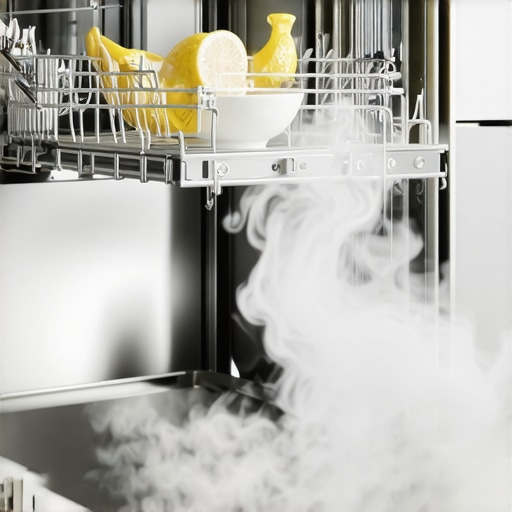
I walked into my kitchen after a glorious fourteen-day escape, dropped my bags, and went to grab a glass of water. I opened the dishwasher—which I thought I’d emptied before leaving—and nearly passed out. A damp, sour cloud hit me square in the face. It wasn’t just a smell; it was a physical presence. Even some of the innovative dishwashers with AI technology can’t save you if you leave a little standing water trapped in the dark for a fortnight. I realized right then that my kitchen’s hardest worker had spent the last two weeks becoming a literal petri dish. It was a humbling moment for someone who prides themselves on a clean home. Today, I’m going to walk you through exactly how I banished that funk and why you need a specific game plan the moment you get back from your travels.
That Smell When You Open the Door After Two Weeks Away
The reality is that modern machines are built to be airtight to save energy, but that seal is a double-edged sword. When you close that door and head to the airport, any lingering moisture becomes a breeding ground for microbes. According to a study published in the journal Medical Mycology, opportunistic fungi like Exophiala dermatitidis thrive in the high-heat, moist environments of household dishwashers. If you’ve ever noticed why your dishwasher bottom is full of standing water, you know that even a tiny puddle can turn into a swampy mess in no time. I learned this the hard way when I ignored the scent for a few days, only to find black spots creeping along my racks. Have you ever come home to a kitchen that smelled more like a locker room than a home? Let me know in the comments, because I felt like I was the only one!
Wait, Is Sanitizing Really Necessary Every Time?
I know what you’re thinking. Can’t I just run a normal cycle with some extra soap and call it a day? I used to think so too. However, soap is designed to break down food grease, not necessarily to kill the deep-seated mold spores hiding in the crevices. If you don’t take the time to actually sanitize the unit, you’re just washing your dinner plates in sewage-scented water. To truly reset your appliance, you have to go beyond the surface.
Clean the Filter First or You’re Just Recirculating Sludge
The filter is the stomach of your machine. If you leave it full of gunk while you’re on vacation, it’s essentially a buffet for bacteria. When I first did this after my two-week trip, I pulled out the mesh and found a piece of salmon that had somehow survived the previous wash. It looked like a gray alien lifeform. To prevent this, you need to know how to clean the hidden filter in your energy efficient dishwasher properly. Twist it out, rinse it under hot water, and use an old toothbrush to scrub the fine mesh. If you skip this, no amount of soap will fix the smell because the source of the rot is still sitting in the basement of your machine.
A Vinegar Steam Bath to Strip Away the Film
Once the physical debris is gone, you need to tackle the microscopic film. I like to think of white vinegar as a chemical crowbar; it pries the mineral deposits and old soap scum off the walls. Place a dishwasher-safe bowl filled with two cups of white vinegar on the top rack. Don’t add detergent yet. Run a hot cycle. This ‘steam bath’ breaks down the hard water deposits that cause why your dishwasher leaves a chalky film on your coffee mugs. Halfway through the cycle, I usually pause it for twenty minutes to let the vinegar vapors really soak into every corner. This ensures that the acidic steam reaches the spray arms and the top of the tub.
Scrub the Seal Before Mold Moves In
While the cycle is running or right after, pay attention to the rubber gasket. This is the ‘no-man’s-land’ where moisture hides even when the rest of the tub is dry. It’s the most common spot to find black mold. Use a mixture of warm water and a splash of vinegar to wipe down the entire perimeter. I’ve found that how to prevent mold growth in your dishwasher seal is mostly about mechanical agitation—actually rubbing the gunk away. I once used a cotton swab to get into the folds and was disgusted by the black sludge that came out. This process is very similar to maintenance for other laundry appliances, as the reason your high efficiency washer smells like old gym socks is often identical: moisture trapped in rubber seals.
Choose the Right Cycle to Kill the Bacteria
Finally, when you run your next load, don’t just hit ‘Normal.’ If your machine has a ‘Sanitize’ or ‘High-Temp Wash’ setting, now is the time to use it. These modes aren’t just for show; they raise the internal temperature to at least 150°F, which is the magic number for killing most common household pathogens. Using the best energy efficient settings for your new dishwasher is great for daily use, but after a long absence, you need the brute force of heat. Think of it as a fever for your machine—it’s the only way to ensure that the microbial party that started while you were at the beach is officially over. By the time that high-heat cycle finishes, your kitchen should smell like… well, nothing. And nothing is exactly what we’re aiming for.While we’ve covered the basics of deep cleaning, I want to pivot to the biggest mistake I see: the ‘More is Better’ fallacy. Most people assume that if their dishwasher or washing machine smells, they just need to double down on the detergent. In reality, modern high-efficiency sensors are calibrated for precise measurements. If you overdo it, the machine can’t rinse the excess away, leaving a sticky residue that becomes a magnet for the very bacteria we just tried to kill. This is exactly why your washer doesn’t need a whole cup of detergent to get clothes clean. In fact, that white film you might see on your laundry isn’t just lint; it’s often unrinsed soap. This ‘surfactant overkill,’ as experts at the American Cleaning Institute note, creates a biofilm that shields mold from heat and vinegar.
The Eco Mode Myth That’s Ruining Your Routine
There’s a persistent belief that ‘Eco Mode’ is just a gimmick that leaves dishes half-dirty. I used to be a skeptic, but here’s the nuance: Eco mode uses less water but extends the contact time. If you’re dealing with baked-on grease, it might struggle, but for daily loads, the truth about eco mode on modern dishwashers is that it’s actually gentler on your machine’s internal seals. The real trap is using pods in short cycles; they often don’t have enough time to dissolve, which is why your dishwasher pod isn’t dissolving completely and leaving a gritty mess in the bottom.
Why does my high-efficiency washer still smell after a self-clean cycle?
This is the ultimate frustration for many homeowners. If you’ve run the clean cycle and the ‘locker room’ scent persists, you likely have a clog in the outer tub or a drainage issue that internal sprayers can’t reach. This often happens because why your high-efficiency washer is leaving white streaks on dark clothes is usually a sign of ‘scrud’—a combination of fabric softener and detergent buildup. Have you ever fallen into this trap of adding ‘just a little more’ soap for luck? Let me know in the comments! It took me years to realize that why modern refrigerators don’t last as long as your grandma’s often comes down to how we overload their sensors and motors with these seemingly small user errors. Choosing the best detergent for hard water that won’t kill your dishwasher is a much better strategy than simply increasing the volume. Stop the cycle of over-cleaning and start focusing on the chemistry of your machines.
Once you’ve mastered the chemistry of detergents, the next hurdle is the physical maintenance that most people ignore until something breaks. I’ve realized that a simple rag isn’t enough when you’re dealing with the narrow gaps of washing machines that save water expert advice for 2025. I personally keep a 28-inch flexible dryer lint brush in my utility drawer. Why? Because it’s the only tool that can reach the cooling coils at the bottom of the fridge or the deep recesses of a washer’s pump housing. If you let dust settle on your refrigerator’s condenser, it’s one of the primary 5 mistakes that are shortening the life of your smart refrigerator. A technical report by the Association of Home Appliance Manufacturers (AHAM) notes that even a thin layer of dust on these coils can increase energy consumption by 20% and significantly increase the risk of compressor failure. This often explains why your new refrigerator is making a loud humming sound; the motor is literally gasping for air.
The Tools That Actually Saved My Sanity
Beyond the brush, I recommend keeping a pack of citric acid powder. It’s more effective than vinegar for stripping mineral scale from internal components without the harsh smell. I use it once a month to keep the internal sensors clear. This is vital because the future of home appliances trends to watch in 2025 points toward even more sensitive AI sensors that determine water levels and soil detection. If those sensors are covered in lime scale, the AI gets ‘blinded’ and starts running cycles that are either too short or too aggressive. I also keep a small LED borescope—the kind that plugs into your phone—to check for clogs in the drain line without taking the whole machine apart. It sounds like overkill, but it’s saved me at least three $150 plumber visits this year alone.
How can I keep my smart appliances running like the day I bought them?
Maintenance in the digital age isn’t just about scrubbing; it’s about the software too. I make it a habit to check for updates on my phone app once a month. Learning how to update the firmware on your smart kitchen appliances is just as important as cleaning the filter. Manufacturers often release patches that optimize motor torque or heat cycles to prevent premature wear. When you combine updated software with physical cleanliness, you’re setting yourself up for a top smart appliances for a seamless home experience in 2025 rather than a headache of error codes. My best advice? Set a calendar reminder for the first Saturday of every month. Clean the filter, brush the coils, and check the app. This simple 15-minute routine is the difference between a machine that lasts seven years and one that lasts fifteen. I challenge you to go check your refrigerator coils right now—if you see gray fuzz, get that brush out today!
The Maintenance Secrets I Only Learned the Hard Way
After years of trial and error with high-end machines, I realized that most of our problems are self-inflicted. First, I had to accept that modern efficiency comes with a trade-off: tighter seals and lower water usage mean that how we clean has to change. I finally understood why your front loader collects more gunk than your old top loader—it is simply because those airtight gaskets don’t allow for evaporation between cycles. I also learned that sanitization is about temperature, not just volume; for example, knowing the best way to sanitize a washing machine after a stomach bug or a long vacation requires a specific high-heat cycle to break down pathogens. Lastly, I discovered that smart features are only as good as the physical state of the machine. If you want to enjoy refrigerators in 2025 top features that transform your kitchen, you have to keep the basic mechanical components, like the condenser coils and drain lines, completely clear of debris.
A Peek Inside My Appliance Survival Kit
To keep my kitchen running smoothly, I’ve moved away from generic grocery store cleaners and toward a more specialized toolkit. I swear by Citric Acid powder; it’s a natural descaler that works wonders on heating elements without leaving the lingering chemical smell of white vinegar. I also rely heavily on a long-reach flexible coil brush. It is the only tool that can reach the dust bunnies hiding under the fridge that cause the motor to overheat. Finally, I trust the manufacturer-specific apps more than I used to. In the smart appliances revolution how to choose the best dishwasher involves looking at how well the software supports the hardware. These apps often provide diagnostic codes that tell you exactly which filter is clogged before you ever have to pick up a wrench.
#IMAGE_PLACEHOLDER_E#
Claim Back Your Kitchen One Cycle at a Time
Coming home to a smelly appliance can feel like a personal failure, but it’s really just a sign that your machine needs a little focused attention. By cleaning the filters, wiping the seals, and choosing the right high-heat cycles, you can reset your home environment in just a few hours. Your home appliances are there to serve you, but they require a partnership to stay at peak performance. Don’t let a two-week trip turn into a permanent odor; take these steps today and get back to enjoying your clean, efficient home. Have you ever discovered a ‘science project’ growing in your dishwasher after a vacation? Let me know in the comments below!