
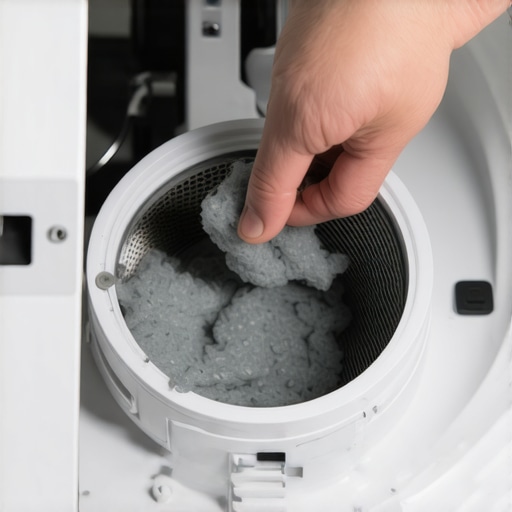
I was standing in my laundry room last Tuesday, staring at a pile of supposedly clean towels that smelled exactly like a damp basement. I felt defeated. I had spent a small fortune on fancy scent beads and extra-strength detergent, but the results were always the same: a faint, funky odor that just wouldn’t quit. I honestly thought my machine was on its last legs. I even started looking at washing machines that save water, thinking a newer model would solve my woes. Then, I saw it. A tiny, unassuming plastic square near the base of the machine. I pried it open, and what I found inside—a swampy, lint-clogged mess—changed my laundry game forever.
My Clothes Smelled Like a Swamp Until I Found the Secret Door
We’ve all been there, dumping in more soap because we think more bubbles equal more clean. One of the biggest mistakes I made early on was using way too much detergent, which only added to the buildup. Modern high-efficiency machines are incredible, but they have a hidden secret: a pump filter that catches all the coins, hair, and stray fibers your clothes shed. If you don’t clean it, that debris sits in a pool of stagnant water. According to maintenance data from Consumer Reports, failing to clear these filters is one of the leading causes of premature pump failure and that dreaded mildew scent. Today, I’m going to show you exactly how to find this hidden trap and clean it without turning your laundry room into a swimming pool. Have you ever noticed your front-load washer smells like a damp locker room no matter what you do?
Is cleaning a hidden filter actually worth the hassle?
You might be thinking that your machine is fine because it hasn’t exploded yet. I get it. It sounds like one more chore on an already long list. But here’s the reality: that filter is the only thing standing between your clean clothes and a backup of gray water. When it gets blocked, your machine has to work twice as hard to drain. This is often why your clothes are still sopping wet after the spin cycle ends. Taking ten minutes once a month to clear it out will save you hundreds in repair bills and keep your clothes smelling like actual sunshine instead of a marsh.
Where Your Machine Is Hiding the Gunk
Unlike your grandma’s old top-loader that had a visible lint cage on the agitator, modern machines like to play hide-and-seek. Most front-loaders have a small access panel on the bottom front. If you have a top-loader, it might be tucked along the rim of the drum or even inside the agitator column. I spent years ignoring mine because I simply didn’t know it existed. I even wrote about how front loaders collect more gunk than the old-school machines, and this filter is the primary culprit. Before you start pulling panels off, grab a shallow tray and some old towels—you’re going to need them to catch the residual water that is definitely waiting for you inside.
How to Drain the Gunk Without Flooding Your Floor
Last time I tackled this, I thought I could wing it with a single hand towel. It was a disaster. Within thirty seconds, a liter of gray, tepid water was racing toward my hallway. I spent the next hour mopping instead of five minutes cleaning. To avoid my mistake, you need to build a defense perimeter. Grab a shallow baking tray—the kind with a lip—and at least three old towels. Lay the towels flat directly under the access panel. Even if you own one of those washing machines that save water, there is always a reservoir of trapped liquid waiting for its moment to escape.
First You Have to Catch the Water
Open the small access door and look for a tiny rubber hose tucked next to the large circular filter cap. This is the emergency drain hose, and it is your best friend. Pull it out as far as it will go, place the end over your tray, and pop the plug. This slow-drain method is the only way to clean a front load washer filter without flooding the room. Once the flow stops, replace the plug and tuck the hose back in. 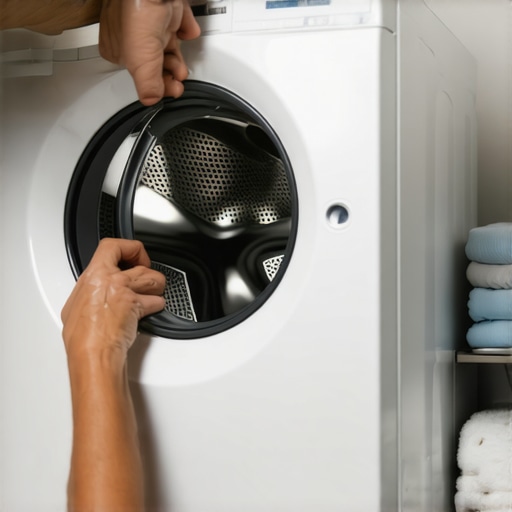
The Proper Way to Pull the Plug
Now you’re ready for the main event. Grip the large circular filter cap and slowly twist it counter-clockwise. Do not just yank it out. As the seal breaks, more water will likely trickle out. Wait for it to stop before fully removing the assembly. When you finally pull the filter out, don’t be surprised if it looks like something out of a horror movie. This is usually the reason your high efficiency washer smells like old gym socks. I once pulled out a tangled mess of hair, three quarters, and a plastic Lego sword that had been acting as a dam for months. The build-up was so thick it was clearly why my clothes were still sopping wet after the spin cycle—the pump just couldn’t push the water past the obstruction.
Scrub Away the Slime
Take the filter to the kitchen sink. You don’t need fancy cleaners; warm water and an old toothbrush will do the trick. Scrub the plastic mesh until you can see through it again. If the gunk is particularly stubborn, you can treat it similarly to cleaning a front load washer gasket without using bleach by using a vinegar soak. While the filter is out, reach your finger into the hole on the machine. Feel around the impeller—the little fan blade at the back—to ensure no stray coins or bobby pins are jammed in there. This process isn’t much different from how to clean the hidden filter in your energy efficient dishwasher. In both cases, physical debris is the enemy of efficiency. If you ignore it, you’ll eventually find why your dishwasher bottom is full of standing water or why your washer refuses to finish a cycle. Finally, wipe the housing clean with a damp cloth and screw the filter back in tight. You’ll know it’s right when it clicks or hits a firm stopping point. If it’s loose, you’ll have a leak on your next load, so double-check that seal. This simple ten-minute task is the most effective way to how to clear a blocked pump on your front load washing machine before it requires a professional repairman.While clearing that filter is a great first step, it’s just the tip of the iceberg when it comes to keeping modern machines running. We’ve all heard the complaint: "My grandma’s fridge lasted 30 years, why did mine die in seven?" It’s a valid frustration, and there is a real reason why modern refrigerators dont last as long as your grandmas. Older machines were essentially "dumb" tanks—they used massive amounts of energy and had very few moving parts or sensors. Today’s appliances are more like computers that happen to wash dishes or chill milk. This added complexity means that the simple maintenance we used to ignore is now mandatory for the survival of the unit.
Why does my new dishwasher take three hours to run a single cycle?
This is the number one question I get from friends who just upgraded. It feels like a step backward, right? You’d assume a more powerful machine would be faster. However, the truth about eco mode on modern dishwashers is that it trades time for energy. According to the Association of Home Appliance Manufacturers (AHAM), modern units use significantly less water, often as little as 3 gallons compared to the 10-15 gallons used by vintage models. To get dishes clean with that little water, the machine has to let the detergent soak for much longer. If you force a "quick wash" every time, you’re actually bypassing the most efficient part of the machine’s design and potentially leaving behind residue that will eventually clog the internal spray arms.
The Over-Detergent Trap is Killing Your Sensors
Everyone thinks they are being helpful by adding "just a little more" soap for a heavy load. This is a massive mistake. I’ve seen countless cases where why your washing machine is moving across the floor during the spin cycle is actually caused by "oversudsing." The sensors get confused by the foam, the pump can’t prime correctly, and the drum becomes unbalanced. Modern High-Efficiency (HE) sensors are incredibly sensitive to the clarity of the water. When you use too much soap, a film builds up over these optical sensors. Suddenly, your dishwasher thinks your clean mugs are still dirty, or your washer refuses to drain. This is exactly why your washer doesnt need a whole cup of detergent to get clothes clean; you are literally blinding the machine’s "eyes" with bubbles.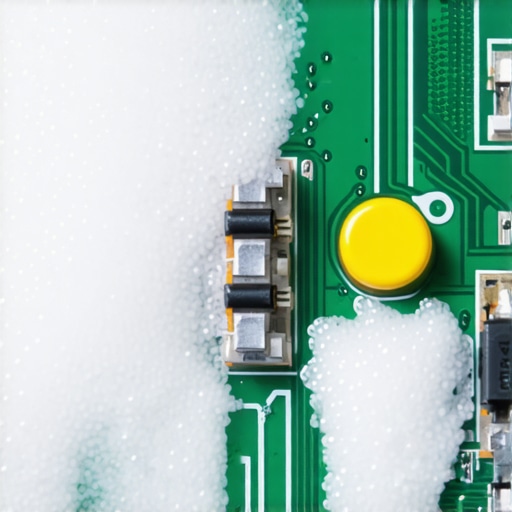
Don’t Ignore the Software in Your Kitchen
We treat our phones and laptops like they need constant updates, but we treat our refrigerators like furniture. This is a "trap" for the modern homeowner. If you have a smart unit, you must learn how to update the firmware on your smart kitchen appliances. Manufacturers often release patches that fix sensor calibration issues or energy-draw bugs. Ignoring these updates is like driving a car with a check engine light on just because the engine isn’t smoking yet. A simple software glitch can lead to a hardware failure if the compressor is forced to run too hard for too long. Have you ever fallen into this trap of thinking "it’s just a fridge, it doesn’t need Wi-Fi"? Let me know in the comments—I’d love to hear your horror stories or successes with high-tech kitchen gear.I’ve learned that the difference between a fridge that lasts fifteen years and one that dies at six usually comes down to a $15 brush and about twenty minutes of work. If you own one of those refrigerators in 2025 with all the bells and whistles, you need to be obsessive about the condenser coils. I personally use a 26-inch flexible coil brush and a specialized narrow vacuum attachment twice a year. When those coils get caked in pet hair and dust, the compressor has to run at much higher temperatures to shed heat, which is one of the primary 5 mistakes that are shortening the life of your smart refrigerator. According to the Whirlpool technical service documentation for high-end linear compressors, heat is the number one killer of inverter boards, and clogged coils are the number one cause of that heat.
Stop Letting Dust Kill Your Compressor
Beyond just cleaning, you need to keep an eye on the actual environment. I’ve found that how to calibrate your refrigerator thermometer without calling a pro is the single most underrated skill for any homeowner. I use a dedicated digital probe thermometer because the built-in sensors on the door can sometimes be off by as much as five degrees if the seal is slightly worn. If your fridge thinks it’s colder than it actually is, it won’t run enough, and your food spoils. If it thinks it’s warmer, it overworks itself into an early grave. 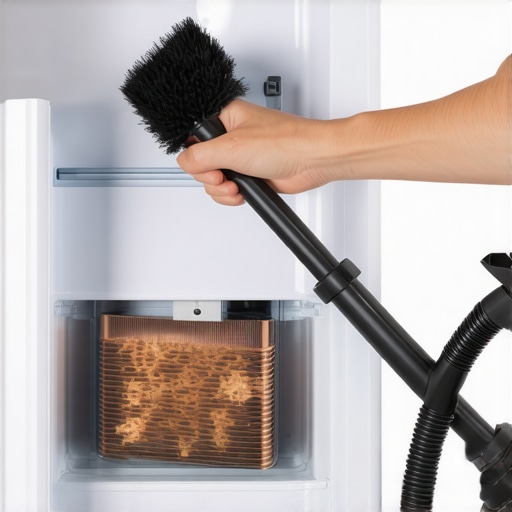
How do I keep my high-end appliances alive for more than a decade?
The secret is a combination of physical descaling and software management. In the dishwasher world, everyone focuses on the filters, but I recommend checking your spray arm nozzles with a small toothpick every few months. Hard water deposits can partially block these, causing uneven pressure. While using the best energy saving modes on your new dishwasher is great for your utility bill, those lower temperatures don’t always dissolve minerals effectively. I also suggest investing in a high-quality surge protector specifically rated for major appliances. A tiny power flicker that wouldn’t even trip your breaker can fry the sensitive Wi-Fi modules in modern units.
Why Your Fridge Will Soon Call the Repairman Itself
Looking at the future of home appliances trends to watch in 2025, we are moving toward a world of predictive maintenance. Soon, your washing machine won’t just tell you it’s broken; it will analyze the vibration patterns of the drum and send a notification that your bearings are starting to wear out three months before they actually fail. This shift from reactive to proactive care will be the biggest change in how we manage our homes. In the meantime, the best thing you can do is stick to a schedule. I keep a small logbook inside my cleaning cupboard to track when I last descaled the dishwasher and cleared the washer filter. If you want to see an immediate difference in your machine’s performance, I challenge you to go pull your refrigerator out from the wall tonight and check those coils—I bet they’re fuzzier than you think.
The Hardest Lesson I Learned About Laundry Maintenance
If I could go back to the day I first bought my front-loader, I would tell myself that those ‘secret doors’ aren’t just for show. The biggest lightbulb moment for me was realizing that modern machines are built to be maintained by the owner, not just a professional. I used to think a funky smell meant a broken unit, but 90% of the time, it is just a plea for a ten-minute cleaning session. I also learned that silence is rarely golden; if your machine is whisper-quiet but your clothes are coming out grey, your sensors are likely blinded by detergent residue. Trusting the ultimate guide to smart home appliances for a modern living helped me realize that the more complex the tech, the more it relies on basic cleanliness to function. Finally, don’t wait for a breakdown to act. Proactive care is the only way to ensure your smart washing machines can simplify laundry day rather than complicating it with repair bills.
My Essential Toolkit for Keeping Kitchen Tech Alive
I don’t believe in buying every gadget on the shelf, but these four items have saved me thousands in potential repairs. First, a 26-inch flexible coil brush is non-negotiable for cleaning under the fridge. Second, I swear by a simple digital probe thermometer to verify that my fridge settings are accurate, which is one of my top choosing the right refrigerator tips from industry experts. Third, keep a dedicated ‘Appliance Logbook’ in your kitchen junk drawer. Write down the dates you cleaned the filters and updated the firmware; it sounds nerdy, but it’s the best way to spot patterns before they become problems. Lastly, a high-quality surge protector for your major units is a small investment that protects the sensitive motherboards from power spikes that occur during summer storms.
#IMAGE_PLACEHOLDER_E#
Take Control of Your Kitchen’s Destiny
At the end of the day, your home appliances are there to serve you, not the other way around. It can feel overwhelming to manage sensors, filters, and firmware, but remember that you are the expert of your own home. Start small—go clean that one filter you’ve been avoiding tonight. Once you see how much gunk was actually hiding in there, you’ll feel a strange sense of satisfaction (and your laundry will finally smell like actual laundry again). Your journey into modern appliance care is just beginning, and with a little bit of elbow grease, you can keep your home running smoothly for a decade or more. Have you ever found something completely bizarre inside your washing machine filter? Let me know in the comments below!