
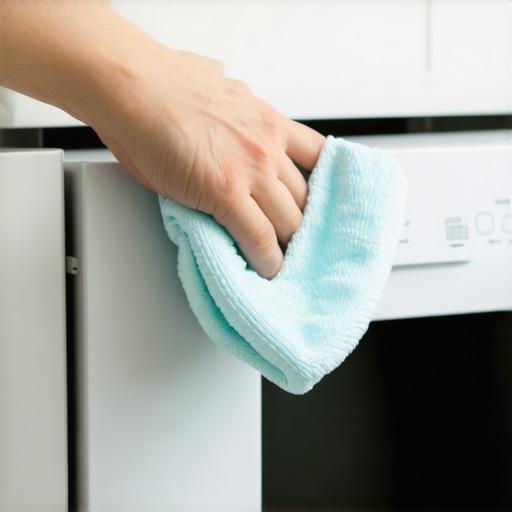
It was a Tuesday morning, and I was greeted by that unmistakable, slightly sour scent of a “clean” dishwasher that wasn’t actually clean. I pulled back the rubber gasket, expecting a stray noodle, but what I found was much worse: a hidden ecosystem of gray sludge and mold. In my typical “I’ll fix this right now” fashion, I grabbed a metal scraper and a bottle of bleach. Ten minutes later, I didn’t just have a clean seal; I had a torn one and a puddle on my kitchen floor. It turns out, your dishwasher door seal is way more delicate than it looks, and most of us are treating it like a cast-iron skillet when we should be treating it like a silk shirt.
Stop Scrubbing Your Gasket Into an Early Grave
I learned the hard way that the black gunk living in the crevices of your machine isn’t just gross—it’s actually destructive. This residue, often a mix of hard water minerals and undissolved detergent, can eventually degrade the rubber if left alone. However, the solution isn’t brute force. I’ve spent years testing the latest innovative dishwashers with AI technology, and even the smartest machines on the market still rely on a simple piece of flexible rubber to keep your kitchen dry. If you’ve noticed that your dishwasher isn’t drying the dishes well lately, a compromised or filthy seal might be the culprit. Today, I’m going to show you how to break the cycle of “clean, rip, repeat” with a gentle method that actually works.
Is meticulous seal cleaning actually worth the hype?
You might be thinking, “It’s just a piece of rubber, does it really need its own spa day?” The answer is a resounding yes. According to a study published in the journal Fungal Biology, dishwashers are prime breeding grounds for opportunistic fungi, including black yeasts, which thrive on the moist, warm surface of rubber seals. Skipping this task doesn’t just lead to smells; it can lead to health concerns and premature machine failure. I once thought I could just ignore it until it started leaking, which is one of the common mistakes that are shortening the life of your appliances. Don’t wait for a flood to start caring about your gasket health. Have you ever looked behind the flap of your dishwasher seal and regretted it immediately? Tell me I’m not the only one who has been shocked by what lives in there!
The Secret to Removing Sludge Without the Scars
When you start cleaning, the goal is to lift the grime, not peel the rubber. You have to understand how to prevent mold growth in your dishwasher seal using the right pH-balanced solutions. Using harsh chemicals can make the rubber brittle, which is why it’s vital to stick to soft cloths and mild cleaners. We’re going to walk through the exact process I use now—the one that doesn’t involve emergency calls to the plumber or expensive replacement parts.
Grab These Three Household Staples First
You don’t need an industrial degreaser to win this battle. In fact, if you treat your dishwasher seal like a greasy engine block, you’ll be shopping for a new machine sooner than you think. I usually stick to a simple trio: warm water, a squirt of mild dish soap, and a stack of clean microfiber cloths. If the mold has already staked a claim, a 50/50 mix of white vinegar and water is your best friend. I learned this lesson during a particularly humid summer when my dishwasher started smelling like a swamp. I initially reached for bleach, but then I remembered that the best way to clean a moldy front-load gasket in a washing machine involves avoiding harsh oxidizers that eat away at the elasticity. The same rule applies here. High-end rubber is surprisingly porous; treat it with respect.
Why a Soft Touch Beats Brute Force Every Time
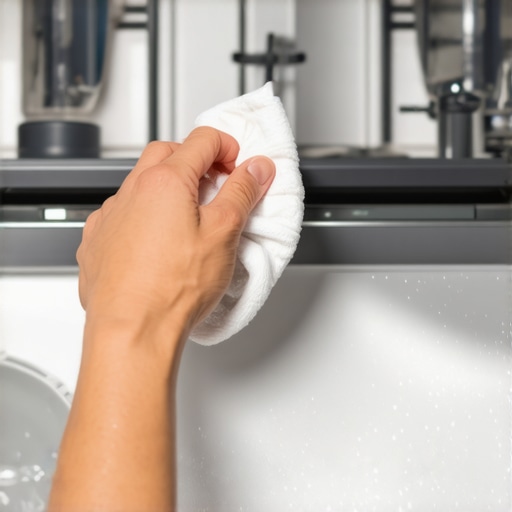
Think of the gasket as the weatherstripping on a luxury sedan. It’s designed to compress and seal perfectly. When you use a metal scraper or a stiff wire brush, you’re creating microscopic tears. These tiny canyons are like five-star hotels for bacteria. Once, while trying to dislodge a stubborn piece of calcified pasta, I used a butter knife. The tiny nick I created was invisible to the naked eye, but it was enough to let steam escape, which eventually led to the control panel shorting out. It’s a classic example of how 5 mistakes that are shortening the life of your smart refrigerator can often be translated to any kitchen appliance. Instead, use a soft-bristled toothbrush to gently agitate the fold. If you use the best detergent for hard water that won’t kill your dishwasher, you’ll notice less mineral buildup over time, making this deep clean much easier.
The Proper Way to Floss Your Machine
The real secret isn’t just wiping the surface—it’s getting into the ‘valley’ behind the rubber flap. This is where the real sludge hides. I call this the ‘flossing’ technique. Dampen your cloth, wrap it around your index finger, and run it slowly along the entire perimeter of the door. Don’t forget the very bottom edge where the door meets the tub. This area is often overlooked and is a primary reason why your dishwasher still has standing water in the filter area or develops a funky odor. I once pulled a literal handful of hair and lint from this bottom crevice after months of wondering why the kitchen smelled like a locker room.
Dry It Down to Stop the Cycle
Mold loves a party, and moisture is the invitation. After you’ve wiped away the grime, take a fresh, dry cloth and go over the seal one more time. Leaving the door cracked for an hour after a cycle is also a pro move. This is similar to how you’d maintain other moisture-heavy zones, like ensuring you know how to prevent mold growth in your dishwasher seal through consistent airflow. If you find that moisture is constantly trapped, it might be time to check if your unit is level. I’ve seen cases where how to level a washing machine on an old slanted floor provided the right logic to fix drainage issues; the same principle applies to your dishwasher’s ability to shed water properly.
It’s easy to assume that if you’ve invested in top smart appliances for a seamless home experience in 2025, the machine is smart enough to tell you when it’s dirty. But here’s the contrarian truth: AI sensors monitor water turbidity and motor torque, not the microscopic mold growing in the shadow of your door latch. I’ve seen homeowners who meticulously update the firmware on their smart kitchen appliances but haven’t touched the rubber gasket in six months. This digital-first mindset is a dangerous trap. While we look forward to the future of home appliances and the trends to watch, we often ignore the basic mechanical failures happening right under our noses. Even the most innovative dishwashers with AI technology can’t physically scrub their own creases, and assuming they can is a recipe for a kitchen flood.
Stop Trusting the Self-Clean Button Blindly
One of the biggest myths in modern appliance care is that a “self-clean” cycle is a catch-all solution. In my experience, these cycles are great for the internal plumbing but terrible for the peripheral seals. Because the water jets are designed to hit the racks and the tub, the area behind the gasket remains in a “shadow zone.” This is where biofilm—a slimy layer of bacteria—thrives. A study by the International Journal of Hygiene and Environmental Health indicates that these biofilms are surprisingly resilient to the standard temperatures used in eco-friendly cycles. If you only ever use the best energy-saving modes on your new dishwasher, you aren’t reaching the temperatures necessary to kill these stubborn colonies. 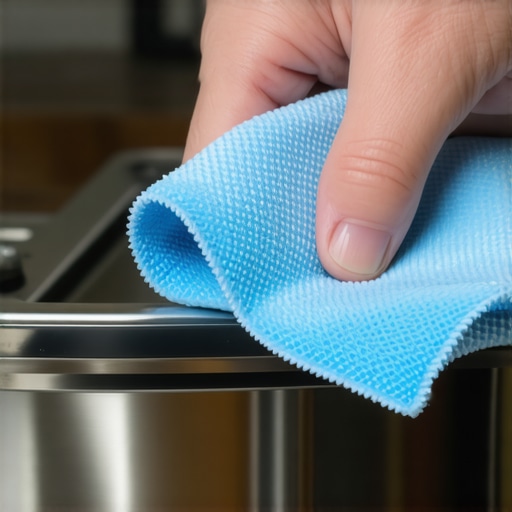
The Detergent Overload Trap
One of the most expensive ‘oops’ moments I encounter involves the belief that more soap equals a cleaner machine. In reality, the fact that your washer doesn’t need a whole cup of detergent is a principle that applies to your dishwasher too. Excess suds don’t just stay in the tub; they get pushed into the seal’s folds, dry out, and create a sticky ‘glue’ that attracts hair and food particles. Over time, this mixture hardens, causing the rubber to lose its elasticity and eventually crack. It’s one of the subtle 5 mistakes that are shortening the life of your appliances across the entire kitchen. Have you ever fallen into this trap of thinking ‘more is better’ with your cleaning supplies? Let me know in the comments!
Can hard water minerals actually crystallize your rubber?
The short answer is yes, and it’s a nightmare for your gasket’s longevity. When hard water evaporates on the seal after a cycle, it leaves behind calcium and magnesium. These minerals don’t just sit on the surface; they can become embedded in the porous rubber, making it brittle. This is the reason your high-efficiency machine smells like old gym socks—it’s not just the moisture; it’s the structural damage to the rubber providing a perfect, jagged home for bacteria. If you find your high-efficiency washer takes so long to complete a load or your dishwasher is struggling, check for white, chalky residue on the seals. That’s your signal that a deep, manual clean is no longer optional.
While a deep manual clean might seem like the final step, it’s actually just the baseline for keeping your kitchen in top shape. I’ve spent a small fortune on gadgets over the years, but the most important tool in my maintenance kit isn’t a piece of software—it’s a high-intensity LED penlight. You simply cannot fix what you cannot see, and most kitchen lighting is designed for aesthetics, not for inspecting the dark recesses of a sump pump. I use mine weekly to peer into the drainage area, which is how I learned how to clean the hidden filter in your high-end dishwasher before the debris creates a permanent blockage.
Spot Invisible Biofilms with a Ten Dollar Penlight
The human eye is remarkably good at detecting subtle changes in texture if you have the right light. When I shine my penlight along the gaskets, I’m looking for ‘bio-sheen’—that early stage of bacterial growth that hasn’t turned black yet. According to the Miele Service Engineering Guide, biofilm accumulation in the sump area can reduce pump efficiency by up to 15% before a sensor even triggers an error code. This is why manual inspection is non-negotiable. If you wait for the machine to complain, the damage to the motor’s seals is likely already underway. It’s the same proactive mindset required when you how to update the firmware on your smart kitchen appliances; you’re preventing bugs before they crash the system.
Why Smart Plugs are Better than Built-in Sensors
I’m also a huge advocate for using external hardware to monitor internal health. While your fridge might tell you it’s ‘running efficiently,’ it won’t show you the real-time energy spikes that indicate a struggling compressor. I personally use the best smart plugs for monitoring appliance energy use to track the power draw of my older units. Last year, I noticed my refrigerator was drawing 20% more power than usual at 3:00 AM. It turned out the condenser coils were packed with pet hair. The fridge ‘thought’ it was fine, but the data told a different story. 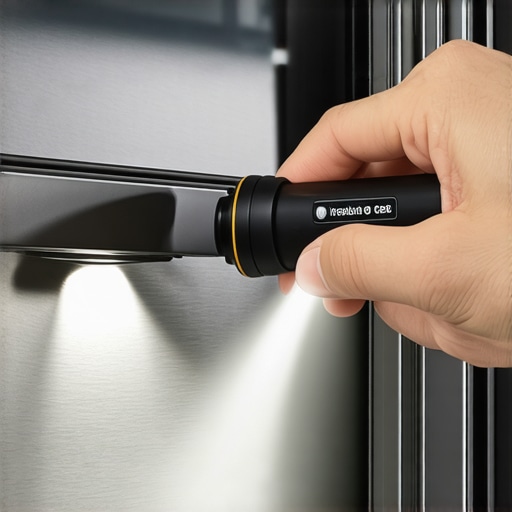
How do I keep my high-end appliances running for a decade?
Maintenance is a marathon, not a sprint. It involves a mix of physical cleaning and digital optimization. For instance, I always check that I’m using the best energy efficient settings for your new dishwasher, as these often run longer but at lower temperatures, which can be gentler on the heating element. However, the true secret is to never let the machine ‘forget’ its calibration. Just as you would with refrigerators in 2025 and the top features that transform your kitchen, you need to verify that the sensors are actually reading the environment correctly. A simple thermometer inside the tub or drawer can save you from a thousand-dollar repair bill later.
The Future is Self-Healing but Still Distant
Looking at the future of home appliances and trends to watch in 2025, I predict we will see more ‘self-healing’ systems—machines that can reverse-flush their own filters or use UV-C light to sanitize their own seals. But until that tech becomes standard in every household, we are the first line of defense. My advanced tip for you today? Grab a flashlight, get on your hands and knees, and look at the very bottom of your dishwasher’s door seal. If you see even a hint of slime, wipe it with a vinegar-soaked microfiber cloth immediately. Don’t wait for the weekend; do it now and save yourself the headache of a mid-cycle leak.
Lessons From My Most Expensive Mistakes
Over the years, I’ve realized that the difference between a kitchen that lasts ten years and one that fails in five often comes down to the things we ignore. One of the biggest shifts in my mindset occurred when I realized that 5 mistakes that are shortening the life of your smart refrigerator are usually the same ones hurting your dishwasher. Specifically, I learned that ignoring the ‘feel’ of the rubber is a disaster waiting to happen. If a seal feels stiff or tacky, it’s already crying for help. I also discovered that while I love the convenience of top smart appliances for a seamless home experience in 2025, these machines require a partnership with the owner. You can’t just buy a high-end unit and expect it to manage its own physical degradation. Finally, I’ve learned that a ten-minute monthly checkup saves more money than any extended warranty ever could.
The Maintenance Kit I Actually Use Every Weekend
You don’t need a toolbox the size of a car to keep your appliances happy. My personal kit is surprisingly lean. I swear by a dedicated set of high-density microfiber cloths; they grab biofilm that standard sponges just smear around. I also recommend keeping a small bottle of distilled white vinegar handy for those stubborn hard water spots. For those who want to go deeper, I always suggest using the best smart plugs for monitoring appliance energy use. This allows me to see if my dishwasher is working harder than it should, which is often a sign of a clogged filter or a failing seal. If you are looking to upgrade your setup, check out my guide on innovative dishwashers with AI technology you must know to see which brands are making manual maintenance even easier.
Take Control of Your Kitchen’s Future Today
It is easy to get overwhelmed by the complexity of modern home technology, but remember that at its core, your dishwasher is still just a box that needs to stay watertight. As we look toward the future of home appliances and the trends to watch in 2025, the human element remains the most important factor in appliance longevity. By taking five minutes today to wipe down that rubber gasket, you aren’t just cleaning; you’re preserving the heart of your home. #IMAGE_PLACEHOLDER_E# Don’t wait for a leak to become an emergency. Whether you are maintaining a classic model or exploring refrigerators in 2025 and the top features that transform your kitchen, a proactive approach is your best tool. Have you ever discovered something truly bizarre hiding in your dishwasher seal? Let me know in the comments below!