
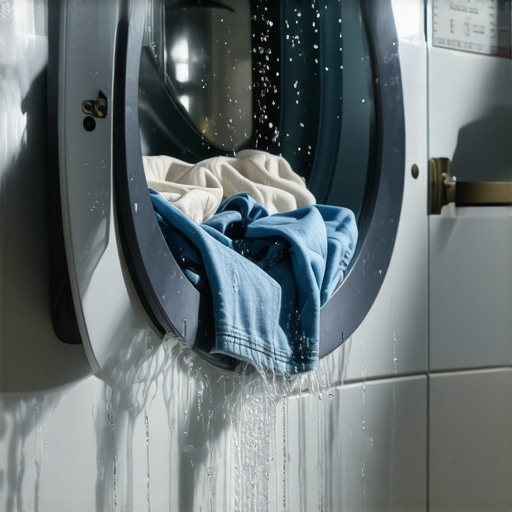
There I was last Tuesday night, standing in my laundry room at 10:00 PM, hauling what felt like a hundred pounds of sodden denim out of the drum. Water was literally dripping onto my slippers. I’d waited nearly an hour for that cycle to finish, but instead of damp-dry jeans ready for the line, I had a heavy, dripping mess that looked like it had barely been spun at all. It’s incredibly frustrating. You trust these modern machines to do the heavy lifting, yet there you are, hand-wringing towels over the sink. I’ve been through this more times than I care to admit, and honestly, the fix is usually much simpler than a massive repair bill. Today, I’m going to walk you through exactly why your machine is quitting on you right at the finish line and how to get those clothes actually dry again.
Stop Wringing Your Hands Over Saturated Laundry
One of the biggest mistakes I made early on was thinking that if the machine was still running, everything must be fine. I actually once thought adding extra detergent would somehow help the process—spoiler alert: it made the suds situation way worse and confused the sensors. If you’ve noticed your washing machine is moving across the floor during the spin, it’s a huge red flag that the balance is off. Modern high-efficiency machines are sensitive; if the load isn’t perfectly distributed, they’ll simply refuse to hit those high RPMs to protect the motor. According to Consumer Reports, an unbalanced load is the primary reason why many washers fail to complete a high-speed spin cycle. We often blame the technology, but sometimes it’s just that one heavy bath mat throwing everything out of whack. Have you ever opened your lid only to find a mini-swimming pool inside and felt like kicking the machine? You aren’t alone.
Is my machine just a total lemon?
It’s easy to feel like you bought a dud, especially if your high-efficiency washer takes forever just to leave you with wet clothes. But before you go shopping for a replacement, remember that even the most innovative washing machines that save water have built-in safeguards that can be triggered by something as small as a clogged drain filter or a slightly tilted floor. I’ve spent years tinkering with these gadgets, and I’ve learned that a little bit of patience and some basic troubleshooting can save you hundreds. We are going to look at the drain pump, the level of your machine, and those pesky internal sensors that think they know better than we do. If your vibration pads aren’t working as they should, that’s another piece of the puzzle we need to solve together. Let’s get your laundry day back on track.
Dig Into the Debris Filter Before You Panic
Most people do not even realize their front-loader has a secret access door at the bottom. I learned this the hard way after a week of damp towels that smelled like a swamp. I finally knelt on the floor, unscrewed that little circular cap, and a torrent of gray water—along with three hairpins and a stray nickel—shot across my tile. If that filter is clogged, the pump cannot push the water out fast enough, and the machine’s internal brain decides it is too dangerous to spin at high speeds. You need to clear a blocked pump on your front load washing machine every few months to prevent this drainage traffic jam. It is like trying to run a marathon while breathing through a cocktail straw; eventually, your machine is going to give up and leave your clothes sitting in a puddle. 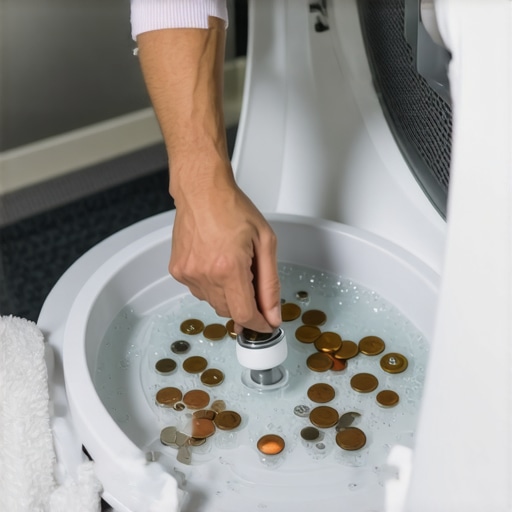
Stop the Suds from Choking Your Motor
We have been conditioned by decades of commercials to think more bubbles mean cleaner clothes, but in modern high-efficiency machines, too many bubbles are the enemy. I used to fill the detergent cap to the brim until I realized my clothes were coming out slimy and soaked. This is a phenomenon called suds lock. The sensor sees a wall of foam and mistakenly thinks the drum is still full of water, so it refuses to spin to avoid a flood. Trust me, your washer doesn’t need a whole cup of detergent to get the job done. If you start seeing mysterious white streaks on your dark jeans, that is a glaring sign you are overdoing it.
Get Your Machine on Level Ground
If your washer sounds like a freight train hitting a brick wall during the final ten minutes, it is not just an annoyance—it is actively stopping the spin cycle from completing. I once had a washer on a slightly slanted basement floor that would walk two inches every load. Because it was not stable, the vibration sensors would trigger a safety shutdown before it ever reached the high RPMs needed to extract water. Learning how to level a washing machine on an old slanted floor is a game changer for anyone in an older home. Adjust the feet until there is zero rock when you push on the corners; this stability allows the drum to spin fast enough to actually dry your clothes.
Reset the Brain When It Glitches
Sometimes the hardware is perfectly fine, but the software has a temporary brain fart. I once spent two hours checking hoses and belts only to realize the machine just needed a hard reboot. Knowing how to reset the error codes on your modern smart washer can save you a $150 service call for a problem that did not exist. It is often as simple as a specific button sequence or unplugging the unit for ten minutes to clear the capacitor. This wipes out the temporary memory and lets the cycle start fresh without the baggage of the previous failed attempt. Also, do not forget to check the hidden spots; how to clean the lint filter you didn’t know your washer had is another critical step, as even small amounts of trapped debris can trick water-level sensors into thinking the tub is still full.
Stop Scrubbing Your Dishes Before You Load Them
One of the biggest misconceptions I see in modern kitchens is the ‘pre-rinse’ ritual. Most of us grew up watching our parents scrub every speck of lasagna off a plate before it ever touched the dishwasher rack, but that habit is actually sabotaging your appliance. According to research by the Association of Home Appliance Manufacturers (AHAM), modern dishwashers are equipped with advanced turbidity sensors that measure how ‘dirty’ the water is during the initial rinse. If you’ve already scrubbed the dishes clean, the sensor mistakenly concludes that no heavy lifting is required. This ‘trap’ leads to a shorter, cooler cycle, which is often why your dishwasher isn’t drying the dishes well—it simply never reached the thermal threshold needed for effective evaporation. Have you ever fallen into this trap? Let me know in the comments. 
The Rinse Aid Secret That Saves Your Tupperware
Then there is the chemistry of the ‘extra’ features. We often focus on the physical layout of our machines, debating whether the truth about third racks is your dishwasher losing space, while ignoring the molecular level of what is happening inside. Many people treat rinse aid as a luxury or a marketing gimmick, but in the world of high-efficiency appliances, it is a mechanical necessity. Unlike older units with exposed heating elements that ‘bake’ your dishes dry, modern machines use a condensation drying process. Without rinse aid to break the surface tension of the water, droplets cling to surfaces—especially plastic—preventing them from sliding off and evaporating. This lack of proper flow can even contribute to frustrating scenarios where your dishwasher pod isn’t dissolving completely, as the internal humidity stays too high for the pod’s casing to break down at the right moment.
Why does my high-efficiency washer seem to hate water?
It feels like a genuine mistake when you peek through the glass and see only a few inches of water, but why your high-efficiency washer doesn’t fill all the way to the top is actually a masterclass in modern engineering. These machines are designed to use a concentrated chemical slurry to lift stains, rather than drowning the clothes in a ‘bath.’ When users try to ‘help’ by adding more water manually, they dilute the enzymes in the detergent, rendering the wash far less effective. I have seen people use garden hoses to fill their drums, which is a massive mistake that can burn out the motor sensors. This shift toward precision and efficiency is something we are seeing across the board, from laundry to refrigeration. If you are looking to upgrade your entire kitchen suite, I highly recommend checking out these choosing the right refrigerator tips from industry experts to understand how smart sensors and inverter compressors are redefining what it means for an appliance to be ‘on’ in 2025.
Keep Your Appliances Breathing Easy for the Long Haul
I have found that the secret to a decade of service from these machines isn’t just luck; it’s about treating them like high-performance vehicles. I’ve made it a habit every first Saturday of the month to run a dedicated cleaning cycle. If you ignore the buildup of mineral deposits and biological film, you’re looking at a slow decline in performance. I personally use a high-quality citric acid-based cleaner because it’s effective at breaking down the scale that hides behind the drum. It’s the same logic behind the best way to sanitize a washing machine after a stomach bug; you have to be proactive to keep the environment inside that stainless steel tub pristine. When you let these tasks slide, you start seeing 5 mistakes that are shortening the life of your smart refrigerator and other expensive gear. Regular maintenance is the only thing standing between you and a premature trip to the appliance showroom.
How do I maintain my high-tech kitchen suite over time?
Consistency is more important than intensity when it comes to maintenance. I suggest setting up a digital calendar for your filter changes and deep cleans. For your laundry room, understanding the best energy saving tips for your front load washing machine can actually reduce the wear and tear on the internal heater and motor. In the kitchen, I keep a simple $15 digital thermometer tucked in the back of my fridge. Why? Because I don’t always trust the digital readout on the door. According to the U.S. Department of Energy (DOE) technical specifications, even a slight three-degree deviation can result in a significant spike in utility costs and potential food safety issues. Knowing how to calibrate your refrigerator thermometer without calling a pro is one of those small skills that pays dividends every month when the electric bill arrives. #IMAGE_PLACE_HOLDER_D#
The Invisible Tools That Guard Your Efficiency
We often focus on physical tools like pliers or screwdrivers, but in 2025, your best tools are often software-based or passive sensors. I’ve started using the best smart plugs for monitoring appliance energy use to track exactly how much power my older dishwasher is drawing. If I see a sudden jump in energy consumption, I know something—like a heating element or a drain pump—is starting to struggle. This level of monitoring is exactly where the industry is headed. We are moving toward a future of ‘predictive maintenance,’ where innovative dishwashers with AI technology will alert your phone the moment a part starts to vibrate out of spec, long before the machine actually breaks down. This shift is highlighted in the future of home appliances trends to watch in 2025, where self-diagnostics become standard. Even if you don’t have an AI-driven unit yet, you can mimic this by paying attention to the sounds and cycle times. If you have an inverter compressor, keep an eye on the difference between inverter and traditional refrigerator compressors to understand why your fridge might be running longer but at a lower power level. My challenge to you today: Take five minutes to find your fridge’s humidity slides and set them correctly for your current produce load—it is a tiny adjustment that prevents your greens from turning into a swampy mess.
Hard Truths from the Laundry Room Trenches
I used to think that the more I spent on a machine, the less I would have to think about its maintenance. I was wrong. The biggest lesson I have learned is that high-efficiency technology requires a high-efficiency user. If you ignore the small things, like that hidden debris filter or the level of your floor, you will inevitably end up wondering why your clothes are still sopping wet after the spin cycle even with a brand-new unit. Another lightbulb moment was realizing that ‘smart’ does not mean ‘invincible.’ These machines are sensitive to balance and suds because they are designed to protect their expensive motors. When I stopped fighting the sensors and started working with them—using less detergent and balancing my loads—my laundry days became significantly shorter and less stressful.
#IMAGE_PLACEHOLDER_E#
My Personal Tech-First Toolkit
If you are looking to dive deeper into the world of connected homes, I always recommend starting with the ultimate guide to smart home appliances for a modern living to get a comprehensive big-picture view. For tracking the actual health of my machines, I rely on smart energy monitors to see if my dishwasher pump is drawing too much power, and I keep a digital thermometer in my freezer to ensure everything is staying at the perfect temperature. When it is time to upgrade an aging unit, I keep a close eye on the top smart appliances for a seamless home experience in 2025 to see which brands are actually prioritizing repairability and sensor accuracy over flashy gimmicks. These resources have saved me thousands in unnecessary technician visits over the years.
Stop Fearing the Digital Beep
It is easy to feel overwhelmed by all the sensors and flashing error codes, but remember that you are the one in control of your home environment. By understanding the unique quirks of your high-efficiency system—from the drain pump to the leveling feet—you turn a frustrating, dripping mess into a quick five-minute fix. Do not be afraid to open that access panel, tackle that drainage filter, or recalibrate your sensors today. You have the tools and the knowledge now to keep your machines running perfectly. Have you ever had a machine ‘lie’ to you with a weird error code just to find out it was something silly like a stuck sock? Let me know in the comments below!