
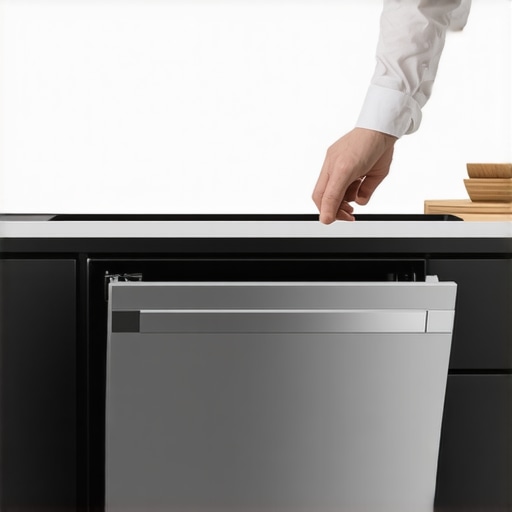
I still remember the day I stepped back to admire my ‘finished’ kitchen renovation, only to feel a sharp pang of regret. There it was: a massive, glaring slab of industrial stainless steel right in the middle of my warm, walnut cabinetry. It looked like a robot had crashed a dinner party. I had spent weeks choosing the best dishwasher for its cleaning power, but I completely ignored how much that metal beast would disrupt the visual flow of the room. It was an eyesore I had to live with until I finally realized that the secret to a high-end kitchen isn’t showing off your tech, but hiding it in plain sight. Today, I’m going to share exactly how you can stop your dishwasher from ruining your kitchen’s aesthetic and guide you through the process of creating a truly integrated look.
Stop Letting Your Dishwasher Kill the Kitchen Vibe
The trend toward ‘hidden’ kitchens isn’t just for people with bottomless pockets; it is for anyone who wants their home to feel like a living space rather than a showroom for modern home appliances. When everything is tucked away, the room feels larger, calmer, and more intentional. Early in my DIY journey, I made the classic mistake of trying to ‘force’ a standard dishwasher to accept a wooden panel. I literally tried to glue a piece of plywood to the front. It was a disaster. The door wouldn’t stay open, and the extra weight almost burned out the motor. To do this right, you generally need to start with innovative dishwashers that are specifically labeled as ‘panel-ready.’ These units have special heavy-duty hinges and recessed fronts designed to handle the weight of a custom cabinet door without failing. According to the National Kitchen & Bath Association (NKBA), integrated appliances are a top-tier design choice because they significantly boost a home’s resale appeal by creating a furniture-like finish.
Is a Custom Panel Actually Worth the Extra Headache?
You might be worried that adding a panel is just one more thing to break or that it will make maintenance a nightmare. I get it. I used to worry that if I hid the controls, I wouldn’t know when the cycle was done or if there was a leak. However, most panel-ready units now project a tiny light onto the floor to show you the status. If you have ever felt like your kitchen looks a bit too much like a commercial laundry room, have you considered if a hidden panel might be the missing piece of the puzzle? Once you see how a panel aligns perfectly with your existing cabinets, you will never want to look at a stainless steel door again. We also have to ensure we don’t ignore maintenance, like knowing how to clean your dishwasher door seal properly, because once that panel is on, you want everything behind it to run like clockwork. Let’s look at the actual steps to make this happen without calling in an expensive contractor.
Measure Twice and Cut Once to Avoid a Custom Disaster
The first thing you need to understand is that a panel-ready dishwasher is basically a skeleton waiting for its skin. It is significantly lighter and thinner than a standard unit because it lacks that heavy outer door. Your first task is to grab the paper template that comes in the box. Do not throw this away. It is your roadmap. I once watched a buddy of mine try to wing it by holding the heavy cabinet door up to the unit while I tried to mark the holes with a pencil. We ended up with three ‘extra’ holes in his brand-new walnut panel that we had to fill with wood putty. Use the template to mark your drill points on the back of the cabinet door, ensuring the top of the panel aligns perfectly with the top of your drawer line across the rest of the kitchen.
Why Your Template is the Most Important Paper You Own
Think of the mounting brackets as the skeletal joints of your appliance. Most modern systems use a ‘slide-and-lock’ mechanism. You screw the brackets into the back of your wooden panel, and then those brackets hook into slots on the dishwasher door. This is where precision is non-negotiable. If you are off by even an eighth of an inch, the door will sit crooked, and you will see a slanted gap every time you walk into the room. While you are prepping the door, it is a great time to ensure you know the best way to stack your dishwasher for maximum clean, as once that panel is on, you will want the internal performance to match the external beauty. 
The Secret to a Seamless Gap Around the Door
Once the brackets are on, you lift the panel and slide it into place. This is the ‘aha’ moment where your kitchen starts to look like a high-end design magazine. But here is where the mess happened for me: I forgot to check the door tension. A custom wooden panel can weigh between 10 and 20 pounds. If you don’t adjust the door springs, the door will fly open and hit the floor or refuse to stay closed. Most smart appliances have adjustment screws at the bottom of the base. Tighten these until the door feels balanced—it should stay put at any angle you leave it. If it feels like it is fighting you, stop and adjust. Forcing it is a recipe for a broken hinge or a dishwasher that won’t start its cycle because the latch isn’t engaging properly.
Final Leveling is Like Tuning a Piano
The last step is leveling the entire unit within the cabinet opening. If the dishwasher isn’t perfectly level, the panel will rub against the neighboring cabinets, eventually chipping the paint or finish. Use a spirit level on the top of the tub (not the door) and adjust the feet until it is rock solid. While you are down there adjusting the legs, take a moment to learn how to deep clean the gasket on your dishwasher, as a leak is the last thing you want behind a custom wood panel. Once everything is tight and level, secure the unit to the underside of the counter or the side cabinets using the provided screws. This prevents the whole machine from tipping forward when you pull out a heavy bottom rack full of pots and pans.I’ve seen it a hundred times: a homeowner spends thousands on a panel-ready setup, only to complain that the dishes aren’t as clean as they were with their old 1990s loud-as-a-jet-engine model. The most common myth I encounter is that you need to ‘help’ your machine by pre-rinsing every plate. In reality, modern innovative dishwashers use turbidity sensors to measure how dirty the water is. If you pre-rinse, the sensor thinks the load is clean and shortens the cycle, leaving your dishes less sanitized than they should be. It’s counterintuitive, but scraping is enough—rinsing is a mistake that prevents the enzymes in your detergent from having anything to latch onto. Have you ever fallen into this trap of over-cleaning before the machine even starts? Let me know in the comments because it’s a hard habit to break.
Stop Letting Detergent Overload Ruin Your Cabinetry
Another massive ‘oops’ factor involves detergent. Many people assume that more soap equals more clean, but in choosing the best dishwasher, we often overlook how concentrated modern pods are. If you have soft water and use a full pod plus a pre-wash detergent, you are actually etching your glassware. That ‘cloudy’ look isn’t dirt; it’s the soap eating the glass. This is the same reason why your washer doesn’t need a whole cup of detergent to function. Over-sudsing can actually leak through the seals and damage those expensive custom panels you just installed by causing the wood to swell from the inside out.
Why does my energy-efficient fridge seem to run all day?
This is a question I get from anyone upgrading to refrigerators in 2025. We are conditioned to think that a running motor means wasted money. However, a study by the Association of Home Appliance Manufacturers (AHAM) points out that modern variable-speed compressors are designed to run longer at lower speeds. It is much more efficient than the old ‘on-off’ cycle of legacy units which consumes massive amounts of energy during the startup surge. If you hear a constant low hum, it’s usually a sign that your high-efficiency fridge is working correctly, not that it’s broken. 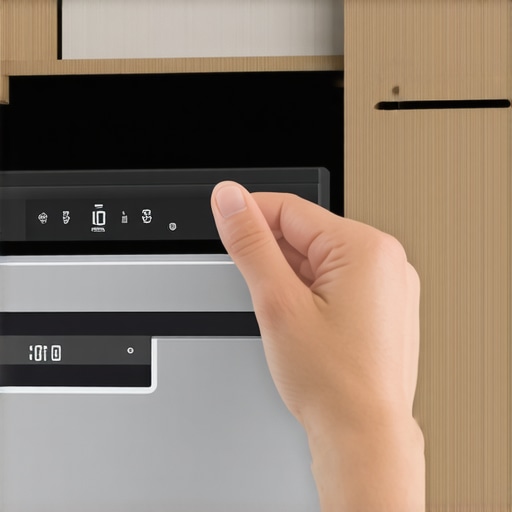
The Critical Need for Local Water Calibration
One final advanced tip: check your water hardness. No amount of ‘smart’ tech can overcome mineral-heavy water. If you don’t calibrate your machine for your local water, you’ll end up with spots regardless of how well you stacked the racks. You might even find yourself wondering why your dishwasher is leaving a cloudy film on glasses despite the premium price tag. Take the time to read the manual on water softener salt settings—it’s the difference between a ‘fine’ kitchen and a professional-grade one. Always remember that high-end aesthetics require high-end maintenance logic. If you treat a smart appliance like a dumb one, you’re just wasting electricity.
Maintaining the ‘invisible’ kitchen look requires more than just a good eye for cabinetry; it demands a proactive approach to the hardware humming behind those panels. If you have gone through the effort of creating a modern living space, the last thing you want is for a $20 sensor to brick your $2,000 investment. I have found that the most vital tool in my arsenal isn’t a fancy screwdriver, but a simple digital multimeter. Most people panic when a smart appliance goes dark, but often it is just a blown thermal fuse—a part that costs less than a latte. Learning to test for continuity yourself can save you hundreds in service fees and weeks of waiting for a technician.
Stop Calling a Repairman for Every Little Glitch
Beyond the electrical side, physical hygiene for your machines is non-negotiable. For instance, if you have a panel-ready refrigerator, you must know how to keep your refrigerator coils clean, especially if you have pets. Dust and fur act like an insulator, forcing the compressor to work twice as hard and shortening its lifespan significantly. I personally use a narrow coil brush and a vacuum attachment every six months. It’s a dirty job, but it is the secret to making your refrigerator last twice as long as the average unit. When the coils are clean, the motor runs cooler, quieter, and more efficiently, protecting the delicate electronics that manage your smart features.

How do I maintain my integrated appliances for the long haul?
The key to longevity is consistency rather than intensity. You don’t need to deep-clean every week, but you do need to listen to what the machine tells you. The Association of Home Appliance Manufacturers (AHAM) notes in their technical guidelines that nearly 30% of service calls for high-end dishwashers are actually related to simple debris blockages in the filter or spray arms rather than actual mechanical failure. I recommend running a dedicated descaling cycle once a month, particularly if you are in a hard-water area. While you are at it, take a moment to calibrate your smart fridge temperature sensors. A slight drift in sensor accuracy can mean the difference between fresh produce and a frozen head of lettuce on the top shelf. High-end tech requires this level of precision to justify its price tag.
Predictive Tech Will Soon Fix Your Fridge Before It Breaks
Looking ahead, we are moving away from the era of ‘reactive’ repairs. The future of home appliances lies in predictive maintenance. Soon, your dishwasher won’t just tell you it’s broken; it will notify your phone that the heating element is showing signs of resistance degradation and automatically order the replacement part before it fails. To prepare for this, I’ve already started to sync my smart kitchen appliances to one app. Having a unified dashboard allows you to monitor energy spikes, which are often the first red flag of a failing motor or a leaky seal. My challenge to you today: Don’t just trust the factory settings. Open your dishwasher’s menu tonight and manually adjust the water hardness setting to match your local zip code’s data—it’s the single fastest way to see an immediate jump in cleaning performance.
Mistakes That Taught Me How to Hide Modern Tech
After years of tinkering with cabinetry and home appliances, I’ve realized that the most common failure point isn’t the machine itself, but the homeowner’s fear of the ‘gap.’ We often try to make panels so tight that they rub against the frame, forgetting that wood is a living material that breathes and expands. If you don’t leave that hairline 1/8-inch clearance, you will likely be sanding your expensive walnut panels by next summer. Another lightbulb moment was realizing that weight distribution changes over time. Your dishwasher hinges work incredibly hard; if you notice the door getting ‘heavy’ or falling open too fast, don’t ignore it—adjust the tension immediately before the springs snap or the wooden panel warps from the stress.
I also learned that cheaping out on the mounting hardware is the fastest way to a crooked kitchen. Always use the heavy-duty brackets that come with the unit, even if they look intimidating. It is worth checking out the hidden costs of cheap budget appliances before you commit to a full integration project, as the structural integrity of the base unit is everything when you are hanging 15 pounds of custom wood on the front.
#IMAGE_PLACEHOLDER_E#
A Few Tools to Make Your Life Easier
To get that magazine-quality finish, I rely on a few specific resources that I have tested in the field. First, I always keep a digital copy of the ultimate guide to smart home appliances for a modern living handy to ensure I am not missing any new ventilation requirements for hidden units. Second, a high-quality spirit level is non-negotiable. If your floor is even slightly slanted, your washing machines that save water will vibrate and eventually rattle against your custom cabinetry, causing permanent damage. Finally, I highly recommend looking at the top smart appliances for a seamless home experience in 2025 to see which brands currently offer the most robust and adjustable panel-ready hinges.
Your Path to a Truly Seamless Kitchen
Taking the leap into integrated design can feel overwhelming, but the results are life-changing for the flow of your home. Your kitchen stops being a utility room and starts being a peaceful living space. Don’t let the fear of a drill bit or a technical manual stop you from creating the sanctuary you deserve. Whether you are hiding a dishwasher, a fridge, or even a laundry unit, the goal is the same: a home that works for you, not the other way around. Smart appliances are meant to simplify your life, and hiding them in plain sight makes that simplicity a visual reality. Have you ever had a custom cabinet panel that just wouldn’t stay aligned? Let me know in the comments below!