
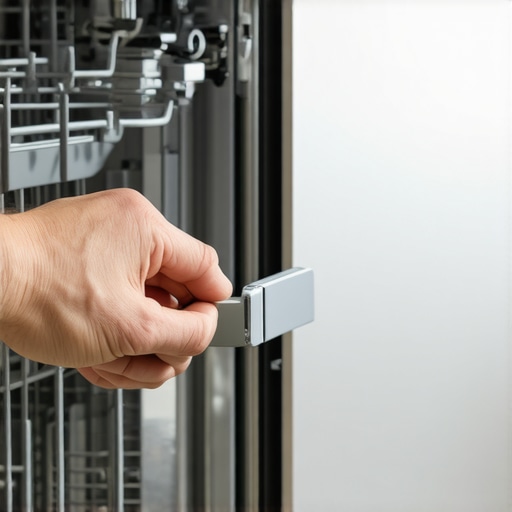
There I was, standing in a kitchen that smelled faintly of garlic and failure. I’d just loaded the last greasy pan from a Sunday roast, and when I pressed the ‘Start’ button, my dishwasher gave me the silent treatment. No water rushing, no rhythmic swishing—just a mocking, blinking light. It’s that sinking feeling in your gut where you start calculating how many hours you’ll spend scrubbing by hand or how many hundreds of dollars a technician will charge just to ring your doorbell. I’ve been there, and I’ve made the classic rookie mistake of slamming the door harder, thinking brute force would solve a software glitch. Spoiler alert: it doesn’t. Today, I’m going to show you how to breathe life back into that machine in five minutes flat, because your evening should be spent relaxing, not wrestling with [innovative dishwashers with AI technology](https://smartappliancereview.com/innovative-dishwashers-with-ai-technology-you-must-know) that decide to take an unannounced nap.
Your Kitchen Isn’t Cursed, Your Latch is Just Moody
Most people think a dishwasher that won’t start is a goner. I certainly did. A few years back, I actually called a repairman out for a ‘dead’ unit, only for him to pull a stray plastic spatula out of the way of the door latch. I paid $120 for him to move a piece of Tupperware. I felt like a total amateur. The truth is, modern machines are incredibly sensitive. If the door isn’t sealed to the exact millimeter, the control board won’t let the water flow for fear of a flood. This is often why you see issues like [why your dishwasher isn’t drying the dishes well](https://smartappliancereview.com/why-your-dishwasher-isnt-drying-the-dishes-well) or [why your dishwasher pod isn’t dissolving completely](https://smartappliancereview.com/why-your-dishwasher-pod-isnt-dissolving-completely)—it all starts with a proper, secure cycle initiation.
Is a DIY Fix Really This Simple?
You might be skeptical, thinking your machine is far too complex for a five-minute home remedy. I get it. We are conditioned to think ‘digital’ means ‘difficult.’ However, most dishwasher ‘failures’ are actually just safety locks or sensor errors that have gotten stuck in a loop. Think of it like your computer freezing; you don’t buy a new laptop, you just reboot it. According to data from Consumer Reports, nearly 30% of major appliance service calls are deemed ‘no-fault-found,’ meaning the owner could have fixed it themselves with basic troubleshooting. We are going to avoid being part of that statistic today.
The Hard Reset That Clears the Brain Fog
Sometimes the control panel just needs a fresh start. If you’ve checked the latch and cleared away any obstructing plates, it’s time to perform what I call the ‘Electric Time-Out.’ Have you ever noticed your machine behaving strangely, perhaps leaving you wondering [how to fix a dishwasher that leaves water in the bottom](https://smartappliancereview.com/how-to-fix-a-dishwasher-that-leaves-water-in-the-bottom-after-the-cycle)? These quirks are often ghosts in the machine. Before you start unscrewing panels, tell me: have you ever felt like your appliances are intentionally trying to test your patience during the busiest week of the year? We’re going to end that power struggle right now by cutting the cord—literally—and forcing a factory-style refresh that clears those stubborn error codes.
Kill the Power to Clear the Cache
The first thing you need to do is strip the machine of its digital memory. Modern appliances are essentially computers that happen to spray water, and like any computer, they get ‘stuck’ in logic loops. If your buttons are unresponsive or a light is flashing in a weird pattern, you need a hard reboot. Walk over to your circuit breaker panel and find the switch labeled ‘Dishwasher’ or ‘Kitchen.’ Flip it to the OFF position and leave it there for at least five full minutes. It sounds like an eternity when you’re standing in a quiet kitchen, but that time allows the capacitors on the control board to fully discharge, wiping away any temporary error codes. If you have easy access to the outlet, simply pulling the plug works too. While you wait, it is a great time to check if you are using the best smart plugs for monitoring appliance energy use, as these can sometimes help you identify if your machine is drawing unusual power before it fails.
Hunt for the Hidden Filter Drain
While the power is off, we need to address the physical reason the software might be protesting. Most people don’t realize that a dishwasher is like a smart washing machine; it has sensors that detect water levels and drainage speed. If the machine ‘thinks’ it can’t drain, it won’t even try to start a new cycle. Reach into the very bottom of the tub, usually under the bottom rack, and twist the circular plastic assembly. This is your filter. I once spent three days washing plates by hand only to discover a single cherry pit had wedged itself into the mesh, triggering a ‘flood’ sensor that didn’t actually exist. Pull that filter out and rinse it under hot water. If yours is particularly grimy, you should learn how to clean the hidden filter in your high-end dishwasher to prevent this from happening every month.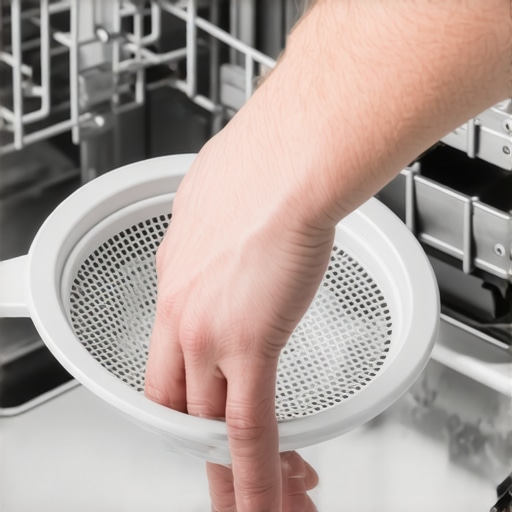
Force a Manual Drain Sequence
Once the power is back on, don’t just hit ‘Start.’ You need to force the machine to clear any leftover water that might be sitting in the sump. Press and hold the ‘Cancel’ or ‘Drain’ button for three to five seconds. You should hear the pump kick in—it’s a low, guttural humming sound. This is the machine’s way of clearing its throat. I remember a frantic Tuesday night when my own unit refused to budge because of a ‘ghost’ water reading. I performed this manual drain, and suddenly, the control panel lit up like a Christmas tree, ready to work. It’s the same logic used when you need to how to clear a blocked pump on your front load washing machine. If the water stays put, you might be dealing with a deeper clog, which is often why your dishwasher bottom is full of standing water even after a reset.
Check the Child Lock and Demo Modes
If the power is on but the buttons feel ‘dead,’ you might have accidentally engaged the Child Lock. This happens more often than you’d think, especially if you lean against the counter while prepping dinner. Look for a small padlock icon on the panel. Usually, holding the ‘Dry’ or ‘Options’ button for three seconds will release the lock. Some innovative dishwashers with AI technology also have a ‘Demo Mode’ used in showrooms that can be triggered by a specific sequence of button presses. Check your manual—or a quick Google search of your model number—to ensure you haven’t accidentally told your dishwasher it’s a store display model. I once saw a friend almost trash a perfectly good refrigerator because they didn’t realize it was in showroom mode; it’s a simple fix that saves thousands.
Stop Using So Much Soap Already
Most of us grew up watching laundry commercials where a mountain of suds meant ‘mountain fresh’ cleanliness. It’s a lie. In the world of High-Efficiency (HE) appliances, bubbles are actually your enemy. I’ve seen countless machines break down because the owner thought a double-dose of detergent would tackle a tough stain. What actually happens is a ‘suds lock’—the machine detects too much foam, thinks it’s overflowing, and shuts down the pump. This is why your washer doesn’t need a whole cup of detergent to get clothes clean. In fact, excess soap creates a biofilm that leads to that ‘old locker room’ smell. If you see residue, you aren’t dealing with a broken rinse cycle; you are seeing why your high-efficiency washer is leaving white streaks on dark clothes. According to the Association of Home Appliance Manufacturers (AHAM), using the wrong type or amount of detergent is one of the leading causes of premature pressure switch failure in modern units.
Does Your Water Softness Secretly Attack Your Dishes?
If you have a whole-house water softener, you might think you’re doing your dishwasher a favor. But here is the nuance: soft water is extremely ‘hungry.’ Without minerals to cling to, the detergent can actually start to etch the glass or corrode the internal stainless steel components. It’s a delicate balance. This is often the best detergent for hard water that wont kill your dishwasher strategy: you need less chemical help when your water is already soft. If you ignore this, you’ll find your glasses looking cloudy and permanently ‘scratched’ within a year. 
The Drying Myth That Ruins Your Plastics
We’ve all been annoyed by wet Tupperware after a cycle. The common reflex is to turn up the heat or blame the machine’s heater. However, modern units often use ‘condensation drying’—they don’t have a visible heating element that glows red. They rely on a final hot rinse and the stainless steel walls to pull moisture away. If you skip the rinse aid, the water won’t ‘sheet’ off, and your plastic will stay soaked. This is exactly why your dishwasher still needs rinse aid even with 3-in-1 tablets. The tablet releases the agent too early or too late; you need that dedicated dispenser to fire at the precise moment.
Don’t Block the Airflow or Your Milk Will Freeze
Finally, let’s talk about the ‘oops’ factor in the fridge. Most people treat their refrigerator like a Tetris board, packing every square inch. But have you ever noticed your lettuce freezing in the back? This happens because you’ve blocked the internal air vents. Modern fridges use a single evaporator and a series of fans to move cold air. If you block the ‘return’ vent, the sensor thinks the fridge is too warm and keeps the compressor running, leading to why your fridge is freezing everything on the top shelf. It’s a cascade of errors triggered by one misplaced gallon of milk. Have you ever fallen into this trap? Let me know in the comments.
The Toolbox Every Grown-Up Kitchen Needs
If you think a screwdriver and a prayer are enough to keep a modern home running, you are in for a very expensive surprise. Over the years, I’ve learned that the secret to avoiding a $300 service fee is having the right diagnostic tools before the crisis hits. My number one recommendation? A digital multimeter. It sounds intimidating, but learning to check for ‘continuity’—basically seeing if electricity can actually flow through a part—is the difference between guessing and knowing. For instance, if your washing machine won’t start, I use my multimeter to see if the lid switch is physically broken or just electronically dead. It’s exactly how to diagnose a faulty lid switch on your top loader without having to wait three days for a technician to tell you the same thing. I also keep a set of long-reach flexible brushes. These aren’t for the dishes; they are for reaching into the dark recesses of your fridge coils. If those coils are caked in dust, your compressor has to work twice as hard, leading to why your high-efficiency fridge runs more often than your old one.
How do I maintain my smart appliances over time?
Long-term maintenance isn’t just about cleaning; it’s about calibration. Every six months, I run a full diagnostic check on my system. This involves checking for how to update the firmware on your smart kitchen appliances to ensure the software isn’t fighting the hardware. I also recommend a deep-clean cycle even if the machine looks fine. For my dishwasher, I use a dedicated descaler to combat mineral buildup that can lead to why your dishwasher is making a grinding noise. If you’ve been away for a while, you should follow the steps for the best way to sanitize your dishwasher after a long vacation to prevent bacterial growth in the stagnant water lines.
Why I Trust Specialized Cleaners Over Kitchen Vinegar
I know the internet loves ‘all-natural’ vinegar for everything, but please, stop putting it in your high-end appliances. I’ve seen vinegar eat through rubber gaskets and corrode specialized coatings in innovative dishwashers with AI technology. I personally use citric-acid-based cleaners or brands like Affresh and Glisten. They are formulated to be tough on lime but gentle on the seals. This is especially vital for your laundry room; using the wrong chemicals is the reason your high-efficiency washer smells like old gym socks. The specialized tabs break down the biofilm that vinegar simply slides over. To keep things fresh, I always keep a bottle of high-quality cleaner on hand and follow the secret to odor-free laundry in a high efficiency machine by leaving the door ajar after every single load.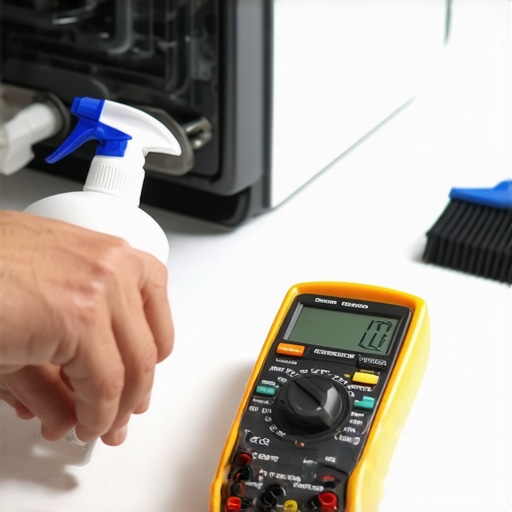
Update Your Firmware or Risk a Brick
We are entering an era where your fridge is as much a computer as your smartphone. According to a recent report in the IEEE Consumer Electronics Magazine, unpatched firmware in smart appliances can lead to significant energy inefficiencies and even hardware ‘looping’ where the machine wears itself out because of a software bug. I’ve seen users get frustrated because why your smart fridge app refuses to sync with your grocery list, but the real danger is a missed update that controls the defrost cycle. If you value your sanity, set your appliances to auto-update or check the manufacturer’s app once a month. Looking ahead, I predict the future of home appliances trends to watch in 2025 will focus on ‘self-healing’ sensors that can detect a failing part and order a replacement before you even know there is a problem. For now, take control yourself: I highly recommend you spend ten minutes tonight to how to calibrate your refrigerator thermometer without calling a pro to ensure your food stays safe and your energy bill stays low.
The Hardest Lesson I Learned About Modern Sensors
If there is one thing that years of troubleshooting have taught me, it is that your machine isn’t trying to be difficult—it’s just trying to be safe. I used to think that an error code was a death sentence, but most of the time, it is just a plea for a quick cleaning. One major lightbulb moment for me was realizing that “efficiency” often means “tighter tolerances.” A tiny bit of scale or a single stray seed can trip a sensor that would have gone unnoticed ten years ago. It’s also why I stopped believing the “more is better” soap myth. Over-sudsing is the silent killer of pumps, and once I started using half the recommended detergent, my machines started lasting twice as long. Finally, don’t ignore the software. Just like washing machines that save water require specific care, your smart dishwasher needs its digital brain kept in check with regular updates.
My Essential Toolkit for Appliance Longevity
You don’t need a professional workshop, but a few specific items will save you thousands over a decade. First, a simple digital multimeter is non-negotiable; it takes the guesswork out of whether a switch is actually broken. Second, I always keep a bottle of high-quality descaler on hand because mineral buildup is the root of most grinding noises. I also highly recommend reading the ultimate guide to smart home appliances for a modern living to understand the ecosystem you’re building. For those looking to upgrade, I always suggest choosing the right refrigerator tips from industry experts before making a purchase, as the right specs prevent many of these common headaches from the start. These tools turn you from a frustrated owner into a confident home manager.
Reclaiming Your Kitchen One Reset at a Time
The next time your dishwasher blinks or your fridge hums a bit too loudly, don’t reach for your phone to call a pro immediately. Take a deep breath, grab your flashlight, and check the basics we discussed. You have the power to fix these smart appliances yourself, and there is an incredible sense of satisfaction that comes from hearing that rhythmic swish of a working cycle after a five-minute DIY fix. The future of home appliances trends to watch in 2025 suggest machines will only get smarter, but they will always rely on a little human TLC to keep them running smooth. You’ve got this! Have you ever had a machine “miraculously” start working after a simple reset? Let me know your story in the comments below.