
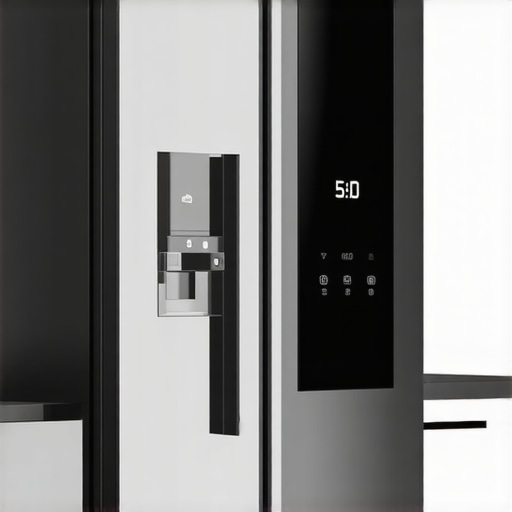
I was standing in my kitchen at 6:30 AM, clutching a lukewarm mug of coffee and staring into a literal abyss. Not a philosophical one—my refrigerator’s massive 21-inch touchscreen had simply decided to quit. One day it’s showing me my Google Calendar and the next, it’s a giant, expensive obsidian slab. It felt like my kitchen had lost its pulse. If you’re reading this, you’re likely standing in front of your own high-tech icebox right now, wondering if you just bought a very expensive paperweight. I’ve been there. In fact, I once tried to “fix” a similar glitch by poking a butter knife into the seam of the control panel—spoiler alert: don’t do that. It’s an easy way to turn a software hiccup into a permanent hardware funeral.
When Your High-Tech Hub Becomes a Black Hole
It’s a specific kind of frustration when your “smart” appliance acts dumber than a 1990s cooler. When your smart fridge screen keeps going black every morning, it usually happens right when you need it most. For me, it wasn’t just about the aesthetics; it was about the fact that I couldn’t adjust the humidity for the local farmer’s market haul I’d just stuffed inside. Modern appliances are essentially computers that keep your milk cold, and just like your laptop, they can get “confused.” According to a report by IEEE Spectrum, firmware complexity in home appliances has increased by over 300% in the last decade, making software glitches almost inevitable. We are going to tackle the three most likely culprits today: power delivery, software hangups, and that pesky “energy saver” mode that sometimes oversteps its bounds. By the time we’re done, you’ll know exactly how to hard reset your smart refrigerator control panel without losing your mind or your warranty.
Is All This High-Tech Trouble Really Worth It?
I get this question all the time from neighbors over the backyard fence. You start wondering is a smart fridge really worth the extra money when the basic act of checking your grocery list becomes a tech support ticket. It’s a valid fear. We trade simplicity for convenience, and when that convenience breaks, the trade feels lopsided. But here’s the secret: most of these “black screen” issues aren’t hardware failures. They are digital hiccups that you can solve in five minutes once you find the hidden reset button on your smart refrigerator. Have you ever seen your screen flicker or go dark while the rest of the fridge was humming along just fine? It’s an eerie feeling, isn’t it? Drop a comment below if you’ve had that “black hole” moment—I’d love to hear which model finally gave up on you and how long you stared at it before searching for help. We’re going to get that display back online right now.
Get Control Back Without Calling a Pro
Think of your smart fridge like a high-end smartphone strapped to a cooling box. When the screen goes dark, it’s rarely a total hardware meltdown; it’s usually the software getting stuck in a loop. I remember one Tuesday morning when my Samsung Family Hub decided to go dark right as I was trying to check a recipe. I panicked, thinking I’d need a $500 repair bill. Instead, I treated it like my frozen laptop. The first and most effective move is to hard reset your smart refrigerator control panel. Look for a small toggle switch, usually hidden behind a plastic cover at the top of the right-hand door. Flipping this off for thirty seconds and then back on forces the ‘brain’ to reload its operating system from scratch. It’s the digital equivalent of a cold shower for a groggy appliance.
Find the Invisible Reset Switch
If your model doesn’t have a visible toggle, you might have to go hunting for the hidden reset button on your smart refrigerator. On many LG and GE models, this is a pinhole button located on the underside of the display assembly. I once spent twenty minutes on my hands and knees with a flashlight, feeling like a safe-cracker, only to find the button was right under the logo. You’ll need a paperclip. Press and hold it until the logo flashes. 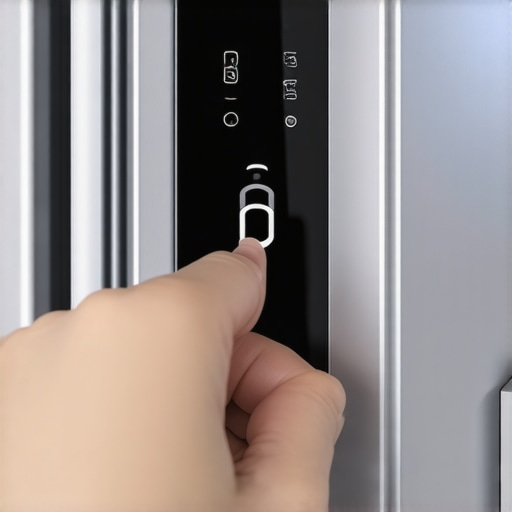
Stop Energy Saver From Killing Your View
Sometimes the ‘black screen’ isn’t a glitch at all; it’s the fridge being too smart for its own good. Energy-efficient settings can be aggressive. If you find that your smart fridge screen keeps going black every morning, check if ‘Eco-Mode’ or ‘Screen Saver’ is enabled. These hidden settings on your fridge that can save you money are great for the environment but terrible for visibility. I once thought my display was dying, but it turned out my toddler had accidentally enabled ‘Sabbath Mode’ while looking for juice.
Fix the WiFi Sync Fail
A black screen can also be a symptom of a failed handshake between your fridge and your home network. Just like innovative dishwashers with AI technology, your fridge is constantly trying to ‘talk’ to the cloud. If your router updated overnight, the fridge might be stuck in a blacked-out reconnection loop. You need to know how to sync your smart kitchen appliances to one app properly to resolve these conflicts. If the screen is still unresponsive, you might need to pull the unit out to reach the main power cord. Be careful—knowing how to move a heavy refrigerator without scratching the floor is vital here. A five-minute power cut at the wall outlet is the ‘nuclear option’ that clears out any residual electrical charge in the capacitors.
Check for Temperature Interference
Believe it or not, the heat from the compressor can sometimes affect the sensitive electronics of the door display. If you haven’t kept up with how to keep your refrigerator coils clean, the entire unit runs hotter, which can cause the control panel to throttle or shut down to prevent damage. When I finally cleaned the thick layer of dog hair off my coils last summer, my screen stopped flickering almost instantly. It’s all about maintaining the balance between the high-tech brain and the low-tech cooling components.Let’s dig deeper into why we often fight against our machines instead of working with them. Most people believe that ‘more is better’—more water, more soap, more heat. But that’s a legacy mindset from the 1990s. In reality, why your washer doesn’t need a whole cup of detergent to get clothes clean is rooted in chemistry, not frugality. Modern high-efficiency (HE) systems use about 70% less water than older models. When you dump in a full cap of soap, it cannot dissolve properly. The machine’s sensors detect the excess suds and keep adding rinse cycles to compensate, which is why your energy-efficient washer takes so long to finish. You aren’t getting cleaner clothes; you’re just wearing out your motor and wasting money. 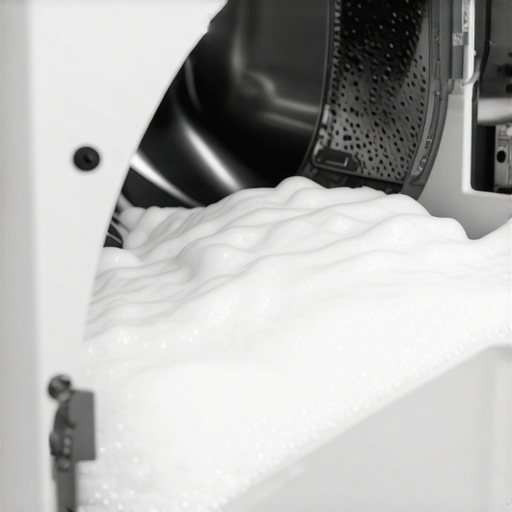
Stop Killing Your Machine With Extra Soap
Have you ever fallen into this ‘extra soap’ trap? Let me know in the comments. I’ve seen countless owners think their washer is broken when it’s actually just choking on bubbles. To keep things running smoothly, you should focus on the secret to making your refrigerator last twice as long and applying that same preventative care to your laundry room.
Why Do My Sensor-Driven Cycles Ignore My Manual Settings?
This is the number one question I get from tech-savvy owners. According to the Association of Home Appliance Manufacturers (AHAM), modern sensors measure soil levels and water turbidity in real-time to optimize resource use. If you pre-rinse your dishes until they are spotless, you are actually doing a disservice. Innovative dishwashers with AI technology will ‘see’ the clean water and shorten the cycle or reduce the heat prematurely, often leaving stubborn proteins or bacteria behind. The ‘oops’ factor here is the ‘quick wash’ trap. We use it to save time, but it often skips the thermal sanitize step required for true hygiene.
The Smelly Reality of Perpetual Eco-Mode
While I’m a huge advocate for using the best eco-friendly settings for your modern washing machine, there is a nuance most people miss: temperature. If you only ever run cold cycles to save energy, you are creating a breeding ground for biofilm. This is the reason your high-efficiency washer smells like old gym socks even when it’s empty. At least once a month, you need to break the ‘eco’ habit and run a high-heat sanitizing cycle. This dissolves the fatty acids from detergents and body oils that cold water simply leaves behind. Managing a smart home isn’t about setting it and forgetting it; it’s about understanding the internal logic of the hardware.Software updates are the new oil change for your kitchen. I used to ignore the ‘Update Available’ notification on my washer until a software glitch caused the door lock to jam mid-cycle for three days straight. Now, I treat these prompts with respect. If you have been putting it off, you should connect your smart washer to your home wifi in minutes and let it download the latest firmware. These updates are not just about adding new emojis to your fridge screen; they contain critical motor timing adjustments and security patches that prevent the hardware from working harder than it needs to. This digital upkeep is the first step in scaling your smart home without it becoming a full-time job.
The Professional Tools Every Smart Home Owner Needs
When it comes to tools, I do not just rely on a standard screwdriver. I keep a digital multimeter and a specialized flexible vacuum attachment in my ‘maintenance drawer.’ According to the Energy Star technical specifications for residential refrigeration, even a 1/10th of an inch layer of dust on your condenser coils can reduce thermal exchange efficiency by nearly 20%. I use my multimeter once a year to check the continuity of my fridge’s defrost heater. It sounds like overkill, but proactive electrical testing is the secret to making your refrigerator last twice as long by preventing the compressor from overheating.
How Can I Keep My Smart Kitchen Running Smoothly for the Long Haul?
The key is a concept I call ‘Active Observation.’ Do not wait for a loud beep or a leak to tell you something is wrong. Once every three months, you should calibrate your smart fridge temperature sensors using the simple ice-water method. If the digital display says 37 degrees but your thermometer shows 41, you have caught a failing thermistor before it ruins your milk. Similarly, mastering how to keep your refrigerator coils clean in a pet-friendly home is a non-negotiable task if you want to avoid the dreaded ‘black screen’ power throttle issues we discussed earlier. For your laundry room, ensure you are using high-heat cycles periodically, as this is the only way to get that weird smell out of your front loader and prevent gunk from clogging the pump sensors.
The Coming Era of Self-Healing Appliances
Looking ahead, the future of home appliances: trends to watch in 2025 suggest we are moving toward ‘predictive self-healing’ technology. We are already seeing refrigerators in 2025 top features that transform your kitchen, such as AI-driven vibration analysis that can detect a failing bearing weeks before it actually breaks. Until those machines are in every home, we remain the primary technicians. My challenge to you today: go to your laundry room, open the settings panel, and learn how to reset the error codes on your modern smart washer to clear the memory. It is the easiest way to give your machine a fresh start and potentially fix those annoying lag issues.
Lessons From My Most Expensive Software Glitches
After years of trial and error with these machines, I’ve realized that most ‘catastrophic’ failures are actually just communication errors. First, remember that your appliance’s ‘brain’ is often its most sensitive link, not the heavy-duty motor. If you treat it with the same patience you give a lagging laptop, you will save thousands in unnecessary repair fees. Second, never ignore a slow-loading screen; it is usually a warning that your WiFi signal is weak or the internal cache is full. Finally, I’ve learned that environment is everything. A dusty floor or a humid laundry room affects the electronics just as much as a power surge. It is about respecting the hardware as much as the software.
My Personal Survival Kit for Modern Appliances
I do not leave my kitchen’s health to chance, and you shouldn’t either. I highly recommend bookmarking the ultimate guide to smart home appliances for a modern living as a baseline for setting up your entire home ecosystem correctly. For physical maintenance, a simple non-conductive probe or a plastic shim is much safer than any metal tool for reaching those hidden reset switches. I also swear by high-quality surge protectors specifically rated for large motor loads; a single power spike can fry a four-hundred-dollar control board in milliseconds. If you are still in the shopping phase, I always point my friends toward choosing the right refrigerator tips from industry experts to ensure they buy a model known for software stability.
Reclaim Control of Your High-Tech Home Today
You bought these machines to make your life easier, not to become a slave to their flashing error codes. By staying proactive and performing these small resets and coil cleanings, you ensure that your smart washing machines can simplify laundry day instead of complicating it. We are entering an exciting era where the future of home appliances: trends to watch in 2025 promise even more autonomy and self-repair features, but for now, your manual care is what keeps the kitchen running smoothly. The goal is to spend less time staring at a black screen and more time enjoying the convenience you paid for. Have you ever had a smart appliance ‘ghost’ you with a frozen panel or a sudden black screen? Let me know which model gave you the most trouble and how you finally fixed it in the comments below!