
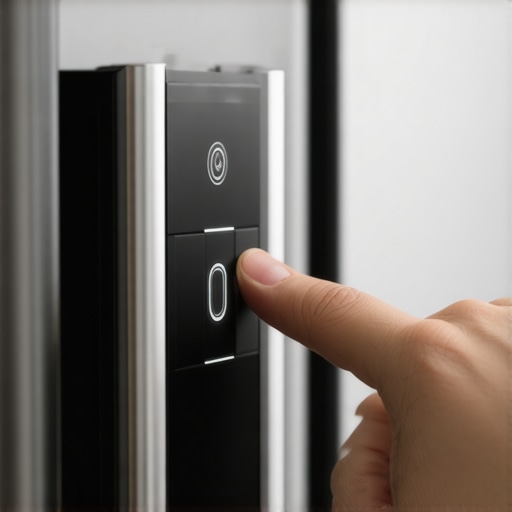
It was 3:00 AM on a Tuesday, and my kitchen sounded like a distressed spaceship. I stood there, eyes blurry from sleep, staring at my expensive French-door fridge as it chimed a frantic, rhythmic warning that something was very wrong. The touchscreen was a void of blackness, and the interior lights wouldn’t even flicker. My first thought? ‘There goes two weeks’ worth of groceries.’ I spent the next hour frantically Googling, only to realize I was falling into one of those common 5 mistakes that are shortening the life of your smart refrigerator—panicking and pulling the plug without a plan. It wasn’t just about the food; it was the sheer frustration of having a high-tech machine fail so fundamentally. You expect a premium product to have a premium solution, but often, the answer is tucked away where no one thinks to look.
That Time My Fridge Decided to Retire Without Notice
I’ve been exactly where you are—barefoot on a cold floor, wondering why I ever jumped into the ultimate guide to smart home appliances for a modern living. When these machines work, they’re like magic. But when they glitch? They’re just massive, stainless steel paperweights. Early on, when I was first choosing the right refrigerator, I didn’t realize that these units are basically giant computers that happen to keep things cold. I once paid a tech $150 just to show me where a tiny toggle switch was hidden behind a door hinge. Since then, I’ve made it my mission to find every shortcut possible to keep my home running without a professional’s intervention. Even when your smart fridge app refuses to sync with your grocery list, there is usually a simpler fix than calling for backup.
Find the Secret Switch Before You Call the Repairman
According to a study by Consumer Reports, the complexity of modern smart appliances means software glitches are now a top reason for user frustration and unnecessary service calls. If your touchscreen is unresponsive or you need to reset your smart fridge after a power outage, you don’t need a toolbox. You just need to know where the manufacturers hide the ‘brain’ of the machine. Usually, it’s a pinhole button or a small toggle switch often found near the top hinge or inside the filter compartment. Today, I’m going to show you exactly where to look so you can silence a chirping smart fridge control panel in seconds. We are moving toward a future of home appliances where we need to be part-time IT experts just to get a glass of water.
Is a simple reset actually going to save my groceries?
I get the skepticism. When your fridge is making a loud humming sound or the ice maker is totally silent, a tiny button seems like a band-aid on a bullet wound. But here is the truth: modern fridges often get stuck in a ‘loop’ during a software update or after a minor voltage spike. A hard reset forces the sensors to re-calibrate. It’s the same reason we restart our laptops when the Wi-Fi acts up. If you’ve already tried to set up your smart refrigerator to alert you when the door is ajar and it still won’t behave, the reset is your last ‘free’ option before the pros arrive. Have you ever felt like your refrigerator was smarter than you were, especially when it starts making weird noises in the middle of the night? Drop a comment below—I’d love to hear your most ridiculous ‘smart’ appliance fail.
Stop Pushing Random Buttons and Start the Sequence
To get your appliance back on track, you have to stop treating it like a standard icebox and start treating it like the high-end computer it is. The most common error I see is people pulling the plug repeatedly, which can actually lead to 5 mistakes that are shortening the life of your smart refrigerator. Instead of brute force, we use a targeted reset. Think of it like a ‘Ctrl+Alt+Del’ for your kitchen. Most manufacturers include a dedicated reset button because they know software is prone to ‘hanging’ during updates. 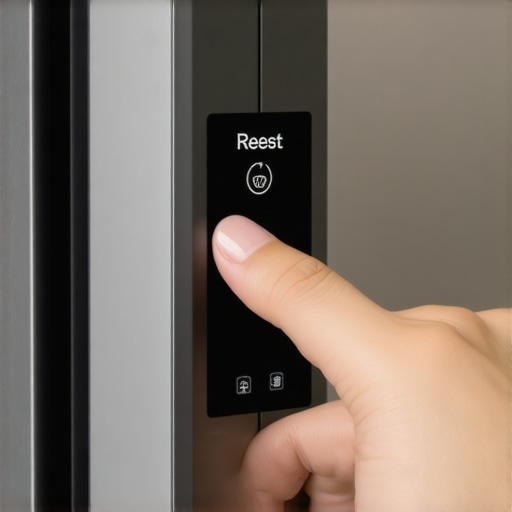
Hunt for the Master Toggle
The master toggle is rarely out in the open. On several units I’ve worked on, it’s hidden behind a small plastic panel on the top of the right-hand door hinge. I once spent forty minutes frantically searching for one of these while my unit was stuck in a loop, only to realize the switch was behind the magnetic seal. When you find it, flip it to the ‘Off’ position and wait at least sixty seconds. This allows the capacitors on the motherboard to fully discharge. This is the same logic used when you reset your smart fridge after a power outage to ensure the sensors don’t get a false reading from a lingering charge.
When the Software Just Won’t Listen
If the physical switch doesn’t bring the screen back to life, you’re likely dealing with a frozen operating system. This is often why your smart fridge screen keeps going black every morning—it’s trying to run a background update and failing. To force a software reboot without losing your settings, locate the ‘Home’ and ‘Help’ buttons (or the equivalent volume up/down buttons on some models) and hold them simultaneously for ten seconds. You’ll know it worked when the manufacturer’s logo appears. I did this on a client’s fridge last month after their smart fridge wasn’t updating its software, and it immediately cleared a cache error that had been blocking the cooling fans for days.
Don’t Ignore the Physical Blockages
Sometimes the ‘smart’ part of your fridge is fine, but it’s giving you a digital error because of a physical problem. If the reset doesn’t stop the alarm, check the airflow. I’ve seen cases where a simple build-up of pet hair caused the system to think the compressor was failing. You should clean the hidden debris under your refrigerator grille at least twice a year. Similarly, if your temperature is spiking, check the secret drain filter at the bottom of your fridge you never knew existed. A clog there can cause moisture buildup that tricks the smart sensors into thinking the door is open. When I finally cleared my own drain filter, the annoying ‘ghost’ chimes stopped instantly, and I didn’t have to spend a dime on a technician. If you notice the fridge is still acting up, like why your fridge is freezing everything on the top shelf, it’s time to move from software resets to sensor calibration.One of the biggest lies we’ve been sold by marketing is that a ‘clean’ smell requires a mountain of suds. In fact, if you see bubbles through the window of your front-loader, you’ve already failed. Most users assume that more soap equals better results, but why your washer doesn’t need a whole cup of detergent is actually a matter of fluid dynamics and sensor accuracy. Modern machines are designed to use high-efficiency (HE) formulas that require very little volume to break down surface tension. When you over-pour, you aren’t getting cleaner clothes; you’re just drowning the motherboard in ‘suds lock’ errors. This causes the machine to add more rinse cycles, which explains why your high-efficiency washer takes so long to complete a load.
The Invisible Film Killing Your Smart Sensors
According to a study by the Association of Home Appliance Manufacturers (AHAM), using excess detergent is the primary cause of mechanical strain and ‘biofilm’ buildup in modern washers. This film is a magnet for mold, and it is exactly the reason your high-efficiency washer smells like old gym socks even after you’ve run a tub-clean cycle. It is a classic ‘oops’ trap: we try to fix a bad smell by adding more of the thing that caused it in the first place. This same logic applies to your dishwasher. If you’re using 3-in-1 pods and still filling the rinse aid reservoir, you might be causing a chemical overlap that leads to cloudy glassware.
Why does my new fridge run almost 90% of the time?
If you’ve upgraded recently, you probably noticed a constant, low-frequency hum. Old-school fridges were binary—they were either ‘on’ at 100% power or completely ‘off.’ Modern smart units use variable-speed inverter compressors that stay on at a low speed to maintain a perfectly stable internal climate. It’s actually more energy-efficient than the old start-stop cycle, but it can be jarring for owners of refrigerators in 2025 who expect silence. However, if the hum turns into a rattle, you need to understand the difference between inverter and traditional refrigerator compressors to know if your unit is failing or just doing its job.
Trust the Turbidity Sensors Over Your Instincts
The most common mistake I see advanced users make is ‘pre-rinsing’ dishes to a surgical shine before putting them in the dishwasher. Modern units are equipped with turbidity sensors that ‘see’ how dirty the water is during the initial rinse. If you provide the machine with clean dishes, the sensor tells the computer to run a shorter, cooler cycle. Because the enzymes in modern detergent need food particles to react with, the soap has nothing to latch onto and ends up scouring your plates instead of cleaning them. This is often why your dishwasher isn’t drying the dishes well—the cycle ended too early because you were too helpful. Have you ever fallen into the ‘more soap is better’ trap or spent hours pre-scrubbing dishes? Let me know in the comments—I’ve done both, and the repair bills were a tough lesson in trusting the tech. If you’re looking for a fresh start, check out top smart appliances for a seamless home experience in 2025 to see how the latest sensors are taking over the heavy lifting.Maintaining these machines isn’t just about surface-level cleaning; it’s about preserving the delicate balance of sensors and hardware that keep your home running. If you want to avoid the ‘planned obsolescence’ trap, you need to think like a technician. I keep a dedicated ‘appliance kit’ in my garage that includes a long-neck flexible brush and a high-suction handheld vacuum. This isn’t for the floor—it’s for your condenser coils. When I tell people to clean the hidden debris under your refrigerator grille, I mean they should be getting deep into those fins. According to the IEEE Standard 1100-2005, electronic equipment—which includes your smart fridge’s motherboard—is extremely sensitive to heat and voltage fluctuations. Clogged coils force the compressor to run hotter and longer, eventually baking the nearby control boards. #IMAGE_PLACE_HOLDER_D#
The Small Tool Kit That Saves Me Thousands
My most used tool isn’t a wrench; it’s a simple multimeter. If you can check for continuity, you can solve half of your own problems. For example, if you’re wondering the real reason your ice maker is producing tiny hollow cubes, it’s often a failing water inlet valve. A quick test with a meter tells me if the part is dead before I spend $80 on a replacement. I also swear by using the best smart plugs for monitoring appliance energy use. These aren’t just for turning lamps on; they act as an early warning system. If my washer starts drawing 20% more power than usual for a standard cycle, I know a bearing is starting to seize long before the machine throws an error code.
How do I maintain these high-tech systems over time?
Consistency beats intensity every single time. Every six months, I perform a ‘deep sync’ check. I ensure the firmware is updated—since why your smart fridge isn’t updating its software is often a simple Wi-Fi handshake issue—and I manually clear the debris filters. If you have a front-loader, you must clean a front-load washer filter without flooding the room at least quarterly. This prevents the pump from overworking and keeps those sensors from miscalculating the water levels.
Look Ahead to the Self-Healing Kitchen
I predict that by 2027, we won’t even be looking for these filters. We are already seeing innovative dishwashers with AI technology that can detect mineral buildup and suggest a specific descaling cycle automatically. The future is moving toward ‘predictive maintenance,’ where your fridge will order its own replacement water filter or even a capacitor before the current one fails. Until then, you are the brain of the operation. My advice? Go to your laundry room right now and check the drain pump filter. It’s a five-minute task that prevents a three-hundred-dollar service call. If you’re ready to see how far this tech can go, take a look at the top smart appliances for a seamless home experience in 2025 to see the newest self-monitoring features hitting the market.
The Most Costly Myths I Stopped Believing
Looking back on years of troubleshooting, I’ve realized that the biggest hurdle isn’t the technology itself—it’s our old-school habits fighting against new-school logic. Here are the lightbulb moments that saved my wallet: First, silence isn’t always golden. If your machine is dead quiet, it might be idling to save energy rather than being ‘broken.’ Second, the smell of bleach does not equal ‘clean.’ In fact, over-sanitizing can degrade the rubber seals that keep your kitchen dry. I learned this the hard way when researching how to sanitize your dishwasher after a long vacation without damaging the internal sensors. Finally, stop overthinking the cycles. Using the best settings for washing your heaviest winter bedding usually means letting the machine’s AI determine the water weight, not forcing a ‘heavy duty’ mode every time. Trust the sensors; they are faster and more accurate than our instincts.
The Small Kit That Saves My Sanity
You don’t need a van full of tools to keep your home running. My personal ‘war chest’ consists of just four items that have solved 90% of my tech headaches. #IMAGE_PLACEHOLDER_E# I always keep a high-quality multimeter nearby to check for continuity in heating elements or valves. I also rely heavily on the best smart plugs for monitoring appliance energy use because they act as the ultimate diagnostic tool—if the power draw spikes, I know a motor is struggling before it actually burns out. Beyond the hardware, I keep a digital folder of PDFs for every manual I own. When you dive into the ultimate guide to smart home appliances for a modern living, you realize that the manufacturer’s ‘hidden’ reset codes are your best friend. These resources aren’t just about fixing things; they are about understanding the ‘why’ behind the ‘how.’
Your Kitchen Is Waiting for a Reset
The transition from traditional to smart home appliances can feel like a steep mountain to climb, but remember that you are in control. These machines were built to serve your lifestyle, not the other way around. By taking ten minutes a month to check a filter or update a firmware patch, you are extending the life of your investment by years. Don’t be afraid to poke around the settings or try a different loading pattern. The top smart appliances for a seamless home experience in 2025 are more resilient than you think, and most ‘failures’ are just the machine asking for a little attention. You’ve got the knowledge now—go ahead and give your fridge that long-overdue reset. Have you ever managed to fix a ‘dead’ appliance just by finding a hidden reset button? I’d love to hear your success stories in the comments below!