
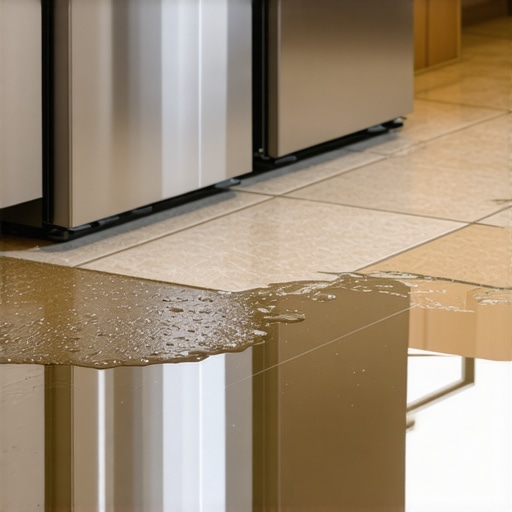
I remember the exact moment I realized my kitchen had a plumbing problem that wasn’t coming from the sink. It was 2:00 AM, and my foot hit a cold, slimy puddle right in front of the crisper drawer. My first thought? The fridge is dead, and I am about to lose three hundred dollars worth of groceries. My second thought? My poor hardwood floors. I spent the next hour frantically searching for choosing the right refrigerator tips from industry experts because I was convinced I needed a replacement immediately. But here is the truth: most refrigerator leaks are not a death sentence for the appliance. They are usually just a cry for a little bit of basic maintenance. Today, I am going to walk you through exactly why your fridge is turning your kitchen into a water park and how you can fix it without calling a professional. Have you ever walked into your kitchen and felt that unmistakable squish of wet socks? It is a frustrating rite of passage for every homeowner, but we are going to solve it together right now.
Your Kitchen Floor Doesn’t Have to Be a Lake
When I first started DIY-ing my home repairs, I made a massive mistake. I saw water under the unit, panicked, and tried to move a heavy refrigerator without scratching the floor by just yanking it toward me. I ended up with a deep gouge in the linoleum and a leak that was still there. It turns out, the culprit was just a clogged defrost drain. This is incredibly common. In fact, research from organizations like the Association of Home Appliance Manufacturers suggests that simple maintenance issues like clogged drains and sealing issues account for a significant portion of service calls that could have been avoided. When your defrost cycle runs, the melted frost is supposed to go down a tube into a pan under the fridge to evaporate. If that tube gets blocked by a stray piece of food or a bit of ice, that water has nowhere to go but out the front door and onto your tile. It is a simple fix once you know where to look.
Is my fridge actually broken or just being temperamental?
I know what you are thinking. My fridge is only a few years old, so it should not be leaking already! It is easy to get skeptical and think you bought a lemon, especially with all the talk about refrigerators in 2025 top features making them seem like they should be invincible. But even the smartest, most expensive units are subject to the laws of physics. If your water line for the ice maker has a tiny pinhole leak, or if your door is not closing perfectly, moisture will accumulate. Before you assume the worst or start worrying about the hidden costs of cheap budget appliances, we are going to look at the three most likely culprits that are currently soaking your socks. Grab a towel and a flashlight, because we are going to find that leak and stop it for good.
Blast through that clogged defrost drain
Think of your defrost drain as the gutter system for your freezer. When the appliance goes through its automatic thaw cycle, that water needs a clear path to the drain pan. If a single frozen pea or a shard of ice blocks the exit, you get an overflow. This is exactly what happened to me last summer. I spent twenty minutes bailing out the bottom of my freezer with a sponge because I hadn’t realized that the secret to making your refrigerator last twice as long often involves just keeping these tiny passages clear. I eventually used a turkey baster filled with hot water to flush the line. The first few tries just splashed back at me, making a mess on my shirt, but on the fourth squeeze, I heard a loud ‘pop’ and the water finally drained away.
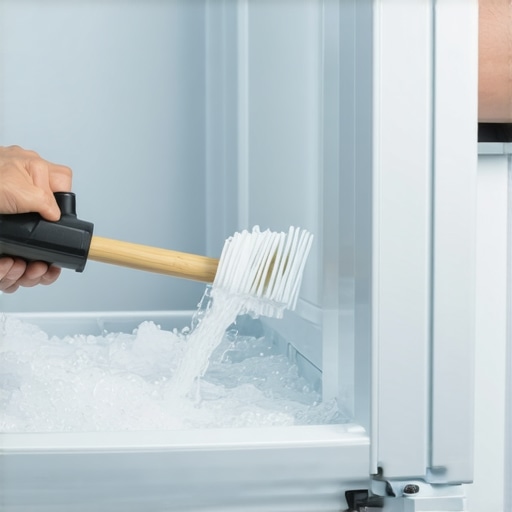
If you suspect a clog, look for the drain hole—usually located on the back wall of the freezer. If it’s frozen shut, use a hair dryer on a low setting to melt the ice, then flush it with warm water. This simple maintenance prevents the ‘puddle on the floor’ syndrome and keeps your unit running efficiently without expensive repairs.
Is your gasket letting the swamp inside?
Sometimes the water isn’t coming from a leak, but from thin air. If your door doesn’t seal perfectly, warm, humid air from your kitchen sneaks inside. When that warm air hits the cold interior, it condenses into water droplets that eventually pool at the bottom. I once ignored a tiny tear in my fridge gasket for a month, only to find my vegetable crisper literally floating. You should regularly check the perimeter of your door for any cracks or stiff spots. It is vital to how to test if your fridge door seal is actually airtight using the ‘dollar bill test.’ Close the door on a bill; if you can pull it out with no resistance, your seal is failing and your fridge is working overtime.
Hunt for hidden cracks in the water line
If the water is appearing behind the fridge rather than inside it, the culprit is likely the water supply line for your ice maker or water dispenser. These plastic tubes can become brittle over time or get pinched when the fridge is pushed back against the wall. A tiny pinhole can spray a fine mist of water for weeks before you notice the damage to your baseboards. While you are back there, it is also the perfect time to learn how to keep your refrigerator coils clean in a pet-friendly home, as dust buildup can cause the compressor to overheat and vibrate, which further stresses those delicate water lines. If your ice cubes look strange, it might even be a sign of low pressure or a line issue; check out why your refrigerator ice maker is producing tiny or cloudy cubes to see if your plumbing is the root cause of both the leak and the bad ice.
Most homeowners believe that more soap equals cleaner clothes, but in the world of modern engineering, this is a dangerous misconception. In fact, using too much detergent is the primary cause of internal ‘suds locks’ that force water out of overflow valves. I have found that the secret to using less detergent in your high-efficiency washer is actually the best way to prevent the very leaks that ruin your flooring. When you over-sudse, you are not just wasting money; you are creating a thick biofilm that traps bacteria. This is the real reason why your front-load washer smells like a swamp and how to fix it without buying a brand-new unit. Then there is the ‘vinegar trap.’ I see influencers recommending white vinegar for every appliance, but as an expert, I have to warn you: acetic acid is a solvent that can eat through the specialized rubber gaskets in modern machines. While it is great for glass, the truth about using white vinegar in your high-efficiency dishwasher is that it can lead to brittle seals and catastrophic leaks over time.
Why does my energy-efficient washer take so long to finish?
It feels like a step backward when a modern machine takes two hours to complete a load that your 1995 model finished in forty minutes. However, the nuance lies in the chemistry of cleaning. Because modern units use significantly less water, they must compensate with longer ‘contact time’ and agitation to break down soils. Understanding why your energy-efficient washer takes so long to finish helps you realize that the machine isn’t broken; it is just being precise. According to research from the Association of Home Appliance Manufacturers, these longer cycles are actually gentler on fabrics and more effective at stain removal. If you feel like your machine is still underperforming, remember that the hidden sensor in your dishwasher that needs a manual scrub or your washer’s debris filter are often the true culprits behind poor performance, not the appliance’s age. Have you ever fallen into this trap? Let me know in the comments.It is one thing to know why your machine is acting up, but it is another thing entirely to have the right gear to stop the problem in its tracks. I do not keep a massive workshop, but there are three things I never go without: a 24-inch flexible dryer vent brush, a basic digital multimeter, and a small bottle of food-grade silicone grease. I learned the hard way that a standard vacuum attachment will not reach the back of the condenser. When you learn how to keep your refrigerator coils clean in a pet-friendly home, you realize that half an inch of cat hair is basically an insulating blanket that chokes your compressor to death. I use that long brush once every six months, and my energy bill noticeably drops every single time. As for the multimeter? It is the only way to truly know if a heating element is burnt out or if your control board is just having a bad day. If you are trying to how to diagnose a washing machine that wont spin at full speed, testing for continuity is much better than guessing and buying parts you do not need.
How do I maintain my appliances over the long haul?
The secret is not just cleaning; it is calibration. Most people set their fridge to a middle setting and never look back. But as sensors age, they drift. I recommend using a secondary thermometer to check your internal temps. This is part of the secret to making your refrigerator last twice as long. If you are not checking the actual air temperature, you might be overworking the motor without knowing it. According to technical service manuals from manufacturers like General Electric, even a five-degree variance can increase energy consumption by nearly 20% and significantly shorten the lifespan of the evaporator fan motor. Beyond the physical tools, we are entering an era where software is just as vital as a wrench. I have started using a single interface to manage everything. Once you figure out how to sync your smart kitchen appliances to one app, you get push notifications for things like filter changes or abnormal power draws before a leak even starts. This is where the future of home appliances trends to watch in 2025 are headed. We are not just buying boxes that wash or cool; we are buying integrated systems that tell us when they are sick. I predict that within three years, your dishwasher will not just tell you the drain is clogged; it will use AI-driven pressure sensors to back-flush the line automatically. I want you to try something this weekend: pull your fridge out, get a vacuum back there, and then check your gasket with the dollar bill test I mentioned earlier. Small, consistent wins are the only way to avoid the hidden costs of cheap budget appliances that fail the moment you stop paying attention. It is about taking control of your kitchen health so it does not take control of your wallet.
Lessons from the Kitchen Trenches: What My Flooded Floor Taught Me
After years of tinkering with compressors and gaskets, I have realized that the biggest mistake isn’t failing to fix a leak—it’s ignoring the subtle warning signs. I used to think a persistent clicking sound was just ‘character’ for an old machine, but I soon learned why your refrigerator is making a clicking noise every ten minutes usually signals a relay or compressor struggle that ends in a puddle. Maintenance is a conversation, not a chore. If you listen, your appliances will tell you exactly what they need before your socks get wet. I have also learned that even with the most expensive units, you still have to be the boss; never assume a ‘smart’ label means the machine is self-healing.
The Survival Kit for Modern Homeowners
If you want to move beyond just reacting to disasters, you need a proactive strategy. Start by checking out the ultimate guide to smart home appliances for a modern living to see how connectivity can actually save you from unexpected repair bills. Personally, I never live without a simple moisture sensor placed under the fridge—it is a ten-dollar investment that saves thousands in floor damage. I also highly recommend keeping a digital folder for your manuals; knowing how to hard reset your smart refrigerator control panel can solve many ‘ghost leaks’ caused by software glitches during the defrost cycle. These tools aren’t just gadgets; they are your first line of defense.
Take Back Control of Your Kitchen Today
You do not need a degree in mechanical engineering to keep your home running smoothly. Whether you are browsing refrigerators in 2025 top features or nursing a ten-year-old workhorse, the principles remain the same: clean your coils, check your seals, and stay curious. You have got the knowledge now to turn that ‘puddle panic’ into a simple ten-minute fix. Your kitchen should be a place of joy, not a source of stress. Dealing with leaks is just one part of the journey toward a truly seamless home experience.
Have you ever discovered a leak just in time to save your floors, or did you find out the hard way like I did? Let me know in the comments below!