
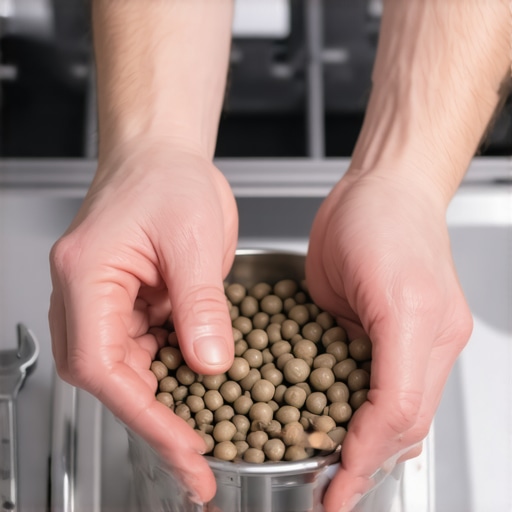
I was sitting in my living room last night, finally enjoying a moment of peace, when a sound erupted from the kitchen that made my heart drop. It wasn’t the usual gentle swoosh of water; it was a violent, erratic clattering. It sounded exactly like someone had tossed a handful of river stones into my wash cycle. My mind immediately went to the worst-case scenario: a blown motor or a shattered heating element. I’ve spent years tinkering with home gear, but that sound still sends a shiver down my spine. We rely on these machines to make life easier, but when they start acting like they’re munching on gravel, it’s stressful. Today, we are going to silence that racket and get your kitchen back to being a sanctuary.
My Dishwasher Sounded Like a Rock Tumbler Last Night
I’ll be honest with you: the first time I heard this noise years ago, I panicked and almost called a repairman for a $200 visit. I was convinced the pump was toast. I even started looking at how to choose the best dishwasher to replace it. But before I pulled the trigger, I decided to get my hands dirty. It turns out, that terrifying “loose rock” sound is rarely a terminal illness for your appliance. More often than not, it’s a foreign object—a stray popcorn kernel, a broken piece of glass, or even a rogue screw—bouncing around in the impeller or the spray arms. According to research by Consumer Reports, noise is a leading consumer complaint, yet many sounds are caused by simple obstructions rather than mechanical failure. If you have been struggling to quiet down a noisy dishwasher pump fast, you need to know that the fix is usually much simpler than a total overhaul. Have you ever opened your dishwasher mid-cycle just to see if a literal rock was in there? Tell me I’m not the only one who has felt that frustration! [image_placeholder_1]
Is Your Machine Actually Broken or Just Busy?
We often fear the worst because we don’t see what’s happening behind that stainless steel door. I once made the mistake of ignoring a slight rattle for weeks, only to find that cleaning the filter in your dishwasher would have solved it in five minutes. Instead, that tiny bit of debris eventually caused a clog. That’s the thing about “the rock sound”—it’s your machine’s way of screaming for a quick inspection. Whether it’s a gritty white film on your plates or a sound like a drum solo, your dishwasher is trying to tell you something. Before you assume you need a new unit, we’re going to walk through the exact steps to find that “rock” and get rid of it for good.
Clear the Path for Your Spray Arms
The most common reason for that rhythmic clicking or banging is actually the simplest: a spray arm is hitting a rogue utensil. Think of your spray arms like a garden sprinkler; if you put a lawn chair in the way, it’s going to thump against it every time it rotates. I recommend a manual spin test before every cycle. Just reach in and flick the arms with your finger. If they hit a tall plate or a dangling spatula, you’ve found your culprit. Learning the best way to stack your dishwasher for maximum clean isn’t just about hygiene; it’s about ensuring those arms have a clear 360-degree path. If the arms are clear but the sound persists, you should clean the internal spray arms of your dishwasher for better flow to ensure no internal debris is causing a rattling vibration.
Hunt for Debris in the Sump and Filter
When the sound is more of a grinding or a persistent rattle, it’s time to look deeper into the belly of the beast. Most modern units have a sump area at the very bottom where water collects before being pumped back up. This is the ‘lost and found’ of your kitchen. I once spent twenty minutes fishing out a tiny, jagged piece of a broken glass ornament that had wedged itself perfectly between the filter mesh and the plastic housing. Every time the water pulsed, it hit that glass like a guitar pick on a string. You need to pull out the bottom rack and remove the filter assembly. If you aren’t sure how, the easiest way to clean the filter in your dishwasher is usually a simple quarter-turn of the plastic cylinder. Check the cavity underneath for cherry pits, broken glass, or even those tiny plastic ties from bread bags.
Check the Impeller Before Calling for Help
If the filter is clean but the noise happens specifically when the water is draining, the problem is likely at the drain pump impeller. This is a small fan-like part that pushes water out of the machine. Even a single popcorn kernel stuck here can make it sound like the motor is failing. While you are down there, check if your dishwasher isn’t draining and how to clear the blockage because a clogged drain often forces the motor to work harder, creating a louder, more strained hum.
Stop the Racket Before it Starts
Preventing these sounds often comes down to the small choices we make during the ‘load and go’ phase. We often blame the machine, but the chemistry and mechanics of the wash matter. For instance, many people don’t realize the dishwasher detergent mistake that is etching your favorite glassware can also lead to a buildup of grit in the seals, which eventually causes leaks or squeaks. Keeping the unit level is another quick fix; a tilted machine causes the racks to vibrate against the tub. If your machine is older and none of these fixes work, it might be time to look into innovative dishwashers with AI technology that can actually alert you to specific mechanical issues through your phone before they become audible disasters.That ‘rock in a tumbler’ sound is really just the entry-level lesson in appliance ownership. When we move into the realm of modern smart tech, the problems get a lot more subtle and, frankly, a lot more annoying. Most people assume that because they spent a premium on a machine with Wi-Fi, it should be able to diagnose its own issues. But here is the contrarian truth: smart sensors are often less ‘intelligent’ than a basic mechanical float switch because they can be easily fooled by the very environment they are meant to clean. I have seen countless cases where a ‘faulty’ motor was actually just a sensor coated in a fine layer of calcium.
Smart Sensors Aren’t as Brilliant as You Think
Everyone tells you that smart appliances are the future of home appliances because they optimize every drop of water. In my experience, this ‘optimization’ is a double-edged sword. While it is true that your high-efficiency washer uses barely any water to save the planet, that very lack of water volume means debris isn’t flushed away as forcefully as it used to be. This leads to a ‘nuance’ that most manuals won’t mention: modern machines require more frequent manual cleaning than the old ‘dumb’ units your parents owned. A technical report from the Association of Home Appliance Manufacturers (AHAM) suggests that as sensor complexity increases, the margin for environmental error—like hard water buildup or detergent residue—shrinks significantly, leading to ‘false positive’ failure codes.
Why Does Your AI Dishwasher Stop Mid-Cycle Without an Error Code?
This is the ultimate frustration for the modern homeowner. You expect a notification on your phone, but instead, the machine just sits there, silent and full of soapy water. Usually, this happens because the turbidity sensor—the eye that ‘sees’ how dirty your dishes are—has become clouded. When the AI can’t determine the water clarity, it often defaults to a ‘pause’ state rather than risk a motor burnout. If you are dealing with a washing machine that stops mid-cycle without an error code, or a dishwasher doing the same, the fix isn’t a software patch; it’s a physical cleaning of the internal sensors.
The Hidden Danger of Detergent Overload
The biggest ‘oops’ factor I see with advanced gear is the tendency to use too much soap. We are conditioned to think more bubbles equals more clean. However, in a smart unit, excess suds can actually leak into the internal electronics or cause the pressure switch to misread the water level. Learning the secret to using less detergent in your high-efficiency washer is the single best way to extend the life of your control board. If you see your smart appliance app keeps asking for a firmware update, it might be trying to recalibrate those very sensors to handle the ‘suds lock’ you’ve accidentally created. Have you ever had a ‘smart’ appliance do something completely nonsensical? Let me know in the comments; I’d love to help you troubleshoot the weirdness.The real secret to making your refrigerator last twice as long isn’t just about the software updates; it’s about the hardware hygiene we have forgotten in the digital age. I keep a very specific kit in my utility drawer: a long-handled coil brush and a small bubble level. It sounds primitive for a machine that can order milk, but hear me out. If your fridge isn’t perfectly level, the door seal won’t seat properly. You might think you need to test if your fridge door seal is actually airtight, but the root cause is often just a slight tilt. I’ve seen compressors burn out in five years just because they were fighting a 2-degree lean. According to the ASHRAE (American Society of Heating, Refrigerating and Air-Conditioning Engineers) handbook, a mere 0.042 inches of dust on a coil can reduce its efficiency by 21%. That’s a massive hit to your utility bill and the compressor’s lifespan.
Don’t Let Your Fridge Choke on Pet Hair
If you have a cat or dog, you need to keep your refrigerator coils clean in a pet-friendly home every six months. I use a vacuum with a crevice tool followed by that narrow brush. It is the single most effective way to prevent that loud humming sound that signals a dying motor.
How do I keep these machines running like new for ten years?
It starts with a deep dive into the parts you can’t see. For washing machines, it’s about that hidden trap. Everyone forgets to clean the debris filter on your front load washer effectively until they face a ‘sud lock’ or a drain failure. I personally set a calendar reminder every three months to pull that little plug. If you don’t, you’re just recirculating old lint and gunk. According to the Association of Home Appliance Manufacturers (AHAM) service bulletins, nearly 30% of ‘pump failures’ are actually just blocked filters. It’s a $0 fix that saves a $400 repair bill.
Tools That Actually Matter for High-Tech Gear
I’m also a big believer in the ‘Less is More’ philosophy when it comes to chemicals. We’ve talked about suds, but there’s also the scale issue. If you live in a hard water area, you absolutely must learn the best way to sanitize your dishwasher without using bleach, because bleach can actually degrade the rubber gaskets in newer high-efficiency models over time. I use a simple citric acid cleaner once a month to keep the heating element from scaling over. Looking ahead, I predict the future of home appliances involves ‘self-healing’ diagnostics. We’re already seeing refrigerators in 2025 with top features that transform your kitchen, including sensors that monitor compressor vibration patterns to predict failure before it happens. Until then, we are the first line of defense. My challenge to you today: grab a level and check your washer. If it’s even a hair off, take ten minutes to level a washing machine so it stops banging on tile floors. Your floor—and your machine’s bearings—will thank you.
What I Learned After My Third Service Call
Reflecting on my years of managing household gadgets, the biggest eye-opener was realizing that “smart” doesn’t mean “self-sufficient.” I used to think that because I had the latest gear, I could skip the basics, but I was wrong. The first big lesson? Most “broken” sensors are actually just dirty sensors. Second, never ignore a new vibration; if you learn how to level a washing machine so it stops banging on tile floors early on, you save the internal bearings from a slow, expensive death. Lastly, the software is only as good as the hardware hygiene; if you know the secret to using less detergent in your high-efficiency washer, you’ll avoid the suds-lock errors that plague modern machines. I also learned that when the display goes haywire, knowing how to recalibrate your smart fridge temperature sensors can save you from throwing away a perfectly good freezer full of food.
The Maintenance Toolkit I Swear By
To keep everything running smoothly, I recommend keeping three simple things in your utility drawer: a magnetic bubble level, a long-handled coil cleaning brush, and a bag of citric acid. These tools are far more effective at extending lifespan than any firmware update. For those with high-tech kitchens, I highly suggest checking out the ultimate guide to smart home appliances for a modern living to understand how these systems interact. I also frequently revisit the best way to sanitize your dishwasher without using bleach to ensure I’m not accidentally degrading my rubber gaskets with harsh chemicals. I trust these methods because they focus on the mechanical reality of your hardware rather than flashy marketing promises.
Stop Fearing the Rattle and Start Fixing
It is easy to feel overwhelmed when a machine worth thousands of dollars starts making a noise like a blender full of marbles. But remember, you are the one in control of your home. Most of these terrifying sounds are just small objects looking for a way out. By taking a proactive approach to your home appliances, you’re not just saving money on service calls; you’re ensuring your kitchen remains the quiet sanctuary it’s supposed to be. Don’t wait for an error code to pop up on your smartphone. Grab a flashlight tonight, check those filters, and keep your machines humming perfectly. Have you ever found something bizarre inside your dishwasher filter that was causing a massive racket? Let me know in the comments below!