
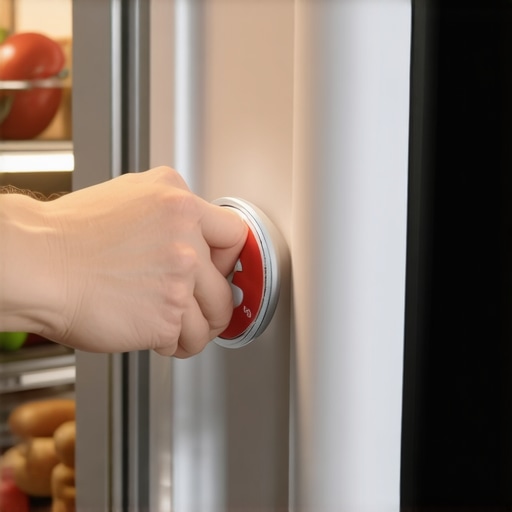
I stood in my kitchen last month, staring at a utility bill that looked more like a car payment, while my refrigerator hummed a low, expensive tune in the corner. It hit me right then: I’ve spent thousands on refrigerators in 2025 that claim to be ‘smart,’ yet I was still using the default factory settings like a total amateur. My milk was ice-cold, sure, but my bank account was feeling the chill even more. We often obsess over the future of home appliances without realizing that the machine currently sitting in our kitchen is likely bleeding energy because of a few simple toggles we’ve ignored since delivery day. Today, I’m going to show you exactly how to stop that waste without risking a single gallon of milk.
Stop Letting Your Fridge Settings Eat Your Savings
When I first started trying to optimize my home, I made a massive rookie mistake: I assumed that the ‘recommended’ middle-of-the-road setting on the dial was the most efficient. It wasn’t. In fact, most manufacturers set these devices to run colder than necessary to avoid any liability regarding food spoilage. I spent months running my freezer at -10°F, unknowingly inviting freezer burn in my smart refrigerator and driving up my kilowatt usage. According to the U.S. Department of Energy, refrigerators are among the top energy-consuming appliances in any home, but you don’t need to buy the best energy saving refrigerator models just to see a difference in your monthly costs. Have you ever felt like your fridge is constantly running, even when nobody has opened the door for hours? It’s a frustrating cycle, but it’s usually just a cry for a settings recalibration.
Will these small changes actually lower my bill?
You might be skeptical that moving a dial a few degrees or flipping a power-saver switch will actually make a dent. I get it. I used to think the same until I realized that every degree lower requires significantly more compressor effort. Beyond just the internal temp, I found that even simple maintenance like learning how to check if your refrigerator door seal is actually airtight can prevent the motor from working overtime. We aren’t just talking about pennies here; we are talking about extending the life of your appliance and keeping your hard-earned money where it belongs—in your pocket, not the utility company’s. It’s time to stop the ‘set it and forget it’ mentality that is costing us every single day.
Zero In on the Perfect Temperature
To really start seeing results, you need to stop guessing where that dial should land. I’ve found that the ‘Goldilocks zone’ for most households is exactly 37°F (3°C) for the fresh food compartment and 0°F (-18°C) for the freezer. If you’re even a few degrees off, you’re either risking bacteria or burning cash. I recently had to learn how to recalibrate your refrigerators internal thermometer for better cooling because my digital display was lying to me by a full four degrees. Using a $5 standalone thermometer is a game-changer here; don’t trust the built-in sensors blindly.
The Freezer Is Not a Deep-Freeze Vault
Setting your freezer to -10°F is overkill unless you’re trying to preserve a woolly mammoth. Keeping it at zero ensures your ice cream stays firm without forcing the compressor into a marathon. This also helps you figure out how to organize your freezer to prevent frost burn and food waste, as stable temperatures reduce the moisture fluctuations that ruin your meat.
Stop Blocking the Air Vents
Your fridge is basically a giant wind tunnel. If you stack a dozen soda cartons right in front of the vents, the air can’t circulate. I learned this the hard way last Easter. I crammed the top shelf so full of holiday prep that I blocked the main damper. The result? I had to figure out why your refrigerator is freezing the eggs on the top shelf because the cold air was trapped in one corner while the rest of the fridge was actually getting warm. It’s a paradox: overstuffing to ‘save’ space actually makes the machine work twice as hard.
Check Your Coils Before They Kill Your Compressor
Think of your refrigerator’s coils like its lungs. If they are covered in pet hair and dust, the fridge can’t ‘breathe’ out the heat it’s removing from your food. This forces the motor to run longer cycles. When you understand the real difference between inverter compressors and standard fridge motors, you realize that even the most advanced inverter will struggle and fail if it’s choked by dust. Pull the unit out every six months and vacuum those black grates. It’s a five-minute job that can save you a $500 repair bill.
Leverage Off-Peak Energy Cycles
Many modern units have an ‘Energy Saver’ or ‘Eco’ mode that adjusts the defrost cycle frequency. If you have a smart model, you can often sync it with your utility’s off-peak hours. While we usually talk about how to use your smart washers delayed start for cheaper energy rates, your fridge is a 24/7 draw. By enabling ‘Power Save’ modes during the day when the house is empty, you minimize the number of times the compressor kicks into high gear during peak demand hours. It’s all about working with the machine’s logic rather than fighting it.
I’ve spent a lot of time in enthusiast forums lately, and I’ve noticed a dangerous trend: people are ‘hacking’ their appliances into an early grave. While we’ve covered the basics of temperature, the real nuances of appliance longevity often fly under the radar. For instance, everyone tells you to use white vinegar for everything from descaling to softening, but in my experience, this is a recipe for a flooded kitchen. I’ve seen how the truth about using white vinegar in your high efficiency dishwasher is far more complicated than the DIY blogs suggest. Vinegar is an acid, and while it’s great for glass, it is a silent killer for the ethylene propylene diene monomer (EPDM) rubber seals found in modern machines. Over time, that ‘natural’ cleaner eats the gaskets, leading to a slow, undetectable leak that rots your subfloor.
The Detergent Trap That Most Homeowners Fall Into
Here is a contrarian take that usually gets me some sideways looks: you are probably using three times too much detergent. We’ve been conditioned by marketing to believe that more suds equals more clean. In reality, modern high-efficiency (HE) machines use so little water that excess soap never fully rinses away. This creates a ‘scrubbing’ effect on your clothes and a disgusting biofilm inside the drum. I finally had to learn the secret to using less detergent in your high efficiency washer after my own machine started smelling like a swamp. If you see bubbles during the final rinse, you’ve already used too much. This buildup eventually triggers sensors to malfunction, which is why your smart dishwasher app keeps giving you phantom errors about drainage or water levels when there’s actually no blockage at all.
Does a Longer Cycle Actually Clean Better?
Most people assume the ‘Heavy Duty’ or ‘Intense’ cycle is the gold standard for a deep clean. However, experts at organizations like the Association of Home Appliance Manufacturers (AHAM) point out that these cycles often rely on higher heat rather than better mechanical action. This heat can actually ‘bake’ proteins like egg or milk onto your plates, leading to that annoying situation why your dishwasher is leaving a gritty white film on your plates. Furthermore, high-heat cycles are the primary cause of the dishwasher detergent mistake that is etching your favorite glassware. The chemical reaction between aggressive detergents and soft water at high temperatures literally eats the surface of the glass.
Avoid the Pre-Rinse Performance Myth
The biggest ‘oops’ factor in modern kitchens is the habit of pre-rinsing dishes in the sink. Modern dishwashers are equipped with turbidity sensors that ‘see’ how dirty the water is. If you load clean dishes, the machine’s AI assumes the load is light and runs a shorter, weaker cycle. Ironically, the detergent needs those food particles to latch onto; without them, the enzymes just end up attacking your plates or the machine’s internal plastic parts. It’s a classic case of trying too hard and getting a worse result. Have you ever fallen into this trap of over-cleaning or over-soaping? Let me know in the comments below. We need to stop treating these top smart appliances for a seamless home experience in 2025 like the dumb machines from the 90s; they are smarter than we give them credit for, but they require us to change our old-school habits.
Invest in a Multimeter Before You Call a Pro
I’m a tinkerer by nature, but it took a $300 service call for a simple fuse to realize I was flying blind. Now, I keep a digital multimeter in my kitchen junk drawer. If my dishwasher stops heating, I don’t guess; I check the resistance. Learning how to tell if your dishwasher heating element is actually broken is a skill that takes ten minutes to learn but saves you thousands over a lifetime. Most modern appliances fail at the point of a single $15 component, like a thermistor or a solenoid. If you can read a continuity setting, you can beat the planned obsolescence cycle. I’ve found that even on refrigerators in 2025, the diagnostic mode is often accessible via a secret button combination found in the technician’s manual—usually tucked in a plastic sleeve behind the bottom kickplate.
How do I maintain my appliance efficiency over time?
The most important thing you can do is manage your local water quality. Hard water is a silent killer for anything that uses a pump. I personally use a titration-based water hardness kit once a quarter because municipal water quality fluctuates. If your water is ‘hard,’ minerals will calcify inside the internal spray arms and the heating element. This is almost always the culprit when you are looking for the trick to removing hard water spots from your dishwasher interior. Beyond aesthetics, that scale makes the motor work harder, increasing heat and shortening the life of the seals. According to technical documentation from the Association of Home Appliance Manufacturers (AHAM), even a 1/16-inch layer of scale can reduce heating efficiency by up to 12%, forcing your machine to run longer cycles just to hit the same temperature.
The Rise of Self-Diagnosing Machines
I’ve spent a lot of time looking into the future of home appliances, and the trend is clear: we are moving toward edge-computing diagnostics. Right now, your ‘smart’ fridge sends data to the cloud, but the next generation will process that data locally. Imagine a washing machine that listens to the frequency of its own motor and alerts you that a bearing is failing three months before it actually seizes. We are already seeing this in washing machines that save water by using vibration sensors to recalibrate the spin cycle in real-time. This shift will make ‘dumb’ failures a thing of the past, but only if we keep the firmware updated to recognize these new error patterns.
Don’t Ignore the Small Gaskets
Maintenance isn’t just about the big motors; it’s about the rubber. I make it a habit to wipe down the door seals of my front-loader with a dry microfiber cloth after the last load of the day. It’s the simplest way to prevent the mold that leads people to wonder why your front load washer smells like a swamp. These small habits, combined with the right tools, turn a five-year appliance into a fifteen-year appliance. My challenge to you this week is to find your appliance’s model number, search for the ‘Service Manual’ (not the User Manual) online, and learn how to trigger the ‘Service Diagnostic Mode.’ It’s like getting a peek under the hood of a sports car, and it’s the first step toward true home mastery.
The Hardest Lessons My First Smart Fridge Taught Me
Reflecting on my journey from an amateur user to a savvy homeowner, there are a few lightbulb moments that changed everything. First, I realized that the “Auto” mode on most smart appliances is often a compromise between performance and energy efficiency. If you really want to save, you have to be the active brain behind the machine. I also learned that ignoring a small vibration today leads to a massive repair bill tomorrow; knowing how to diagnose a washing machine that wont spin at full speed before the motor burns out is a skill that pays for itself. Lastly, never underestimate the power of a clean sensor. A dirty turbidity sensor in your dishwasher will waste more water than an old-school machine ever could, simply because it thinks the dishes are perpetually dirty.
#IMAGE_PLACEHOLDER_E#
My Go-To Resources for Keeping Everything Running
I don’t expect you to memorize every technician’s manual, but having a few trusted sources and tools makes all the difference. I always keep the AHAM technical database bookmarked for real-world efficiency ratings rather than just trusting the sticker on the box. For physical tools, a simple digital multimeter is my best friend for checking continuity in heating elements or solenoids. If you are just starting your upgrade journey, I highly recommend reading through the choosing the right refrigerator tips from industry experts to avoid the common marketing traps. I also swear by titration-based water test kits; knowing your exact grains of hardness allows you to set your appliance’s internal softener perfectly.
Take Control of Your Kitchen Today
Maintaining your home doesn’t have to be a daunting chore; it’s an empowering investment in your peace of mind and your bank account. By applying these small tweaks and maintenance habits, you’re not just saving money—you’re extending the life of your smart appliances and ensuring they serve you for a decade or more. Don’t be afraid to poke around in the settings or pull that fridge away from the wall to vacuum the coils. Your future self will thank you when the utility bill arrives and remains surprisingly low. Have you ever discovered a hidden setting or a maintenance trick that completely changed how your appliance works? Let me know in the comments below!