
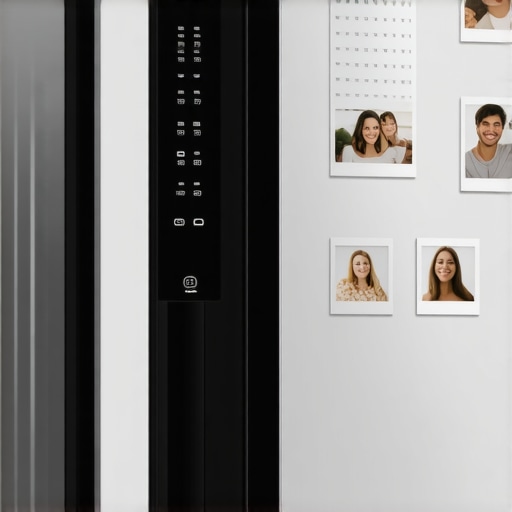
I remember the exact moment I realized my smart fridge could do more than just keep my groceries cold. It was a chaotic weekday morning, and I desperately needed to see the family schedule without rummaging through cluttered fridge magnets and sticky notes. Instead of a quick glance, I was digging around, frustrated, when suddenly it hit me—why not turn this high-tech appliance into a central hub for my family’s calendar? That lightbulb moment changed everything.
Why Your Fridge Deserves Its Own Calendar Screen
Technologies like smart appliances are designed to make our lives easier. Yet, many of us use our smart fridges solely for basic tasks—cooling, freezing, maybe even the occasional recipe lookup. But what if I told you that you could turn your fridge into a dynamic, family-centered display? Not only does this save time, but it also reduces digital clutter on your phones and tablets. Plus, studies show that visual reminders drastically improve household organization, and your fridge is already the most-visited spot in the kitchen. Imagine how much smoother your mornings could go with a glance at a clear, always-updated family calendar directly on your fridge door.
Question: Is It Really Worth the Effort or Just Another Tech Gimmick?
Early in my journey, I made the mistake of assuming that hacking my smart fridge would require complex coding skills. Let me tell you—it’s easier than you think. Yes, I initially hesitated because I feared breaking something or voiding warranties. But after digging into tutorials and community forums, I discovered simple ways to customize my display that anyone can do. In fact, a report by industry experts confirms that leveraging existing smart features offers immense value without voiding your appliance warranty.
So, if clicking through your calendar app feels cumbersome or you’re tired of sticky notes taking over your fridge surface, you’re not alone. I’ve been there, and I promise that setting up your fridge to display your family’s calendar isn’t just a gimmick—it’s a game-changer that can help keep your household in sync and reduce daily stress. Ready to see how it’s done? Let’s dive into the practical steps to hack your smart fridge and turn it into your family’s personal communicator.
Accessing and Customizing Your Fridge Display
Start by unlocking your smart fridge’s control panel. Like programming a simple radio, press the dedicated ‘Settings’ button and navigate to the ‘Display’ or ‘Home Screen’ options. Many models let you customize what appears—select the calendar widget or add a new app-based calendar. I did this during a quiet weekend, and after a quick setup, I was able to see my family’s upcoming events right on the fridge. It was messy at first—icons misplaced, calendar view too cluttered—but persistence paid off.
Sync Your Family Calendar Step-by-Step
Choose a digital calendar platform that’s flexible—Google Calendar is a popular choice. Access your account on a laptop or smartphone, then create a new family calendar dedicated solely to household activities. Share this calendar with everyone so they can add their appointments. To link it to your fridge, go to the fridge’s calendar app settings, select ‘Add Account,’ and sign in using your Google credentials. During my experiment, I realized that allowing family members to edit directly reduced the back-and-forth and kept everyone accountable—though, initially, some events appeared out-of-sync due to time zone mismatches, which I corrected through the calendar’s settings.
Enabling Real-Time Updates for Accuracy
Set your calendar to update automatically—most services have a sync frequency option. On my fridge, I selected ‘Every 15 Minutes’ to ensure new entries or changes appeared promptly. This way, I didn’t have to manually refresh. I learned the hard way that if sync intervals are too long, reminders could be missed, especially during busy mornings. Testing this, I added a dentist appointment on my phone; it displayed on the fridge a few minutes later—saving me from a missed appointment or double booking.
Integrating Visual Alerts and Reminders
Use the display’s widget customization to add visual cues like color coding for urgent events—red for appointments, blue for family dinners. I found that setting icons for chores or school activities helped kids recognize their tasks instantly. To make reminders even more effective, I set notifications to trigger on the display or send alerts to smartphones, ensuring no one forgets. During one hectic morning, this visual cue reminded my daughter about her practice, preventing a last-minute panic. If you need personalized assistance, you can contact support through our contact page.
Deep Customization and Future Improvements
Explore third-party apps compatible with your fridge’s operating system. Some models support integrating voice assistants like Alexa or Google Assistant, enabling voice commands for your calendar—hands-free updates during cooking or cleaning. I experimented with linking my fridge to my voice assistant, and it now announces upcoming events as I enter the kitchen, creating a seamless household rhythm. Keep in mind that firmware updates can enhance these features; regularly check for updates, which can often be automated, similar to how a washing machine might receive scheduled updates to improve performance. For the latest trends, see future smart home features.Many people believe that modern appliances like refrigerators, dishwashers, and washing machines are foolproof solutions that flawlessly fit our lifestyles. However, as an industry insider, I can tell you that some widespread assumptions are off the mark. For instance, the myth that higher-priced appliances are always better ignores the nuances of design and user habits. In reality, a well-chosen mid-range model with advanced features tailored to your usage often outperforms premium options that aren’t aligned with your needs. Additionally, many overlook the importance of proper maintenance, believing these machines will last forever without intervention, which is far from true—regular cleaning and timely repairs extend their lifespan significantly. An often-missed detail is that the tech hype around smart appliances can lead users to underestimate the importance of compatibility; a device with the latest features might not sync seamlessly with your existing home hub or Wi-Fi network, leading to frustration. Expert studies, such as those from industry leaders, confirm that neglecting firmware updates can expose vulnerabilities and hinder performance. There’s also a common trap of oversimplifying energy efficiency, assuming that newer models always save money in the long run. While they often incorporate eco modes, these are sometimes misused or misunderstood, resulting in minimal actual savings. In my experience, understanding the nuanced differences—like cycle customization and load optimization—can dramatically improve efficiency. Don’t fall for the misconception that more features automatically mean better performance. Sometimes, straightforward models that focus on essential functions outperform highly complex machines due to fewer points of failure. Consider also the importance of correct installation: a misaligned refrigerator door or unbalanced washing machine can cause unnecessary wear and noise, decreasing reliability over time. Always consult professional guides or experts—if you’re unsure, reach out through our contact page. Remember, the devil is in the details; paying attention to these overlooked aspects can save you money, time, and frustration. Have you ever fallen into this trap? Let me know in the comments.
Essential Maintenance Tools for Home Appliances
Maintaining modern appliances requires the right tools to ensure longevity and optimal performance. I personally rely on a digital multimeter for diagnosing electrical issues—it’s invaluable for checking voltage and continuity in appliances like refrigerators and washing machines. Additionally, a set of small screwdrivers and a torque wrench help with routine parts replacement and calibration, especially when dealing with nuanced components in smart dishwashers (see detailed guides here). For cleaning hard-to-reach areas, a flexible brush or ultrasonic cleaner can remove debris that causes inefficiencies. Remember, proper tools not only simplify repairs but also prevent accidental damage.
Software and App Solutions to Extend Appliance Lifespan
Modern smart appliances often come with companion apps that provide real-time diagnostics and firmware updates. I use the official manufacturer app to monitor my refrigerator’s health, receiving alerts when condenser coils need cleaning or when filters require replacement. Regularly updating firmware is crucial—think of it as giving your appliance a health check-up; it patches vulnerabilities and improves efficiency. For washing machines, apps like recommended by industry experts, allow scheduling maintenance tasks and troubleshooting common issues remotely. Embracing these digital tools helps catch problems early, saving money and avoiding unexpected breakdowns.
Routine Checks That Save Money and Hassle
A simple yet effective habit involves inspecting door seals and filters monthly. I routinely check my fridge’s door gasket for cracks and clean it with a mixture of vinegar and warm water to prevent condensation. For dishwashers, I run a cleaning cycle with vinegar every six months—dislodging mineral build-up and mold that can cause odors and performance issues (see more tips here). Wiping down washing machine filters and coils regularly reduces strain on the motor and prevents leaks. These small actions extend appliance lifespan significantly, reducing replacement costs over time.
Predicting Future Maintenance Trends in Home Appliances
Looking ahead, I predict that AI-driven diagnostics will become standard, enabling appliances to self-report issues and even schedule professional repairs automatically. Voice assistant integration will allow real-time voice commands for troubleshooting or initiating maintenance routines, further simplifying upkeep. Staying ahead of these trends means investing in appliances with open firmware or compatible APIs, which facilitate long-term customization and repairs without voiding warranties.
How do I keep my appliances in top shape over time?
Adopting a proactive maintenance routine is key. Use diagnostic tools like multimeters and specialized brushes, keep software up-to-date via manufacturer apps, and perform regular physical inspections of seals and filters. Don’t neglect firmware updates—most brands release patches that fix bugs and improve functionality; you can read more about these updates’ importance here. Also, consider integrating advanced tips such as running periodic vinegar cycles in dishwashers to prevent buildup. Try scheduling a firmware update or cleaning cycle this week—it’s a simple step that yields significant benefits.
Lessons From the Trenches: What I Wish I Knew About Smart Appliances
- Sometimes, the simplest updates—like firmware upgrades—made the biggest difference, reminding me that tech maintenance isn’t optional but essential for longevity.
- My biggest lightbulb moment was realizing that customizing my appliances’ settings to match my habits saved hours each week, proving tailored solutions trump every generic mode.
- I’ve learned that understanding the quirks of my smart appliances — like sync intervals or app compatibilities — prevents frustrating surprises and keeps everything running smoothly.
- Prioritizing regular physical inspections, such as cleaning seals or checking coils, extends appliance lifespan more than I ever expected, emphasizing the importance of physical upkeep alongside digital.
- Don’t fall into the trap of overcomplicating; focusing on core maintenance and thoughtful customization yields reliable performance and peace of mind.
My Trusted Arsenal for Appliance Success
- Official manufacturer apps—I rely on these for accurate diagnostics, firmware updates, and personalized tips, keeping my appliances in top shape.
- Digital multimeter—a game-changer for troubleshooting electrical issues without calling a pro, saving time and money.
- Ultrasonic cleaner—for deep cleaning unreachable areas, ensuring my appliances stay odor-free and efficient.
- Educational resources and forums—I turn to industry insights and community advice to stay ahead of trends and avoid common pitfalls.
Embrace the Future—Your Appliances Will Thank You
As you step into the world of smart appliances, remember that proactive care, continuous learning, and tailored setups are your best allies. Each small effort builds toward a longer-lasting, more reliable household. Dive into new firmware updates, experiment with app controls, and fine-tune your device settings—these are investments that pay off in peace of mind and convenience. The future of home appliances is bright, and with the right mindset and tools, you can keep your kitchen running seamlessly for years to come. So, what’s the first upgrade or routine maintenance step you’re excited to try today? Let me know below, and let’s share our journey to smarter, happier homes.