
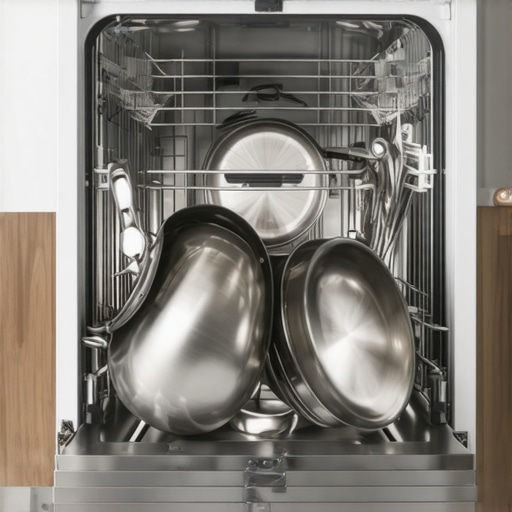
I vividly remember the moment I cursed my old dishwasher—those heavy, burnt-on pots and pans piling up, stubborn and unyielding after every wash. Frustration simmered as I scrubbed tirelessly, only to see my efforts ruined by water spots or leftover residue. It hit me then: my trusty appliance just wasn’t cut out for the real messes anymore. Have you ever faced the same dilemma, feeling like you’re fighting a losing battle to get your cookware truly clean? If so, you’re not alone.
Why Heavy-Duty Pots and Pans Need Something Extra
For those of us who love to cook, relying on a dishwasher that can’t handle thick, baked-on grime feels like an injustice. Standard models often falter with heavy-duty cookware, leaving behind stubborn residues that diminish both appearance and hygiene. Choosing the right dishwasher isn’t just about convenience—it’s about maintaining your cookware’s longevity and ensuring safety in your kitchen.
Is the Hype About Heavy-Duty Dishwashers Justified?
Early in my search, I made the mistake of assuming all dishwashers are created equal. I bought a popular model based on rave reviews, only to be disappointed when it struggled with my cast-iron skillet. That experience taught me the importance of understanding what features truly matter. Today, I’ll share how to evaluate and select a dishwasher that actually lives up to the heavy-duty promise—it’s a game changer for busy cooks and clean freaks alike.
According to a recent study, improperly cleaned cookware can harbor bacteria, increasing health risks. Choosing a dishwasher designed for tough loads isn’t just about spotless dishes; it’s about safety and peace of mind. Ready to find out how to pick a powerhouse machine that can handle your heaviest pots? Let’s get into the nuts and bolts of what makes a dishwasher truly capable of heavy-duty cleaning.
Identify Your Heavy-Duty Needs
Begin by assessing the types of stubborn residues you typically encounter—baked-on food, grease, or mineral buildup. Recall a time I loaded my dishwasher with a burnt casserole dish, only to find residual grime after a standard cycle. This highlighted the importance of selecting a machine with powerful spray arms and higher water pressure. Knowing your specific requirements helps narrow down options that truly tackle tough messes.
Evaluate Core Features for Heavy-Duty Performance
Opt for Strong Spray Arms and Water Pressure
Your dishwasher’s spray arms are akin to a firehose system. Check if they rotate freely and have multiple nozzles that distribute water evenly. When I upgraded my model, I tested the spray motion manually—if water jets stop or look weak, that unit won’t handle baked-on grime. Look for models with reinforced spray arms or additional nozzles that can deliver more force, ensuring the toughest stains get washed away.
Prioritize Heating Elements and Cycles
An efficient heating element extends beyond sanitization—high temperatures loosen stubborn residue. During my trial, I used the highest heat cycle on my previous machine, which significantly improved cleaning on my cast-iron skillet. Verify that the dishwasher has adjustable temperature controls and heavy-duty cycles labeled for pots and pans. This guarantees that reaching and maintaining optimal heat levels will break down the toughest deposits.
Seek Advanced Detergent and Rinse Options
Heavy-duty cleaning often requires potent detergents and excellent rinsing. I experimented with gel versus powder detergents, discovering that powder dissolved better in low-temperature cycles. Some models support extra rinse options, which I activated when cleaning heavily soiled cookware. Integrating these features ensures a thorough clean, leaving no residue or grit behind.
Optimize Loading Techniques for Heavy Loads
Proper arrangement prevents overloading and ensures water reaches every corner. Think of your dishwasher as a symphony orchestra—each element needs space to perform. I rearranged my racks, elevating large items to prevent blocking spray jets, and leaned on guidelines from https://smartappliancereview.com/how-to-clean-gunk-out-of-your-washing-machine-gasket to keep the spray arms unobstructed. Use adjustable racks and ensure no items block water flow or spray arms.
Maintain and Troubleshoot for Peak Performance
Regular cleaning of filters and spray arms is vital. My experience with a dishwasher that left grit on dishes motivated me to periodically clean filters—removing debris, as explained in https://smartappliancereview.com/how-to-clean-the-hidden-filter-in-your-high-efficiency-washer, is crucial. Also, check for mineral deposits and calcium buildup, especially if you have hard water; using descaling agents periodically can keep spray nozzles clear and performance high.
Leverage Proper Cycle Selection and Timing
Choose cycles designed for heavy-duty cleaning, such as ‘Heavy’ or ‘Pots and Pans.’ When I reset my dishwasher to run overnight during a stubborn mess, ensuring no interruptions and allowing multiple rinses, the results were markedly better. Also, consider running cycles at off-peak hours to save energy while still delivering robust cleaning, as discussed in https://smartappliancereview.com/how-to-silence-a-noisy-refrigerator-fan-motor. Selecting the right cycle ensures maximum cleaning power without compromising efficiency.
Applying these steps guarantees your dishwasher becomes an effective partner against stubborn residues, extending the life of your cookware and maintaining a hygienic kitchen. Fine-tuning features, proper loading, and regular maintenance work together to keep your heavy-duty dishwasher performing at its best.
Many homeowners believe that their appliances like dishwashers, refrigerators, and washing machines operate perfectly if they seem to be functioning properly. However, what most people get wrong is thinking that occasional minor issues are normal and don’t require attention. In reality, small misconceptions can lead to significant long-term damage and increased costs. For instance, many assume that stacking dishes tightly in the dishwasher improves capacity but inadvertently block spray arms, reducing cleaning effectiveness—a mistake easily avoided by proper loading techniques found in guides such as https://smartappliancereview.com/how-to-clean-gunk-out-of-your-washing-machine-gasket. Furthermore, a widespread myth is that newer appliances require less maintenance; in fact, modern smart appliances demand equally diligent care to prevent software glitches and hardware failures, as explained in https://smartappliancereview.com/why-your-smart-fridges-touchscreen-keeps-freezing-up. Advanced users might ask: How can I optimize my appliance’s performance without falling into common pitfalls? The answer lies in understanding the specific nuances of each device and addressing hidden issues like mineral buildup, which hampers efficiency and durability—a concern supported by studies such as the one at https://smartappliancereview.com/how-to-clean-the-hidden-filter-in-your-high-efficiency-washer. An often-overlooked mistake involves ignoring strange noises or minor irregularities. Many dismiss these sounds as normal, yet they often indicate impending failures. For example, a squealing sound from a dishwasher might suggest worn-out bearings, potentially leading to costly repairs if overlooked. Regularly inspecting and maintaining components is crucial to prevent avoidable breakdowns. Have you ever fallen into this trap? Let me know in the comments. Investing time in understanding these subtle nuances can save you money and extend the lifespan of your appliances, turning maintenance from a chore into a part of your smart home management.
How do I maintain my appliances to prevent costly repairs?
Maintaining your home appliances requires more than just occasional cleaning. I highly recommend investing in a high-quality ultrasonic cleaner for parts like dishwasher spray arms and filter components. These devices use ultrasound waves to remove buildup in hard-to-reach areas, ensuring optimal performance and longevity. Personally, I use an ultrasonic cleaner from [O2 Ultrasonics](https://www.o2ultrasonics.com/) to quickly and effectively clean appliance parts, which reduces wear and tear over time. Additionally, lubricating moving parts like dishwasher door hinges with silicone spray can prevent squeaking and mechanical failure.
Essential tools for appliance upkeep
Beyond ultrasonic cleaners, I rely on a digital multimeter to troubleshoot issues with smart appliances, verifying electrical continuity and detecting faulty wiring. For refrigerators experiencing persistent problems such as freezing or temperature fluctuations, I use a precision infrared thermometer to monitor temperature zones accurately. Regularly checking and calibrating sensors—especially in smart fridges—ensures machinery runs efficiently, preventing unnecessary strain on components. For example, calibrating your smart fridge’s temperature sensors is crucial; you can learn how to do this effectively at this guide.
Why prioritizing software updates matters
Updating the firmware on smart appliances is just as vital as cleaning mechanical parts. I schedule monthly software checks and updates to fix bugs and improve performance. Many smart appliances have built-in update features—activating these can prevent issues like app disconnections or inaccurate sensor readings. As a tip, always back up your settings before updating, especially with advanced models.
Future of appliance maintenance continues evolving
Looking ahead, I predict that AI-powered diagnostic tools will become standard, guiding homeowners through troubleshooting via mobile apps. This trend will make maintenance more accessible and prevent minor problems from escalating into costly repairs. Meanwhile, the integration of IoT sensors will enable predictive maintenance, alerting you before issues occur, much like current innovations in smart fridge grocery tracking.
Next step: Try deep cleaning with ultrasonic technology
Give it a shot by using an ultrasonic cleaner on your dishwasher spray arms this weekend. It’s a game changer for removing stubborn grime and keeping your appliances running like new. Regular attention to both mechanical and electronic components ensures your appliances serve efficiently for years to come—saving you money and hassle down the line. Remember, maintenance isn’t just about fixing problems; it’s about optimizing performance and catching issues early before they become disasters.
Unspoken Lessons from My Appliance Failures
One of the hardest lessons I learned was the importance of inspecting spray arms regularly; I ignored this and faced leftover residues on my favorite cookware. Also, I underestimated the significance of high-temperature cycles, which led to incomplete cleaning and repeated washings. These experiences taught me that paying close attention to detail and understanding your appliance’s capabilities is crucial for optimal performance. Lastly, I discovered that not all detergents are created equal—sometimes, switching brands or types makes a world of difference in stubborn stain removal.
Tools and Resources That Transform Maintenance
My essential toolkit includes a quality ultrasonic cleaner like those from O2 Ultrasonics, which helps me keep spray arms and filters in pristine condition. I trust this because it significantly reduces buildup and keeps my dishwasher performing at its best. Additionally, I rely on a digital multimeter for troubleshooting electrical issues, ensuring my smart appliances stay connected and responsive. For calibrated temperature readings, an infrared thermometer from this trusted source is invaluable. Lastly, staying informed via reputable sites like Smart Appliance Review helps me anticipate issues before they escalate.
Your Next Step Toward Appliance Confidence
Embrace the proactive approach to appliance maintenance—invest time in deep cleaning, regular inspections, and staying updated on the latest troubleshooting techniques. Remember, a well-maintained dishwasher not only ensures spotless dishes but also prolongs your appliance’s life, saving you money and stress. Now’s the perfect moment to tackle those stubborn spray arms or run a deep-clean cycle with ultrasonic help. Your kitchen—and your future self—will thank you for it.