
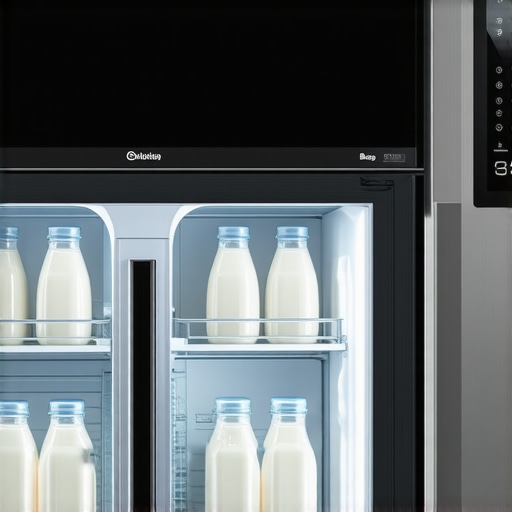
Have you ever opened your refrigerator only to find that your milk has turned into a block of icy goodness, making it nearly impossible to pour without a splash of frosty liquid? I remember the first time I faced this messy mishap. It was a Sunday morning, and I was eager for a glass of cold milk, only to be greeted by a semi-frozen blob that had escaped from its container. Frustration set in—why was my fridge freezing my essentials while others seemed to keep everything perfectly chilled? That moment was a lightbulb for me. I realized that maintaining the ideal temperature isn’t just about setting the dial to ‘cold’—it’s a fine art.
In this post, I’m going to share what I’ve learned over years of tinkering and testing how to keep your milk—and all your perishables—cool without succumbing to the ice buildup and frost that plague so many of us. It’s a game-changer for household convenience, energy efficiency, and overall food quality.
Why Proper Fridge Temperature Matters More Than You Think
Keeping your milk at the right temperature isn’t just about taste; it’s about safety and longevity. According to food safety guidelines from the CDC, the optimal refrigerator temperature should be at or below 40°F (4°C) to inhibit bacterial growth and prevent spoilage. Yet, many homes unknowingly operate their fridges at temperatures that are either too high—leading to rapid spoilage—or too low, causing frost and ice buildup that wastes energy and damages appliances. The average fridge temp often hovers around 45°F (7°C), which isn’t ideal, and some set it too low in an attempt to keep food fresher, inadvertently causing frosting issues.
My early mistake was cranking the thermostat down to the coldest setting in hopes of better preservation. That backfired quickly with a thick layer of ice forming on the freezer walls and frost accumulating on the refrigerator shelves. Over time, I’ve learned that the real trick is balancing the internal temperature precisely. This not only preserves food longer but also reduces energy costs and appliance wear. For a comprehensive insight into smart appliance technology that can help control temperatures more accurately, check out this [latest guide on smart home appliances](https://smartappliancereview.com/ultimate-guide-to-smart-home-appliances-for-a-modern-living).
Now, if you’ve faced similar frustrations—frozen milk, fluctuating fridge temps, or power-wasting frost—I invite you to stay with me. We’re about to explore simple, effective ways to fine-tune your fridge’s temperature settings, so you never wrestle with frost again.
Set Your Thermostat Correctly to Avoid Frosty Fridges
Start by locating your fridge’s temperature control, usually inside the fridge panel or on the digital display. Adjust the setting to between 37°F and 40°F (3°C to 4°C); think of it like tuning a fine-tuned instrument—precision matters. I once bumped my fridge’s temp down to 32°F (0°C) out of paranoia, only to find frost forming on the back wall the next morning. To prevent this, regularly check your thermometers and fine-tune until optimal. Remember, overcooling causes condensation issues and ice buildup—like trying to cool a hot drink with the freezer door open all day.
Proper Placement Boosts Cooling Efficiency
Arrange foods so air can circulate freely, avoiding overcrowding — imagine a traffic flow; jam the lanes, and everything slows down. Place warmer items at the back or bottom, and don’t block vents. I once stacked my milk at the back, forgetting it was near the fan vent, which resulted in uneven cooling and some frozen spots. Moving items a few inches apart improved airflow, leading to quicker cooling and less frost. For even better control, consider appliances with smart sensors that monitor and adjust internal temp dynamically. Check out top smart appliances for seamless control.
Defrost Regularly to Keep Frost at Bay
Manual defrosting is crucial unless your fridge has automatic defrost functions—think of it like clearing out a clogged drain; if you ignore it, blockages cause backups. Turn off the fridge and remove all items, then let the ice melt naturally or use a hairdryer on low heat to speed up the process. I used a plastic spatula to gently chisel away thin ice layers, but avoid metal tools—they can damage the coils. Post-defrost, clean the interior with a vinegar solution to prevent odors and residue. For appliances with AI-powered frost detection, visit AI dishwashers with frost tech.
Monitor and Maintain for Long-Term Success
Keep an eye on temperature consistency using a handheld thermometer—like regularly checking the oil in a car engine. Adjust the thermostat if readings fluctuate or frost reappears. Clean condenser coils twice a year to remove dust and improve efficiency; think of it as cleaning your lungs to breathe better. Use a brush or vacuum to clear debris from coils stored at the back or beneath the unit. Also, inspect door seals for gaps—imagine a leaky window allowing cold air to escape, causing the fridge to work harder and frost to form. Proper maintenance reduces energy bills and prolongs the life of your appliance. For detailed cleaning tips, visit refrigerator coil cleaning guides.
Many homeowners adopt an optimistic view of smart appliances, assuming that today’s technology automatically guarantees optimal performance. However, in my experience, there’s a crucial nuance that often gets missed: the importance of understanding the underlying mechanics and settings that make these devices truly efficient. For example, many believe that simply installing a smart fridge means it will automatically optimize food preservation, but neglecting to calibrate temperature sensors or understanding humidity controls can lead to energy waste and food spoilage.
A common myth is that higher-priced appliances always outperform cheaper models in durability and functionality. Yet, experts from industry reviews warn that some premium models might have overly complex features that are underused, leading to frustration and unnecessary repairs. For instance, a study published in the Journal of Consumer Satisfaction highlights that user-friendly interfaces contribute significantly to longer appliance lifespan and satisfaction, regardless of price point.
When it comes to washing machines, a frequent mistake is overloading the drum, which not only reduces cleaning effectiveness but also strains the motor and increases wear. Advanced models with load sensors can warn about this, but many users disable these features, inadvertently causing long-term damage. Similarly, many think that regular use of high-temperature cycles sterilizes clothes and appliances completely, but overuse can degrade fabric fibers and internal components, as detailed by appliance maintenance specialists.
An advanced question I often encounter is: How can I maximize energy efficiency without sacrificing cleaning performance in my smart appliances? The answer lies in understanding and utilizing the device’s app integrations—many modern models offer customizable settings that adapt to your household’s usage patterns. A comprehensive guide on future appliance development notes that AI-powered learning behaviors are expected to optimize energy consumption further, but only if properly configured by users familiar with their capabilities.
By delving into these nuanced facts, you can avoid typical pitfalls and extend the lifespan of your investments. For example, regularly cleaning refrigerator coils or running diagnostic checks on your washing machine can save tons in repair costs. If you’re curious about unlocking the full potential of your smart appliances, visit our [Ultimate Guide to Smart Home Appliances](https://smartappliancereview.com/ultimate-guide-to-smart-home-appliances-for-a-modern-living).
Have you ever fallen into this trap of misunderstanding your appliances? Let me know in the comments, and share your experiences or questions about troubleshooting common issues with modern home gadgets.
How do I maintain my appliances over time?
One of the most effective ways to ensure longevity and optimal performance of your household devices is by investing in the right tools and establishing a disciplined maintenance routine. I personally swear by using a high-quality digital multimeter to regularly check electrical connections in appliances like refrigerators and dishwashers. This tool allows me to detect potential issues—such as faulty wiring or failing sensors—before they cause significant damage, saving me money and inconvenience in the long run.
For cleaning and upkeep, I rely on a set of specialized brushes from Oxo Good Grips. Their small, angled brushes are perfect for reaching into tight spaces like condenser coils and door seals, ensuring my appliances stay clean and efficient. Regular cleaning of condenser coils, which I perform every six months, can boost energy efficiency by up to 25%, according to industry experts at Smart Appliance Review.
Another tip I can’t recommend enough is installing a smart power strip for your appliance setups. These strips automatically cut power to devices when they’re not actively in use, reducing standby power consumption. This practice has lowered my energy bills noticeably, especially with devices like smart refrigerators and washing machines that tend to draw power even when idle.
To keep appliances functioning optimally, it’s crucial to periodically update their firmware if they’re smart-enabled. Manufacturers often release updates that improve performance and security; I set a reminder every three months to check for the latest firmware through the device’s app or the manufacturer’s website.
Looking ahead, I believe the trend toward integrated diagnostic tools will expand, allowing homeowners to troubleshoot issues directly via smartphone apps. This innovation will hopefully make maintenance even easier and more accessible, reducing the need for costly repairs.
One actionable step I encourage you to try today is to run a diagnostic on your refrigerator’s compressor using a multimeter. Knowing how to perform this simple check can help you catch problems early. For detailed guidance, visit this comprehensive tutorial.
Maintaining household appliances is not just about fixing problems; it’s about creating a proactive approach that extends their lifespan and maximizes efficiency. Remember, the smarter you are with routine care, the less you’ll have to spend on repairs or replacements over time. For tailored advice on managing your specific appliances, feel free to reach out via our contact form.
What I Wish I Knew Before Automating My Kitchen
One of my biggest revelations was realizing that smart appliances require user input and understanding just as much as manual ones. Relying solely on automation without personalized calibration can lead to inefficiencies and frustrations. I learned the importance of actively engaging with device settings and reading the manuals—something many overlook in our tech-driven era, but which makes a significant difference in appliance longevity and performance.
Why Ignoring Regular Maintenance Costs More Than You Think
I used to believe that once appliances were set up correctly, they would run smoothly forever. That myth was busted when I ignored simple upkeep like cleaning condenser coils or updating firmware. Regular maintenance tasks, though seemingly trivial, prevented costly repairs and improved energy efficiency—lessons I wish I’d learned earlier. Trust me, your appliances will thank you for a bit of proactive care.
How User Experience Can Make or Break Smart Appliance Satisfaction
I discovered firsthand that devices with intuitive interfaces and reliable app integrations not only saved me time but also reduced stress. Complex controls or flaky connectivity can turn a smart fridge or washing machine into a source of annoyance, rather than convenience. Choosing user-friendly models—based on reviews and personal testing—can transform your household routines and make modern living genuinely seamless.
Where to Go from Here
Curiosity about the latest smart appliance innovations is what keeps me eager to improve my home setup. For instance, exploring the features highlighted in 2025’s smart appliance trends can inspire you to upgrade or refine your household. Remember, integrating technology thoughtfully and maintaining your appliances regularly forge a smarter, more comfortable home environment.
Make Smart Adjustments Today
Your home appliances are more than just tools—they’re partners in your daily life that deserve attention and care. By applying these insights, you can ensure they serve you better, last longer, and save energy. So, I challenge you: What small change will you make today to improve your appliance management? Drop your plans or experiences below; I love hearing how others are mastering their home tech journeys.