
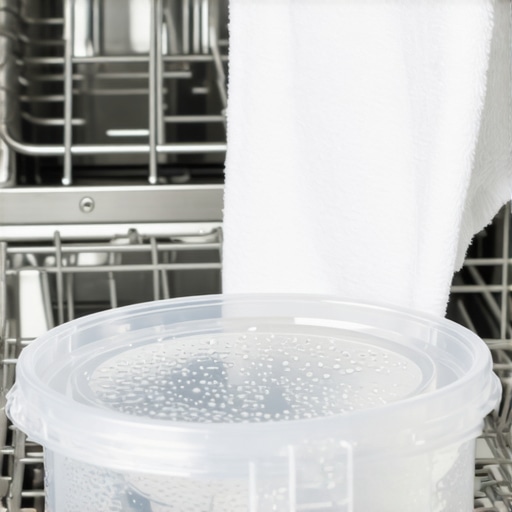
I have done it a thousand times: I wait for the ‘beep,’ open the door, and pull out a perfectly dry ceramic plate. But then, I reach for that one plastic storage container lid, and—splash—a pool of cold water dumps right onto my clean socks. It is infuriating. For years, I just accepted that ‘plastic stays wet’ was a universal law of physics I could not break. I even thought about replacing my machine, wondering if innovative dishwashers with AI technology were the only way out of this soggy mess. But the truth is, you do not necessarily need a huge upgrade to get those containers dry. Today, I am sharing the simple, slightly weird trick that changed my kitchen routine forever. Have you ever stood there with a dish towel, drying every single lid by hand while thinking there has to be a better way?
Your Dishwasher Is Not Broken and Neither Is Your Plastic
Early in my home-appliance journey, I made a classic rookie mistake. I assumed that if my plastics were wet, the machine was not getting hot enough. I spent hours trying to tell if my dishwasher heating element was actually broken when the real issue was much simpler: physics. Plastic is a poor conductor of heat. While your heavy ceramic plates retain warmth and help evaporate water, plastic loses its heat almost instantly. According to researchers at the American Chemical Society, plastics have a lower thermal mass, which means they do not stay hot enough long enough to facilitate the ‘flash drying’ effect we see on glass or metal. It is why you can have a perfectly clean load that still feels like a swamp. If you have also found yourself wondering why your dishwasher is leaving a gritty film alongside those stubborn water droplets, you know how frustrating a ‘clean’ load can be.
Is a better rinse aid really the secret?
I used to scoff at the idea of extra chemicals. I thought rinse aid was just a marketing ploy to get me to spend more money. I even worried about detergent mistakes etching my glassware. But after trying every DIY hack in the book—from vinegar (which can actually damage your seals) to leaving the door open for hours—I realized that surface tension is the real enemy. Trust me, I have been through the trial and error so you do not have to. The trick I am about to show you involves a common household item you already own, and it works better than any ‘extra dry’ button ever could.
Angle Your Containers to Kill the Puddles
The first rule of drying plastic is to stop fighting gravity. When you lay a Tupperware lid flat on the top rack, you are essentially creating a tiny swimming pool for the wash water. Even the most innovative dishwashers cannot overcome a physical reservoir of water. I learned this the hard way during a massive meal-prep Sunday three years ago. I had forty identical plastic containers stacked almost flat. When the cycle ended, they were so soaked I ended up dripping water into my open silverware drawer, causing a second mess. Now, I load every lid at a steep 45-degree angle. If your rack doesn’t have the right tines for this, use a dishwasher-safe weighted clip to hold them upright. This ensures water runs off the surface immediately rather than pooling in the rim. While you are at it, make sure you clean the internal spray arms of your dishwasher so the water is hitting those angles with enough force to slide off.
The Dish Towel Hack That Saves Your Socks
This is the ‘weird’ trick I mentioned earlier, and it is the closest thing to magic in a modern kitchen. When the dishwasher cycle finishes, do not let it sit closed for three hours. Instead, open the door immediately, take a clean, dry cotton dish towel, and drape it over the top of the door so that half of it hangs inside the tub. Then, close the door back onto the towel. The fabric acts like a giant sponge for the ambient steam. Without the towel, that steam eventually cools down, turns back into liquid, and rains down onto your plastic. By wicking away the moisture in those first critical ten minutes, your plastics actually stand a chance. I used to think this was a myth until I tried it on a load of toddler sippy cups. For the first time in months, I didn’t have to shake water out of the straws.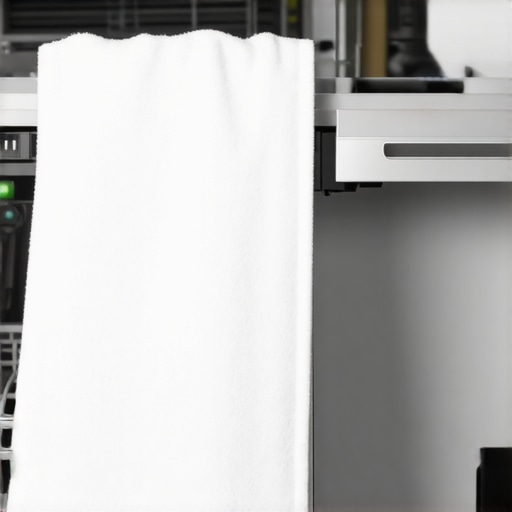
Check Your Hidden Sensors Regularly
Sometimes the issue isn’t your loading technique; it is a hardware component that has gone ‘blind.’ Many people don’t realize there is a hidden sensor that stops your dishwasher from drying properly by misreading the moisture levels in the air. If this sensor is covered in hard water scale or a thin layer of grease, it tells the machine the dishes are dry when they are still soaking wet. It is very similar to how a hidden sensor in your dishwasher that needs a manual scrub can impact the overall cleaning cycle. Take a damp microfiber cloth and wipe down the interior walls and any small plastic nodes you see. This simple bit of maintenance ensures the machine’s ‘brain’ is actually seeing the reality of the wet plastic. If you still see issues, it might be worth investigating the ‘Sanitize’ or ‘Extended Dry’ settings, which use a final high-heat rinse to boost the thermal mass of the entire load, giving the plastic a fighting chance to evaporate that last bit of moisture before the ‘rain’ begins inside the tub.While my towel trick solves the immediate damp-plastic problem, there is a much bigger misunderstanding about how these machines function at a high level. Most people believe that ‘Smart’ technology means the appliance is a mind-reader. I have seen friends invest in the ultimate guide to smart home appliances for a modern living only to be frustrated when their dishes are still wet or their clothes feel stiff. The biggest myth? That a shorter cycle is a more efficient one. We have been conditioned to think speed equals efficiency, but in the world of modern engineering, it is the exact opposite.
Can your appliance’s ‘brain’ actually get out of its own way?
The Association of Home Appliance Manufacturers (AHAM) has pointed out that modern machines use significantly less water by extending the contact time between the detergent and the grime. When you force a ‘Quick Wash,’ you are often bypassing the sensors that calculate the optimal water temperature for drying. This is why washing machines that save water often take twice as long as the old top-loaders from the 90s. If you constantly override the machine’s logic because you are in a hurry, you are actually preventing the internal heating element from reaching the ‘thermal equilibrium’ needed to evaporate water off those plastic lids.  Here is the ‘trap’ I see advanced users fall into: the Detergent Overload. In an attempt to ensure everything is sterile, we tend to use way too much soap. In a High-Efficiency (HE) environment, excess suds act as a literal blanket, trapping moisture and preventing the ‘flash dry’ effect. I learned the secret to using less detergent in your high-efficiency washer the hard way—after my front-loader started smelling like a stagnant pond. This excess residue also coats the very sensors I mentioned earlier. If you find yourself wondering why your energy-efficient washer leaves your clothes feeling crunchy, it is likely not the machine; it is the chemistry. We also tend to ignore the digital health of our gear. We treat them like ‘dumb’ boxes, but how smart washing machines can simplify laundry day depends entirely on their software. I’ve seen people ignore notifications for months, unaware that a simple patch could fix a known drying-cycle glitch. If you have been skipping those updates, you are basically running an outdated version of your kitchen’s brain. Have you ever fallen into this trap of thinking more soap or shorter cycles would help? Let me know in the comments—I’d love to hear your ‘oops’ moments.
Stop Ignoring That Gross Little Door at the Bottom
I will be the first to admit that cleaning a filter is about as fun as watching paint dry. But if you want to avoid that stagnant ‘swamp’ smell I mentioned earlier, you have to get hands-on with the hardware. I keep a dedicated long-handle brush and a small silicone basin specifically for my front-loader. Knowing how to clean the debris filter on your front-load washer effectively is the difference between a machine that lasts five years and one that lasts fifteen. I have seen so many friends call a repairman for a ‘broken’ pump when they just had a stray nickel and some heavy lint clogging the exit path. It is the same story under your kitchen sink. If your machine is not draining, do not panic; there are often 5 signs your dishwasher drain hose is kinked that have absolutely nothing to do with the motor failing.
The Monthly Routine That Saves Hundreds
The secret isn’t doing more work; it is doing smarter work. I have moved away from checking individual apps for every single device. Instead, I have learned how to set up a central kitchen hub for all your smart appliances so I can see every status report on one wall-mounted screen. According to the LG Global Service Information Network (GSIN) technical guidelines, interpreting the decibel shifts in an inverter motor can predict a failure months in advance. I use the ‘Smart Diagnosis’ logs once a month to look for those invisible red flags. If you are seeing a why your dishwasher salt light stays on notification after a refill, it is usually just a stuck float—something you can fix with a gentle stir rather than a $200 service call.
How do I maintain these high-tech machines over time?
Maintaining a smart home is 20% physical cleaning and 80% digital upkeep. Beyond the physical filters, you need to treat these machines like the computers they are. I schedule a ‘Digital Sweep’ on the first of every month. I check for firmware updates that often recalibrate internal sensors for better efficiency. If you feel like your future of home appliances investment is underperforming, it is likely the software, not the steel. For example, if your fridge starts making a clicking noise every ten minutes, a firmware patch might actually be available to adjust the defrost cycle timing before that noise turns into a permanent hardware failure.
AI Might Soon Manage Its Own Repairs
Looking ahead, we are moving toward a world of predictive failure. Soon, your fridge will not just tell you the filter is old; it will detect a micro-vibration in the compressor and order the replacement part before you even notice a temperature change. We are already seeing the start of this with innovative dishwashers with AI technology that adjust spray arm intensity based on water turbidity. But until the day these machines can physically scrub their own gaskets, we are still the primary caretakers. Stop treating these as set-it-and-forget-it boxes. They are precision instruments that happen to wash your socks. Try this today: open your washer’s filter door and drain it manually. You will be shocked at what has been sitting in there, and your machine will sound quieter immediately.
Hard Lessons My Appliances Taught Me
After years of tinkering, I realized that drying is a dance of thermodynamics, not just a heating element. First, stop treating your rinse aid like an optional luxury; it is the lubricant that breaks surface tension. Second, remember that steam is just water waiting to happen. If you do not vent it or trap it, your plastic will never be dry. Third, your machine’s sensors are its eyes—if they are dirty, the machine is essentially flying blind. I spent months frustrated with wet plates before I realized a simple manual scrub could restore its internal logic. Finally, the ‘Quick Wash’ is usually the enemy of a dry kitchen. Give the physics time to work.
The Gear That Keeps My Kitchen Running Smoothly
I do not rely on luck anymore. My toolkit includes high-quality microfiber cloths for sensor maintenance and a dedicated thick cotton towel for the steam-wicking trick I mentioned earlier. For a truly cohesive home, I recommend looking into top smart appliances for a seamless home experience in 2025 to see how connectivity reduces your daily mental load. I also frequently check manufacturer technical bulletins, which helps me understand the ‘why’ behind the ‘what.’ If you are planning a larger upgrade, checking out the best smart fridges for people who love to meal prep can change your entire Sunday routine by keeping your inventory organized while you wash.
Take Control of Your Modern Kitchen
Do not let a few damp lids or a confusing sensor light make you regret your investment. These machines are designed to make our lives easier, but they require a tiny bit of human intuition to bridge the gap. Whether you are using innovative dishwashers with AI technology or an older reliable workhorse, the physics remains the same. Once you master the ‘towel trick’ and the ’45-degree tilt,’ you will never have to dry a lid by hand again. Your kitchen should work for you, not the other way around. Do you have a ‘weird’ trick for getting your Tupperware dry, or are you still fighting the puddle battle? Let me know your best hack in the comments below!