
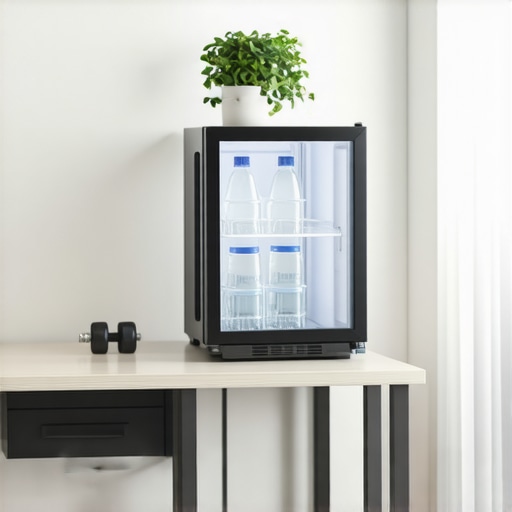
I remember the afternoon I almost passed out mid-deadlift in my garage gym. It wasn’t the weight; it was the fact that I hadn’t had a sip of water in an hour because the kitchen felt like it was three miles away. Then there was the time I lost a huge client call because my stomach growled so loudly it sounded like a literal bear was in the room. I had walked away from my desk to find a snack, got distracted by my dishwasher—which, by the way, was leaving a gritty white film on my plates again—and by the time I sat back down, my momentum was gone. I realized then that my office and gym needed their own dedicated cold zones. I’ve spent thousands of dollars and way too many hours testing these tiny units. I’ve made the mistake of buying “silent” fridges that sounded like jet engines and “energy-efficient” ones that couldn’t keep a soda below 50 degrees. Today, I’m going to show you how to pick a compact refrigerator that actually serves your lifestyle without becoming a noisy, leaky headache.
Your Productivity is Dying in the Kitchen Hallway
Every time you leave your workspace to grab a drink, you’re rolling the dice with your focus. It’s not just about the walk; it’s about the mental transition. I used to think a mini-fridge was a “dorm room” luxury until I realized it’s a professional necessity for any serious home setup. When I first started setting up my home office, I grabbed the cheapest unit I could find at a big-box store. Big mistake. I didn’t bother choosing the right refrigerator based on actual cooling specs, and I ended up with a model that vibrated my desk so much my mouse would move on its own. It eventually leaked right onto my hardwood floors, something I could have avoided if I knew why your refrigerator is leaking water. According to a study by the University of Connecticut, even mild dehydration can significantly drop your concentration levels and mood. Having cold water within arm’s reach isn’t being lazy; it’s being smart about your output. Have you ever had a brilliant idea evaporate the moment you stood up to go find a bottle of water? [IMAGE_PLACEHOLDER]
Can a Tiny Fridge Actually Handle My Needs?
Skepticism is healthy here, especially if you’ve been burned by cheap appliances before. Most people think these small units are either ice-makers or lukewarm boxes with no in-between. I once had a “compact” unit that was so poorly designed it froze my expensive protein shakes solid while the door shelf stayed warm enough to spoil my almond milk. That was before I learned about the real difference between inverter compressors and standard fridge motors. If you’re looking for something for a tight space, you really need to look at the best compact refrigerators because they often have far better temperature control than the cheap “cube” models found in big-box aisles. I’m here to tell you that a well-chosen compact fridge is worth its weight in gold, provided you don’t fall for the same marketing traps I did.
Give Your Fridge Some Breathing Room
Most people treat a compact fridge like a book on a shelf, shoving it into the tightest corner possible. This is the fastest way to kill your compressor. Think of your fridge like a runner; if they can’t breathe, they overheat. I once tucked a sleek unit into a custom-built wooden cabinet in my office. It looked like a Pinterest dream, but within two months, the back of the unit was hot enough to fry an egg, and the motor was screaming. I had ignored the basic rule of airflow. You need at least two to three inches of clearance on all sides and the top. If you’re working with a tight layout, you should specifically look for the best compact refrigerators for tiny home kitchens under 24 inches because they are often designed for better heat dissipation in cramped quarters. Without this gap, the heat removed from the inside has nowhere to go, forcing the motor to run 24/7.
Dial in the Cold Without Freezing the Eggs
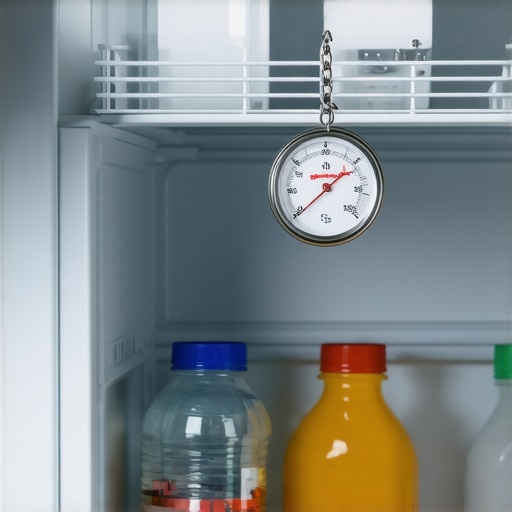
Setting the temperature on a mini-fridge is often a game of Russian roulette. The dials are usually labeled 1-7 or 1-10, which means absolutely nothing to the average person. I learned this the hard way when I set my first unit to ‘7’ thinking ‘colder is better,’ only to find my morning yogurt had turned into a solid block of ice by noon. To avoid this, you need to learn how to recalibrate your refrigerators internal thermometer for better cooling. I highly recommend buying a cheap analog fridge thermometer and placing it in the center of the unit. You want to hit that sweet spot between 35°F and 38°F. If you go higher, your milk spoils; if you go lower, you’ll find out why your refrigerator is freezing the eggs on the top shelf. 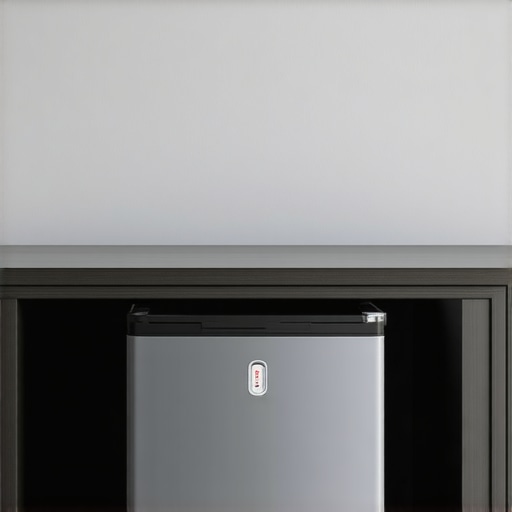
Stop the Buzz Before It Kills Your Zoom Calls
If you’ve ever been in the middle of a high-stakes presentation and heard a low-frequency hum start to vibrate through your floorboards, you know why noise matters. Standard fridge motors kick on and off with a loud ‘click’ and a shudder. If silence is a priority for your workspace, you need to understand the real difference between inverter compressors and standard fridge motors. Inverters ramp up and down slowly, avoiding that jarring start-up noise. I eventually swapped my loud ‘bargain’ unit for one of the best quietest refrigerators for studio apartments and small rooms, and the difference in my mental clarity was immediate. To further dampen sound, place the unit on a heavy-duty rubber mat—the kind used for washing machines—to absorb those micro-vibrations before they hit your hardwood or tile.
The Paper Test That Saves Your Power Bill
Small fridges are notorious for having weak door seals. A tiny gap in the rubber gasket allows cold air to pour out, causing the unit to work twice as hard. I noticed my electric bill creeping up and realized my fridge door wasn’t quite pulling shut. You can perform a ‘dollar bill test’ by closing the door on a piece of paper; if it slides out easily, your seal is failing. Knowing how to test if your fridge door seal is actually airtight is the simplest way to ensure you aren’t wasting money. If the seal is dirty, a quick wipe with warm, soapy water can often restore its ‘stickiness.’ You can also find how to save money on your electric bill by changing three fridge settings, which usually involves adjusting the internal light and the energy-saver mode frequently hidden at the back of the unit.
I see it every time a friend shows me their new home setup: they’ve bought one of those fancy refrigerators in 2025 and immediately flipped on every ‘Eco’ or ‘Power Save’ toggle available. I used to do the same. But here is the contrarian truth: for a compact unit in a home office or gym, ‘Eco Mode’ is often your worst enemy. Most people think it saves money, but in reality, it often widens the temperature swing—the gap between the compressor turning on and off. According to a study by the Association of Home Appliance Manufacturers (AHAM), frequent temperature fluctuations can stress the motor far more than maintaining a steady, slightly higher energy draw. If your office gets warm in the afternoon, that ‘Eco’ setting is basically forcing your fridge to run a marathon every three hours just to catch up.
The Invisible Trap of Smart Sensors
The ‘Oops’ factor usually hits when you realize you’ve been treating your fridge like a static piece of furniture. I’ve seen people spend hundreds on a unit and then forget about the most important part: the sensors. If you’re using smart home appliances, you have to realize they are only as good as the data they receive. I once had a client whose ‘smart’ fridge kept defrosting because it was placed next to a sunny window; the sun hit the external sensor, and the internal computer got confused, thinking it was in a tropical heatwave. It’s the same reason why your smart fridge camera looks blurry after six months—dust and heat aren’t just cosmetic issues; they’re performance killers that affect the motherboard’s decision-making.
Why Do Factory Energy Settings Often Fail in High-Traffic Workspaces?
When you use a fridge in a workspace, you’re likely opening the door more frequently than someone using a unit for long-term storage. Factory settings are calibrated for ‘average’ use, which assumes the door stays shut for 20 hours a day. In a home office where you’re grabbing a sparkling water every time you finish a task, those settings fail. To compensate, you need to stop trusting the auto-adjust. I’ve found that even with the best slimline refrigerators, you must manually lower the thermostat by one degree if you plan on opening the door more than five times an hour. This prevents the unit from entering a ‘recovery spike’ where it draws maximum power to cool down the warm air you just let in.
Stop Overstacking Your Cooling Vents
Another common mistake? The ‘stacking’ trap. We all want to cram as many protein shakes as possible into that tiny frame. But overfilling a compact fridge is like wearing a winter coat while trying to run a sprint; the cold air simply cannot circulate. If you notice your refrigerator is creating excessive ice in the freezer, it’s usually not a mechanical failure—it’s you. You’ve likely blocked the internal vents with a carton of milk or a stack of sodas. Leaving at least 20% of the shelf space empty is the secret to appliance longevity. It allows the air to move, which means the motor shuts off faster and stays off longer, protecting that expensive inverter compressor. This nuance is just as critical in the laundry room; for example, using too much detergent because you think it cleans better is actually why your high-efficiency washer leaves white streaks on dark clothes. It is always about the airflow and the cycle, not just the volume. Have you ever fallen into this trap of over-filling your appliances? Let me know in the comments below.
I used to ignore the back of my appliances until a $400 repair bill taught me a lesson. Most people think maintenance is a quarterly chore, but for a compact fridge living in a high-traffic home office, it’s the difference between a silent worker and a paperweight. I personally swear by a long-reach flexible coil brush. It looks like a giant pipe cleaner, and it is the only way to get the pet hair and dust bunnies out of those tight radiator fins. If you hear that specific refrigerator noise that means your fan motor is dying, it’s usually because the motor has been struggling to pull air through a wall of lint for six months. A study by ASHRAE (American Society of Heating, Refrigerating and Air-Conditioning Engineers) found that a layer of dust just 0.042 inches thick on a condenser coil can reduce heat transfer by up to 21%. That’s a 21% increase in your energy bill just for being lazy with a brush.
Stop Fighting Your Router and Fix the Connection
If you’ve stepped up to a smart unit, you’ve probably dealt with the ‘offline’ headache. I’ve wasted hours resetting my Wi-Fi when the problem was actually the fridge’s internal cache. Every time you see why your smart appliance app keeps asking for a firmware update, don’t ignore it. These updates often contain patches for the power-management chips that prevent the unit from cycling too hard. I recommend using a dedicated 2.4GHz band for your appliances. My office fridge used to drop off every time I used my microwave until I learned how to set up a central kitchen hub for all your smart appliances to manage the traffic. Keeping the ‘brain’ of the machine healthy is just as important as the compressor.

Balance Your Base to Prevent a Rattle
We often focus on the inside, but the feet of the fridge are critical. If your fridge isn’t perfectly level, the door won’t seal properly, and the internal coolant won’t flow at the right pressure. It’s the same physics behind how to level a washing machine so it stops banging on tile floors. I use a standard 12-inch bubble level on the top of the unit. If it’s even slightly tilted back, the door might stay open an inch without you noticing. This causes the ‘sweat’ that leads to mold. If you’re struggling with a unit that feels unstable, you can apply the same logic used to how to stop your washing machine from jumping during the spin cycle—use rubber anti-vibration pads. They keep the fridge from ‘walking’ across your office floor during a heavy cooling cycle.
How do I keep my compact fridge running like new for a decade?
Longevity comes down to three non-negotiable habits: cleaning the gasket, vacuuming the coils, and checking the internal drain hole. I use a Q-tip to clear the tiny drain hole at the back of the fridge once a month. If that gets clogged, water pools under your vegetable crisper and starts to smell. Looking ahead, the future of home appliances suggests we’ll soon see units with self-cleaning coils and AI that predicts part failure before it happens. But until then, you are the mechanic. My best tip? Grab that dollar bill right now and check your seal. If it’s loose, you’re literally bleeding money. Go clean those coils this weekend—your electricity bill (and your compressor) will thank you.
The Hard-Earned Lessons from My Fridge Graveyard
After cycling through five different units in three years, I realized that the environment is often the silent killer of small appliances. First, never place your unit on a thick carpet; it chokes the bottom vents and forces the compressor into an early grave by trapping heat. Second, I learned that door storage is often ‘dead space’ for temperature-sensitive items; keep your milk and perishables in the center-back where the air stays most consistent. Lastly, don’t ignore a slight wobble. A level unit is a quiet unit, and a quiet unit means you stay in the flow state longer. If you are still undecided on which model fits your budget, checking the best energy-saving refrigerator models currently on the market is a great way to ensure your utility bill doesn’t spike unexpectedly.
The Gear I Use to Keep Things Quiet and Efficient
I don’t just plug in and walk away anymore. My personal toolkit for a successful office setup includes a simple analog thermometer to verify the internal temp—I never trust the factory dial labels anymore. I also suggest using heavy-duty rubber vibration pads; they are the secret to keeping a unit in a home office without it sounding like a construction site. If you are integrating your tech into a larger ecosystem, look into the best way to voice control your kitchen from the living room so you can monitor your office environment from your main hub. Finally, for those in truly cramped spaces, I always recommend browsing the best slim refrigerators for studio apartment living and tight corners to find a unit that breathes properly in confined quarters.
[IMAGE_PLACEHOLDER_E]
Your New Peak Productivity Routine Starts Today
The goal of adding a compact refrigerator to your personal space isn’t just about the convenience of a cold drink. It is about building an environment that respects your time and your physical health. When you don’t have to break your concentration to stay hydrated, you will find that your deep work sessions last longer and feel significantly more rewarding. You have done the research and learned the pitfalls of poor maintenance; now it is time to set up your space for genuine success. What is the biggest distraction you have faced in your home office this week—was it the kitchen commute, or something else? Let me know in the comments below!