
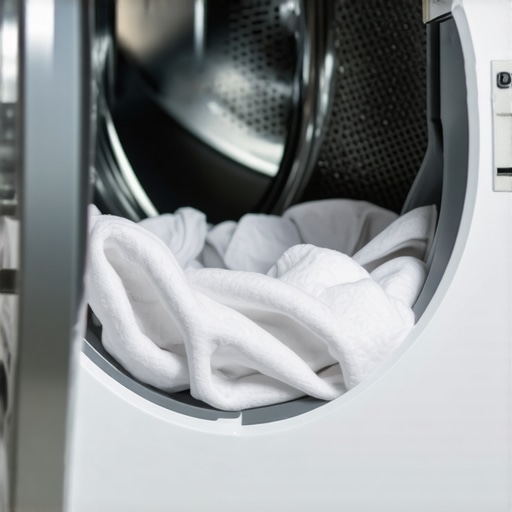
I stood there, staring at my ‘state-of-the-art’ washer, holding a pair of towels that weighed roughly fifty pounds. The timer said zero, the chime had sung its happy little song, but the laundry was basically a swamp. It’s the ultimate betrayal. You spend good money on a machine that promises to simplify laundry day, yet you’re left hand-wringing shirts over the bathtub. I’ve been there more times than I’d like to admit. In fact, for the longest time, I thought my machine was just ‘getting old’ or that I was cursed. Have you ever felt like your washer is just pretending to spin while it actually holds your clothes hostage in a cold puddle? Today, I’m going to share exactly why your laundry room has become a humidity chamber and how we can get those clothes spin-dried properly without calling a repairman for five hundred dollars. [image_placeholder]
Stop Putting Up With Soggy Laundry at the End of the Wash
The biggest mistake I made early on was assuming that if the drum was spinning, the water must be leaving. I ignored the drain filter for three years—yes, three years—until it was so clogged with pennies and pet hair that the pump just gave up. It turns out, why your clothes are still sopping wet after the spin cycle often has more to do with simple physics than a broken motor. If the water can’t exit the drum fast enough during the high-speed phase, it just sits there, soaking back into the fibers the second the machine stops. According to data from the Association of Home Appliance Manufacturers (AHAM), improper load balancing and drainage issues are the primary reasons modern high-efficiency units fail to remove moisture effectively. If you’ve been stuffing your machine to the brim, you’re likely the culprit. I used to think I was being efficient by washing every single towel I owned in one go, but all I was doing was creating an unbalanced mess that the machine couldn’t handle. You might need to clear a blocked pump on your front load washing machine just to give it a fighting chance.
Is a high-end machine actually worth the hype?
Many of my neighbors ask me if they should just scrap their current unit and look for washing machines that save water or have better sensors. While newer tech is great, even the smartest appliance will fail if you don’t treat it right. The skepticism is real—we’ve all bought a ‘smart’ tool that felt dumber than the manual one it replaced. But before you go shopping, let’s look at the simple mechanical reasons your spin cycle is leaving things damp. It’s usually not a software glitch; it’s usually a physical hurdle that we can clear in ten minutes.
Scrub the Debris Out of Your Drain Filter
The first thing you need to do is get on the floor. Most modern front-loaders have a small access door at the bottom right or left. Behind that door is a screw-off cap that leads to the pump filter. This is the ‘junk drawer’ of your washing machine. I once pulled out three bobby pins, a Lego Batman cape, and enough lint to felt a small hat. If this filter is even partially blocked, the pump struggles to push water out fast enough for the spin cycle to reach its top RPM. You should clean the lint filter you didn’t know your washer had at least once every three months. To do this, lay a shallow tray or a thick towel down first—expect about a cup of stagnant water to spill out. Unscrew it slowly, dump the gunk, rinse it under the tap, and screw it back in tightly. If you don’t seat it perfectly, you’ll trade wet clothes for a flooded floor. 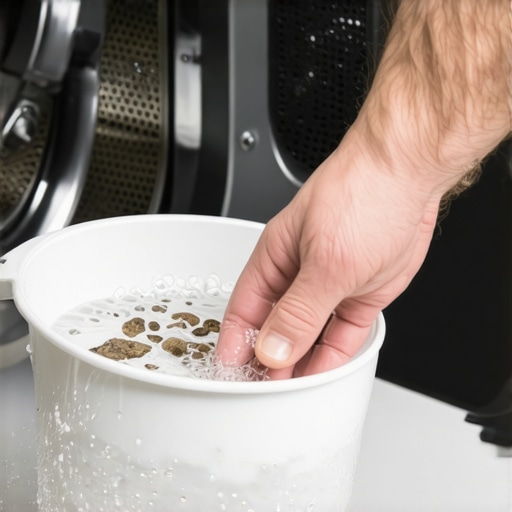
Master the Art of the Balanced Load
Your machine has a brain, and that brain is programmed to protect the drum bearings. If the load is lopsided, the sensors will refuse to ramp up to high speeds to prevent the machine from shaking itself apart. I learned this the hard way when I tried to wash a single, heavy bathroom rug. The machine spent thirty minutes trying to tumble it into a balanced position, failed, and just stopped, leaving the rug sitting in a literal gallon of water. Always wash heavy items in pairs or add a few towels to act as a counterweight. If your machine is constantly shaking, check the reason your washing machine vibration pads aren’t working because an unstable base makes it much harder for the sensor to give the ‘all clear’ for a high-speed spin.
Cut Back on Detergent to Speed Up the Spin
It sounds counterintuitive, but more soap often leads to wetter clothes. High-efficiency (HE) washers use very little water, and if you use too much detergent, the machine creates a ‘suds lock.’ This is a thick cloud of foam that the pump can’t easily move. When the sensors detect excessive suds, they trigger an extra rinse cycle or slow down the spin to let the bubbles dissipate. If you see white streaks on your dark clothes, why your washer doesn’t need a whole cup of detergent to get clothes clean becomes very obvious. Stick to two tablespoons at most. If the machine is already stuck in a suds loop, you might need to how to reset the error codes on your modern smart washer to clear the logic and start fresh.
Use the Right Cycle for Heavy Fabrics
Don’t expect the ‘Delicate’ or ‘Quick Wash’ setting to handle a king-sized duvet. These cycles often have inherently lower spin speeds to protect fragile fibers. If you are washing heavy linens, you must select the best settings for washing your heaviest winter bedding to ensure the motor is authorized to hit maximum velocity. If the cycle finishes and the items are still heavy, run a ‘Drain and Spin’ cycle manually. This is the quickest way to fix the immediate problem of why your clothes are still sopping wet after the final spin cycle without re-washing the entire load.Let’s dig deeper into the psychology of modern appliances because this is where most homeowners lose the battle. We’ve been conditioned to believe that ‘Smart’ equals ‘Self-Healing,’ but it’s actually the opposite. Everyone tells you that buying smart home appliances for a modern living space will save you time, but in my experience, these machines require a much higher level of ‘technical hygiene’ than the old-school dial units. If you don’t keep the sensors clear, the machine’s ‘brain’ starts making bad decisions based on bad data. For example, I’ve seen people complain about how to get your dishwasher to finally dry your plastic tubs, only to realize they’ve been blocking the turbidity sensor with a giant serving platter for months. 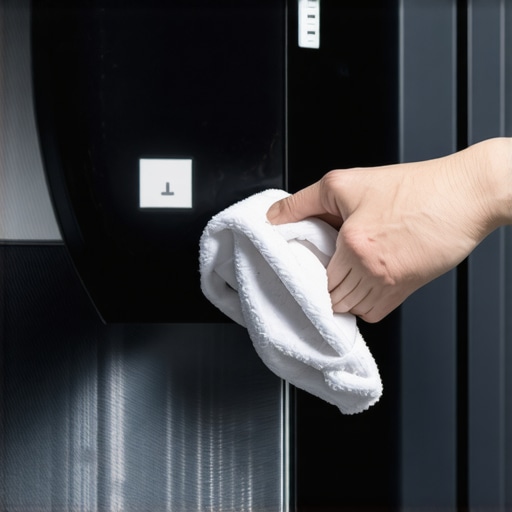
Your Smart Machine is Only as Good as Its Sensors
The common myth is that more tech means less work. The nuance is that while innovative dishwashers with AI technology can detect soil levels, they can’t clean their own ‘eyes.’ If you have hard water, a thin film of scale can build up over the internal sensors, leading to cycles that either end too early or run indefinitely. I once spent a weekend wondering why your high-efficiency washer takes so long to complete a load, and it turned out the internal water temperature sensor was coated in a layer of undissolved fabric softener. It’s a classic trap: we use products designed for 1995 in machines built for 2025.
Why does my energy-saving cycle take four hours to wash a few shirts?
This is the number one question I get from people who upgrade to washing machines that save water. It feels like a scam, right? You want to save energy, but the machine runs all afternoon. However, according to the U.S. Department of Energy (DOE), it actually takes significantly less energy to heat a small amount of water slowly than it does to flash-heat a massive drum of water quickly. The long cycle is the secret to the efficiency, not a defect. If you try to ‘beat the system’ by constantly using the ‘Quick Wash’ for everything, you’re actually making one of the 5 mistakes that are shortening the life of your smart refrigerator and other major appliances because you’re forcing the components to work at maximum intensity every single time.
Stop Trusting the Pod for Everything
Here is the ‘Oops’ factor most people miss: the convenient detergent pod is often the secret enemy of the high-efficiency machine. Most pods are pre-dosed for a massive, heavily soiled load. If you’re doing a medium load in a water-saving machine, that pod creates a suds-storm that traps moisture and prevents the spin cycle from ever reaching its full potential. I’ve seen this lead to owners mistakenly researching how to tell if your washer bearings are about to fail because the machine was banging around so hard trying to balance a suds-locked drum. Have you ever fallen into this trap of thinking ‘one pod fits all’? Let me know in the comments below.
I’ve spent thousands of hours tinkering with these machines, and if there is one thing I’ve learned, it’s that the ‘set it and forget it’ mentality is the quickest way to a $600 repair bill. After you’ve mastered the art of the perfect detergent dose, you need to look at the long-game. We often think of maintenance as a chore, but in the world of smart home appliances for a modern living, it’s more like software optimization. If the hardware is dusty or the seals are sticky, the smartest AI in the world can’t save your electricity bill.
The Toolbox Every Smart Home Owner Actually Needs
Forget the heavy wrenches; your most important tools are now a soft-bristled toothbrush, a microfiber cloth, and a flexible vacuum hose attachment. I personally use a 36-inch thin dryer vent brush not just for the dryer, but to reach the condenser coils under the fridge. According to the Association of Home Appliance Manufacturers (AHAM) Technical Standards, even a 1/16th inch layer of dust on refrigerator condenser coils can reduce cooling efficiency by up to 20%, forcing your compressor to work overtime. I also swear by using the best smart plugs for monitoring appliance energy use. These aren’t just for turning lamps on and off; they act as an early warning system. If I notice my dishwasher is suddenly drawing 15% more power than it did last month, I know I’ve likely got a partial clog in the spray arms or a heating element that is struggling. 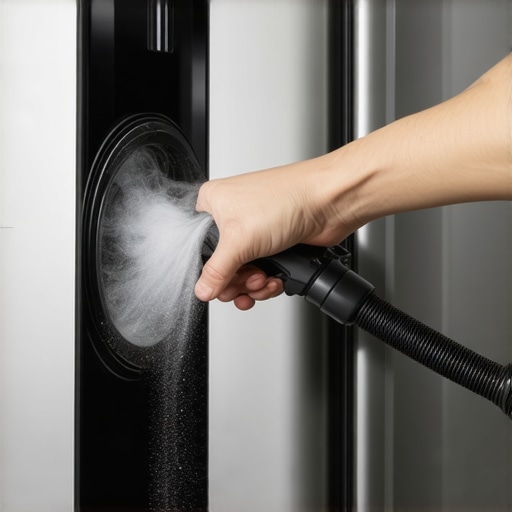
How do I maintain my high-tech appliances over the long haul?
The secret is ‘sensor hygiene.’ Every month, I take a damp cloth and wipe down the turbidity sensors in the dishwasher and the moisture sensors in the dryer. If these get coated in a film of minerals or fabric softener, your innovative dishwashers with AI technology will lose their ability to ‘see’ how clean your plates actually are. For your refrigerator, it is all about the ‘paper test’ on the gaskets. If you can slide a piece of paper through the door seal, you are leaking cold air and inviting mold. You don’t always need a pro; you can often learn how to calibrate your refrigerator thermometer without calling a pro to ensure your sensors match the actual internal temperature.
The Era of Predictive Maintenance is Coming
Looking at the future of home appliances trends to watch in 2025, we are moving away from reactive fixes. Soon, your washing machine won’t just tell you it’s broken; it will tell you that the drain pump is vibrating at a frequency that suggests it will fail in three weeks, and it will offer to order the part for you. This shift toward ‘digital twins’—where your app simulates the wear and tear of your specific machine—will change everything. But until then, the best thing you can do is stay proactive. My challenge to you today: go to your fridge, grab a vacuum, and clean those coils. It takes five minutes and could save you three years of appliance life. If you have questions about a specific model, don’t hesitate to contact us for a deep dive.
Lessons from the Laundry Room Trenches
After years of fighting with my appliances, I’ve realized that why your clothes come out of the washer with mysterious white streaks is almost always a sign that you’re using too much soap, not that the machine is failing. We often forget that these units are delicate systems. I also learned that why your front loader collects more gunk than your old top loader is simply the price we pay for water efficiency; those rubber gaskets need a quick wipe every week or they become a breeding ground for mildew. The biggest lightbulb moment for me was realizing that ‘smart’ doesn’t mean ‘maintenance-free’—it actually means the machine is sensitive enough to tell you when you’re making a mistake, provided you know how to listen.
Tools That Keep My Kitchen Running Smoothly
If you want to move beyond just guessing what’s wrong, I highly recommend picking up the best smart plugs for monitoring appliance energy use. It’s the easiest way to see if your fridge or washer is drawing too much power, which is a massive red flag for a motor issue. I also keep a stash of white vinegar and baking soda nearby, as they are the best ways to clean a smelly dishwasher without using bleach or harsh chemicals that can degrade your seals over time. Finally, keep a flexible vacuum attachment in your utility closet; it’s the only way to reach the dust bunnies living under your heavy appliances without throwing your back out.
Take Control of Your Home Technology Today
Don’t let a soggy pile of towels ruin your afternoon or convince you that you need to spend thousands on a replacement. By understanding the small quirks of your washing machines and keeping those sensors clean, you can extend the life of your gear by years. You have the power to fix most of these issues with just a little patience and a screwdriver. You’ve got this! Your home should work for you, not the other way around.
Have you ever found a weird object in your drain filter that was causing your laundry to stay wet? Let me know in the comments below!