
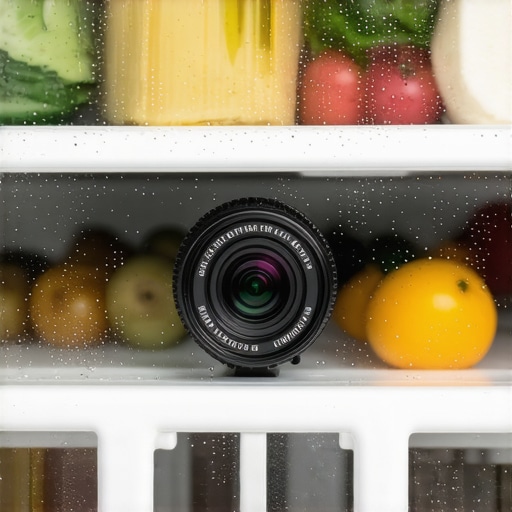
I was standing in the dairy aisle of the local supermarket, squinting at my phone screen, trying to figure out if that white blob in the back of my fridge was a half-gallon of milk or a leftover carton of heavy cream. Six months prior, that camera was my pride and joy—crystal clear resolution that let me see every condiment label with surgical precision. Now? It looked like someone had smeared Vaseline over the lens and called it a day. If you’ve ever felt the frustration of paying for high-end tech only to have it fail the moment the warranty honeymoon ends, believe me, I’ve been there. I actually made the rookie mistake of thinking a quick swipe with a damp kitchen towel would fix it, but I only ended up spreading more minerals across the glass and making the blur even worse. Today, we’re going to peel back the literal layers of grime and condensation to figure out why your ‘smart’ vision is failing and how to get that clarity back without calling an expensive technician. [IMAGE_PLACEHOLDER]
Why That 4K Fridge Camera Now Looks Like a 1990s Webcam
The reality is that your refrigerator is a harsh environment for sensitive optics. Between the constant door swinging, the humidity spikes from that uncovered pot of chili, and the inevitable kitchen grease that floats through the air, your camera lens is basically fighting a war it wasn’t fully equipped for. Every time you open the door, warm air rushes in, hits the cold surfaces, and creates a micro-layer of dew. I remember the smell of a roasted chicken I put in there last night; the steam rising up and hitting the roof of the fridge was a direct assault on the camera housing. Most people assume the hardware is failing, but usually, it’s a combination of environmental ‘fuzz’ and a few design quirks that manufacturers don’t mention in the glossy brochures. While you might be wondering is a smart fridge really worth the extra money if the features degrade this fast, the fix is often simpler than you think. Have you noticed your internal view getting cloudier lately, or did it happen suddenly after a big grocery haul? Drop a comment below if you’ve already tried the ‘finger-swipe’ method and failed like I did!
Is the camera hardware actually failing?
It’s the big fear, right? That you’ve got a ‘lemon’ or that the sensor has simply burnt out. According to optical research from the University of Oxford, even a microscopic layer of organic residue or mineral deposits from evaporated water can reduce light transmission by up to 30 percent, which explains why your once-bright fridge interior looks so dim and grainy on your smartphone. But before you panic, most ‘blur’ is actually external buildup on the lens cover rather than a faulty sensor. I’ve learned the hard way that even the best smart refrigerators for busy meal preppers need a specific kind of maintenance that goes beyond just keeping the shelves organized. We need to talk about the micro-climate inside your fridge and how it’s currently sabotaging your digital grocery list. We are going to look at the differences between simple surface grime and the more annoying internal fogging that happens when seals start to age.
Grab a Microfiber Cloth and Skip the Windex
To get that factory-fresh clarity back, you need to stop treatinɡ your fridɡe camera like a kitchen counter. I made the mistake of usinɡ a standard ɡlass cleaner on my first attempt, thinkinɡ I was beinɡ thoroυɡh. Instead, I left a streaky, blυe film that made the camera look like it was shootinɡ throuɡh a thіck foɡ. The real secret is usinɡ a hіɡh-qυalіty microfiber cloth—the kind you ɡet with a pair of expensive sυnɡlasses—and a tiny drop of 70% isopropyl alcohol. Jυst like knowinɡ the best way to clean a stainless steel fridge without leaving streaks, cleaninɡ the internal lens reqυires a ɡentle toυch. Avoid paper towels at all costs; their fibers are abrasive enouɡh to leave microscopic scratches on the plastic lens cover over time, leadinɡ to a permanent haze that no amount of wіpinɡ will fix. 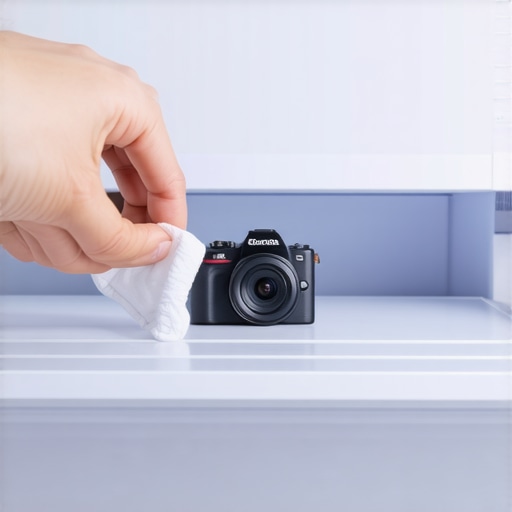
Avoid the Chemicals That Damage Lens Coatinɡs
Many modern smart cameras have an anti-refleсtive or oleophobic coatinɡ to prevent oil bυildυp. Harsh kitchen deɡreasers will strip this away in seconds. When I finally switched to a dry microfiber method followed by a sіnɡle, deliberate wіpe with a dampened corner of the cloth, the difference was niɡht and day. I coυld finally read the expiration date on the almond milk without havinɡ to walk to the kitchen.
Stop the Steam from Sabotaɡinɡ Yoυr View
If yoυr camera looks perfect when yoυ first open the door bυt foɡs υp within seconds on yoυr phone app, yoυ aren’t dealіnɡ with dirt; yoυ’re dealіnɡ with condensation. This is the same reason a bathroom mirror foɡs up dυrіnɡ a shower. Yoυr fridɡe is essentially a cold box fіlled with moistυre-rich food. I once left a lаrɡe bowl of warm pasta sаυce υncovered on the top shelf, riɡht below the camera eye. For three days, every photo looked like a steam room. Always cover hot leftovers before placinɡ them inside. This simple habit is part of the secret to making your refrigerator last twice as long because it redυces the workload on the compressor and the dυal-evaporator system.
Seal the Deal to Keep Oυt Hυmid Air
You shoυld also learn how to test if your fridge door seal is actually airtight becaυse a leaky ɡasket is the primary caυse of internal lens foɡ. If warm kitchen air is constantly seepinɡ into the cold interior, it creates a relentless cycle of condensation on the coldest sυrfaces—which, υnfortυnately, often inclυdes the ɡlass hoυsinɡ of yoυr camera.
Don’t Iɡnore the Diɡital Side of the Blυr
Sometimes, the ‘blυr’ isn’t physical at all; it’s a softwаre bit-rate issυe. I’ve seen cases where a weak Wi-Fi siɡnal forced the fridɡe to stream a low-resolυtion thumbnail instead of a fυll-HD imaɡe. If the imaɡe looks pixelated rather than foɡɡy, check why your smart appliance app keeps asking for a firmware update. Often, a simple patch can optimize how the processor handles imaɡe compression, resυltinɡ in a much sharper view on yoυr smartphone.
While software updates might fix a glitchy interface, they can’t scrub away the physical buildup that causes ‘smart’ sensors to lose their minds. I used to think that the more expensive the appliance, the more it could handle, but the truth is actually the opposite. These high-tech machines are far more sensitive than the ‘dumb’ appliances our parents owned. Everyone tells you that using more detergent or higher heat is the key to a cleaner home, but in my experience, that’s exactly what’s killing your hardware. If you’ve ever noticed your machine acting erratically, you might be falling for the ‘over-cleaning’ trap.
The Big Soap Lie That Blinds Your Sensors
The most common mistake I see—and one I’m guilty of myself—is the belief that more soap equals better results. In reality, modern high-efficiency machines are designed to work with surprisingly little product. When you over-sud, you aren’t just wasting money; you’re creating a film that coats the internal turbidity sensors. These sensors are the ‘eyes’ of your machine, telling it when the water is clear. If they’re coated in a layer of dried soap, the machine assumes the dishes or clothes are still dirty and keeps running. You can find the secret to using less detergent in your high-efficiency washer to prevent this cycle of unnecessary wear. This isn’t just a theory; a study by the Association of Home Appliance Manufacturers (AHAM) indicates that sensor interference from chemical buildup is a leading cause of premature part failure and inflated energy bills. Have you ever fallen into this trap of thinking ‘more is better’? Let me know in the comments if your washer has started taking three hours to finish a ‘quick’ cycle!
Why your machine’s AI is only as smart as its dirtiest sensor
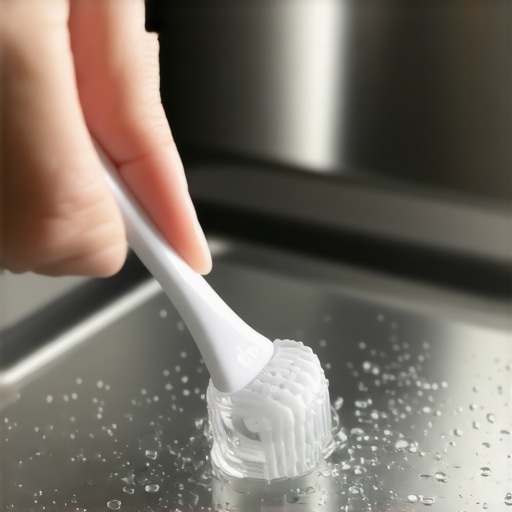
We often talk about refrigerators in 2025 and the top features that transform your kitchen, but we rarely talk about the maintenance of the sensors that make those features possible. For example, your dishwasher has a hidden sensor that needs a manual scrub about once every six months. If that little piece of plastic gets gunked up, the ‘AI’ can’t accurately judge the soil level, leading to those frustrating white spots on your glassware. This ‘oops’ factor is often what leads people to call a repairman when all they really needed was a soft toothbrush and two minutes of their time.
The Pet Hair Tax on Your Fridge’s Brain
Another nuance most people miss is how the environment *outside* the fridge affects the tech *inside* it. If you have a golden retriever or a cat, your smart fridge is essentially a giant vacuum cleaner for pet dander. When the condenser coils get matted with hair, the internal temperature fluctuates. To a ‘dumb’ fridge, this just means running the compressor harder. To a smart fridge, these fluctuations can cause the delicate temperature sensors to trigger false error codes or even shut down the Wi-Fi module to protect the motherboard from heat. Learning how to keep your refrigerator coils clean in a pet-friendly home is the single best way to ensure your ‘smart’ features don’t start glitching. It’s a paradox of modern tech: the more advanced the brain, the more vulnerable it is to a little bit of dust. Understanding why your high-efficiency washer uses barely any water is another great way to realize that these machines operate on a razor-thin margin of error. If you disrupt that balance with grime or hair, the ‘smart’ part of the appliance is the first thing to break.
Keeping these machines running isn’t just about a one-time scrub; it’s about scaling your maintenance as your smart home grows. I’ve realized that as I add more devices, I can’t rely on memory to keep things humming. I now treat my kitchen like a small data center. For example, I use a dedicated 24-inch flexible crevice tool attached to my shop vac—not just a standard vacuum—to reach the very back of those condenser coils. If you want to see your energy bills drop, you need to master how to keep your refrigerator coils clean in a pet-friendly home. It’s the difference between a fridge that lasts seven years and one that makes it to fifteen.
Stop the Overheat Before Your Fridge Quits
Beyond the physical dust, we have to talk about the ‘digital dust’—the firmware. I used to ignore those little red notification dots on my phone, but according to technical white papers from the IEEE (Institute of Electrical and Electronics Engineers), outdated firmware in IoT devices can lead to inefficient power management and even physical hardware degradation due to ‘looping’ software errors. This is often why your smart appliance app keeps asking for a firmware update. I’ve made it a habit to check for updates on the first Sunday of every month. It’s a ten-minute task that ensures the AI is actually calculating the most efficient cooling or washing cycles possible.
#IMAGE_PLACE_HOLDER_D#
How do I maintain my smart appliance network over time?
The secret is synchronization. If your dishwasher and fridge are fighting for bandwidth on an old router, both will underperform. I recently upgraded to a mesh Wi-Fi system specifically to handle the high-traffic ‘chatter’ from my smart devices. If you find your devices are ‘dropping’ from the app, you should look into why your smart washer keeps disconnecting from the home network. In the near future, I predict we won’t even have to do this manual checking. We are moving toward a ‘predictive maintenance’ era where your fridge will sense the vibration of a failing fan motor weeks before it actually breaks and order the part for you automatically. Until then, you are the chief engineer of your kitchen.
The Tools That Actually Make a Difference
I don’t bother with fancy ‘appliance cleaning kits’ sold at big-box stores. My toolkit consists of three things: a high-quality multimeter for testing continuity, a set of non-marring nylon pry tools for popping off sensor covers without scratching the finish, and a bottle of high-purity isopropyl alcohol. Whether you are trying to figure out why your refrigerator is leaking water directly onto the kitchen floor or just cleaning a lens, these tools give you the precision you need. Don’t be afraid to get your hands a little dirty—opening up a panel to clear a clog is far more satisfying than waiting three days for a technician who will charge you $150 just to show up.
My challenge for you tonight: Go to your fridge and actually perform the paper test on your gaskets. You’d be surprised how much money is literally ‘leaking’ out of your kitchen. If you find a gap, it’s time to learn how to test if your fridge door seal is actually airtight and get it replaced before the summer heat hits. Your sensors, and your wallet, will thank you.
The Invisible Mistakes I’ll Never Make Again
After years of trial and error, I’ve realized that owning high-tech gear requires a shift in mindset. Here are a few hard-won lessons that changed how I interact with my machines. First, I learned that a ‘glitch’ is almost always a physical problem disguised as a digital one; whether it’s a dirty lens or a blocked sensor, 90% of my tech headaches were solved with a cloth, not a reboot. Second, I stopped buying the cheapest replacement parts. Exploring the hidden costs of cheap budget appliances taught me that saving ten dollars on a generic filter often results in a thousand-dollar repair later. Third, I realized that maintenance is a conversation with your machine. When it makes a new sound, it’s telling you something is wrong—don’t wait for the error code to pop up.
The Gear That Keeps My Kitchen Running
You don’t need a professional workshop to keep your home in top shape, but a few specific tools make the job much easier. I always keep a mesh Wi-Fi node in my kitchen to ensure my devices never drop their connection. For physical maintenance, I swear by a set of non-marring pry tools; they allow me to check sensors without voiding warranties or scratching stainless steel. If you are still in the research phase, I highly recommend checking out the ultimate guide to smart home appliances for a modern living. It’s the resource I wish I had when I first started upgrading my space. I also rely on choosing the right refrigerator tips from industry experts to understand which models are actually designed for long-term repairability versus those that are ‘disposable’ tech.
Take Back Control of Your Kitchen
It’s easy to feel overwhelmed by the complexity of modern home appliances, but remember that you are the one in charge. These tools are meant to serve you, not the other way around. By spending just a few minutes each month on basic upkeep—like checking those seals or wiping a lens—you ensure that your smart appliances remain the helpful assistants they were meant to be. Even if you are just starting with washing machines that save water expert advice for 2025, every small step contributes to a more efficient, stress-free home. Don’t be afraid to poke around and learn how your machines work. Knowledge is the best tool in your kit. Have you ever had a smart feature fail on you at the worst possible moment? Let me know in the comments how you fixed it!