
The smell of leftover garlic and damp heat is something you never quite forget once it’s been trapped in a dishwasher that refuses to empty itself. It was a Tuesday night, the kind where you just want to finish the chores and crash. Instead, I was staring at a rhythmic, blinking “Drain” light. My dishwasher had decided to go on strike right after a dinner party. The water sat there—stagnant, gray, and filled with the debris of a successful meal—mocking my attempts at a clean kitchen. It’s a visceral, sinking feeling when your most reliable appliance turns into a glorified tub of swamp water.
That Frustrating Moment the Water Just Won’t Leave
Most of us invest in high-end machines to buy back our time, but when that error code starts flashing, it feels like we’ve just been handed a second job. I’ve been there more times than I’d like to admit, usually with a wrench in one hand and a YouTube video in the other. In my early days of DIY home maintenance, I made a classic “rookie” mistake that I still cringe about. I was so convinced the drain pump had burned out that I went ahead and ordered a replacement part before even checking the basics. I spent three hours under the sink, bruised my knuckles, and spent eighty bucks, only to find a single, tiny piece of a broken wine glass wedged perfectly in the impeller. The pump was fine; I was just impatient.Today, I’m here to make sure you don’t do what I did. We are going to tackle the most common reasons why your dishwasher is holding onto its water and how you can get that light to stop blinking without calling a technician who charges a hundred dollars just to show up. If you’ve been struggling with why your dishwasher isn’t draining, take a deep breath. We’re going to fix this. We’ll look at everything from simple clogs in the filter to the mechanics of the drain line itself.
Is my dishwasher just ready for the landfill?
It’s the first question everyone asks when they see an error light. “Is it finally dead?” We live in a world where things feel disposable, but stop right there. Most drainage issues are actually maintenance failures or simple blockages, not terminal mechanical deaths. According to industry data from Consumer Reports, a significant percentage of dishwasher service calls could be avoided with regular cleaning and basic troubleshooting. We often jump to the worst-case scenario because we’re frustrated and standing in a wet kitchen, but repair is usually simpler than you think.Whether you’ve upgraded to innovative dishwashers with AI technology or you’re nursing an old reliable unit from a decade ago, the physics of water removal is surprisingly consistent. Sometimes the culprit is a kinked drain hose that got pinched when you pushed the machine back in, or maybe the hidden sensor just needs a manual scrub to realize the tub is actually empty. I’ve even seen cases where a simple soap error caused a backup, which led me to research how to stop your dishwasher from leaking water before it ruined my hardwood floors.Have you ever opened your dishwasher only to find a lake of dirty water at the bottom? Tell me I’m not alone in that “why now?” moment! Seriously, it always happens on a holiday or a Sunday night, doesn’t it? Let’s walk through how to diagnose this properly so you can get back to your life.
Getting Your Hands Dirty to Get the Water Moving
Before you start tearing out wires, we need to handle the basics. Think of your dishwasher like a high-end plumbing circuit; if one point is blocked, the whole system backs up. I remember a humid Sunday afternoon when I was convinced my pump was dead. I had tools spread across the floor and a look of pure defeat. It turned out to be a single, soggy toothpick wedged in the mesh. Five minutes of cleaning saved me a week of waiting for a repairman. You don’t need a degree in engineering to do this, just a bit of patience and a flashlight.
Start at the Bottom with the Filter
The filter is the most common point of failure. Most modern units have a cylindrical filter at the base that you can twist and lift out. If yours is covered in a gray, slimy film, that’s your culprit. This gunk is a mix of undissolved detergent, fats, and food particles that eventually creates a waterproof seal. If you aren’t sure how to handle this part, the easiest way to clean the filter in your dishwasher involves nothing more than warm soapy water and a soft brush. While you are down there, take a second to look at the sprayers. Learning how to clean the internal spray arms of your dishwasher for better flow ensures that once the water does drain, the next cycle actually cleans your plates.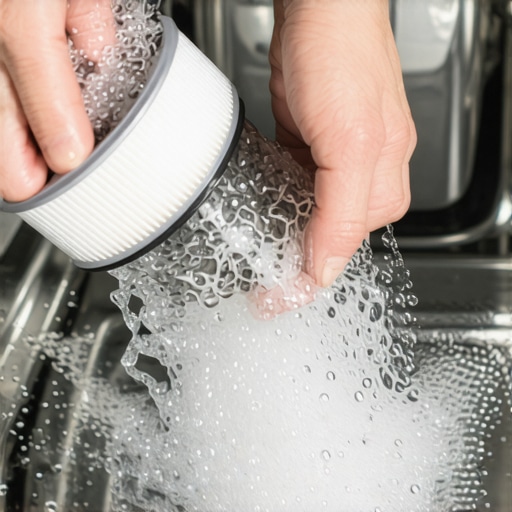
Clear the Line Where Most Clogs Hide
If the filter is clean but the tub is still full, the issue is likely in the drain hose. This is the long, flexible tube that connects your machine to the sink drain or garbage disposal. It acts like a straw; if it’s pinched or clogged, nothing moves. I’ve seen cases where people push their dishwasher back into the cabinet too hard, resulting in a kinked drain hose that stops water dead in its tracks. Disconnect the hose from the sink side and blow through it or run a snake through it to ensure it’s clear. If you find a blockage here, you’ve likely found the reason why your dishwasher isn’t draining properly.
Check the Connection to Your Sink
Many people forget that the dishwasher shares a “highway” with the kitchen sink. If you recently installed a new garbage disposal, check if the knockout plug was removed. I once helped a friend who bought a top-tier machine from the smart appliances revolution only to find it “broken” on day one. The installer had forgotten to remove that tiny plastic plug in the disposal, so the dishwasher was essentially pumping water against a brick wall. Also, don’t overlook the electronics. Sometimes the hidden sensor that detects water levels gets coated in calcium and needs a manual wipe to tell the brain that the tub is still full. If the pump sounds like it’s trying to work but struggles, you might need to how to quiet down a noisy dishwasher pump fast by clearing out hard debris like glass shards or fruit pits that have made it past the filter and into the impeller blades.Let’s dig deeper into the nuances that most homeowners overlook when they transition from “old school” appliances to the modern era. We often carry over habits that were necessary in 1995 but are actively damaging in 2025. For instance, there is a pervasive myth that you must pre-rinse your dishes until they are practically clean. In reality, most innovative dishwashers with AI technology rely on turbidity sensors to gauge the soil level of the water. If you rinse everything off, the sensor detects clean water and tells the machine to run a shorter, cooler cycle. This results in proteins and starches being “baked” onto the plates, leaving you wondering why your dishwasher is leaving a gritty white film on your plates. Scraping is necessary; scrubbing is counterproductive. I spent years scrubbing my plates to “help” the machine, only to realize I was the reason my glasses looked cloudy.
Stop Rinsing Your Plates If You Want Them Clean
The biggest “trap” I see DIY-ers fall into is the over-reliance on “natural” cleaners like white vinegar in their high-efficiency units. While it is great for windows, the high acidity can be a silent killer for your appliance’s internal components. Experts at Reviewed.com have found that prolonged exposure to vinegar can degrade the rubber door seals and gaskets, leading to costly leaks. Instead of reaching for the vinegar bottle, it is vital to understand the truth about using white vinegar in your high-efficiency dishwasher before you inadvertently cause a flood. 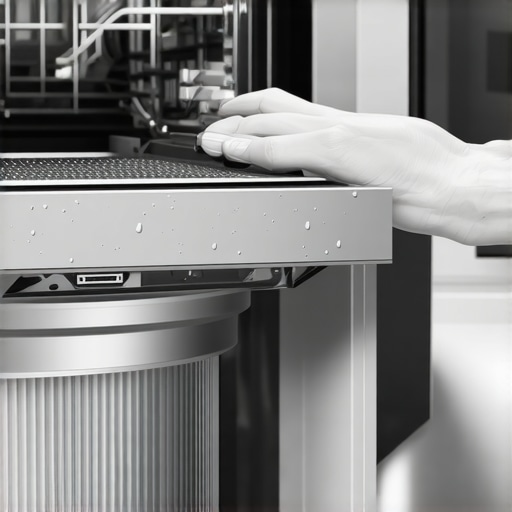
Why does my high-end fridge keep freezing the eggs on the top shelf?
It’s a sophisticated question that plagues many who have just finished choosing the right refrigerator based on premium specs. You might assume the thermostat is broken, but the nuance usually lies in the airflow design of inverter compressors and standard fridge motors. Modern fridges use precise “air towers” to circulate cold air throughout the cabinet. When we overstuff the top shelf, we block these vents, causing cold air to pool and freeze items directly in the path of the blast. Before you spend time trying to calibrate your smart fridge temperature sensors, try moving your dairy and eggs away from the back wall vents. Finally, we need to address the “soap equals clean” fallacy. In a high-efficiency world, more detergent creates an “air cushion” that prevents the water from actually hitting the fabric or dishes. Learning the secret to using less detergent in your high-efficiency washer isn’t just about saving money; it’s about preventing the mold and mechanical strain caused by undissolved suds. Have you ever fallen into this trap of over-cleansing? Let me know in the comments! We’re all learning to navigate this smart home transition together.It’s one of the great ironies of adult life: you have to clean the machines that do the cleaning. I used to think that because my washing machine was constantly full of soap and hot water, it was naturally the cleanest place in the house. I was wrong. If you don’t take an active role in maintenance, your high-end investment will eventually revolt. To keep things running smoothly, I’ve moved beyond just “wiping the surface” to using a few specific tools that every homeowner should own.
The Two Tools That Saved My Sanity and My Wallet
First, if you have a dishwasher or a washing machine, you need a wet/dry shop-vac. I don’t use it for the garage; I use it for the drain lines. When my dishwasher stopped draining, I didn’t just poke at the hose with a coat hanger. I took the shop-vac, taped the nozzle to the end of the drain hose under the sink, and sucked out every bit of grease and sediment. It’s the single most effective way to clear a line without a plumbing bill. Second, get a basic digital multimeter. It sounds intimidating, but it’s the only way to know for sure how to tell if your dishwasher heating element is actually broken or if the board just isn’t sending power. Technical documentation from Appliantology.org emphasizes that a simple continuity test can save you from replacing an entire unit when only a $20 sensor or a loose wire is the real culprit.#IMAGE_PLACE_HOLDER_D#
How can I actually prevent these expensive failures over time?
Prevention isn’t about deep cleaning once a year; it’s about micro-habits. For example, if you have a dog or cat, you need to know how to keep your refrigerator coils clean in a pet-friendly home. Pet hair acts like a blanket on those coils, making the compressor work twice as hard and shortening its life by years. It’s why I recommend a coil brush—a long, skinny tool that reaches under the unit where your vacuum can’t go. Similarly, I’ve learned to perform the “dollar bill test” to how to test if your fridge door seal is actually airtight. If the bill slides out easily, you’re leaking cold air and money.
Don’t Let Your Front-Loader Turn Into a Science Experiment
We also need to talk about the “front-load funk.” Modern high-efficiency washers are notorious for mold if the door is kept closed. I’ve seen beautiful machines ruined because the owner didn’t know how to replace the door seal on a front-load washing machine once the mold became permanent. My rule? Always leave the door ajar and the detergent drawer open. It’s a simple change that prevents that swampy smell from ruining your clothes. Looking ahead, the future of home appliances is shifting toward self-diagnosis. I predict that by 2030, we won’t even check filters manually; the machine will vibrate your phone and tell you exactly where the blockage is before the water even backs up. Until then, stay on top of your software; why your smart appliance app keeps asking for a firmware update is often linked to better motor efficiency and bug fixes that prevent mechanical wear. My challenge to you: Go to your kitchen right now and pull out that bottom dishwasher filter. If it’s slimy, give it a scrub under hot water. That two-minute task might just save your pump tonight.
Hard Truths from a Decade of DIY Appliance Battles
After years of wrestling with stagnant water and blinking error codes, I’ve realized that the most expensive repairs usually start with the smallest oversights. One of the biggest shifts in my thinking happened when I stopped viewing my machines as invincible robots and started seeing them as high-precision systems. If you treat a modern unit like it’s a 1970s tank, you’re going to run into trouble.
- The Magic of the Power Cycle: Before you unscrew a single panel, try the ‘hard reset.’ Modern control boards get digital hiccups just like your laptop. Unplugging the unit for ten minutes clears the residual charge and often resets those stubborn ‘false’ error codes.
- Noise is Your Early Warning System: I’ve learned to listen to the rhythm of the drain pump. A healthy hum is fine, but a rhythmic clicking usually means a piece of bone or plastic is dancing on the impeller. Catching it early prevents the motor from burning out.
- Software Matters: It sounds strange, but understanding why your smart appliance app keeps asking for a firmware update is often the key to better efficiency and quieter operation. These updates frequently tweak the pump timing to prevent clogs.
The Resources That Never Fail Me
I don’t expect you to become a master plumber overnight, but having the right information at your fingertips makes all the difference. When I’m stuck, I return to a few trusted places. Consumer Reports is my go-to for reliability data, while Appliantology.org provides the technical deep-dives for those of us who aren’t afraid of a multimeter. #IMAGE_PLACEHOLDER_E# If you are still in the shopping phase, looking into refrigerators in 2025 top features that transform your kitchen can help you pick a model that is actually built for easy maintenance. I also highly recommend keeping a ‘maintenance log’ in a simple notes app—track when you last cleaned the coils or swapped the filter. It sounds tedious until it saves you a $300 service call.
Take Control of Your Kitchen Future
Maintenance doesn’t have to be a chore that you dread; it’s an investment in your sanity. Whether you are navigating the future of home appliances or just trying to get through the week with your current setup, remember that you are in the driver’s seat. You don’t need to be an expert to make a difference; you just need to be observant. Start with that filter, check the seals, and don’t be afraid to get your hands a little dirty. Your home appliances are there to serve you, and with a little bit of care, they will do so for years to come. If you have questions or need more specific advice, feel free to contact us anytime.
Which appliance has been giving you the most grief lately? Is it the dishwasher that won’t drain or a fridge that’s too loud? Let’s troubleshoot together in the comments!