
I was halfway through a glass of wine on a Tuesday night when my phone started screaming at me. A “Critical Water Leak Detected” notification flashed across my screen in bright red. I sprinted to the kitchen, heart hammering, expecting to see my hardwood floors turned into a swimming pool, only to find my dishwasher humming away peacefully. The floor? Dry as a bone. Not a single drop. That was my first introduction to the “Phantom Error”—a digital hallucination that makes you want to throw your router out the window and go back to hand-washing every plate. It is a specific kind of modern stress, and if you are dealing with it, I want you to know you are not losing your mind.
Stop chasing digital ghosts in your kitchen
It is incredibly frustrating when your technology lies to you. You buy these high-end machines because they promise a seamless home experience, but then you are stuck frantically deciphering why a drain light is flashing when there is not a puddle in sight. These phantom errors usually happen because the sensors are almost too sensitive for their own good. Last year, I spent two hours trying to clear a nonexistent blockage just because a tiny bit of steam hit a sensor the wrong way. I even made the rookie mistake of factory resetting my entire home network before checking the actual appliance! Today, we are going to get to the bottom of why your app is crying wolf and how to recalibrate your kitchen’s brain.
Does all this smart technology actually save us time?
It is a fair question to ask when you are staring at a spinning loading icon instead of relaxing. Sometimes it feels like we spend more time managing the app than we do loading the racks. According to research from the IEEE Xplore digital library, the complexity of IoT sensor nodes can lead to “false positive” triggers when environmental conditions, such as internal humidity or soap suds density, fluctuate rapidly. This is especially true if you are still learning how to fix a smart dishwasher that won’t recognize its own detergent pods. We are going to dive into why these sensors lie to us and how you can reclaim your peace of mind. Have you ever been woken up by a 3 AM notification for a “door open” error when the door was bolted shut? Let me know, because I have been there!
The real reason your app is crying wolf
Often, the issue is not a mechanical failure but a communication breakdown. If your smart appliance app keeps asking for a firmware update, you should ignore it at your own peril. Outdated software is the number one cause of these ghost notifications. Also, do not overlook physical maintenance; sometimes the hidden sensor in your dishwasher needs a manual scrub because a film of grease is tricking the infrared eye into thinking the machine is overflowing. It is time to stop being a slave to the notifications and start commanding your kitchen again.
Fix your connection before you call a technician
Most phantom errors aren’t mechanical; they are digital stutters. Think of your Wi-Fi as a long-distance phone call between your dishwasher and your phone. If the signal drops for a millisecond, the app might interpret that silence as a catastrophic failure. I learned this the hard way when my dishwasher started reporting a drainage failure every time I used my microwave. It turned out they were competing for the same 2.4GHz frequency. If you’ve recently upgraded your router, you need to learn the easiest way to connect an older smart fridge to a new mesh network or apply that same logic to your dishwasher. Stability is more important than speed. If your appliance keeps dropping off the grid, it will trigger ‘offline’ or ‘leak’ errors just because it lost its heartbeat connection.
Give those invisible eyes a manual scrub
These machines use sensors that act like tiny, very sensitive eyes. In a dishwasher, an optical sensor might measure how dirty the water is by shooting a beam of light through it. If a tiny piece of wet kale or a film of grease gets stuck on that lens, the machine thinks the water is perpetually ‘thick’ and throws an error code. I once spent $150 on a service call because my smart washer refused to finish a cycle. The technician walked in, wiped a smudge off a sensor with a microfiber cloth, and left in five minutes. I felt like an idiot, but now I know that the hidden sensor in your dishwasher needs a manual scrub at least once a quarter. This prevents the machine from ‘hallucinating’ blockages that aren’t there.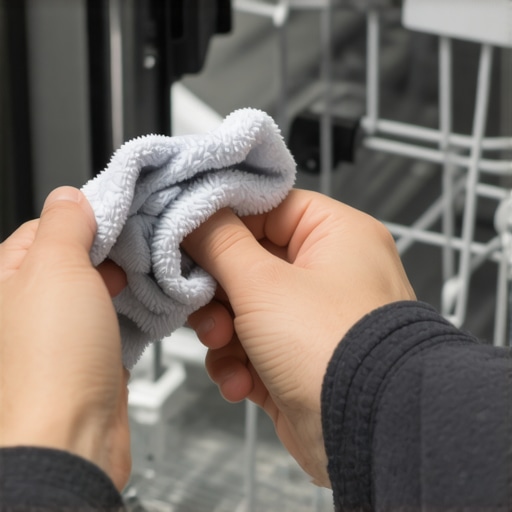
Leveling is the secret to silence and sanity
If your appliance isn’t perfectly level, gravity will pull water or internal components into places they aren’t supposed to be. For a washing machine, being even slightly off-kilter can lead to those violent vibrations that make the machine ‘walk’ across the floor. This movement can jar sensors loose or trigger a ‘sensing’ error. If you find your washing machine is stuck on the sensing cycle, check the feet of the machine first. A simple half-turn of a wrench to stabilize a corner can stop the ghost notifications immediately. It’s much cheaper than replacing a motherboard. I used a simple bubble level on my fridge last month and discovered it was leaning forward, which was exactly why the refrigerator door doesn’t stay closed properly. Gravity is the one sensor you can’t bypass with software.
Treat software updates like a mandatory oil change
We all hate waiting for progress bars, but your smart appliance app keeps asking for a firmware update for a reason. Manufacturers use these updates to ‘dampen’ overly sensitive sensors. If they realize 10,000 users are getting fake leak alerts, they push a patch that recalibrates how the sensor interprets moisture. Think of it as a software ‘bandage’ for a physical quirk. When I ignored my oven’s update for six months, it started telling me the preheat was finished when it was barely lukewarm. One five-minute download later, and the thermometer was back to being honest with me. Stay on top of the digital maintenance, and your hardware will stop crying wolf.
Stop trusting the ‘Auto’ button for every load
Many homeowners assume that paying for high-end sensors means they can finally stop thinking about settings altogether. They believe the machine is ‘smarter’ than they are. However, the contrarian truth is that the ‘Auto’ or ‘Smart’ cycle is often the least efficient choice for specialized needs. Sensors are designed for the average load, not your specific one. If you are washing a king-size duvet, relying on the machine to ‘sense’ the weight can lead to a cycle that stops prematurely or leaves the center dry. While washing machines that save water are engineering marvels, they still require you to intervene when the load is non-standard. If you find that your high-efficiency washer leaves white streaks on dark clothes, it is likely because the smart sensor underestimated the volume of water needed for the amount of detergent you used. 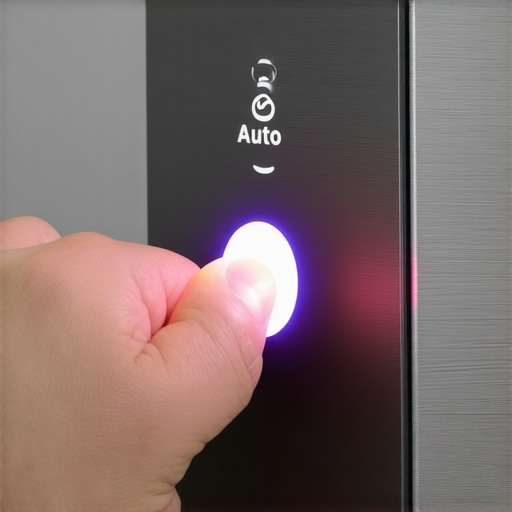
The ‘natural cleaner’ trap that ruins seals
Here is a major ‘oops’ factor I see constantly: the obsession with using white vinegar as a catch-all cleaner. There is a persistent myth that it is the best way to descale a smart machine without chemicals. In reality, the high acidity of vinegar can eventually degrade the rubber gaskets and seals inside expensive units. I’ve seen $2,000 dishwashers develop slow, internal leaks because the owner ran a vinegar cycle every week. You must learn the truth about using white vinegar in your high-efficiency dishwasher before you inadvertently melt your door seal. Instead, stick to manufacturer-approved cleaners that protect the sensors rather than stripping them.
Are you accidentally shortening your machine’s lifespan with the wrong soap?
It sounds like a beginner problem, but even experts fall into the trap of using ‘premium’ pods that are too aggressive for their specific water hardness. According to a study published in the Journal of Cleaner Production, the chemical interaction between high-alkaline detergents and soft water can lead to ‘glass corrosion’ or etching that is irreversible. This is the dishwasher detergent mistake that is etching your favorite glassware, and no amount of ‘smart’ sensing can stop a chemical reaction once it starts. If your app is telling you the cycle is perfect but your glasses look cloudy, the software isn’t the problem—your chemistry is. Have you ever fallen into this trap of over-relying on the ‘Smart’ label only to have it backfire? Let me know in the comments!
Keep your sensors from lying to you
I personally keep a “smart kit” in my junk drawer. It isn’t filled with heavy wrenches, but rather a few specific items: a high-quality microfiber cloth, a soft-bristle baby toothbrush, and a bottle of 70% isopropyl alcohol. These are my secret weapons for keeping those sensors from going blind. When I am not scrubbing the hidden eyes, I am using a signal-strength app on my phone to map out the dead zones in my kitchen. You would be surprised how much a simple refrigerator repositioning can help when you are choosing the right refrigerator and trying to keep it connected to the mesh network. Stability in your signal is the foundation of a reliable smart home.
The $10 toolkit every smart homeowner needs
According to the Samsung Engineering Service Bulletin on Hall Effect sensors, even a slight magnetic interference from decorative kitchen magnets can occasionally disrupt the “door closed” signal on high-end smart fridges. This is why I always recommend a magnetic-free zone around the main control panel. If you are struggling with connectivity that feels like a full-time job, you should look into how to set up a central kitchen hub for all your smart appliances to ensure every machine has a clear line of sight to your router. A dedicated hub offloads the processing power from your main phone, reducing those annoying lag-induced errors.
Edge AI will soon end the era of phantom errors
Looking ahead to 2025, I expect to see “edge AI” becoming the standard in home engineering. Instead of sending data to a remote cloud server and waiting for a response, your dishwasher will process sensor data locally and instantly. It will be able to distinguish between a real catastrophic leak and a stray bit of steam from a heavy cycle. This is part of the broader future of home appliances: trends to watch in 2025 that will finally prioritize reliability over flashy app features. We are moving toward a world where your machine fixes its own software glitches before you even notice them.
How do I maintain my smart appliances for the long haul?
The secret isn’t in a magic cleaning spray; it is in the physical gaskets. Every month, I take a damp cloth and run it along the rubber seals of my dishwasher and washing machine. If these seals get brittle or collect debris, the sensors detect the pressure drop and assume the machine is failing. You need to how to check if your refrigerator door seal is actually airtight at least twice a year using the paper-test method. For the internals, skip the harsh chemicals and learn the best way to sanitize your dishwasher without using bleach to prevent the sensitive plastic components and sensors from degrading prematurely.
Your smart home is only as reliable as your weakest connection. If your app is still acting up after a deep clean, try the “Power Cycle 10-Minute Rule.” Unplug the machine entirely for ten minutes to let the internal capacitors drain and the software hard-reboot. This often clears sticky error codes that a simple restart button won’t touch. My challenge to you this weekend: find that hidden sensor in your dishwasher and give it a gentle wipe with your new toolkit. You might just save yourself a $200 service fee for a problem that was just a smudge of grease.
The reality check most tech manuals skip
I spent years thinking that more sensors meant fewer headaches, but the hardest lesson I learned is that smart technology requires a different kind of intuition. First, don’t let a “Critical Error” ruin your dinner party; nine times out of ten, it is a communication lag, not a flood. Second, I realized that many owners forget that modern living appliances are still physical machines subject to dust and steam. Third, the “Auto” cycle is a baseline, not a rule—trust your eyes more than the app when it comes to load size. Finally, keep in mind that even dishwashers with AI technology can have “bad days” if your Wi-Fi is acting up.
Gear that actually saves your sanity
You don’t need a degree in electrical engineering, but I trust these three things to keep my kitchen running. I always keep a Wi-Fi Analyzer app on my phone to check for interference near the dishwasher. I also swear by a dedicated microfiber sensor cloth that never touches grease—this is purely for the “eyes” of the machine. Lastly, I frequently revisit the best dishwasher selection guides to ensure my hardware matches my home’s water hardness, which prevents most sensor errors before they start. #IMAGE_PLACEHOLDER_E# If you are dealing with a machine that just quits without telling you why, checking out how to handle a washing machine that stops mid-cycle is a great place to start your troubleshooting library.
The future is smarter than your last error code
It is easy to get frustrated when your “helper” becomes a source of stress, but don’t be afraid to keep experimenting. We are on the verge of a true smart appliances revolution where these machines will finally understand context as well as we do. Until then, remember that you are the brain of the operation, not the app. You have the power to mute the noise and enjoy your home. Have you ever had a smart appliance tell you something was broken when it was perfectly fine? Let me know your funniest “phantom error” story in the comments below!