
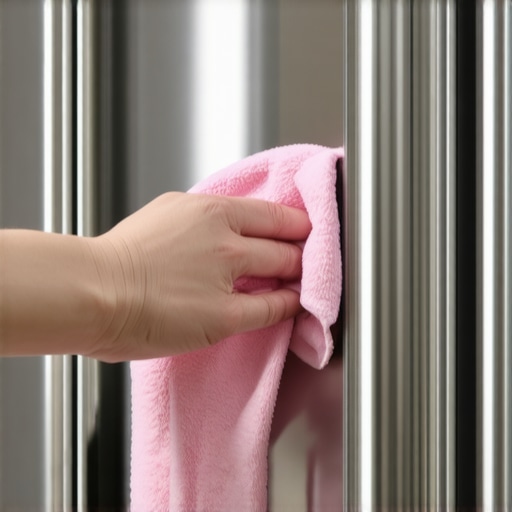
I stood there in my kitchen, afternoon sun hitting the door just right, and I could have cried. There it was—a dull, cloudy patch right at eye level where I had tried to scrub off a stubborn bit of dried jelly. I thought I was being thorough, but I was actually sanding down the finish of my most expensive appliance. It is a gut-wrenching feeling, isn’t it? You spend a fortune choosing the right refrigerator only to realize you do not actually know how to keep it looking new. We have all been there, staring at those pesky fingerprints and wondering why “stainless” seems to be the biggest lie in home decor. Today, I am stripping away the mystery. I am going to share the exact, scratch-free method I use now—the one that finally stopped the madness in my house.
That First Scratch is Always the Deepest
When I first started obsessing over my kitchen, I made the classic rookie mistake: I went against the grain. Literally. I grabbed a heavy-duty sponge and scrubbed in circles like I was waxing a car. Bad idea. Stainless steel has a grain just like wood, and if you ignore it, you are essentially creating thousands of tiny valleys for dirt to hide in. It is one of those common refrigerator issues that is not about the mechanics, but about the aesthetics. I have learned that the secret is not just what you use, but how you move your hand. If you have recently upgraded to one of the refrigerators in 2025, the finishes are even more specialized, making the stakes higher than ever.
Is Vinegar Actually Safe for Long-Term Use?
I hear this all the time from neighbors: “Just use vinegar, it fixes everything!” While vinegar is a miracle worker for many things, using it undiluted on certain stainless finishes can actually cause pitting over time if not rinsed properly. You need a balance. According to cleaning experts at Consumer Reports, many modern appliances feature a protective clear coat to resist fingerprints, and harsh acids can slowly degrade that barrier. It is a fine line between a clean fridge and a chemically damaged one.
Stop Reaching for the Paper Towels
It sounds crazy, right? We use paper towels for everything. But most paper towels are surprisingly abrasive because they are made from wood pulp. On a high-gloss stainless surface, they act like ultra-fine sandpaper. I switched to high-quality microfiber cloths years ago, and I have never looked back. It is the same logic as how to clean an induction cooktop without scratching it—soft materials are your best friend. Have you ever noticed your fridge looking streakier after you “cleaned” it? That is usually the paper towel residue and the wrong cleaning direction working against you. Tell me, have you already tried the vinegar and oil trick, or are you still terrified of touching the door at all?I remember one Saturday morning I decided to ‘deep clean’ my kitchen. I grabbed a scouring pad—the green ones that feel like sandpaper—and went to town on a smudge. Within three seconds, I had etched a permanent swirl into the door. It was a $2,000 mistake. Since then, I have refined a process that works for everything from standard models to the latest refrigerators in 2025.
Identify the Grain Before You Touch the Metal
If you look closely at your fridge, you will see very fine lines running either horizontally or vertically. That is the grain. Think of it like a cat’s fur; you want to pet it in the direction it grows. If you scrub across those lines, you are forcing cleaning agents and debris into the metal’s pores, which eventually causes a dull, hazy appearance. #IMAGE_PLACE_HOLDER_B#
Start with the Weakest Solution Possible
Most of the time, you do not need heavy-duty chemicals. Mix two drops of mild dish soap into a spray bottle with warm water. If you live in an area with high mineral content, use distilled water. Much like the trick to removing hard water spots from your dishwasher interior, using purified water prevents cloudy deposits from forming on the surface as it dries.
The Two-Cloth Technique for a Mirror Finish
Dampen your first microfiber cloth with your soapy solution—do not soak it. Wipe in long, steady strokes following the grain. Immediately follow up with a second, completely dry microfiber cloth. This ‘dry-buff’ is the secret to removing the moisture before it has a chance to leave a streak. It is the same logic professional detailers use on luxury cars to keep the paint from spotting.
Why Your Door Seal Matters More Than the Shine
While you are focused on the metal, do not ignore the rubber gasket running along the edge. A dirty or cracked seal forces your motor to run constantly, leading to a loud, struggling hum and higher bills. You should learn how to check if your refrigerator door seal is actually airtight to keep your appliance efficient. If the seal is compromised, all the polishing in the world won’t save your groceries from spoiled spots or freezer burn.
Save Your Compressor by Tweaking These Settings
Once the exterior is pristine, take a moment to look at your control panel. Often, we set our fridges to ‘maximum cold’ thinking it is better for food safety, but it actually stresses the system and causes unnecessary condensation. You can find out how to save money on your electric bill by tweaking your fridge settings to find the ‘sweet spot’ for your specific model. If you notice the temperature is still fluctuating, it might be time for a deep dive into how to recalibrate your refrigerators internal thermometer for better cooling to ensure your investment lasts for the next decade.I used to think that the more a product cost, the tougher it must be. I was wrong. What most people get wrong about refrigerators and modern washing machines is the assumption that expensive means indestructible. In reality, the high-end finishes on the refrigerators in 2025 are more delicate than the industrial steel of the 1990s.
Stop Using Commercial Polishes Every Time You Clean
Here is a contrarian view that might shock you: those expensive ‘stainless steel’ spray cans are often the primary cause of your fridge looking dull. Most of them are oil-based. While they give an immediate, satisfying shine, they leave a microscopic, tacky film on the surface. This film acts like a magnet for dust, pet hair, and airborne grease from your stovetop. Within forty-eight hours, your fridge looks worse than before you started. I have found that sticking to the soap-and-water method is actually better for the metal’s long-term health. If you are struggling with a finish that seems permanently smeared, you might be dealing with years of wax buildup.
Why Does My Fingerprint-Resistant Finish Look Like It Is Peeling?
This is the ultimate ‘oops’ factor for many homeowners. If you bought a modern unit with a ‘fingerprint-resistant’ coating, you are not actually touching bare metal; you are touching a thin polymer layer. If you use harsh degreasers or vinegar-heavy solutions, you can actually cause this layer to delaminate or ‘peel.’ It is one of those common refrigerator issues that usually requires a professional door replacement to fix. #IMAGE_PLACE_HOLDER_C#
The Efficiency Trap You Need to Avoid
We are all trying to be more sustainable, but you have to know how to tell if your appliances eco-friendly tag is just marketing versus actual performance. For example, many people rely solely on ‘Eco’ modes for every load. However, the Association of Home Appliance Manufacturers (AHAM) notes that modern sensors are designed for specific load types; using Eco mode for a heavily soiled load in a dishwasher can lead to fat and grease buildup in the internal pipes because the water never gets hot enough to melt them. You might think you are saving money, but you are actually setting yourself up for a service call. It is a similar logic to the truth about the eco mode on your new dishwasher—sometimes, the ‘Heavy’ cycle is actually the more efficient choice for the machine’s lifespan.
Don’t Ignore the Hidden Filters
Whether it is the debris filter in your laundry room or the water intake on your fridge, neglecting these points is a recipe for disaster. I once ignored my washer’s filter until the machine stopped mid-cycle with a tub full of grey water. Learning the secret to using less detergent in your high-efficiency washer can help prevent some of this gunk, but manual cleaning is the only way to ensure the pump doesn’t burn out. Have you ever fallen into this trap of over-relying on ‘Auto’ settings or fancy sprays only to have it backfire? Let me know in the comments below, because we have all had those ‘I should have known better’ moments.I’ve spent thousands of dollars on appliances over the last decade, and if there is one thing I have learned, it’s that a $20 tool can save a $3,000 investment. Most people focus on the shiny exterior, but the real battle is happening underneath and behind the machine. For my refrigerator, I do not just wipe the doors; I pull it out every six months to attack the condenser coils. I use a long, flexible coil brush—it looks like a giant pipe cleaner—to pull out the pet hair and dust bunnies that act like a thermal blanket. According to the International Association of Certified Home Inspectors (InterNACHI), dirty coils are one of the leading causes of premature compressor failure because they force the motor to work twice as hard to dissipate heat. If you ignore this, you will eventually need to know how to spot a failing refrigerator compressor before it dies, and by then, the repair bill will be astronomical. #IMAGE_PLACE_HOLDER_D#
The Tool Every Appliance Owner Actually Needs
Beyond the brush, I keep a dedicated maintenance kit in my laundry room. This includes a small socket wrench set and a specialized wet-vac attachment for tight spaces. I use these specifically for the washing machine. You would be shocked at how much lint and stray change gets past the drum and into the pump housing. I make it a habit to perform the secret to cleaning a front load washers hidden filter every three months. It is a bit messy, but it prevents that frustrating ‘stuck on sensing’ error that plagues modern units. By keeping the drainage path clear, you are ensuring the sensors can accurately read the water levels, which actually extends the life of the entire control board.
How do I keep my high-tech kitchen running smoothly for years?
The answer isn’t just about cleaning; it is about proactive management. We are entering an era where your dishwasher is essentially a high-performance computer that happens to spray water. I predict that by the end of this decade, we won’t even be manually cleaning anymore; we will be optimizing software. Looking at the future of home appliances trends to watch in 2025, we see more predictive AI that tells you when a specific solenoid valve is 10% clogged before it ever leaks. For now, you have to be the AI in the system.
Why Software is the New Hardware
One of the biggest mistakes I see with smart appliances is ignoring firmware updates. I have seen refrigerators essentially ‘glitch’ their cooling cycles because of a bad Wi-Fi connection during an automatic update. You need to know how to update your smart fridge software without crashing the system to ensure your security patches are current and your energy-saving algorithms are actually working as intended. This isn’t just a tech gimmick; it is about making sure your machine does not waste electricity by running outdated, inefficient cooling cycles. My best advice? Set aside one ‘Appliance Saturday’ every quarter. Take the brush to the coils, drain the washer filter, and check for software updates. It takes forty-five minutes but adds years to the lifespan of your kitchen. Go grab a coil brush today—it is the best $15 you will ever spend on your home.
Lessons That Saved My High-End Appliances From Early Retirement
After a decade of testing the latest kitchen gear, I realized that the ‘Smart’ label is often a double-edged sword. You have to accept that your modern refrigerator is essentially a high-performance computer that happens to chill food. If you do not treat the hardware with specialized care, you will find yourself searching for how to spot a failing refrigerator compressor before it dies much sooner than you ever intended. My biggest ‘lightbulb moment’ was realizing that friction—even from a seemingly soft paper towel—is the primary enemy of a modern kitchen finish.
Another thing experts rarely mention is that the environment around your unit matters as much as the interior. If your kitchen gets heavy afternoon sun, those refrigerators in 2025 with darker or matte finishes will expand slightly from the heat. Cleaning them while the metal is warm can actually make the surface more prone to micro-scratches. Always wait until the evening or early morning when the exterior is cool to the touch before you begin your buffing routine.
Don’t Start Your Next Deep Clean Without These Tools
You do not need a massive supply closet, but a few specific items changed the way I view maintenance. I personally swear by 400GSM microfiber cloths; they have enough ‘bite’ to grab grease without any risk of etching the metal. Secondly, a flexible condenser brush is non-negotiable for anyone serious about choosing the right refrigerator and keeping it for its full lifespan. #IMAGE_PLACE_HOLDER_E# Finally, make sure you have the manufacturer’s official app properly configured. It is the most reliable way to know how to update your smart fridge software without crashing the system, which keeps the cooling algorithms running at peak efficiency.
Reclaim the Shine and Efficiency of Your Home
Your kitchen should be a place of pride, not a source of frustration over persistent streaks and fingerprints. By shifting from aggressive scrubbing to this more mindful, grain-focused approach, you are not just cleaning; you are actively protecting one of the most significant investments in your household. As we look toward the future of home appliances trends to watch in 2025, these personal care habits will remain the foundation of a truly functional smart home. Take it one shelf and one coil at a time—your home appliances will thank you for the extra effort with years of silent, reliable service.
Have you ever accidentally used the abrasive side of a sponge and lived to regret it? Let me know in the comments below!