
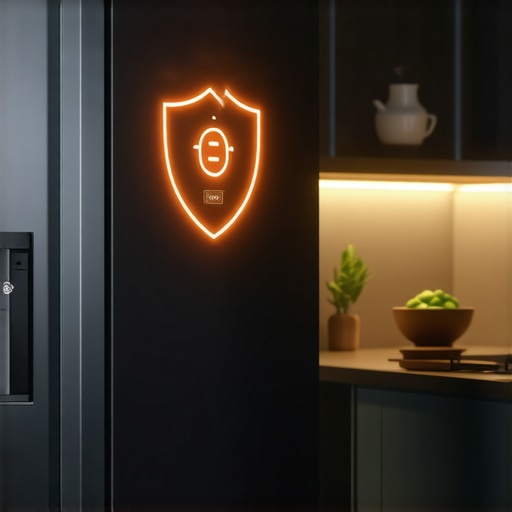
I was sitting in my kitchen at 2 AM, the hum of the refrigerator the only sound in the house, when I saw a tiny blue light flicker on its door. I checked my router logs—yes, I am that guy—and realized my fridge had been uploading data for forty-five minutes straight. What on earth was it sending? Pictures of my half-empty milk carton? Or was it something more personal? It felt like finding a stranger looking through my windows. We buy these gadgets to make life easier, but we rarely ask what they are taking from us in return. Today, I am peeling back the curtain on what these machines are actually doing with your info and how you can reclaim your digital walls without throwing your expensive gear into a dumpster. Have you ever felt like your house was knowing just a little too much about you?
Your Kitchen is Talking Behind Your Back
Believe me, I have been there. I made the classic mistake of clicking ‘Accept All’ when I first followed the ultimate guide to smart home appliances for a modern living. I wanted the convenience. I wanted the alerts. What I did not want was my dishwasher sharing my location with third-party advertisers just because I wanted to know when the rinse cycle was done. When I finally looked into why your smart fridge is using more data than you expected, the results were eye-opening. These devices are data sponges. A 2023 report by the consumer group Which? revealed that some smart appliances can request permissions to track your precise location or even access your phone’s contacts, data points that have zero impact on how well your clothes get clean. It is a trade-off we often make in the dark.
Why I am starting to doubt if smart means safe
Is all this connectivity actually worth the privacy headache? For a long time, I tried to convince myself that my data was too boring to steal. But data is the new oil, and even your laundry habits tell a story about your schedule and income. I remember when I spent hours learning how to connect your smart washer to your home network without the lag, only to realize later that I had basically invited a telemarketer to live in my laundry room. Now, I often suggest people look into how to bypass the smart features on your appliance for manual use if they value their peace of mind more than a push notification. It is about balance. You can have the tech, but you need to be the one holding the leash. Let’s talk about the specific steps you can take to lock down your kitchen before your toaster starts selling your breakfast preferences to the highest bidder.
Put Your Smart Gear in a Digital Playpen
Think of your home network like your living room. You wouldn’t invite a random door-to-door salesman to sit on your couch while you go through your bank statements. Yet, that is exactly what happens when you connect a smart refrigerator or dishwasher to your primary Wi-Fi. These devices are often the weakest link in your digital fortress. The most effective move I ever made was setting up a dedicated ‘Guest’ network specifically for my top smart appliances for a seamless home experience in 2025. By isolating them, I ensured that even if someone hacked into my toaster, they could not reach my laptop where I keep my taxes and family photos. I remember the first time I checked the traffic on that isolated network; my dishwasher was trying to ping my local media server every fifteen minutes. It felt like catching a guest snooping through my medicine cabinet. Setting this up is usually as simple as toggling a switch in your router settings. 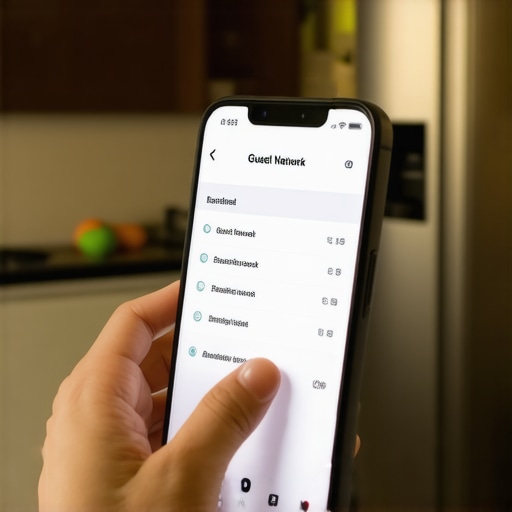
Stop Giving Your Fridge Permission to Know Where You Are
When you first install the companion app for a new appliance, it will bombard you with requests. It wants your GPS location, your contacts, and sometimes even access to your camera. Ask yourself: does your washing machine really need to know you are at the grocery store to start a spin cycle? Most of the time, the answer is a hard no. I once ignored these prompts and later found out that my appliance app was tracking my location in the background to ‘optimize energy,’ which is often just code for selling movement patterns to advertisers. You should go into your phone settings right now and strip away any permission that doesn’t directly impact the machine’s function. If you are struggling with the tech side, learning how to connect your smart oven to your home network without the frustration can help you see where these data-sharing prompts are hidden during the initial setup.
Update Your Tech Without Killing the Hardware
We have all seen the horror stories of a ‘bricked’ device after a bad software patch. It happened to me last winter. I tried to push an update to my fridge, and the entire interface went dark. I spent three hours learning how to troubleshoot a smart fridge screen that stays black because the update failed halfway through. However, skipping updates is even more dangerous. Manufacturers release these patches to plug security holes that hackers use to turn your appliances into ‘botnets.’ The trick is to only update when you are physically home and the Wi-Fi signal is strong. Never do it during a thunderstorm or when your internet is acting spotty. Knowing how to update your smart fridge software without crashing the system is the difference between a secure kitchen and an expensive, non-functional metal box.
Go Manual When the Tech Gets Too Nosy
Sometimes, the ‘smart’ part of the appliance just isn’t worth the hassle. If your app is constantly glitching or you’re tired of seeing why your smart dishwasher app keeps giving you phantom errors, there is no shame in pulling the plug on the connectivity. Most modern machines have a perfectly functional physical interface. I eventually decided to use the ‘dumb’ buttons on my microwave because the app required a login just to heat up popcorn. If you value your sanity and privacy, you should definitely look into how to bypass the smart features on your appliance for manual use. It puts the control back in your hands, literally.We need to talk about the ‘Eco’ button. Everyone tells you it is the best way to save money and the environment, but in my experience, it is often a recipe for a smelly, inefficient machine. The Association of Home Appliance Manufacturers (AHAM) has noted that while these cycles significantly reduce water consumption, the lower temperatures used often fail to fully dissolve fats and heavy detergents. If you only ever run your machine on Eco, you are basically coating your internal pipes in a thin layer of organic sludge. I learned this the hard way when I started investigating the truth about the eco mode on your new dishwasher. Sometimes, you just need a high-heat ‘Sanitize’ cycle to blast through the grime and keep the internal sensors from failing.
Eco mode is actually a grease trap in disguise
Using Eco mode exclusively is the ‘trap’ most beginners fall into. Because the water does not get hot enough to emulsify grease, that fat ends up settling in the drain hose. Over time, this leads to that ‘gritty’ feel on your plates. Experts at Consumer Reports have often pointed out that modern machines are designed to run longer at lower temps to meet Energy Star ratings, but they still require a monthly heavy-duty cycle to stay healthy. This is why I always check choosing the right refrigerator tips from industry experts before buying; you want a machine that allows for manual temperature overrides rather than one that forces you into a specific software-defined path. 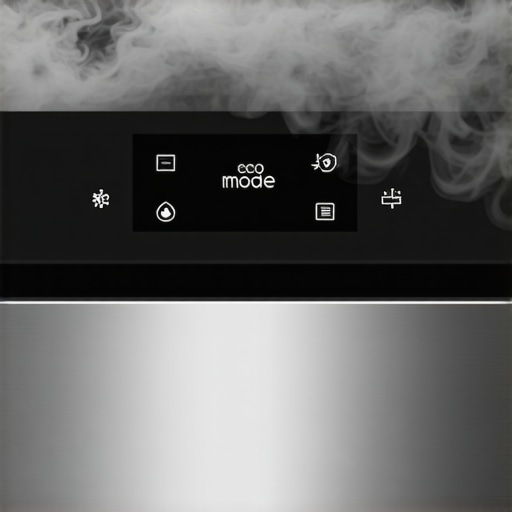
Why does your high-efficiency washer still smell like a damp locker room?
This is the number one question I get from people who have transitioned to high-end, connected laundry rooms. The nuance here is that high-efficiency (HE) machines use so little water that they cannot always wash away the excess suds. If you are trusting the ‘Auto-Dose’ feature in innovative dishwashers with AI technology you must know or similar smart washers, you might be over-saturating your clothes. This residue becomes a breeding ground for mold inside the rubber gasket. I have spent a lot of time perfecting the secret to cleaning a front load washers hidden filter because that is where the ‘stink’ usually lives. If you have been wondering why your washing machine smells like damp towels even after a wash, it is likely because the smart sensor is miscalculating the soil level of your laundry.
Don’t trust the AI with your detergent
Another advanced mistake is assuming the machine’s ‘Inverter’ or ‘AI’ technology handles everything perfectly. While understanding the real difference between inverter compressors and standard fridge motors helps you understand energy draw, it does not mean the machine is infallible. These sensors are often optical; if a piece of kale covers the sensor, the machine thinks the water is clean and cuts the cycle short. I always tell people: use 20% less detergent than the bottle recommends, and never skip the monthly cleaning cycle. Have you ever fallen into the ‘Eco Mode’ trap only to find your dishes still greasy or your washer smelling like a swamp? Let me know in the comments below, and let’s figure out how to fix your settings together.
Moving beyond the software glitches, I have realized that the longevity of these machines comes down to physical maintenance that most owners ignore until it is too late. If you are serious about keeping your high-end gear running, you need a basic digital multimeter. I use a Klein Tools MM300 because it is rugged enough for the kitchen but precise enough to tell me if a sensor has actually failed or if it is just a loose wire. Last month, I used it to verify if my heating element was toast or if the control board was the culprit. Knowing how to tell if your dishwasher heating element is actually broken can save you a $150 service call just for a diagnosis. Most people panic when a screen goes dark, but often, the physical hardware is fine; it is just a communication error between the smart module and the main relay.
The secret weapon in my maintenance kit
Aside from the multimeter, I swear by a simple leveling tool. Most people do not realize that a washing machine that is even slightly off-kilter will wear out its bearings three times faster because the AI is constantly trying to compensate for an unbalanced load. I spent a whole afternoon learning how to stop your washing machine from jumping during the spin cycle, and the fix was literally a two-degree adjustment to the front-left foot. If your machine is shaking, the ‘smart’ sensors are working overtime to prevent a catastrophic failure, which eventually fries the motor controller. Keeping things level is the lowest-effort, highest-reward maintenance task you can perform. 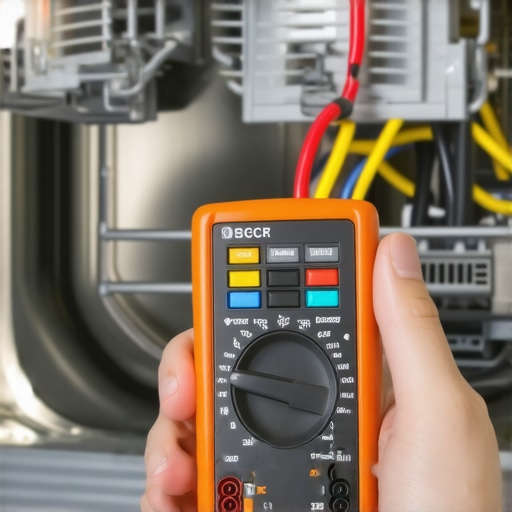
How do I maintain my smart appliance ecosystem over time?
Consistency is the name of the game here. You cannot just ‘set it and forget it’ with these modern machines. Every six months, I perform a ‘factory recalibration’ on my thermostat sensors. It sounds complex, but it is usually just a specific button combination. I found that my beer was getting warmer because the internal probe was off by three degrees. Learning how to recalibrate your refrigerators internal thermometer for better cooling is a skill that pays for itself in lower energy bills and fresher produce. According to technical documentation from the IEEE (Institute of Electrical and Electronics Engineers), the drift in low-cost thermal sensors is a known issue in IoT devices, so manual verification is essential for long-term accuracy.
Predictive AI is coming for your repair man
Looking at the future of home appliances-trends to watch in 2025, we are moving toward a ‘predictive maintenance’ model where your fridge will actually tell you its compressor is failing before it stops cooling. This is already happening in some innovative dishwashers with AI technology you must know, which monitor the amperage draw of the pump to detect blockages. While this sounds like more data-tracking, it is the one area where I am happy to share my info if it means I do not wake up to a flooded kitchen. My advice is to embrace the diagnostics but keep the location tracking off. I highly recommend you go into your appliance settings right now and find the ‘Remote Diagnostics’ toggle—turn it on for the hardware health benefits, but keep the ‘Marketing Data’ toggle firmly in the off position.
The Reality of Living With Devices That Know Too Much
After years of tinkering with everything from connected dryers to high-tech ovens, the biggest ‘lightbulb moment’ I had was realizing that connectivity should serve me, not the other way around. I spent far too long chasing every update until I realized that the ultimate guide to smart home appliances for a modern living isn’t about having the most features; it is about having the features you actually use. Here are three truths I live by now: first, if an appliance requests your contacts, say no—it never needs them. Second, ‘Smart’ doesn’t always mean ‘Efficient’; sometimes the AI overcomplicates a simple wash. Third, physical maintenance beats software updates every single time. If your machine is shaking or leaking, no amount of cloud data will fix a bad bearing or a worn-out seal.
Where I Go for Reliable Technical Advice and Gear
When it comes to staying ahead of the curve, I don’t just rely on the manufacturer’s manual. I constantly look toward the future of home appliances-trends to watch in 2025 to see where the industry is heading, especially regarding user privacy. For hands-on fixes, I trust my Klein multimeter and a simple bubble level more than any smartphone alert. #IMAGE_PLACEHOLDER_E# If you are just starting to build your setup, check out refrigerators in 2025: top features that transform your kitchen to ensure you are buying hardware that supports manual overrides. I also frequent community forums where real users share how to disable the annoying chimes on your smart appliances, because small quality-of-life fixes make the biggest difference in daily happiness.
The Future of Your Kitchen Starts With Small Adjustments
Building a truly efficient home doesn’t happen overnight. It starts with one setting change, one isolated guest network, and one decision to trust your own senses over a buggy app notification. Whether you are learning how smart washing machines can simplify laundry day or trying to stop your fridge from ‘phoning home,’ you are already ahead of 90% of consumers just by paying attention. Your home appliances should make your life easier, not more complicated. Don’t be afraid to pull the plug on the smart features if they aren’t serving you. Have you ever felt like your ‘smart’ appliance was actually making your life harder instead of easier? Let me know your biggest frustration in the comments below!