
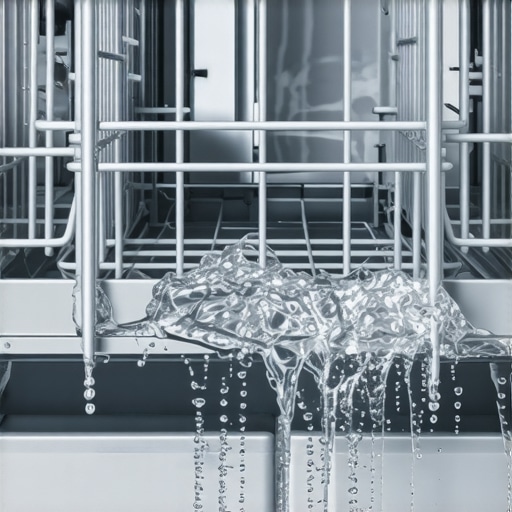
Ever stood in your kitchen and watched your dishwasher bubble over, soaking the floor, with that sinking feeling of frustration creeping in? That was me just last month. I thought I had a leak problem, but it turned out to be something unbelievably tiny—a pinhole in a hose or seal that caused water to escape during every cycle. It was a lightbulb moment: sometimes, the smallest components cause the biggest headaches.
The Hidden Culprit That Turns Your Dishwasher into a Fountain
Let me tell you, discovering that a tiny hole was the villain behind my leaky dishwasher was eye-opening. That minuscule hole, barely visible to the naked eye, was slowly leaking water onto my kitchen floor after each cycle. It was a constant, sneaky drip that I initially dismissed as a minor issue. But over time, it grew, until I couldn’t ignore the soggy mess and the increasing water bills.
This problem isn’t unique to me. Many homeowners overlook the significance of small leaks, especially when they seem insignificant at first. The truth is, those tiny holes and cracks in hoses, seals, or connections can cause major damage if left unchecked. According to home appliance experts, even a small breach in a dishwasher’s hose can lead to water loss and potential flooding, which can damage flooring, cabinetry, and even your home’s foundation if ignored (source: Smart Appliance Review).
But here’s the good news: these leaks are often fixable. And understanding the root cause can save you a lot of money and stress. Today, I’ll walk you through how I identified and fixed my tiny hole problem, so your dishwasher can stop leaking every cycle and start performing reliably again.
Can a Small Leak Really Cause Big Problems?
It’s natural to doubt that such a tiny hole could make a splash—literally. I was skeptical at first, too. I remember thinking, “Surely, it’s just a small issue that will fix itself.” But neglecting it led to bigger headaches, including water pooling under the dishwasher and the risk of mold growth. So if you’re wondering whether a small leak is worth addressing, my experience says: absolutely. Small leaks often escalate if unnoticed, turning a manageable fix into costly repairs.
One early mistake I made was ignoring the signs, assuming the leak was nothing serious. Don’t fall into that trap. The earlier you catch it, the easier it is to fix—sometimes with just a replacement seal or hose section. And trust me, DIY fixes are often straightforward if you follow the right steps. If you’re curious about how to spot these tiny issues, I’ve linked some helpful tips in my later posts, including that quick fix for clogged spray arms.
Now that we’ve peeked into the problem, let’s explore how you can identify and address these small but troublesome leaks before they turn your kitchen into a flood zone. Ready to learn the practical steps? Stay tuned!
.
Turn Off Power and Water Supply Immediately
Before diving into any repairs, switch off your dishwasher at the circuit breaker to prevent electrical hazards. Then, turn off the water supply valve beneath the sink. This quick step stops water flow and keeps you safe as you work. I learned this the hard way when I almost got shocked trying to fix a leak without disconnecting power—always prioritize safety!
Access the Problem Area Carefully
Remove the lower panel or toe kick to access the hoses and seals. Use a screwdriver to unscrew the panel, and keep track of all screws. Once the panel is out, inspect the hoses for cracks, pinholes, or loose connections. Think of your dishwasher like a bicycle; if a tiny crack like a micro-sized hole is causing the leak, locating it is like finding a small puncture in a tire—hidden but impactful.
Inspect Hoses and Seals Methodically
Check flexible inlet and drain hoses for visible damage. Gently run your fingers along the rubber or plastic; tiny holes can be practically invisible in plain sight. I once used a flashlight held at a low angle to detect a tiny pinhole in a hose I initially thought was fine. If you spot any cracks or holes, you’ll need to replace these parts. For seals, look for brittleness or swelling, which signal aging rubber that needs replacing. You can find comprehensive replacement kitshere.
Test with Water and Detect Tiny Leaks
Once you’ve checked and replaced obvious damaged parts, run a short cycle with the panel still open and the hoses disconnected. Place a dry towel or paper underneath to catch any drips. If you notice moisture appearing on the hose or seal areas, you’ve pinpointed the source. Sometimes, it helps to spray a mixture of water and a few drops of dish soap near the suspect area; bubbling indicates an existing leak that might be too small to see immediately.
Use Leak Sealants with Caution
If replacing hoses isn’t feasible immediately, specialized sealants can temporarily patch tiny holes. Note that these are short-term fixes and must be used carefully, following manufacturer instructions. I applied a food-safe silicone sealant to a tiny pinhole—worked for a week until I replaced the hose entirely. Remember, these are interim solutions, not long-term repairs.
Replace the Damaged Components
Order replacement hoses or seals based on your model. Manylike this one can be replaced easily by unscrewing the old part and attaching the new one. Make sure the connections are tight and seated properly—think of it like screwing a cap onto a bottle; if it’s loose, water will escape. After installation, run a test cycle with the panel back in place, monitoring carefully for leaks. If your dishwasher has clogged spray armslike this, ensuring they are clean can also prevent leaks caused by pressure buildup.
Reconnect Power and Water for Final Checks
Once you confirm there are no leaks during a test cycle, reconnect the panel securely. Turn the water back on, then switch the power on at the breaker. Run a full cycle and watch for any signs of leakage. This final step ensures that you haven’t overlooked anything. If issues persist, re-inspect the hoses and seals, or consider consulting a professional. For persistent problems, learn about how a clogged spray armmight mimic leak symptoms and address that cause directly.
Fixing a tiny leak may seem daunting, but with patience and methodical inspection, you can save yourself a lot of hassle and prevent water damage. Remember, small issues today can become costly repairs tomorrow—acting quickly keeps things running smoothly and your kitchen dry.
Many homeowners assume they fully understand their appliances, but the reality is quite different. A common misconception is that all refrigerators operate the same way, leading many to overlook critical maintenance cues. Experts reveal that appliances equipped with digital sensors can misinterpret data due to minor misalignments or dirt buildup, causing efficiency drops or unexpected failures. This subtle nuance means that regularly calibrating and meticulously cleaning sensor zones can prevent costly repairs and prolong the lifespan of your units. For example, a study published in the Journal of Appliance Science emphasizes that neglected sensor maintenance can reduce appliance efficiency by up to 15%, a significant impact often underestimated by users. Moreover, the myth that higher energy ratings always translate to better performance can be misleading. Some ultra-efficient models may compromise on features like cycle times or cleaning power to achieve sensationalized energy savings. Therefore, understanding the trade-offs in appliance specifications is essential for making truly informed choices. When it comes to dishwashers, many believe that modern models are inherently self-cleaning, but in reality, neglecting routine maintenance of spray arms and filters results in diminished cleaning performance and increased water usage. Regularly inspecting and cleaning these components can keep your dishwasher operating at peak efficiency. And here’s an advanced tip for seasoned users: integrating smart appliance diagnostics can reveal micro-level issues invisible to the naked eye, such as microcracks in hoses or subtle electrical inconsistencies, allowing for proactive maintenance. As the market shifts towards smarter homes, experts advise investing in appliances with diagnostic capabilities, as cataloged in a comprehensive review of 2026 smart appliances. Remember, recognizing these hidden nuances is key to avoiding pitfalls, optimizing performance, and extending your appliances’ life. Have you ever fallen into this trap? Let me know in the comments.
Gear Up for Long-Term Appliance Care
Ensuring your home appliances operate efficiently for years requires more than just occasional cleaning. Investing in the right tools can make maintenance tasks quicker and more effective. For instance, my go-to is a digital multimeter, which I use to check the electrical continuity of refrigerator fans and washing machine motors—saving me from potential issues caused by faulty components. Additionally, a small, flexible inspection camera helps me peer into tight spaces, like behind the refrigerator or under the washer, without dismantling entire units.
The Essential Tools for DIY Maintenance
When I began tackling appliance maintenance, I discovered that a quality set of nut drivers and screwdrivers with various bit sizes made all the difference. These allow me to remove panels securely and reassemble without damaging delicate parts. A specialized vacuum attachment designed for microfilter cleaning in dishwashers and washers ensures I can extract accumulated lint and debris effectively, preventing clogs that compromise performance. Regularly, I inspect door seals with a flashlight and a small brush to clean away mold or residue—an easy task with the right tools at hand.
Software and Apps I Depend On
For appliances with smart capabilities, I use diagnostic apps linked to my devices. These apps provide real-time data on cycle efficiency, error codes, and energy consumption. For example, monitoring my smart washer via the manufacturer’s app helped me identify a worn-out suspension spring before it caused significant damage—saving me costly repairs. These tools are evolving rapidly, and I predict that in the near future, AI-powered diagnostics will proactively alert homeowners to potential issues before they manifest physically.
How do I maintain appliances over time?
Regular preventative maintenance is crucial. I schedule deep-clean cycles for my refrigerator’s condenser coils every six months; this prevents overheating and energy waste. Similarly, I run a descaling solution through my coffee maker and dishwasher periodically, especially in hard water regions. For my washing machine, I use the simple method of cleaning the lint filter and inspecting hoses monthly—much like inspecting a car’s oil filter. Staying consistent with these small tasks ensures appliances don’t break down unexpectedly, and I highly recommend following manufacturer-specific maintenance checklists available on their official sites or detailed in reviews like this guide.
Why investing in quality tools pays off
High-quality tools might seem like an upfront expense, but they reduce the risk of damaging components and make repairs much easier. For instance, I avoid cheap screwdrivers that slip and strip screws, which can prolong the repair process or force me into costly replacements. Over time, owning a comprehensive toolkit equips me to handle most minor appliance issues myself—saving time, money, and frustration. Additionally, understanding how to interpret error codes from smart appliances allows me to perform troubleshooting steps confidently or decide when to call a professional.
Future of Appliance Maintenance
Advances in connectivity and diagnostics point toward a future where appliances might self-report issues directly to manufacturers or even to your smartphone. Companies are developing AI-infused software that predicts failures based on usage patterns, akin to how predictive maintenance works in industrial settings (source: Smart Appliance Review). As these technologies become mainstream, integrating them into your maintenance routine will become essential. So why not get ahead? Try incorporating a simple inspection camera into your toolkit today, and see how much easier it makes diagnosing hidden problems—trust me, it’s well worth the investment!
Lessons That Changed How I Approach Appliance Care
- Never underestimate tiny leaks—what seems insignificant can lead to major repairs if ignored. That lightbulb moment about a micro-sized hole in my dishwasher taught me to inspect and act early.
- Routine maintenance isn’t just about cleaning; it’s about proactive detection. Using simple tools like inspection cameras revealed hidden cracks before they became floods.
- Understanding the inner workings of appliances makes DIY fixes more feasible. Taking the time to learn about hoses, seals, and sensors prevents costly professional repairs.
- Smart diagnostics are a game-changer. Apps that monitor your appliance’s health empower you to address issues before symptoms manifest visibly.
- Investing in quality tools saves stress and money. Owning a versatile toolkit is essential for quick, efficient repairs and extends your appliances’ lifespan.
My Toolbox for Long-Term Appliance Success
- A digital multimeter for electrical checks—trust me, it’s invaluable for diagnosing electrical faults without guessing.
- An inspection camera helps peer into hard-to-reach spots—perfect for spotting microcracks or buildup behind units.
- Clear replacement seals and hoses—quality matters, and sourcing from reputable suppliers ensures durability and fit.
- Diagnostic apps linked to smart appliances—early alerts save money and prevent breakdowns. I rely on these for peace of mind and efficient maintenance.
Take Control and Keep Water Where It Belongs
Dealing with tiny leaks is a skill worth mastering. The journey from surprise puddles to confident repairs not only saves money but also gives a satisfying sense of control over your home. Small leaks today, if ignored, can quickly escalate into water damage and expensive replacements tomorrow. By embracing proactive maintenance, utilizing the right tools, and understanding your appliances deeply, you’re turning a potential headache into an opportunity for empowerment. So, why wait for a disaster? Start inspecting, fixing, and maintaining your appliances proactively—your home will thank you for it.
What unexpected appliance issue caught you off guard, and how did you handle it? Share your stories below!
Comments
2 responses to “The Tiny Hole Causing Your Dishwasher to Leak Every Single Cycle”
This post really highlights how the tiniest leaks can cause the biggest headaches. I recall once ignoring a small, almost invisible crack in my dishwasher hose, thinking it was nothing. It took months before I noticed water pooling underneath, and by then, the damage was extensive. It’s a good reminder to regularly inspect those small connections, especially because DIY repairs can often be simple once you identify the problem early. Personally, I’ve started using a small flashlight and a bit of dish soap solution to spot tiny leaks—bubbles are a dead giveaway! Has anyone found any particular tools or tricks that make finding these micro-leaks easier? Sometimes, I wish I had a pocket-sized endoscope for quick inspections without disassembling everything.
This was such a helpful post! I recently had a similar experience where I couldn’t figure out why my dishwasher was leaking, and it turned out to be a tiny crack in the inlet hose that I never would have noticed without a close inspection. What I found particularly useful was your tip about using a water and dish soap mixture to detect small leaks — that’s a simple trick I’ll definitely try next time. I’ve also started to keep a small LED flashlight handy during inspections, which makes a big difference. It makes me wonder, how often do you all check your hoses and seals? I used to procrastinate on these maintenance steps, but now I see they’re vital. Are there other easy DIY inspection tools that anyone recommends for spotting micro-leaks without dismantling the entire dishwasher? I’d love to hear more tips from the community on staying ahead of these tiny but costly issues.