
I was standing in a puddle at 6:30 AM, clutching my favorite mug and wondering why my kitchen felt like a marsh. It wasn’t a burst pipe or a spilled gallon of milk. It was my dishwasher, quietly weeping onto my hardwood floors. I’d spent months meticulously researching how to choose the best dishwasher for my home, only to fail at the most basic maintenance task: cleaning the door seal. I honestly thought that because hot, soapy water was constantly flying around inside, the machine was taking care of itself. I was wrong, and my floor paid the price.
The Day My Kitchen Floor Turned Into a Swamp
Most people think a leak means a mechanical failure, but more often than not, it is just a buildup of gunk—detergent, grease, and bits of last week’s lasagna—stuck in the rubber gasket. I made the mistake of ignoring that sliminess for years. I figured a quick wipe with a paper towel was enough. It wasn’t. Eventually, that buildup creates a gap, and water follows the path of least resistance right onto your floor. If you’ve ever wondered how to prevent mold growth in your dishwasher seal, you’re already ahead of where I was. I had to learn the hard way that a clean seal is the only thing standing between my kitchen and a very expensive floor repair.
Is a deep clean actually worth the elbow grease?
You might be skeptical. After all, life is busy, and scrubbing rubber sounds about as fun as watching paint dry. But here is the reality: according to a study by the National Sanitation Foundation (NSF), the rubber seals on kitchen appliances are some of the most contaminated surfaces in our homes, frequently harboring opportunistic pathogens like mold and yeast. Neglecting this doesn’t just cause leaks; it turns your kitchen into a science experiment. Have you ever noticed a funky smell coming from your machine or seen standing water in the filter area? If so, let me know—I’d love to hear I’m not the only one who’s faced the ‘Dishwasher Swamp’! Today, I’m going to show you exactly how to tackle this without breaking your back or your appliance.
Start With These Gentle Cleaning Supplies
To get that seal back to factory-fresh condition, you do not need a chemical lab. In fact, using harsh bleaches or abrasive cleaners is the quickest way to dry out the rubber, making it brittle and prone to cracking. I learned this the hard way when I grabbed a generic bathroom spray and ended up with a gasket that felt like old sandpaper. Instead, reach for a bowl of warm water mixed with a splash of white vinegar and a drop of mild dish soap. This combo breaks down the greasy biofilm without eating the material. The seal is like the lips of your appliance—if they do not close perfectly, everything inside spills out. Using the best ways to clean a smelly dishwasher without using bleach ensures you are protecting the integrity of the rubber while killing the bacteria that cause those kitchen odors.
The Scrubbing Technique That Saves Your Gasket
Think of your dishwasher seal like a delicate instrument. You are not trying to sand it down; you are lifting away the debris. I use a soft microfiber cloth or even an old, soft-bristled toothbrush for those tight corners where the hinges meet the frame. Dip your cloth into the vinegar solution and run it along the entire length of the rubber. You will likely see a greyish-black sludge come off—that is the stuff that causes the leaks. I once spent twenty minutes on a single corner because the gunk had basically petrified into a solid wall. It is gross, but seeing that clean rubber emerge is incredibly satisfying. Focus on the folds where the seal meets the plastic body of the machine, as this is where the moisture hides.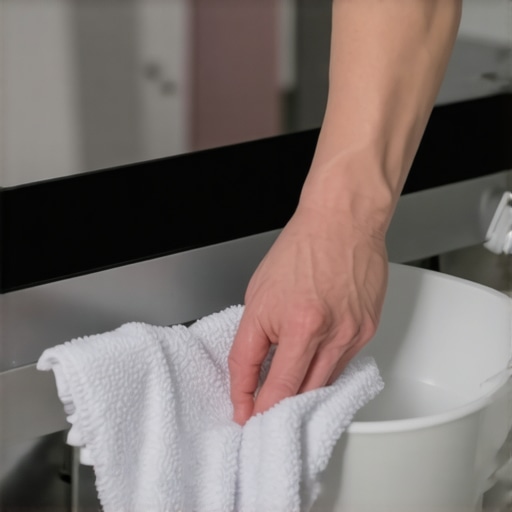
Stop the Slime Before It Stops Your Machine
While you are down there, take a moment to look at the very bottom of the door. This is where most people fail. There is usually a horizontal flap of rubber that hangs down into the tub. It is the Grand Canyon of dishwasher filth. If you find yourself wondering why your dishwasher bottom is full of standing water, it might be because this flap is so caked in debris that it is blocking the drainage path or preventing the door from seating. I found a literal petrified chicken bone wedged in mine once. It was blocking the seal just enough to let a slow drip escape every time the wash cycle hit the high-pressure rinse. Learning the best way to clean your dishwasher door seal without tearing it means getting into these awkward spots without using force.
Check for Hidden Damage and Wear
Once the grime is gone, dry everything with a fresh towel and inspect the rubber. You are looking for pitting or small tears. If the rubber feels hard or stiff, it has lost its elasticity. In some cases, a poorly maintained seal can even affect how the door hangs, leading you to search for how to fix a dishwasher door that drops open too fast because the weight distribution is off. If you are using innovative dishwashers with AI technology you must know that even the smartest machines cannot tell you if a piece of plastic is stuck in your gasket. You have to be the eyes and ears of your kitchen. If you still smell something funky after a deep clean, you might need to try the best ways to clean a smelly dishwasher without using bleach to neutralize the internal tub odors. Don’t rush the process; a few extra minutes of detailing today prevents a lake in your kitchen tomorrow.
The Big Detergent Lie We All Fell For
We’ve been conditioned by decades of commercials to believe that a giant capful of blue liquid is the only way to get a ‘mountain fresh’ scent. In reality, why your washer doesn’t need a whole cup of detergent to get clothes clean comes down to simple fluid dynamics and modern engineering. Modern High-Efficiency (HE) machines use about a quarter of the water used by older top-loaders. When you dump in a full cap of soap, you aren’t getting things cleaner; you’re creating a ‘suds lock’ where the excess bubbles actually lift the clothes and prevent them from rubbing against each other. This friction is what actually removes the dirt. Even worse, the machine has to work overtime to rinse that slime away, which leads to why your high-efficiency washer takes so long to complete a load. 
Why does your high-efficiency machine actually run for two hours?
It’s not just the extra rinsing cycles that keep your machine spinning. Modern sensors are constantly measuring the turbidity (cloudiness) of the water. If you’ve used too much soap, the machine gets caught in an automated loop of trying to clear the suds before the spin cycle can even begin. According to the Association of Home Appliance Manufacturers (AHAM), using excessive detergent in HE machines can lead to the ‘mechanical failure of the drive system’ because the pump is forced to work against air-filled foam instead of liquid water. This is the ultimate ‘Oops’ factor: you think you’re being extra hygienic, but you’re actually burning out your motor while the machine struggles to perform a basic task.
The Fabric Softener Trap That Kills Machines
If your clothes smell like a meadow but your machine smells like a locker room, you’ve likely fallen for the fabric softener trap. Most people don’t realize that traditional softeners are often made from dihydrogenated tallow dimethyl ammonium chloride—essentially, rendered animal fat. When this hits cold or lukewarm ‘eco’ cycles, it doesn’t fully dissolve. It creates a waxy coating called ‘scrud’ that glues itself to the outside of the drum. This is the reason your high-efficiency washer smells like old gym socks even after you’ve cleaned the door seal. I’ve seen spider arms—the aluminum part that holds the drum—literally corrode into dust because the acidic bio-film from softener buildup ate through the metal. It’s why experts suggest why you should never use too much fabric softener in your smart washer. Let’s dig deeper into how these advanced machines function. If you’re using washing machines that save water expert advice for 2025 suggests you should switch to white vinegar as a softener instead. It breaks down mineral deposits rather than adding a layer of grease. Have you ever fallen into this trap and noticed that weird grey buildup on your clothes or machine? Let me know in the comments.
After that kitchen swamp incident, I realized my toolbox was missing the most important things for modern home survival. I used to think a standard screwdriver was enough, but today’s machines are basically computers that happen to wash dishes or chill milk. If you want to avoid the ‘scrud’ and the leaks, you need a specialized strategy. I started keeping a dedicated kit under the sink because when a sensor trips, you don’t want to be hunting for a flashlight. I personally swear by a flexible 30-inch condenser coil brush. Most people forget about the dust under the fridge, but how to clean the hidden debris under your refrigerator grille is the difference between a fridge that lasts fifteen years and one that dies in five. Dust acts like an insulator, forcing the compressor to work twice as hard.
The three tools that live in my ‘Appliance Emergency’ kit
Beyond the brush, I use a simple infrared thermometer. It sounds like overkill, but how to calibrate your refrigerator thermometer without calling a pro is how I caught my freezer failing before I lost $200 worth of groceries. My third secret weapon? A set of smart plugs. I don’t just use them for lamps; the best smart plugs for monitoring appliance energy use let me see if my dishwasher is pulling a weird amount of power during the dry cycle, which is usually the first sign of a heating element going bad. Technical bulletins from the Association of Home Appliance Manufacturers (AHAM) emphasize that consistent monitoring of power draw can predict motor fatigue months before the machine actually stops. It’s about being proactive rather than reactive.
How do I maintain these high-tech machines over time?
Consistency is your best friend. Every six months, I perform what I call the ‘Deep Triple.’ I clean the dishwasher seal, vacuum the fridge coils, and check the washer’s secret filter. Yes, it exists! If you have a front-loader, how to clear a blocked pump on your front-load washing machine is a skill you need to master. I found a rogue penny and three hair ties in mine last month. These small blockages force the pump to run longer, leading to why your high-efficiency washer takes so long to complete a load. If you stay on top of these ‘invisible’ spots, you aren’t just saving money on repairs; you are ensuring the the best energy saving tips for your front-load washing machine actually work because the machine isn’t fighting against its own gunk.
Your next fridge will talk to your phone more than you do
Looking ahead, the trend is moving toward ‘Predictive Maintenance.’ In the next couple of years, we will see future of home appliances trends to watch in 2025 where AI doesn’t just tell you the door is open, but actually diagnoses a failing bearing before you even hear a squeak. We are moving toward a world of innovative dishwashers with AI technology you must know about, which will automatically adjust detergent levels based on water hardness. But even with all that tech, no AI can reach under the fridge and pull out a dust bunny. You still have to be the human in the loop. I highly encourage you to go find your refrigerator manual today and look for the ‘condenser cleaning’ section—it’s the most underrated fifteen minutes of maintenance you’ll ever perform.
The Truth About Why My Machines Kept Failing
I used to think that buying high-end gadgets meant I could set them and forget them. I was wrong. My biggest epiphany came when I realized that a machine is only as good as its cleanest sensor. If you treat your home appliances like magic boxes that never need a break, they will eventually revolt. I learned that the ‘self-cleaning’ cycle is a maintenance aid, not a substitute for manual scrubbing. Another hard-earned lesson? Don’t ignore the sounds. If your dishwasher is making a grinding noise, it is a cry for help, not just a quirk of the cycle. Finally, I realized that water quality changes everything; if you have hard water, your maintenance schedule needs to double to prevent scale buildup.
The Gear That Keeps My Kitchen Humming
To stay ahead of the curve, I have curated a small but mighty toolkit. First, I never go a month without checking my temperatures; calibrating your refrigerator thermometer is the best way to ensure food safety without calling a pro. For my laundry room, I keep a dedicated bottle of white vinegar nearby to act as a natural softener, especially since too much fabric softener can ruin your smart washer. I also rely on technical bulletins from the Association of Home Appliance Manufacturers. These resources, combined with the ultimate guide to smart home appliances, have turned me from a reactive owner into a proactive one who knows exactly what a healthy machine sounds like.#IMAGE_PLACEHOLDER_E#
Mastering Your Modern Household
Taking care of your home appliances does not have to be a full-time job. It is about those tiny, five-minute habits that add up over years of service. Whether you are troubleshooting standing water in the filter area or just wiping down a rubber seal, you are protecting one of your biggest investments. Don’t be afraid to get your hands a little dirty today to save yourself a massive headache tomorrow. Your future self and your kitchen floor will thank you for the diligence. Have you ever found something bizarre stuck in your dishwasher drain filter or your washer pump? Let me know in the comments below!