
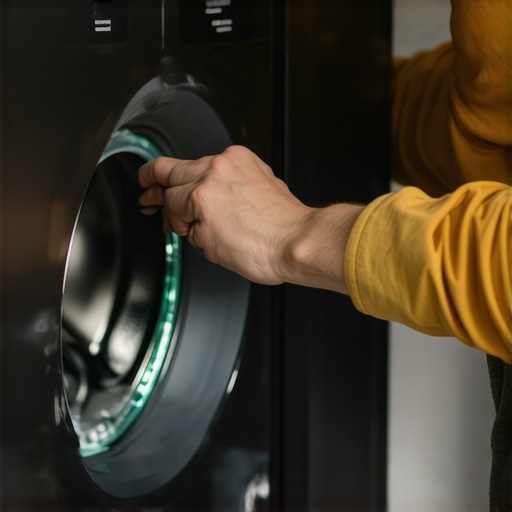
Ever had that sinking feeling when you try to open your washing machine door, only to find the handle isn’t budging? I remember the frustration vividly—juggling wet clothes and helplessly tugging on a stubborn handle that refused to cooperate. That moment was a lightbulb for me, realizing that a stuck door handle isn’t just a minor annoyance but a signal that something needs attention, often quite simple to fix.
Today, I want to share my experience and guide you through resolving this pesky issue step-by-step. If you’ve ever wrestled with a door handle that won’t release your laundry, you’re in the right place. Fixing it yourself can save money, time, and a lot of frustration.
Why Your Washing Machine Handle Gets Stuck and Why It Matters
A stuck washing machine door handle can seem like a small glitch, but it often hints at underlying problems—such as a jammed latch, debris buildup, or mechanical wear—that could impact your whole appliance’s performance. Left unaddressed, these issues can lead to more complex and costly repairs down the line. Additionally, being unable to open your washer can interfere with your laundry routine, especially if you need to pause a cycle promptly.
Many homeowners overlook this problem, assuming it’s just a worn-out handle. However, early detection and simple fixes can prevent further damage. Plus, fixing it yourself fosters a sense of accomplishment and saves money—professional repairs can easily cost over a hundred dollars or more.
Interestingly, according to a 2023 study by appliance repair experts, handles and door latches are among the most common parts to fail in washing machines, especially in models over five years old. Recognizing the signs early means you can tackle the issue before it escalates.
Have you ever faced a stubborn door handle that just wouldn’t release? If so, you know how disruptive it can be. In the next sections, I’ll walk you through the practical steps to fix your stuck washing machine door handle safely and effectively. Ready to get that handle moving again?
Disconnect Power and Prepare
Before performing any repair, unplug your washing machine to ensure safety. Wear rubber gloves to protect your hands from sharp edges or residual moisture. I once worked on my old washer without disconnecting power, and a small electric shock reminded me to prioritize safety.
Locate and Examine the Handle Mechanism
Open the access panel at the back or bottom of your washer to inspect the handle and latch assembly. Use a flashlight to look for debris, corrosion, or broken parts. In my case, a buildup of detergent residue had hardened around the latch, preventing movement, which I cleaned with a soft brush and vinegar solution.
Check for Mechanical Obstructions
Look for any objects or lint that might be jammed in the latch area. Sometimes, a misaligned door or an object caught in the latch assembly can cause the handle to stick. Once, I found a small sock lodged in the latch, which I carefully removed, making the handle operate smoothly afterward.
Apply Lubrication to Moving Parts
Spray a silicone-based lubricant or WD-40 on the latch mechanism and handle pivots. Be cautious not to over-apply; a little goes a long way. Afterlubricating, try gently pulling the handle to see if it releases. Remember, over time, mechanical parts like these can wear out, causing sticking issues.
Test and Adjust the Door Lock System
If the handle still doesn’t budge, manually manipulate the door lock component. Engage and disengage the latch by hand, ensuring it moves freely. If you notice that the latch spring is broken or misaligned, replacing it can often resolve the issue. For detailed repair procedures, check out this guide on [how to fix a washing machine lid lock that won’t release](https://smartappliancereview.com/how-to-fix-a-washing-machine-lid-lock-that-wont-release).
Tackle Stubborn Handles with Reset Techniques
Sometimes, a factory reset of the control board can recalibrate sensors and prevent false lock signals. Consult your washer’s manual for reset instructions or unplug for five minutes to reset electronics. This can resolve electronic glitches causing the handle to stick, similar to the quick fix I used when my smart washer refused to open after a firmware glitch.
Reassemble and Test
Once the latch and handle are moving smoothly, reassemble any removed panels. Plug in the machine and run a test cycle or simply open and close the door repeatedly to ensure smooth operation. Regular maintenance, like cleaning the latch area periodically, can prevent future sticking issues.
Many homeowners operate under assumptions about appliances that can lead to unnecessary repairs or diminished efficiency. For instance, a widespread myth is that all energy-efficient refrigerators sacrifice storage space, but according to recent studies, models like those reviewed at [energy-efficient fridge for off-grid living](https://smartappliancereview.com/the-best-energy-efficient-fridge-for-off-grid-living) actually optimize both energy use and capacity.
Additionally, many believe that running dishwashers with partial loads wastes water and electricity; however, modern appliances are designed to be efficient even with smaller loads, especially if you use the eco mode. This misconception may cause you to run cycles unnecessarily, increasing costs.
A common trap is ignoring the importance of regular maintenance, assuming appliances will last forever without intervention. In reality, neglecting tasks like cleaning filter screens or sealing door gaskets can significantly shorten appliance lifespan. For example, neglecting to clean dishwasher spray arms can cause poor cleaning results, as discussed in [cleaning dishwasher spray arms](https://smartappliancereview.com/how-to-clean-your-dishwashers-spray-arms-without-a-plumber).
It’s also tempting to think that all smart appliances are complex and prone to issues—yet, with proper setup and firmware updates, they often outperform traditional models. As explained in [firmware update tips](https://smartappliancereview.com/why-your-smart-appliance-wont-update-its-firmware), keeping your smart devices current ensures optimal performance and security.
A crucial nuance many overlook is the impact of appliance placement. For example, a refrigerator placed too close to heat sources can overwork its compressor, decreasing efficiency and lifespan. See how proper placement improves performance in [best refrigerator placement tips](https://smartappliancereview.com/the-best-place-to-position-your-refrigerator).
Understanding these subtleties can extend the life of your home appliances and save you money in the long run. Don’t fall into common misconceptions—let’s dig deeper into what really makes your appliances tick. Have you ever fallen into this trap? Let me know in the comments.Maintaining your home appliances reliably requires more than just regular use; it calls for the right tools, a systematic approach, and a bit of know-how. Over the years, I’ve refined my toolkit to include specific equipment that ensures each repair or maintenance task is efficient and durable. Investing in quality tools not only saves you time but also extends the lifespan of your appliances, saving you money in the long run.
Choosing Diagnostic and Maintenance Tools Wisely
One of my go-to devices is a digital multimeter, like the Fluke 116, which allows me to accurately test electrical components such as thermostats, timers, and wiring continuity. For example, when troubleshooting a refrigerator that’s not cooling properly, measuring the compressor’s electrical resistance with a multimeter offers immediate insights. Remember, a good multimeter can detect issues that visual inspections might miss, making it invaluable for both troubleshooting and preventive maintenance.
Specialized Cleaning Equipment Boosts Longevity
To keep appliances running smoothly, I rely on ultrasonic cleaners, which gently remove dirt and mineral deposits from delicate parts like water inlet valves and filters. For instance, cleaning a dishwasher’s spray arms with an ultrasonic device helps prevent clogging and ensures optimal performance. Regular use of brushes and microfiber cloths for internal and external cleaning can darken the difference between temporary fixes and long-term reliability.
Software and App Integration for Smart Appliances
Many smart appliances come with companion apps that provide diagnostic reports and maintenance reminders. I use these apps to schedule alerts for filter replacements, firmware updates, and calibration cycles. Keeping software up-to-date, as highlighted in [a review of firmware update procedures](https://smartappliancereview.com/why-your-smart-fridge-wont-update-its-firmware), ensures your devices operate efficiently and securely. Over time, these digital tools make maintenance less of a chore and more of a proactive strategy.
Tools That Pay Off Over the Long Term
Investing in a good flashlight, like the Maglite ML300L, helps illuminate hard-to-see areas, especially when inspecting concealed components or tight spaces. Threaded inspection cameras, such as the Depstech Endoscope, allow me to visualize inside inaccessible parts like the drip pan of a refrigerator or behind washing machine panels. These tools help identify problems early, making repairs straightforward and preventing minor issues from becoming major failures.
Predictive Maintenance Software and Future Trends
Looking ahead, I predict that in the next five years, home appliances will increasingly integrate Internet of Things (IoT) sensors that monitor their health and predict failures before they happen. Tools like smart diagnostic hubs may eventually replace some physical diagnostics, streamlining maintenance routines. For now, however, combining traditional tools with smart system insights offers the best approach to keeping your appliances in peak condition.
How do I stay on top of appliance health over time?
Using a combination of these tools—multimeters, ultrasonic cleaners, inspection cameras, and smart app integrations—can significantly extend your appliances’ lifespan while reducing unexpected breakdowns. Regularly scheduling preventive checks and staying informed about firmware updates, as suggested in the linked article, empowers you to act promptly when issues arise. For example, try setting aside ten minutes every month to inspect your refrigerator’s seals or clean your washing machine’s filter. Small, consistent efforts pay big dividends in appliance longevity. Make sure to explore detailed guides on connecting or calibrating your appliances to get the most out of this toolkit, turning maintenance from a chore into a manageable routine.
Lessons from My Own Fixes that Changed My Approach
One of the toughest lessons I learned was that not every stuck handle is a sign of total failure; sometimes, it’s just a matter of patience and understanding the mechanism. I used to assume a stubborn handle meant replacing the entire latch system, but after experimenting with cleaning and lubrication, I realized many issues can be fixed with simple tweaks. That realization saved me hundreds of dollars and countless hours.
Another insight was how crucial it is to recognize when electronic glitches are impacting mechanical parts. Resetting my smart washer’s control board made all the difference, illustrating that digital troubleshooting is just as essential as mechanical repairs. Combining these approaches broadened my confidence and ability to tackle similar problems in other appliances.
Lastly, I learned that routine maintenance, like periodic cleaning of the latch area, is your best ally against unexpected sticking. Small preventative steps—like inspecting for debris or applying minimal lubricant—keep the handle moving smoothly and extend the life of your appliance. These lessons have profoundly shaped my approach to appliance care, making repairs less daunting and more empowering.