
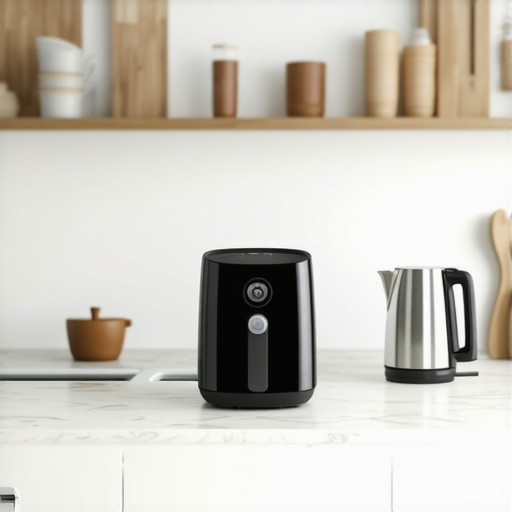
I remember standing in my kitchen two years ago, ankle-deep in a puddle of water because my ancient dishwasher had finally given up the ghost. I was staring at a glossy magazine ad for a $4,000 refrigerator that could basically do my taxes, and I felt a pang of genuine resentment. I wanted the convenience of a modern home, but my bank account was telling me to stick to a hand-cranked can opener. I thought I was priced out of the future. I was wrong. I spent the next eighteen months figuring out that you don’t need a Silicon Valley salary to have a kitchen that thinks for itself. Today, I am going to show you exactly how I bypassed the luxury markups to build a functional, connected space using savvy swaps and a few strategic upgrades.
My First Attempt at a Smart Kitchen Was a Total Disaster
I made the classic rookie mistake. I went out and bought the first ‘smart’ gadget I saw—a Wi-Fi coffee maker that cost three times as much as my old one—only to realize it didn’t even talk to my phone properly. It was a glorified paperweight. I learned the hard way that modern living doesn’t have to cost a fortune if you focus on utility over flash. The secret isn’t buying the most expensive appliance; it’s knowing which features actually save you time and money. For instance, did you know you can lower your monthly utility bills just by tweaking the settings on the appliances you already own? I wasted hundreds of dollars before I realized that ‘smart’ is a strategy, not just a sticker on a box.
Is all this high-tech gear actually worth the hype?
I get it. You’re worried that your fridge will stop working if the internet goes down, or that you’re just paying for a screen you’ll never use. It is a valid fear. Many manufacturers pack these machines with ‘bloatware’ that adds zero value to your life. However, when you focus on tech that prevents disasters—like a dishwasher that pings your phone if it detects a leak—the investment pays for itself. According to the U.S. Department of Energy, transitioning to energy-efficient, smart-managed appliances can save the average household nearly $500 annually. That is real money back in your pocket. Have you ever felt like smart home tech was just a playground for the wealthy, or have you been scared off by the sheer complexity of it all? Let me know in the comments.
Building a High-Tech Kitchen on a Budget That Actually Works
The goal here is a seamless experience where your devices actually help you, rather than giving you more chores. I started by connecting everything to one voice assistant I already owned, which cost me exactly zero extra dollars. You don’t need the $5,000 smart fridge to get expiration alerts or shopping list updates. There are ways to retrofit the kitchen you have right now. We are going to look at the ‘Minimum Viable Smart Kitchen’—the essential pieces that give you 90% of the benefits for about 20% of the traditional cost. I’m talking about smart plugs, simple sensors, and choosing the right base models that allow for future connectivity without the upfront premium. We’ll also dive into the truth about smart appliances and your home data privacy, because being budget-conscious shouldn’t mean sacrificing your security.To get that futuristic feel without the debt, you have to stop thinking of ‘smart’ as a luxury feature and start thinking of it as a set of remote-control switches. My first real success came when I stopped trying to find a fridge with a tablet built into the door. Instead, I focused on the ‘dumb’ hardware and added intelligence where it mattered most. I bought a high-quality base model and used a simple $15 smart plug to schedule my older coffee maker. It felt like a win until I tried to do the same with my dishwasher. I once set a timer for it to run at 2 AM to save on power, but I hadn’t checked the drain properly. I woke up to a minor swamp in my kitchen. That is when I realized the real value of a sensor that can stop your dishwasher from leaking water onto the kitchen floor before the damage starts. #IMAGE_PLACE_HOLDER_B#
Master Your Fridge and Dishwasher Settings
Next, let’s talk about the heavy hitters: refrigerators and washing machines. These are your home’s biggest energy hogs. You can actually save money on your electric bill by changing three fridge settings right now. Think of your fridge like a high-performance engine; if the airflow is blocked or the gaskets are dirty, it works twice as hard for half the result. I spent twenty minutes cleaning my coils and adjusting the internal temp by just two degrees, and my power bill dropped by nearly eight percent the following month. It is not just about the settings, though; it is about knowing how the machine handles the work. For instance, many people are surprised by the truth about the eco mode on your new dishwasher and how it actually extends cycle time to save water.
Make Your Laundry Work While You Sleep
Most people just throw clothes in and hit ‘Normal.’ If you want a truly connected home, you need to use your smart washer’s delayed start for cheaper energy rates. It is like booking a flight on a Tuesday instead of a Friday—it is the same journey, but significantly cheaper. I now set my machine to finish exactly when I wake up. No more damp clothes sitting in the drum for six hours growing a science experiment. This simple habit shift, combined with washing machines that save water, can drastically reduce your environmental footprint without you lifting a finger after the initial setup.
Get All Your Devices Talking the Same Language
The most frustrating part of a smart kitchen is having five different apps for five different machines. It is like having a group of friends who all speak different languages and refuse to use a translator. You need to link your smart appliances to a single voice assistant to create ‘scenes.’ For example, when I say ‘Good Morning,’ my coffee starts, my fridge brightness increases so I can see my ingredients, and my dishwasher pings me if it finished its cycle overnight. This doesn’t require a master’s degree; it just requires choosing appliances that support open standards so you can sync your laundry alerts with your living room TV and never miss a load again.
Even when your devices are talking to each other, they might not be telling you the whole truth. I used to think that the ‘Eco’ button was my ticket to a lower power bill and a cleaner conscience. I was wrong. In my experience, the ‘Eco’ mode on many modern machines is actually a double-edged sword. While it saves water, the lower temperatures and extended cycle times can lead to a nasty buildup of biofilm and undissolved soap. This is the ‘Oops’ factor most manufacturers won’t mention: if you only ever use the most efficient settings, you are essentially slow-cooking a layer of grime inside your machine’s guts.
Your Eco Button Is Often a Double-Edged Sword
Everyone says the eco-mode is the holy grail of saving money, but I’ve found that using it exclusively is a recipe for a repair bill. According to a study by the Association of Home Appliance Manufacturers (AHAM), modern high-efficiency (HE) washers use up to 70% less water than models from twenty years ago. This means the concentration of detergent is much higher, and if the water doesn’t get hot enough—which it often doesn’t in Eco mode—that soap stays trapped in the fibers of your clothes. You have to learn how to tell if your appliances eco-friendly tag is just marketing versus actual utility. I now make it a rule to run one ‘Sanitize’ or high-heat cycle a month just to clear out the pipes.
Why does my expensive washing machine make my clothes feel like sandpaper?
This is a question I get all the time. The answer usually isn’t a broken machine; it’s a logic error in how we use modern tech. If you are noticing that your energy efficient washer leaves your clothes feeling crunchy, you are likely using too much detergent for the low-water volume. The sensors try to compensate, but they can only do so much. Similarly, I see people making the mistake of using heavy-duty pods on quick-wash settings. There is a specific reason why your dishwasher pods are not dissolving in short cycles: they are engineered for a long, hot soak. When you force a 30-minute wash, you’re just throwing money down the drain—literally. Have you ever fallen into this trap of thinking ‘faster is better’ only to find a half-melted pod at the bottom? Let me know in the comments.
Stop Smothering Your Refrigerator with Too Much Love
Another nuance people miss is the ‘Goldilocks Zone’ for refrigerators. Most people trust the digital readout on the door, but those sensors can be notoriously laggy. I once lost an entire week’s worth of groceries because the internal sensor was blocked by a large milk carton, telling the compressor everything was fine while the other side of the fridge was at a balmy 50 degrees. You need to recalibrate your refrigerators internal thermometer for better cooling by using a cheap analog thermometer as a backup. #IMAGE_PLACE_HOLDER_C# When you realize that the digital brain is only as good as the data it gets from its sensors, you start to see why your high efficiency washer leaves white streaks on dark clothes. It’s not a failure of the machine; it’s a mismatch between the ‘smart’ logic and the physical reality of the load. Master these tiny technical gaps, and you’ll finally have the kitchen that works for you, instead of the other way around.
Fix the App Lag Before It Breaks Your Hardware
We usually think of maintenance as changing a belt or unclogging a hose, but with modern gear, your first line of defense is actually your digital infrastructure. Think of your fridge as a computer that happens to keep milk cold. I’ve seen countless systems fail simply because the owner didn’t update your smart fridge software without crashing the system. When the software gets out of sync with the hardware, the sensors start sending garbage data, which can lead to the compressor overworking itself. According to a technical report by the IEEE Internet of Things Journal, device fragmentation is the leading cause of ‘smart bricking,’ where outdated software prevents perfectly good hardware from functioning. I make it a habit to check for firmware updates every time I change the water filter; it’s the only way to ensure those energy-saving algorithms are actually doing their job.
My Go-To Maintenance Kit for High-Tech Fridges
You don’t need a professional toolbox, but you do need a few specific items that most people overlook. My secret weapon is a 24-inch flexible coil brush. Most people just vacuum the front of their fridge, but the dust that kills your efficiency is tucked deep inside the rear fins. Using this brush once every six months is how you save money on your electric bill by tweaking your fridge settings effectively. If the hardware is clean, the smart sensors don’t have to compensate for heat buildup. I also keep a small bottle of food-grade silicone grease for the gaskets. A dry, cracked seal is the quickest way to turn a high-efficiency machine into a power-hungry relic. #IMAGE_PLACE_HOLDER_D#
How do I keep my smart appliances running for a decade?
The key to longevity in the smart era is ‘preventative hygiene.’ For your laundry room, this means you must master the secret to cleaning a front-load washers hidden filter. If that filter is clogged, the pump works harder, the ‘smart’ cycle takes longer, and eventually, the motherboard fries from the heat. In the kitchen, don’t wait for a warning light to clean the grime out of your dishwasher spray arms. Tiny particles of calcium can block the nozzles, tricking the turbidity sensor into thinking the dishes are still dirty, which leads to those four-hour wash cycles that drive everyone crazy.
What the Future of Your Kitchen Actually Looks Like
Looking ahead, I predict we are moving away from ‘smart’ meaning ‘has a screen’ and toward ‘smart’ meaning ‘self-healing.’ We are already seeing the future of home appliances trends to watch in 2025 focusing on AI that can predict a part failure before it happens. Imagine your dishwasher ordering its own replacement seal before the leak even starts. This isn’t sci-fi; it’s the next logical step in connectivity. Until that is standard, however, the responsibility is on us to bridge the gap between the digital brain and the physical machine. My challenge for you today is simple: go into your laundry room and find that hidden drain filter. It’ll probably be gross, but cleaning it right now could save you a $400 repair bill next month.
The Realities of Smart Tech I Learned the Hard Way
After years of trial and error, I’ve realized that the ‘smart’ in smart appliances isn’t just about Wi-Fi connectivity; it’s about the data you use to keep things running efficiently. One of the most vital things I discovered is that physical care is your best digital defense. For example, if you don’t take the time to learn the secret to cleaning a front-load washers hidden filter, all the AI in the world won’t save your motor from burning out. I also learned that software is a living thing. You must update your smart fridge software without crashing the system to keep those energy-saving algorithms sharp and accurate. Most importantly, do not over-rely on pure automation. Sometimes the most efficient way to wash is to manually override a setting based on the load’s actual weight rather than trusting a sensor that might be slightly out of calibration.
My Go-To Toolbox for a Future-Proof Kitchen
Building a high-performing home requires a few reliable sources and tools that cut through the marketing noise. I always keep the top smart appliances for a seamless home experience in 2025 list bookmarked for when I need to advise friends on new purchases. Beyond that, I recommend keeping a high-quality analog thermometer in your fridge to cross-reference your digital readout. For keeping up with where technology is headed, I constantly monitor the future of home appliances trends to watch in 2025 to stay ahead of the curve. These resources, combined with a simple flexible coil brush and food-grade silicone grease, are all you really need to maintain a state-of-the-art kitchen without an expensive professional maintenance contract.
#IMAGE_PLACE_HOLDER_E#
Take Control of Your Home Today
Transitioning into a connected lifestyle doesn’t have to be an all-or-nothing investment. You can start by simply optimizing the gear you already own today. Whether you are following the ultimate guide to smart home appliances for a modern living or just cleaning out a single drain filter, every small step makes your home more efficient and your life a little easier. Your home appliances should work for you, providing comfort and savings rather than additional stress. Go ahead and try one of the small maintenance tips we discussed—your bank account and your peace of mind will thank you. Have you ever found a mysterious clog in your dishwasher that fixed everything? Let me know below.