
I was halfway through a bowl of popcorn and a high-stakes thriller when the credits finally rolled, and that’s when it hit me. A cold, damp realization. I had tossed a load of heavy towels into the washer four hours ago. When I finally trudged down to the basement, the smell wasn’t ‘Mountain Spring’—it was ‘Neglected Locker Room.’ It’s a classic homeowner fail that happens because our machines are tucked away in corners we forget exist. We invest in the ultimate guide to smart home appliances for a modern living, yet we still end up re-washing clothes because we didn’t hear a faint beep from three rooms away. [image_placeholder_1]
Your TV Screen is the Command Center You Already Use
Relying on those tiny, high-pitched chimes is a losing game. My ears just don’t pick them up when the surround sound is pumping. At one point, I even looked into how to disable the annoying chimes entirely because they felt more like a taunt than a tool. But then I had a lightbulb moment: if my television can show me who is ringing the doorbell, it should definitely be telling me when my jeans are ready for the dryer. Today, I’m going to show you how to sync these two worlds so you can stay on the couch and still be the most productive person in the house.
Is this whole setup actually worth the hassle?
You might be thinking this is just another tech gimmick that will break in a week. I felt the same way, especially after I made the rookie mistake of trying to daisy-chain three different third-party apps that ended up crashing my phone. It was a mess. But once you experience that subtle pop-up notification in the corner of your 65-inch screen while you’re mid-binge, you’ll see how smart washing machines can simplify laundry day in a way that actually saves your sanity. According to research from Parks Associates, nearly 40% of US internet households now own at least one smart appliance, but most of us are only using a fraction of what they can do. Have you ever had to re-wash a load of laundry because you simply forgot it existed? Let me know I’m not alone in the comments! Let’s get into the nitty-gritty of making these devices talk to each other.
Bridge the Gap Between Your Laundry Room and Your Living Room
The first hurdle is always the digital handshake. Think of your Wi-Fi router as a traffic controller and your appliances as various vehicles trying to merge onto the same highway. If your TV and washer aren’t on the same band (2.4GHz vs 5GHz), they will never see each other. I learned this the hard way after pulling my hair out for an hour before realizing how to connect your smart washer to your home network without the lag involves ensuring everyone is talking on the same frequency. Most smart TVs now come pre-loaded with a Home Dashboard. This is your nerve center. Whether you are using Samsung’s SmartThings or LG’s ThinQ, you need to sign into the same account on both the TV and your mobile app to begin the sync.
Pick the Ecosystem That Speaks Both Languages
Integrating your home appliances is not just about the hardware; it is about the software bridge. When I first tried to link my kitchen, I treated it like a jigsaw puzzle with missing pieces. I eventually realized that sticking to a single ecosystem—like a smart appliance suite from one manufacturer—makes the TV-to-washer conversation much smoother. If you are mixing brands, you will likely need a third-party hub to act as a translator. I once spent an entire Saturday trying to get an off-brand sensor to talk to my television, only to realize that washing machines and refrigerators from the same brand are designed to communicate automatically. This is a core part of creating top smart appliances for a seamless home experience in 2025.
Configure the Alert Without Ruining the Movie
Once the accounts are mirrored, you need to dive into the TV’s notification settings. This is where most people quit because the menus can be a labyrinth. Look for IoT or Device Connection settings. You are not just looking for the washer; you might find your refrigerators in 2025 top features include a door ajar alert that also pops up. I once set my alerts so aggressively that every time someone grabbed a snack, the TV would dim to tell me the fridge door was open. It nearly ruined the climax of a high-stakes thriller. You want to toggle Cycle Complete for your washing machine and dishwashers, but leave the minor status updates alone. If you are managing a busy kitchen, knowing the best way to voice control your kitchen from the living room can also help you double-check the status without even looking at the screen.
What to Do When the Devices Refuse to Talk
Why does the system fail? Usually, it is a firmware mismatch. I remember a weekend where my dryer refused to ping the TV. I eventually discovered that while I knew how to update your smart fridge software without crashing the system, I had completely neglected the TV’s own OS update. Once the software is aligned, the connection usually stabilizes. If you still see the spinning wheel of death, it might be a signal strength issue. Dealing with why your smart washer keeps disconnecting from the home network is often as simple as moving your router or adding a mesh node. Even something as simple as the best way to load a dishwasher for maximum water flow matters because smart sensors won’t trigger the clean notification if the cycle is interrupted by a physical blockage. Ensuring your washing machines are balanced and not walking across the floor also helps maintain those delicate internal Wi-Fi antennas.
Most homeowners assume that the “Eco” mode on their control panel is a magical setting that perfectly balances performance and sustainability. I used to think that too, until I realized my dishes were coming out with a weird, greasy film. Here is the contrarian truth: consistently running your machine on a low-heat eco cycle is the fastest way to invite a plumbing nightmare. While you are trying to save energy, the lower temperatures fail to fully dissolve fats and proteins, leading to a buildup of “fatbergs” in your pipes. This is exactly the truth about the eco mode on your new dishwasher that manufacturers rarely highlight in the glossy brochures. If you do not run a high-heat sanitizing cycle at least once a week, you are essentially slow-cooking a layer of biofilm inside your appliance.
Stop trusting “Eco Mode” to handle every single load
The biggest trap I see people fall into is the “more is better” mentality with detergent. We were raised on those commercials showing mountains of bubbles, but in a modern High-Efficiency (HE) machine, bubbles are actually the enemy. They cushion the clothes, preventing them from rubbing against each other, which is how they actually get clean. I spent years wondering why your washing machine smells like damp towels even after a wash, only to find out I was effectively suffocating my machine with soap. The Association of Home Appliance Manufacturers (AHAM) has frequently pointed out that using too much detergent is the leading cause of premature pump failure and sensor malfunctions. If you are seeing white streaks on your dark clothes, you are not failing at laundry; you are just over-pouring. Learning the secret to using less detergent in your high efficiency washer will save your clothes and your motor life. Have you ever fallen into this trap? Let me know in the comments!
Why do your smart sensors keep giving you false alarms?
If you have ever seen a phantom error code on your screen, it is likely not a computer glitch but a physical one. Advanced readers often ask why their “clean” notifications trigger when the dishes are still wet. The nuance lies in the turbidity and humidity sensors. Hard water can coat these delicate components in a thin layer of calcium, making the machine think the water is still dirty or the air is still humid. This is why the hidden sensor that stops your dishwasher from drying properly is usually just in need of a quick wipe-down rather than a professional repair. We often blame the software when the hardware is just a bit dusty or calcified. This also explains why your high efficiency washer takes so long to finish a cycle; the machine is stuck in a loop trying to verify data that a foggy sensor simply cannot provide. By understanding these hardware-software handshakes, you can stop fighting your appliances and start outsmarting them.
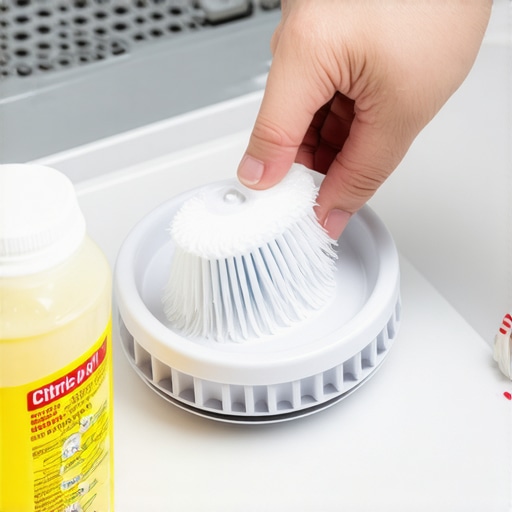
I remember the first time I pulled the debris filter out of my front-loader; it was like a time capsule of bad decisions, loose change, and grey sludge. If you want these machines to actually last a decade, you have to stop treating the mechanical parts like they are invincible just because they have a touch screen. I’ve found that using a simple soft-bristled nylon brush and a bit of citric acid once a month does more for my sensors than any software reboot ever could. You need to get into the habit of performing these physical checkups because even the ultimate guide to smart home appliances for a modern living can’t save a motor that is choking on pet hair and hard water scale.
Stop treating your washer filter like a myth
Most people don’t even know their machine has a drain pump filter until the floor is covered in soapy water. I personally use a specialized long-reach flexible brush to clear out the lint that bypasses the primary trap. This prevents the pump from overworking, which is a major reason why washing machines that save water expert advice for 2025 often emphasizes mechanical flow over digital settings. According to technical documentation from Miele, maintaining a clear path for water discharge can extend the life of your electronic control board by preventing voltage spikes caused by struggling motors. This is the secret to cleaning a front load washers hidden filter that will keep your machine from throwing those cryptic error codes at 11 PM on a Sunday.
How do I maintain smart appliance sensors over time?
Maintenance for a smart machine isn’t just about the physical gunk; it is about the data accuracy. For your dishwasher, I recommend a monthly cycle using a dedicated descaler—not just vinegar, which can actually degrade some rubber seals over time. This keeps the turbidity sensors clear so they can accurately judge how dirty your plates are. If those sensors are clouded with lime, your machine will run for four hours on a cycle that should take ninety minutes. I’ve found that knowing the best way to sanitize your dishwasher without using bleach helps preserve the delicate internal plastic housing while keeping the smart features responsive. For your fridge, the best tool is actually a simple dollar bill. Close the door on it; if you can pull it out easily, your seal is failing. You must how to check if your refrigerator door seal is actually airtight to prevent the compressor from running 24/7 and burning out the smart inverter board.
Predictive AI is the next big thing for your kitchen
As we look toward the future of home appliances trends to watch in 2025, we are going to see a shift from reactive alerts to predictive maintenance. Instead of your TV telling you the laundry is done, it will warn you three weeks in advance that your drain pump is starting to draw too much current and likely needs a cleaning. This kind of edge computing will save us thousands in repair bills. My advice? Try this advanced tip today: go into your appliance app and check the ‘Energy Monitoring’ or ‘Component Health’ section. If you see a steady rise in energy use for the same cycles, it’s time to clean your coils or filters before the machine breaks. Don’t wait for the notification; the data is already there if you know where to look.
Hard Truths I Learned While My TV Shouted About Laundry
After a year of living in a fully synced home, I’ve realized that the notification is only as good as the machine’s health. I once ignored a dishwasher alert for three days, thinking it was a glitch, only to find a small flood because I didn’t know how to fix a rattling dishwasher that sounds like it has loose rocks. The biggest lesson? Smart features are an assistant, not a replacement for your eyes and ears. I also discovered that does the extra rinse cycle actually help with detergent allergies is a question you should answer before you set up automatic alerts, as it changes your notification timing. Lastly, don’t let the tech overwhelm the primary function; even innovative dishwashers with AI technology you must know still require you to scrape the plates first. [image_placeholder_conclusion]
The Toolbelt Every Smart Homeowner Needs
You can’t fix a Wi-Fi drop-out with a wrench, but you can’t fix a clogged pump with an app. My go-to resources include technical forums that offer choosing the right refrigerator tips from industry experts so you don’t buy a lemon with a pretty screen. I also swear by a high-quality Wi-Fi analyzer app to map out dead zones in the laundry room—it’s the only way to stop the ‘Device Offline’ notifications. If your sensors keep acting up, investigate why your fridge temperature fluctuates even when the door is shut before assuming you need a new smart hub. These tools ensure your home appliances remain assets rather than headaches.
Mastering Your Home One Notification at a Time
Creating a truly seamless living space isn’t about having every gadget; it’s about making the gadgets you have work for your specific lifestyle. Whether you are managing smart appliances, washing machines, or high-end refrigerators and dishwashers, the goal is to reduce your mental load. When that notification pops up on your TV, it should feel like a helpful nudge, not a chore. You have the tools and the knowledge to turn your house into a proactive partner in your daily routine. Have you ever had a smart notification actually save you from a major household disaster? Let me know your stories in the comments below!