
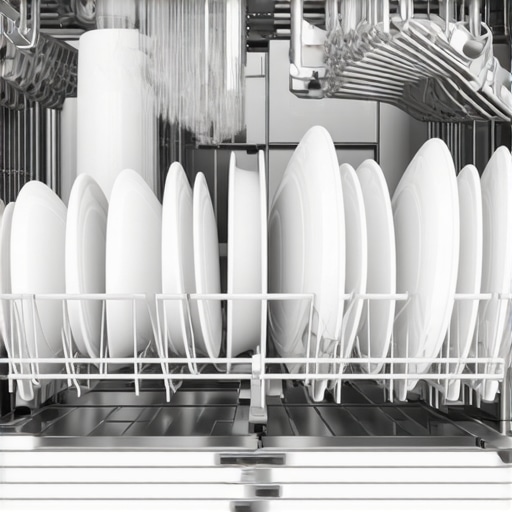
I stood there, staring at a “clean” lasagna pan that still had a crusty ring of cheese around the edges, feeling like my high-tech kitchen had personally insulted me. It’s a classic Tuesday night scenario: you spend ten minutes carefully wedging every single bowl and spoon into the racks like a master Tetris player, only to find a gritty white film on your plates later. I used to think that as long as it fit, it would get clean. I was wrong. My biggest mistake early on was thinking that “more dishes” meant “more efficiency,” when in reality, I was just building a fortress that the water couldn’t penetrate. Today, I’m going to show you how to stop the “re-wash cycle” cycle and finally master the science of water paths so your machine actually does the job you paid for.
The Secret Geometry of a Sparkling Wash Cycle
To get your dishes truly clean, you have to stop thinking about storage and start thinking about irrigation. Most of us just toss things in where they fit, but your dishwasher isn’t a locker; it’s a pressurized water system. When I first started testing the best dishwashers on the market, I realized that even the most expensive AI-driven units fail if you block the spray arms. If you’ve ever noticed that the top rack isn’t getting clean anymore, it’s likely because a stray spatula on the bottom is acting like an umbrella, shielding everything above it. You need to ensure you clean the internal spray arms regularly, but more importantly, you have to give them room to breathe.
Is specialized loading actually worth the extra effort?
Some people think this is just obsessive-compulsive behavior, but the science says otherwise. According to researchers at the University of Birmingham, the distribution of food types—like proteins versus starches—requires different water flow patterns to break down effectively, meaning where you place that bowl matters as much as the soap you use. Have you ever had to re-wash half a load because of one poorly placed mixing bowl? I’ve been there more times than I’d like to admit. We’re going to dive into the specific zones of your machine and how to angle your plates to maximize every drop of water.
Angle Everything Toward the Hub
Think of your dishwasher’s spray arm like a lawn sprinkler. If you stand right in front of it, you get soaked, but if you hide behind a tree, you stay dry. In your machine, that “tree” is often a large platter or a flat-laid bowl. I remember a Thanksgiving where I thought I was being a genius by stacking three oversized serving trays flat on the bottom rack. The result? Every single glass on the top rack came out looking like it had been dusted with flour. To avoid this, every dish needs a clear line of sight to the center. Tilt plates downward and inward toward the middle of the rack. This ensures the water hits the dirty surface directly and, more importantly, drains off immediately. If you don’t, you end up with that annoying puddle on the bottom of your mugs—a problem often compounded if you’ve made the dishwasher detergent mistake that is etching your favorite glassware by using too much abrasive powder in a stagnant pool of water. 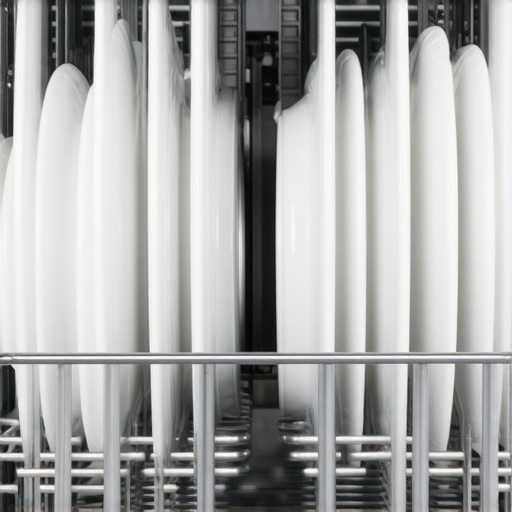
Stop Blocking the Spray Arm’s Path
The most common reason why your dishwasher is not getting the top rack clean anymore is physical obstruction. Before you close the door, give the middle spray arm a manual spin. If it clicks against a tall spatula or the handle of a ladle, you’ve essentially turned off the water for the top half of the machine. It’s like trying to shower with someone holding a board over your head. You also need to clean the internal spray arms every few months because even the best loading won’t save you if the holes are clogged with lime scale or stray peppercorns. Check for tiny seeds or plastic bits that can lodge in the nozzles and kill the water pressure.
Ditch the Over-Crowding Efficiency Myth
We’ve been conditioned to think a full load is an efficient load. While that’s true for your energy bill, it’s false for your hygiene. When items touch, they “nest.” Two nested bowls create a pocket where bacteria and old soup can thrive, protected from the heat. I once pulled out a bowl that still had a perfectly preserved ring of chili because it was spooning its neighbor too closely. Space is your best friend. Proper spacing also helps with drying; you’ll find the trick to getting bone-dry plastic containers out of your dishwasher usually involves leaving enough air gaps for the steam to actually escape rather than condensing back into droplets. If you are using one of the innovative dishwashers with AI technology, remember that the sensors are looking for water clarity. If you over-pack, the sensors think the dishes are cleaner than they are because the food particles are trapped between the plates instead of floating in the water where the sensor can see them. Always leave at least a finger’s width between your plates to let the water dance around them properly.I’m going to challenge a golden rule your parents probably taught you: stop pre-rinsing your dishes before they go in. I know, it feels wrong to put a plate with dried sauce into a machine, but you are actually sabotaging the high-tech sensors you paid for. Most innovative dishwashers with AI technology use turbidity sensors to ‘see’ the soil level in the water. If you’ve already scrubbed every plate, the water stays clear, the sensor tells the machine to use less heat and a shorter cycle, and you end up with plates that aren’t actually sanitized. According to the American Cleaning Institute, the enzymes in today’s detergents are specifically engineered to break down food proteins and starches; without that ‘anchor,’ the detergent simply washes away or, worse, contributes to the dishwasher detergent mistake that is etching your favorite glassware because the chemical energy has nowhere else to go. 
Does white vinegar actually ruin your machine over time?
This is a massive debate in the appliance community, but here is the professional truth: while many DIY blogs swear by it as a rinse aid, the truth about using white vinegar in your high-efficiency dishwasher is that the high acidity can degrade rubber gaskets and seals over several years. I’ve seen countless units where the owner thought they were being ‘eco-friendly’ but ended up with a slow leak because the door seal became brittle and failed. If you want a natural boost, stick to citric acid-based cleaners specifically formulated for appliances. Have you ever fallen into this ‘all-natural’ trap and regretted it? Let me know in the comments.
The Hidden Sensor That Ruins Your Dry Cycle
If your dishes are coming out soaking wet, it might not be a broken heating element. There is often a hidden sensor that stops your dishwasher from drying properly if it detects a drainage issue or a lack of rinse aid. People often overlook the rinse aid dispenser, thinking it’s an optional extra, but in a high-efficiency environment, it’s the only way to break the surface tension of the water so it can sheet off the plates before the heat cycle begins. Another nuance is the way modern motors work; unlike the real difference between inverter compressors and standard fridge motors in your cooling system, dishwasher pumps are designed for variable pressure and logic-based cycles. If you have a smart dishwasher app that keeps giving you phantom errors, it’s usually because of a tiny pressure drop caused by a clogged filter rather than a major mechanical failure. Never assume the app’s firmware update is a substitute for manual maintenance. Keeping that filter clean is the single best way to ensure your AI features actually work as advertised without crashing the system.To keep these high-tech systems running, you have to realize that the more ‘smart’ a machine is, the more sensitive its physical components become. It’s not just about the software; it’s about the hardware’s ability to communicate with that software. If you have ever struggled with why your washing machine smells like damp towels even after a wash, you’re likely dealing with a physical biofilm buildup that the machine’s internal sensors simply can’t ‘see.’ This is where manual intervention becomes the ultimate power-user move.
Clean the Filter or Watch Your Machine Fail
I personally keep a dedicated ‘maintenance kit’ in my laundry room. It’s not fancy—just a stiff-bristled brush, a bottle of scale remover, and a flashlight. You wouldn’t believe how many people call a repairman for a ‘broken’ pump when they just need to clean the debris filter on your front load washer effectively. Most modern machines have a small access door at the bottom. When that filter gets clogged with coins or hair, the pump works twice as hard, the electronics overheat, and eventually, the software throws an ‘unidentified’ error. This is a common culprit when you need to fix a washing machine that is stuck on the sensing cycle because the water can’t drain fast enough for the logic board to move to the next step.
How do I maintain these complex systems over time?
The secret is a quarterly ‘Deep Reset.’ Every three months, I ignore the ‘Clean’ button on the console and do a manual inspection of the seals. According to the Association of Home Appliance Manufacturers (AHAM), even a 10% reduction in airflow due to dust in a condenser system can increase energy consumption by nearly 20%. This is why I always tell people to check if your refrigerator door seal is actually airtight. A simple dollar-bill test—closing the door on a bill and seeing if it pulls out easily—can save you from having to spot a failing refrigerator compressor before it dies due to overwork. 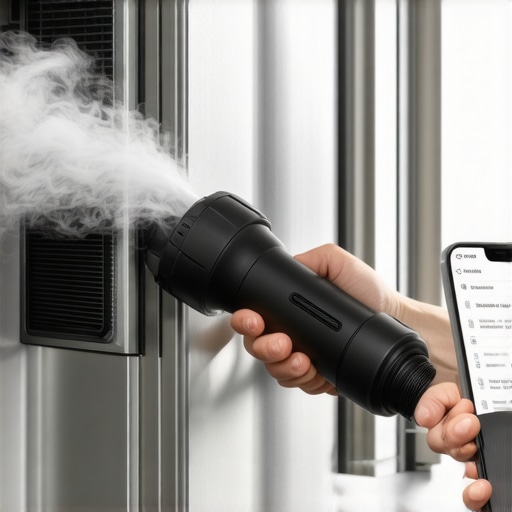
Your Fridge Needs More Than Just a Software Update
While we wait for the future of home appliances and trends to watch in 2025, we have to deal with the hardware we have today. If you have a high-end unit, the refrigerators in 2025 with top features will likely include self-cleaning coils, but for now, you need to vacuum the back of your unit. Dust buildup on those coils is the number one killer of ‘smart’ efficiency. When the heat can’t escape, the internal thermometer gets confused, leading to those frustrating moments where your milk is warm but your lettuce is frozen.
The 2025 Vision for Truly Self-Healing Homes
Looking ahead, I predict we will see ‘predictive failure’ technology become standard. Instead of a generic error code, your machine will tell you exactly which gasket is thinning or which valve is starting to lime up. We are already seeing the beginnings of this in washing machines that save water by using vibration analysis to detect motor wear. Until that tech is perfect, my challenge to you is this: go pull the kickplate off your dishwasher or the debris filter on your washer tonight. If it’s slimy or covered in lint, you’ve just found your performance bottleneck. Take ten minutes to scrub it out; your energy bill and your clothes will thank you.
Lessons from the Trenches of My High-Tech Kitchen
Over the years, I’ve realized that the most expensive ‘smart’ feature in the world is useless if you forget the basics. One big lightbulb moment for me was realizing that detergent enzymes are like little pac-men—they need food to cling to. If you pre-wash your dishes until they are spotless, those enzymes have nothing to do but attack your glassware, leading to permanent cloudiness. Another hard truth? Your machine’s ‘clean’ sensor is easily fooled. A blocked filter can make the water look clear while redepositing microscopic grime back onto your plates. Finally, don’t let the convenience of a smartphone app blind you to physical sounds. If your machine starts humming or clicking, it’s a hardware cry for help that no software update can fix.
My Personal Toolkit for Keeping Everything Running
I don’t believe in buying every gadget on the shelf, but there are a few essentials I never go without. First, I always keep a supply of citric acid-based cleaner; it is the best way to sanitize your dishwasher without using bleach and it won’t eat your rubber seals like vinegar does. Second, a simple stiff-bristled brush is your best friend for scrubbing those debris filters. Third, I highly recommend keeping a digital folder with your manuals—or better yet, bookmarking an ultimate guide to smart home appliances for a modern living so you have a quick reference when things go sideways. #IMAGE_PLACEHOLDER_E#
Your Journey to a Maintenance-Free Home
It’s easy to feel intimidated by the sheer complexity of modern tech, but remember that you are in control. By mastering the geometry of your dishwasher and the airflow of your fridge, you aren’t just cleaning dishes—you’re protecting a major investment. You can even save money on your electric bill by changing three fridge settings tonight. Take it one filter at a time, and soon, these habits will be second nature. These top smart appliances for a seamless home experience in 2025 are designed to make our lives easier, but they only shine when we give them the basic care they deserve. Have you ever found a surprisingly weird object stuck in your dishwasher or washing machine filter? Let me know your funniest (or grossest) discovery in the comments below!