
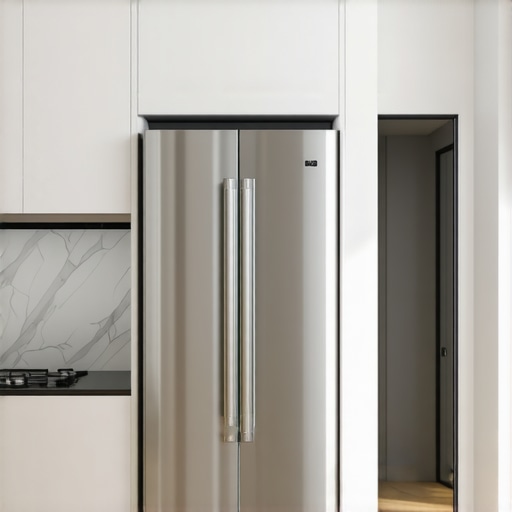
I was standing right there in the middle of what I thought was my dream home, wine glass in hand, when the roar started. My open-concept kitchen, designed for flow and togetherness, had suddenly become a megaphone for a compressor that sounded like a heavy-metal drum solo. It wasn’t just a hum; it was a physical presence that forced my dinner guests to lean in closer just to hear about my weekend. That was the moment I realized that in a home without walls, your appliances are essentially roommates that never shut up. If you’re tired of your kitchen sounding like a small airport, you’re in the right place. I’ve spent months obsessing over decibel charts and compressor technology so you don’t have to. Today, I’m going to help you reclaim your peace and quiet.
The Hum That Ruined My Movie Nights
When I first remodeled, I was all about the look. I wanted the handles to match the oven and the finish to be smudge-proof. I completely ignored the sound rating. Huge mistake. I ended up with a beautiful machine that sounded like a jet engine at 2 AM. I didn’t realize that the hidden costs of cheap budget appliances often manifest in the most annoying way: constant noise pollution. I even spent hours wondering why my fridge sounded like it was whistling, only to find out it was just a low-quality fan struggling to breathe in a tight space. We are going to fix that today by looking at what actually makes a refrigerator whisper-quiet.
Is a Truly Silent Fridge Actually Worth the Extra Cash?
You might be thinking, it’s just a fridge, I’ll get used to it. Trust me, you won’t. I thought I’d grow deaf to the sound, but it only got more grating over time. You might wonder is a smart fridge really worth the extra money if a large portion of that cost is just for peace and quiet? The truth is, modern silence usually comes from superior engineering—think linear compressors and high-density insulation. According to data from the Noise Pollution Clearinghouse, even a 10-decibel increase represents a tenfold increase in sound intensity. That is the difference between a quiet library and a loud vacuum cleaner. If you want a home that actually feels peaceful, choosing the right refrigerator based on more than just aesthetics is non-negotiable. Have you ever had to pause a movie because your fridge decided to kick into high gear? One thing I learned early on is that high-efficiency models can be trickier than they look. I was initially confused about why my high-efficiency fridge ran more often than my old one, but it turns out that’s actually a design feature to maintain stable temperatures more quietly. It’s all about the frequency of the sound, not just the volume. Let’s dive into what actually makes these machines whisper.
Hunt Down the Source of That Racket
Before you can fix the noise, you have to find out what’s actually screaming for attention. Is it a high-pitched whine or a low-frequency rumble? If it’s a constant, rhythmic drone, you’re likely dealing with the compressor. Think of the compressor as the heart of your fridge; if it’s working too hard, the pulse gets louder and more frantic. You might find that why your new refrigerator is making a loud humming sound is actually due to the high-efficiency cooling cycles that run longer than older models. However, if you hear a frantic rattling or a metallic vibration, it’s usually mechanical friction rather than the motor itself. You have to act like a detective here. I once spent twenty minutes tracking a noise only to realize a glass jar of pickles was vibrating against a shelf. Always clear the clutter before you assume the machine is broken.
Level the Feet to Stop the Rocking
I remember one Saturday afternoon where I was convinced my brand-new fridge was a lemon. Every time it turned on, the wine glasses inside would start a tiny, annoying dance that drove me crazy. I spent an hour checking the internal fans before I realized the floor was slightly uneven. A refrigerator that isn’t perfectly flat will vibrate against its own frame like a tuning fork, amplifying every internal movement. Knowing how to adjust the feet on your refrigerator to stop it from rocking is the simplest way to cut noise by half. Grab a spirit level and place it on top of the unit. Most models have threaded legs you can twist by hand or with a wrench. I’ve seen people use cardboard shims as a quick fix, but don’t do that; the weight of the fridge eventually crushes the cardboard and the rattle returns. Once that bubble on your level sits dead-center, the ‘drumming’ usually disappears instantly.
Clean the Coils to Give the Motor a Break
When your fridge’s coils are covered in thick dust, it’s like trying to run a marathon while wearing a heavy wool coat. The heat cannot escape the system, so the compressor has to work double-time to keep things cold, which leads to a louder, more aggressive hum. If you live with cats or dogs, this is non-negotiable. I make it a habit to check how to keep your refrigerator coils clean in a pet-friendly home every six months. Vacuuming that hidden debris with a soft brush attachment reduces the strain on the internal fans, and you’ll notice the pitch of the appliance drops significantly. If the motor doesn’t have to fight through a blanket of pet hair, it doesn’t need to scream.
Invest in Modern Compressor Technology
If maintenance doesn’t solve the issue, the problem might be the hardware itself. Traditional compressors are like old-fashioned light switches—they are either 100% on or 100% off, creating a loud ‘kick’ when they start. Modern digital inverter compressors are more like a dimmer switch; they ramp up and down slowly, maintaining a steady, low-volume hum that blends into the background. Looking at refrigerators in 2025 top features that transform your kitchen, you’ll see that silence is now a premium engineering goal, with many units coming in under 38 decibels. When you are choosing the right refrigerator, specifically ask about the decibel rating and the type of insulation used in the side panels. It’s better to spend a bit more upfront than to live with a machine that sounds like it’s perpetually preparing for takeoff in your own kitchen.Let’s dig deeper into a nuance that most people get completely backwards: the ‘more is better’ fallacy. We’ve been conditioned to think that more water and more soap equals a deeper clean. In reality, modern high-efficiency (HE) systems are designed to work with very little of both. I’ve talked to many homeowners who are frustrated because why your high-efficiency washer doesn’t fill all the way to the top, thinking the machine is broken. It’s not. In fact, if you tried to fill a modern drum with water, you’d actually ruin the mechanical ‘slap’ action that gets stains out. The same logic of precision over power applies to the noise levels we discussed earlier; a machine that sounds like it’s working ‘hard’ is usually just a machine that’s failing. Then there’s the time trap. Everyone complains that modern machines take three hours to do what an old agitator did in forty minutes. But here is the truth: those long cycles are actually saving you money and keeping the peace. According to data from the Association of Home Appliance Manufacturers (AHAM), longer cycles allow enzymes in the detergent to break down soil at lower temperatures, which is the single biggest energy saver in your home. If you’re wondering why your energy-efficient washer takes so long to finish, it’s because it’s trading time for electricity.
Can Too Much Soap Actually Damage Your Machine’s Brain?
This is the biggest ‘oops’ factor I see in modern kitchens and laundry rooms. People still use a full cup of detergent, but modern sensors are incredibly sensitive to suds. Excess foam creates ‘suds lock,’ forcing the motor to work harder and eventually burning out the control board or the pump. I’ve learned the hard way that why your washer doesn’t need a whole cup of detergent to get clothes clean—it’s often just two tablespoons. If you see why your clothes come out of the washer with mysterious white streaks, you aren’t looking at lint; you’re looking at undissolved soap residue that’s currently eating your gaskets and causing your machine to vibrate more than it should. Another trap is the ‘Eco’ button. On many dishwashers, the Eco setting is great for lightly soiled plates, but if you’ve got baked-on residue, it’s actually less efficient because you’ll end up running it twice or hand-washing afterward. When choosing the right refrigerator or dishwasher, look at the sensor technology rather than the marketing stickers. Have you ever fallen into the trap of adding ‘just a little extra’ soap for a heavy load, only to have the machine start banging? Let me know in the comments below—I want to hear your appliance horror stories.
Grab These Tools to End the Appliance Noise for Good
I don’t just wait for things to break; I carry a ‘silence kit’ in my utility drawer. My absolute favorite tool is a 24-inch flexible crevice wand for my vacuum. It’s the only way to reach the very back of the condenser coils where the most stubborn pet hair hides. If you really want to know the secret to making your refrigerator last twice as long, it’s about heat dissipation. According to technical documentation from the Association of Home Appliance Manufacturers (AHAM), even a minor 30% increase in dust accumulation on heat-exchange surfaces forces the compressor to cycle significantly more often, leading to that dreaded metallic rattling. I also keep a small tube of food-grade silicone grease. I use it on my refrigerator door gaskets once a year to keep them supple; if the seal stays soft, the motor doesn’t have to work as hard to keep the cold in, and the suction sound remains a soft ‘thump’ rather than a sticky, loud peel.
How can I make my modern appliances last twice as long?
The biggest mistake I see is the ‘set it and forget it’ mentality. Your machines are essentially living organisms that need to breathe. For your dishwasher, stop using harsh abrasive cleaners and learn how to deep clean the gasket on your dishwasher to prevent leaks and maintain the acoustic seal. A dried-out gasket is a major source of escaping spray-arm noise. In the laundry room, the ‘hidden’ maintenance is all about the drainage system. I make it a point to show my friends how to clean the lint filter you didn’t know your washer had, usually tucked behind a tiny door at the bottom of front-loaders. When that filter is clogged, the pump has to struggle to push water out, creating a high-pitched whine that can be heard three rooms away. If your machine is smart, you should also take the time to learn how to calibrate your smart fridge temperature sensors. A miscalibrated sensor might tell the fridge it’s warmer than it actually is, causing the cooling fans to run at maximum RPM for no reason at all.
The Future of Quiet Kitchens is More Proactive Than You Think
Looking ahead, the era of us manual-checking for dust or leaks is coming to an end. I predict that by 2030, predictive maintenance sensors will be standard in even entry-level models. We are already seeing the start of this with top smart appliances for a seamless home experience in 2025, where internal microphones can detect a bearing beginning to fail weeks before it becomes audible to the human ear. Your fridge won’t just tell you that you’re out of milk; it will tell you that the fan motor is drawing 5% more current than last month and order the replacement part for you before the noise even starts. For now, we have to be the ears of the house. I challenge you to go check your dishwasher filter tonight. Most people haven’t touched it in years, and the difference in water-flow noise after a five-minute rinse is absolutely life-changing.
The Hardest Lesson I Learned While Chasing a Quiet Kitchen
I used to think that a loud appliance was just a sign of age, but I’ve realized that noise is actually the machine’s way of crying for help. After years of tinkering, I’ve found that silence is a byproduct of balance and airflow, not just a high price tag. First, never ignore a new vibration; if you catch it early, you can usually fix it with a simple adjustment before it wears out the motor. Second, high-efficiency doesn’t mean low-maintenance. In fact, it often requires more frequent cleaning because the tolerances are so tight. Finally, remember that your environment matters as much as the machine—hardwood floors amplify sound while rubber pads can be a lifesaver.
My Go-To Toolkit for a Peaceful Home
If you’re serious about silencing the chaos, I recommend keeping a few things on hand. First, grab a standard spirit level to ensure your unit isn’t rocking. Second, the Association of Home Appliance Manufacturers (AHAM) is my favorite source for actual performance data when I’m choosing the right refrigerator or washer. Third, always have a flexible vacuum attachment ready to clear out those coils every six months. If you’ve already got a ruckus in the kitchen, check out my guide on how to quiet down a noisy dishwasher pump fast for immediate relief.
Reclaiming Your Sanctuary from the Machines
At the end of the day, your home should be a place where you can hear your own thoughts, not just the cycle of your dishwasher. By taking these small, proactive steps, you aren’t just extending the life of your gear; you are investing in your own peace of mind. Keeping up with the secret to making your refrigerator last twice as long is the best way to ensure your kitchen stays a sanctuary for years to come. As we look toward the future of home appliances, the goal remains the same: technology that serves us without shouting for attention.
Have you ever had a specific appliance noise that drove you absolutely crazy? Let me know in the comments—I’d love to help you troubleshoot it!