
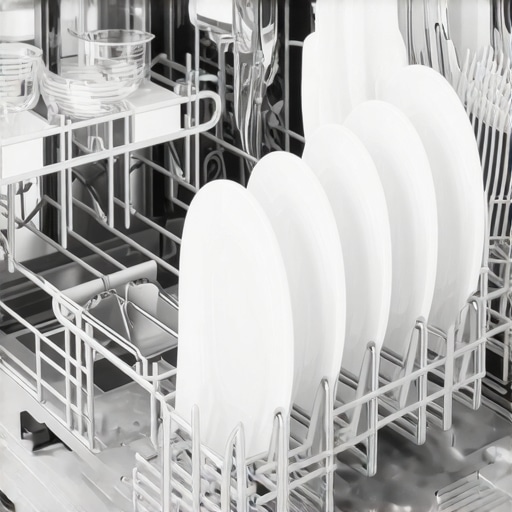
I stood there with my favorite 12-inch dinner plate, staring at the gap where it used to glide in effortlessly. Clink. It hit the spray arm. Again. I had just upgraded to one of those innovative dishwashers with AI technology, and while the third rack looked like a miracle for my silverware, it turned my bottom rack into a claustrophobic mess. I remember the day I finally caved and bought what I thought was the ultimate kitchen upgrade. I was tired of those plastic baskets hogging the bottom rack, so a third rack seemed like the smartest move I’d ever made. But three days later, I was hunched over the sink, scrubbing my oversized Thanksgiving platters by hand because they physically wouldn’t fit. My new machine was smarter, sure, but it felt significantly smaller. We’ve been told that more is more. In the world of smart appliances, we assume every new feature adds value without taking anything away. I fell for it hook, line, and sinker. The reality is that your dishwasher’s tub has a fixed height. When you shove a third rack at the very top for spatulas and espresso cups, that height has to come from somewhere. Usually, it’s stolen from the middle rack or the bottom clearance.
The Hidden Trade-Off of That Extra Shelf
The short answer? Often, yes, you are losing space where it might matter most. If you aren’t careful about how to choose the best dishwasher, you might find yourself in my shoes. I made the classic mistake of ignoring the adjustable features during my initial setup. I assumed the middle rack would just figure itself out. It didn’t. I even thought my dishwasher was making a grinding noise at one point, only to realize it was just a tall spoon wedged against the ceiling of the second rack. According to the Association of Home Appliance Manufacturers (AHAM), modern dishwasher designs are increasingly focused on energy efficiency and specialized cleaning zones, but this often requires more complex internal plumbing that can eat into your usable real estate if not managed correctly.
Does that extra drawer actually steal your vertical space?
It really depends on your loading habits. If you’ve ever struggled with loading large serving platters only to hear that dreaded thwack-thwack-thwack of the spray arm hitting a plate, you know exactly what I’m talking about. We’re going to dive into how to reclaim that space today and look at whether you should stick with a traditional setup or embrace the third rack lifestyle. But first, I have to ask: have you ever bought a better appliance only to realize it actually made your daily routine more complicated? Let’s figure out if your dishwasher is actually shrinking or if you just need a better strategy.The first thing you need to master is the elevator mechanism. Think of your dishwasher like a multi-level parking garage. If a monster truck, like your 12-inch dinner plate, can’t fit on the ground floor, you need to raise the ceiling. Most modern machines have levers on the sides of the middle rack that allow for quick height adjustments. I remember the first time I tried this; I was halfway through cleaning up after a Sunday roast, and my long-stemmed wine glasses were mocking me by standing just an inch too tall. I pressed the gray levers, the rack clicked down, and suddenly, the glasses fit perfectly. However, I quickly learned that moving the middle rack down meant my large plates on the bottom now blocked the spray arm. It is a game of architectural balance. If you are already looking for the best refrigerator shelving hacks for more space, you will find the logic is identical—it is all about modularity and deciding which zone needs the air rights for that specific load.
Lower or Raise the Middle Rack to Save Your Plates
Most users never touch their adjustment triggers, but they are the secret to the best way to load large serving platters without blocking the spray arm. Locate the plastic levers on the outer rails of the middle basket. By clicking them simultaneously, you can drop the rack to accommodate tall glasses or raise it to give your oversized chargers room on the bottom. When I first did this, I didn’t realize the rack could sit slanted. One side was higher than the other, and my dishwasher was making a grinding noise because the spray arm was hitting the tilted plastic. Always ensure both sides click into the same height tier to maintain a level plane for the water jets to spin freely. 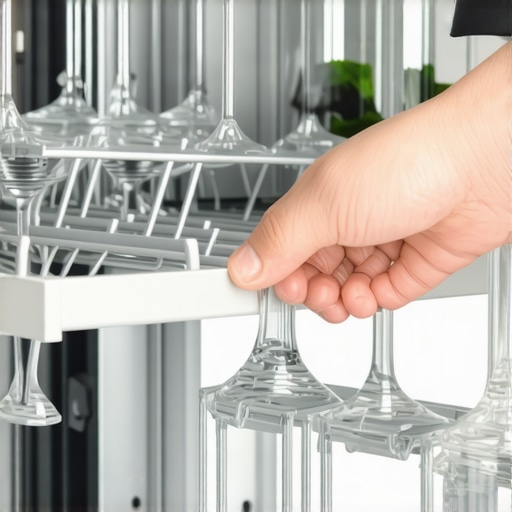
Maximize Every Square Inch with Folding Tines
Don’t let the vertical spikes dictate your life. Many innovative dishwashers with AI technology feature flip-down tines. These allow you to create a flat surface for large mixing bowls or even small pots that would otherwise sit at a weird, water-collecting angle. I used to try and thread my stockpot over the spikes, which eventually scratched the non-stick coating and left the pot half-dirty. Now, I flatten the back row of tines, and the pot sits flush. This level of flexibility is a crucial part of how to choose the best dishwasher; you should always look for racks that offer at least fifty percent collapsible tines to handle holiday-sized cookware.
Ditch the Cutlery Basket for Bottom Rack Freedom
If your third rack is a dedicated cutlery tray, stop using the bulky plastic basket on the bottom rack entirely. Removing that basket can free up nearly twenty percent of your bottom rack floor space, which is perfect for odd-sized Tupperware or extra salad bowls. Much like how refrigerators in 2025 top features that transform your kitchen focus on specialized zones, dishwasher design is moving toward this tray-based approach. Use the top sliver for your spatulas, ladles, and silverware, and keep the bottom clear for the heavy hitters. If you still see spots after optimizing your layout, you might need to look into the best way to remove hard water spots from dishwasher interiors to ensure the water flow is actually reaching those newly opened areas.The mistake I see most often isn’t just about how you load the machine; it’s about the chemistry and physics you’re ignoring. Everyone assumes that ‘Eco Mode’ is a marketing ploy to make manufacturers look green, but the truth about eco mode on modern dishwashers is that it’s actually the most effective setting for standard loads—if you give it enough time. Most people switch it off because it takes three hours. But those three hours are necessary because the machine is using lower heat and less water to allow the enzymes in your detergent to work longer. If you force a ‘Quick Wash’ every time, you’re essentially asking the machine to do the same job with a blunt tool. I fell into this trap myself, thinking I was being efficient by saving time, but I was actually shortening the lifespan of my appliance by forcing high-heat cycles that wear out seals faster. This logic applies to your fridge too; many refrigerators in 2025 top features that transform your kitchen include advanced sensors that can be easily ‘tricked’ by placing hot food directly inside, which forces the compressor to work overtime and leads to premature failure.
Why does your smart dishwasher still need rinse aid if you use 3-in-1 pods?
It sounds like a marketing gimmick by the soap companies, right? Wrong. This is where the physics of drying comes in. Modern innovative dishwashers with AI technology often lack a heating element at the bottom to save energy. They rely on ‘condensation drying,’ which uses the residual heat from the final rinse to evaporate water off the dishes. Without rinse aid, water clings to the surface of your plates and creates spots. Even if your pod says it has a built-in rinse agent, it is often released too early in the cycle to be effective for the final dry. This is exactly why your dishwasher still needs rinse aid even with 3-in-1 tablets. If you skip it, you’re not just getting spots; you’re often preventing the sensors from accurately reading when a cycle is actually done, leading to that annoying dampness. 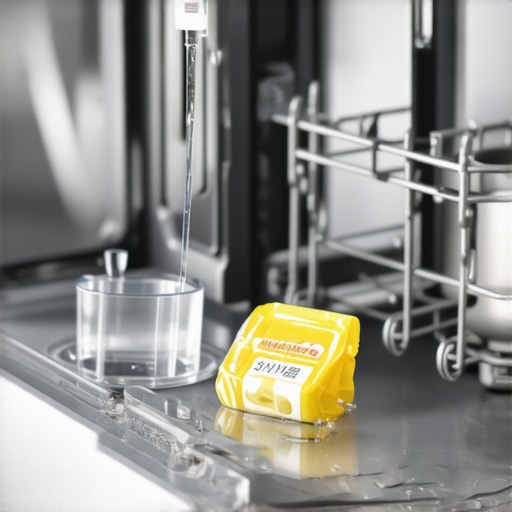 Another major ‘oops’ factor involves the laundry room. I used to think that more soap meant cleaner gym clothes. I was dead wrong. In a high-efficiency machine, excess soap creates a ‘suds lock’ that prevents the water from draining properly. This is the primary reason why your high efficiency washer is leaving white streaks on dark clothes. It’s not lint; it’s un-dissolved detergent residue. Over time, this buildup creates a breeding ground for bacteria. Modern washing machines that save water rely on concentrated chemistry. A study by the American Cleaning Institute found that most households use up to twice the amount of detergent actually required for HE loads. If you’ve noticed a smell or poor performance, you’ve probably already made one of the 5 mistakes that are shortening the life of your smart refrigerator or laundry units by overworking the internal filters. Have you ever fallen into this trap? Let me know in the comments.
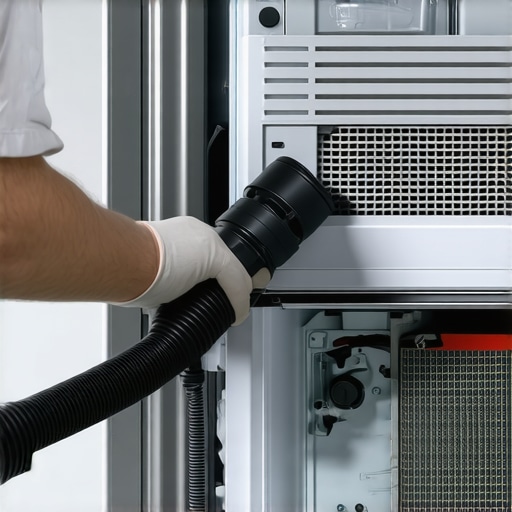
Maintaining a smart home isn’t just about swiping through apps; it is about the grit under your fingernails. I learned this the hard way when my $2,000 fridge started vibrating like a jet engine. I didn’t need a software update; I needed a vacuum. I personally use a narrow crevice tool attachment on my shop vac to clean the condenser coils every six months. If you don’t, the compressor works nearly 30% harder, leading to the exact scenario where you would need to know how to tell if your refrigerators fan motor is failing. High-tech sensors can’t fix physical neglect.
How do I keep my smart appliances running like new for a decade?
The secret is a combination of digital vigilance and manual descaling. For my dishwasher, I’ve stopped using store-bought cleaners and switched to 100% food-grade citric acid. Why? Because unlike vinegar, which is an acetic acid that can eventually degrade the rubber seals and gaskets in innovative dishwashers with AI technology, citric acid is gentler on the hardware while being ruthless against calcium buildup. A technical service bulletin from major manufacturers often highlights that over 30% of cooling and drainage issues are directly related to mineral accumulation rather than component failure. This is especially true if you are trying to figure out the best way to remove hard water spots from dishwasher interiors.
In the laundry room, my favorite tool is a simple digital thermometer. I use it to periodically verify that my ‘Sanitize’ cycle is actually hitting the 150-degree mark. If it isn’t, your machine isn’t just failing to clean; it’s building up a biofilm that leads to that ‘old gym sock’ smell. Mastering the secret to odor-free laundry in a high efficiency machine requires you to look beyond the control panel. Once a month, I also use a small stiff-bristled brush to clear the detergent drawer vents. It takes five minutes, but it prevents the clogs that cause white streaks on your favorite dark clothes.
Looking ahead, I predict we are moving toward a ‘self-healing’ era. The future of home appliances trends to watch in 2025 suggest that next-gen units will use ultrasonic vibration to prevent scale from ever forming on heating elements. Until then, you need to be the brain behind the machine. Make sure you know how to calibrate your refrigerator thermometer without calling a pro to ensure your smart sensors aren’t lying to you. My challenge to you today: pull your dishwasher filter out right now. If it feels slimy, your AI doesn’t have a chance at getting your plates clean.
The Hardest Lesson I Learned About Living with a Third Rack
When I first upgraded my kitchen, I thought the machine would do all the thinking for me. Here is the reality check I needed:
- Volume is a zero-sum game: You cannot add a drawer without losing vertical clearance somewhere else. Always check the ‘air rights’ of your bottom rack before you commit to a three-tier design.
- Software cannot fix a clogged filter: No matter how many sensors your top smart appliances for a seamless home experience in 2025 have, they won’t tell you there is a piece of plastic wrap stuck in the drain.
- Maintenance is the real smart feature: The most intelligent thing you can do is learn how to clean the hidden filter in your energy-efficient dishwasher every single month.
Essential Tools to Keep Your Appliances Running
To keep everything running smoothly, I rely on a few specific tools and guides that have never steered me wrong. First, I always keep a copy of the ultimate guide to smart home appliances for a modern living bookmarked on my phone for quick troubleshooting. For physical maintenance, I trust a standard shop vac for clearing refrigerator coils—it is far more effective than any specialized brush. I also swear by food-grade citric acid for descaling; it is the most reliable way to maintain water flow in hard-water areas. Finally, if you are tackling the laundry room, knowing how to clean a front-load washer filter without flooding the room is a life-saving skill that I have shared with more neighbors than I can count.
#IMAGE_PLACE_HOLDER_E#
Your Path to a Stress-Free Smart Kitchen
Embracing innovative dishwashers with AI technology does not mean you have to surrender control of your kitchen. By understanding the mechanical limits of your machine and performing basic upkeep, you can enjoy all the convenience without the frustration of lost space or sub-par cleaning. The goal is not just to own a smart machine; it is to use it as a tool for a more efficient, stress-free life. Have you ever had to choose between your tallest wine glasses and your biggest dinner plates because of a third rack? Tell me your loading hacks in the comments below!