

It was 2 AM, and I was genuinely creeped out. Every time I walked past the kitchen to grab a glass of water, a high-pitched, melodic whistle would start up, almost like someone was trying to get my attention from the shadows. I actually checked the front door twice before I realized the culprit was my three-year-old refrigerator. It wasn’t a ghost or an intruder; it was just my appliance acting like a boiling tea kettle. It’s an unsettling sound that can make even the most patient homeowner feel like their kitchen is about to take flight.
That High-Pitched Whistle is Driving Me Crazy
We spend a significant amount of money on these machines, expecting them to be silent partners in our busy lives. When they start making “music,” it’s more than just a nuisance; it’s a stressful reminder that something might be failing. Trust me, I know the frustration of trying to watch a movie while your kitchen sounds like a referee’s convention. I spent three weeks ignoring a similar sound, thinking it was just “character,” only to find out I was making a simple mistake that was taxing the motor unnecessarily. Today, I want to help you identify exactly why your smart fridge is making a high-pitched whistling noise and how to silence it for good.
Is my fridge actually about to explode?
I get it. When you hear a sound that isn’t a low, comforting hum, your brain goes straight to the worst-case scenario. You’re probably thinking about a $400 repair bill or, heaven forbid, a total appliance meltdown. But most of the time, a whistling sound comes down to simple airflow physics or a component that is slightly out of alignment. It is rarely a sign of imminent doom, and it is usually a fix you can handle on a Saturday morning with a cup of coffee in hand. In fact, understanding the difference between inverter and traditional refrigerator compressors can help you realize that some modern sounds are actually quite normal, even if they are annoying.
When I first heard my fridge whistling, I did something incredibly stupid: I shoved a thick kitchen towel into the gap behind the unit, thinking I could just “mute” the noise. Big mistake. All I did was restrict the vital airflow, which made the compressor run hotter and even louder. I almost burned out the motor because I was too stubborn to just look for the source. According to experts at ASHRAE, even minor obstructions in air circulation can reduce appliance efficiency by up to 15%, leading to unusual acoustic vibrations and higher energy bills. Don’t be like me; don’t try to hide the noise. Instead, let’s look at choosing the right refrigerator maintenance habits to keep things quiet.
Finding the Source of the Whistle
Before you start shopping for a new model or browsing refrigerators in 2025, we need to do some detective work. Is the sound coming from the back, the bottom, or inside the freezer? Sometimes it is as simple as how to calibrate your refrigerator thermometer to ensure the fans aren’t overworking, or simply moving a gallon of milk that is blocking an internal vent. Have you ever stood in your kitchen at night, staring at your fridge and wondering if it is trying to tell you a secret? Drop a comment below if your appliance has a “voice” of its own! Let’s dive into the practical steps to bring back the silence.
Stop the Screeching Right Now
To kill the whistle, you first need to check the internal vents. Think of your fridge’s cooling system like a set of lungs; if you put a piece of tape over one nostril, the other has to work twice as hard and starts to make a weird noise. I once spent an hour trying to diagnose a ‘mechanical failure’ only to realize a bag of frozen peas was leaning against the air return vent. Once I moved it, the whistling vanished instantly. If your airflow is blocked, you might even notice temperature issues, so learning how to stop your refrigerator from freezing the milk on the top shelf is a great first step in understanding these internal air patterns.
Listen Close to the Freezer Fan
If moving your groceries doesn’t work, we need to look at the evaporator fan. This part is usually tucked behind a panel in the back of the freezer. If it gets a thin layer of ice on the blades, it turns into a high-pitched siren every time it spins. It is exactly like sticking a playing card in the spokes of a bicycle wheel, except much more annoying at 3 AM. If you suspect ice buildup, you might need to look into the easiest way to defrost a manual defrost freezer or its automatic counterpart to melt that obstruction away. If the sound persists after a defrost, you should learn how to tell if your refrigerators fan motor is failing before the part dies completely.
Check for the Flute Effect
Next, inspect the seal of your doors. A tiny gap in the gasket creates a ‘flute effect’ where air is sucked through a narrow opening at high speed. It is the same physics that makes a blade of grass whistle when you blow on it. I tried to test this once by sliding a dollar bill through the door seal while it was closed—if it pulls out without any resistance, your seal is warped or dirty. Cleaning the gasket with warm soapy water usually fixes the ‘leak’ and the whistle simultaneously. It is a simple maintenance task that prevents one of those 5 mistakes that are shortening the life of your smart refrigerator by keeping the internal temperature stable without forcing the motor to compensate for lost cold air.
Give the Unit Some Breathing Room
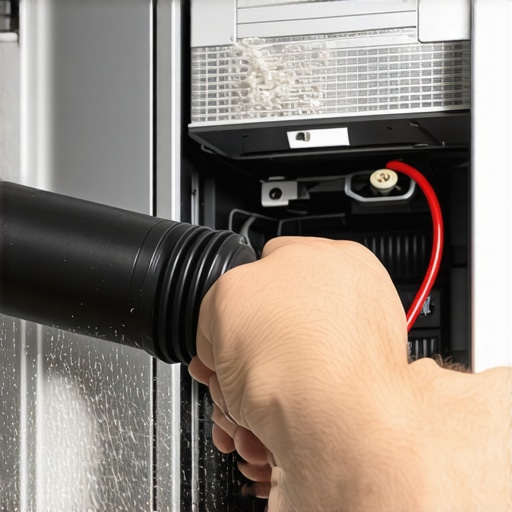
If the sound is coming from the bottom or back, your condenser coils are likely choked with pet hair and dust. A clogged coil forces the compressor to run at high pressure, which can lead to a whine that sounds like a jet engine warming up. Keeping these coils clear is the secret to making your refrigerator run more quietly. I once tried to vacuum mine and accidentally sucked up a loose mounting screw, which caused a whole new rattling sound, so be careful with the attachments! Finally, verify that your fridge isn’t pushed too tight against the wall. Vibrations against the drywall can amplify minor fan noises into major headaches. Just pulling the unit out two inches can sometimes solve the problem without you ever picking up a screwdriver.
We often assume that if a machine is ‘smart,’ it should be smart enough to handle our bad habits. But here is the contrarian truth: modern appliances are actually more sensitive to user error than the clunky units our parents owned. Take the ‘Eco Mode’ on your dishwasher, for example. Most people think it’s a useless setting that just makes the cycle take forever. In reality, the truth about eco mode on modern dishwashers is that it uses a ‘low and slow’ approach—lower temperatures and less water but longer exposure—to achieve the same clean. If you interrupt it because you’re impatient, you’re actually wasting more energy and leaving grime behind.
Why does my high-tech dishwasher take three hours to finish?
It feels counter-intuitive, right? We expect technology to be faster. But the why your high-efficiency washer takes so long to complete a load question boils down to modern environmental regulations. To hit energy-star ratings, machines have to use less water, which means they need more time to tumble and soak. If you try to ‘hack’ this by using the quick-wash setting every single time, you’re likely to see a buildup of residue. Have you ever fallen into the ‘quicker is better’ trap? Let me know in the comments!
The biggest ‘oops’ factor I see with modern laundry is the over-reliance on detergent. We’ve been conditioned to think more bubbles mean more clean, but in a high-efficiency (HE) system, excess suds act like a cushion, preventing the clothes from rubbing against each other. This is exactly the reason your high-efficiency washer smells like old gym socks—that excess soap doesn’t rinse away; it turns into a biofilm that feeds mold. I once used a double dose of ‘extra strength’ detergent on my gym clothes and ended up with a machine that smelled like a swamp for a week. 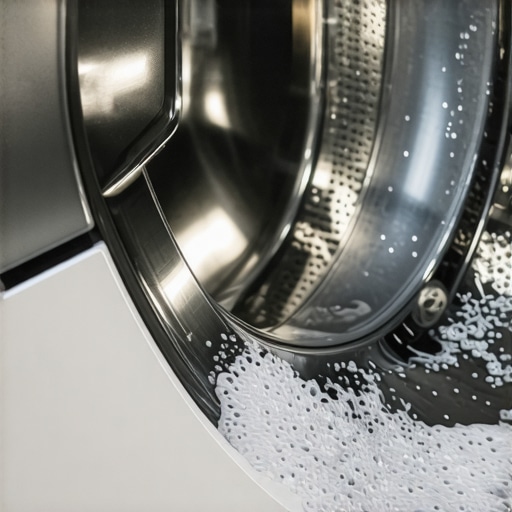
Beyond the soap, there’s a nuance most people miss regarding why your dishwasher pod isn’t dissolving completely. If you’re tossing the pod into the main tub, it dissolves during the pre-rinse and gets pumped out before the actual wash cycle even starts. You’re essentially washing your dishes with plain water. This kind of minor operational mistake is often what leads people to think their expensive unit is a lemon. According to a study by the Association of Home Appliance Manufacturers (AHAM), electronic control boards and sensors are now the primary failure points in modern units, often triggered by simple things like power surges or moisture getting into the wrong places. This explains why modern refrigerators don’t last as long as your grandmas—the tech is brilliant, but the mechanical margin for error is much thinner.
If you’re looking to upgrade, don’t let these nuances scare you off. Just make sure you’re choosing the right refrigerator or dishwasher by looking at the long-term maintenance requirements, not just the flashy touchscreens. Following an ultimate guide to smart home appliances for a modern living can help you navigate these high-tech waters without sinking your budget. The key is to stop treating your smart appliances like they’re indestructible boxes and start treating them like the precision instruments they actually are.
If you want to move beyond just surviving your appliance’s quirks and actually master them, you need more than just a stable Wi-Fi connection. I keep a dedicated appliance kit in my garage, and it is not filled with flashy digital gadgets. The most important tool I own is a long, flexible condenser coil brush. It sounds incredibly low-tech, but according to the U.S. Department of Energy, keeping those coils clean can prevent your compressor from overworking and potentially save you up to 30% on your refrigerator’s energy consumption. I use mine every six months like clockwork because a clean coil is the difference between a silent kitchen and a compressor that is screaming for mercy. If the noise persists even after a cleaning, I break out my multimeter. Learning how to tell if your refrigerators fan motor is failing is a genuine superpower that has saved me hundreds of dollars in diagnostic fees over the years.
How do I maintain these high-tech systems over the long haul?
Consistency is your best friend here. I recommend setting a recurring calendar alert for a deep-clean cycle. For your laundry room, this means more than just wiping the glass. You need to know how to clean a front load washer filter without flooding the room to ensure that heavy debris doesn’t burn out the drain pump. In the kitchen, I always keep a bottle of high-quality rinse aid on hand. Even if you use those fancy 3-in-1 tablets, understanding why your dishwasher still needs rinse aid is crucial for preventing the moisture buildup that leads to electronics-damaging steam. It is these small, boring habits that separate the people who replace their fridge every seven years from those who keep theirs running for twenty.
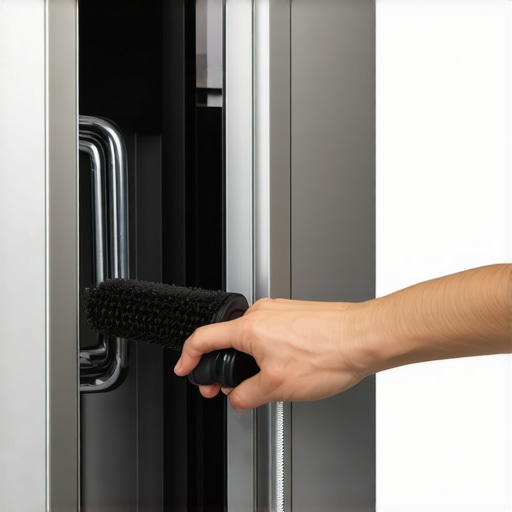
Beyond manual cleaning, I am a huge advocate for using technology to protect technology. I use a few of the best smart plugs for monitoring appliance energy use on my older machines. Why? Because a sudden spike in kilowatt-hours is often the first warning sign that a motor is struggling or a seal is leaking. It is like having a heart rate monitor for your dishwasher. If the app shows my dishwasher is pulling 20% more power than it did last month, I know it is time to check for a blockage before the whole unit shuts down. This data-driven approach is the ultimate way to stay ahead of the curve. If you are just starting your journey into home automation, following an ultimate guide to smart home appliances for a modern living can help you integrate these monitoring tools seamlessly.
Looking ahead, I predict that by 2027, self-healing diagnostics will be the standard for any mid-to-high-range unit. We are already seeing the future of home appliances trends to watch in 2025 leaning heavily into predictive AI. Imagine a world where your fridge detects a microscopic drop in refrigerant pressure and automatically schedules a technician through an API before your milk even has a chance to warm up. Until that tech becomes affordable for everyone, we have to be the brains of the operation. My challenge to you today: go find your refrigerator’s condenser coils and give them a thorough vacuum. You might be shocked at the amount of dust hiding back there, and your electricity bill will definitely thank you for the five minutes of effort.
The Hardest Lessons My Appliances Taught Me
After years of tinkering with everything from rattling compressors to understanding why your refrigerator compressor is cycling too often, I’ve realized that the most expensive tool isn’t a specialized wrench—it’s actually your own ears. I used to assume a high-pitched whistle meant a $500 repair bill, but the reality is usually far less dramatic. One major lightbulb moment was realizing that ‘smart’ doesn’t mean ‘invincible.’ In fact, seeing how smart washing machines can simplify laundry day depends entirely on whether you’re willing to do the five-minute maintenance tasks they can’t do for themselves. I also learned the hard way that why your front loader collects more gunk than your old top loader isn’t a design flaw, but a side effect of high-efficiency tech that requires a slightly different touch. Don’t let the complexity of modern machines intimidate you; they are just puzzles waiting for a logical solution.
Simple Tools I Trust to Save My Sanity
You don’t need a degree in mechanical engineering to keep your home running smoothly. I rely on a few specific resources and items to prevent the next midnight whistling crisis. First, I never skip using the best smart plugs for monitoring appliance energy use. They act as an early warning system, telling me a motor is struggling long before I hear a single squeak. Second, a long-reach condenser brush is non-negotiable; it’s the single best way to ensure your refrigerator breathes properly. Finally, I always keep digital copies of manufacturer manuals in a cloud folder. When your smart appliances throw an obscure error code, having that document ready on your phone is a total lifesaver compared to hunting through a junk drawer for a paper copy that’s been lost since the day you moved in.
Time to Enjoy a Quiet Kitchen Again
Owning modern home appliances should make your life easier, not more stressful. Once you understand the physics of airflow and the importance of a clean seal, that mysterious whistling noise loses its power over you. You’ve got the knowledge now to diagnose, clean, and fix these issues without a frantic call to a technician. Go ahead and give those coils a vacuum or clear those vents today. You’ll be surprised how much better you sleep when your kitchen isn’t trying to whistle a tune at 3 AM. Have you ever spent hours troubleshooting a terrifying sound only to find it was just a loose jar or a bag of frozen peas? Let me know your funniest ‘false alarm’ stories in the comments below!