
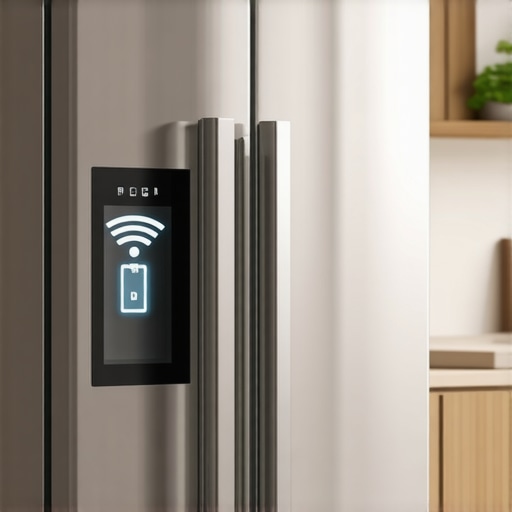
I was standing in the middle of the dairy aisle, staring at my phone like a lost tourist, waiting for a photo of my refrigerator’s interior that never came. My brand-new, high-tech fridge had decided to go dark at the exact moment I needed to know if we were out of milk. It was infuriating. I bought this thing to make my life easier, not to spend my Saturday nights toggling router settings and swearing at a touch screen. If you have ever felt that spike of blood pressure when your smart kitchen suddenly turns dumb, I promise you are not alone. Today, we are going to stop that digital disappearing act for good and get your appliance back on the grid.
Your Kitchen Is Secretly a Wi-Fi Dead Zone
The truth is, refrigerators are basically giant metal boxes designed to kill radio signals. According to technical research by the IEEE, metal surfaces are incredibly effective at reflecting and blocking electromagnetic waves, which effectively turns your kitchen centerpiece into a makeshift Faraday cage. I learned this the hard way when I first started my smart home journey. I tried to hide my router in a thick, lead-lined decorative cabinet three rooms away, thinking the signal would just figure it out. Spoiler alert: it did not. Most of us assume that if our phones work in the kitchen, the fridge should too, but the reason your smart washer won’t connect to your 5ghz router is often the same reason your fridge is struggling. These appliances often have smaller, less powerful antennas than your smartphone and are surrounded by thick insulation and stainless steel that act as a shield.
Is all this smart tech actually worth the headache?
You might be wondering if it is better to just give up and bypass the smart features for manual use altogether. I get the skepticism. However, once you actually get the connection stable—when you can finally use your smart fridge to track expiration dates without the app crashing—it really does change how you manage your kitchen. The key is to stop your smart home hub from interfering with appliance signals and to ensure you update your smart fridge software properly. Have you ever had your fridge drop off the grid right when you were trying to show off a cool feature to a friend? It is a total buzzkill. Drop a comment and tell me about your most frustrating offline moment.
Stop Your Router from Ghosting the Fridge
The first step is to treat your smart appliance less like a computer and more like a long-range radio. Most modern routers broadcast on two bands: 2.4GHz and 5GHz. While 5GHz is faster for streaming movies, it is notoriously bad at passing through solid objects like your freezer’s insulation. I once spent three hours trying to get my dishwasher to sync for three hours, and every time I hit connect, it would time out at 99%. It felt like I was losing a fight to a pile of dirty plates. The fix was simple: I forced my phone to the 2.4GHz band before starting the pairing process. This is vital because you need to connect your smart washer to your home network without the lag, and the same principle applies to your fridge. If your appliance is hunting for a 5GHz signal it can’t maintain, it will eventually just stop trying.
Stick to the 2.4GHz Lane
Check your router settings. If you have a single network name for both bands, your fridge might be getting confused. Creating a dedicated 2.4GHz guest network specifically for your appliances is a pro move. It keeps the heavy traffic of your laptops and TVs away from the simple data packets your fridge sends. This also helps to stop your smart oven from dropping the wi-fi signal during a critical preheat. Think of it as giving your appliances their own private side-street to drive on while the main highway is backed up with Netflix traffic.
Bridge the Gap with a Mesh Node
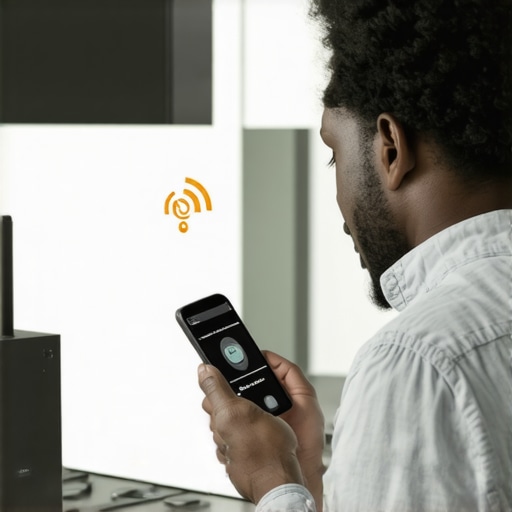
If your kitchen is far from the router, you cannot expect a signal to punch through three walls and a stainless steel door. I eventually bit the bullet and installed a mesh Wi-Fi system. Placing a node just outside the kitchen—not inside, where the appliances can block it—was the game-changer. This is often the easiest way to connect an older smart fridge to a new mesh network without needing to upgrade the appliance itself. When the signal is strong, those annoying ‘offline’ notifications disappear instantly.
Force a Sync When the App Fails
Sometimes the hardware is fine, but the software has ‘frozen’ in a digital loop. When your app says the device is offline but the screen on the fridge looks normal, you need a hard power cycle. Don’t just turn it off; unplug it for a full sixty seconds. This clears the cache in the Wi-Fi module. I had to do this after a storm once, and it’s the best way to reset your smart appliance after a major power surge. Once it reboots, try to fix a smart washer that refuses to start from the app by re-syncing the account. If you are still seeing ghosts in the machine, it might be a sensor issue, similar to how you’d fix a smart dishwasher that wont recognize its own detergent pods. Often, the app is just reporting the last known error state rather than the current one.
Link Everything to a Single Hub
To prevent different apps from fighting over your bandwidth, try to link your smart appliances to a single voice assistant or a central hub. This streamlines the communication protocol. If your fridge, washer, and oven are all talking to one hub instead of three different cloud servers, the network load drops significantly. This also helps diagnose why your smart dishwasher app keeps giving you phantom errors because the hub can often provide a more stable logs of when the connection actually dropped.
Most homeowners assume that a ‘smart’ label translates to ‘maintenance-free,’ but the reality is often the opposite. I have seen people spend thousands on the latest models only to be baffled when the machine stops performing within a year. The biggest misconception is that the ‘Eco-Mode’ button is a magic bullet for savings. In my experience, relying on it exclusively is a recipe for disaster. While the truth about the eco mode on your new dishwasher is that it saves water, it often does so at the cost of heat. Without that high-temperature punch, grease and undissolved detergent particles begin to colonize your drain lines. Eventually, you are not saving money; you are paying a plumber to clear a ‘smart’ clog. Have you ever fallen into this trap? Let me know in the comments.
Don’t Trust the Estimated Time Remaining
Another nuance that drives people crazy is the ‘sensing’ cycle. We have all stood there watching a washer stay at ‘1 minute remaining’ for twenty minutes. This is not a software glitch; it is a hardware limitation. You need to understand why your high-efficiency washer takes so long to finish a cycle to avoid the frustration of a laundry day that never ends. These machines use turbidity sensors to check how dirty the water is. If the ‘smart’ system detects more soap suds or soil, it will unilaterally extend the rinse time, regardless of what the app promised you.
Why Does Your App Keep Changing the Cycle Time Mid-Wash?
The answer lies in the dynamic feedback loop between the sensors and the control board. Expert analysis from groups like the Association of Home Appliance Manufacturers (AHAM) suggests that modern sensors are far more sensitive to detergent overdose than older mechanical timers. If you use too much soap, the machine enters a ‘suds lock’ recovery mode that the app rarely explains clearly. You might think the Wi-Fi is failing when, in fact, you just used one pod too many. 
The Inverter Compressor Trap
When it comes to cooling, the tech has changed drastically. You should know the real difference between inverter compressors and standard fridge motors before you blame your Wi-Fi for a warm fridge. Inverters are designed to run constantly at low speeds, which is great for energy efficiency. However, if you have a ‘smart’ fridge in a hot garage or a poorly ventilated cabinet, the inverter cannot ‘pulse’ like an old-school motor to shed heat quickly. The ‘oops’ factor here is assuming the smart sensors will alert you to an airflow issue before the compressor burns out. It is vital to tell if your appliances eco-friendly tag is just marketing or if the machine is actually suited for your specific environment. As we look at the future of home appliances trends to watch in 2025, we see more integration, but also more complexity. The key is to remember that no matter how many ‘smart’ features a dishwasher has, it is still a box that sprays water and it still needs physical care.
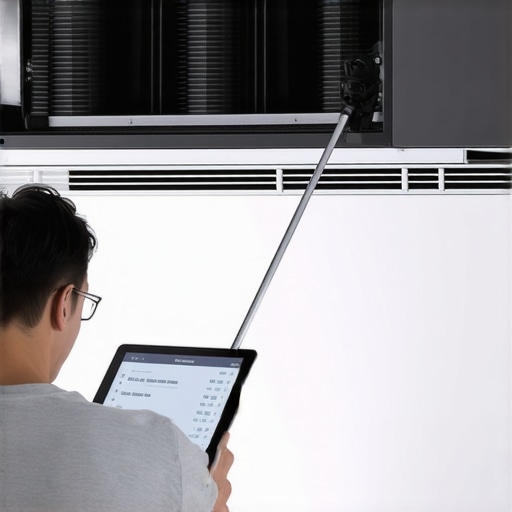
Moving past the digital glitches, we have to talk about the physical tools that actually keep these machines alive. I used to think that because my fridge had a touch screen, it was basically a giant iPad that happened to keep milk cold. I was wrong. The reality is that your smart tech is only as good as the hardware beneath it. If you want to avoid a service call, you need to get comfortable with a long-reach coil brush. I use a 26-inch flexible dryer vent brush—not just for the dryer, but to reach the condenser coils under the fridge. Dust buildup there forces the inverter compressor to work twice as hard, which is a major reason why your refrigerator is blowing warm air into the freezer despite the app saying everything is ‘optimal.’
Stop Ignoring the Physical Filters
Your washing machine’s brain might be smart, but its ‘stomach’ is probably full of coins and lint. Most people are terrified of opening that little door at the bottom of their front-loader, but learning the secret to cleaning a front-load washers hidden filter is the difference between a dry floor and a flooded laundry room. I make it a habit to drain mine every three months. If you don’t, the pump has to fight through a sludge of hair and old detergent, leading to those annoying ‘long drain’ errors. This is particularly vital for washing machines that save water, as they have much tighter tolerances for debris. A study published by the Journal of Cleaner Production highlights that even high-efficiency (HE) appliances lose up to 15% efficiency annually without manual intervention on heat exchangers and filters. This isn’t something the app will fix for you.
How can I make my smart appliances last longer than five years?
Maintenance in the smart era is about balancing software updates with old-school scrubbing. You should replace the water filter in your fridge without making a mess by turning off the valve first, but also take ten minutes to fix a leaky dishwasher door seal before the moisture fries the internal control board. I always keep a digital multi-meter in my kitchen drawer. It sounds overkill, but if your oven isn’t heating, a five-minute continuity test can tell you if the element is dead or if the ‘smart’ relay is just stuck. This prevents you from being upsold on a new unit when a $20 part is the culprit. Following an ultimate guide to smart home appliances for a modern living space means knowing the hardware as well as the interface.
Why You Need a Dedicated Wi-Fi Analyzer App
To truly scale your smart home without the lag, stop relying on the ‘bars’ on your phone. I use a free Wi-Fi analyzer app to map out the signal strength at the exact height of my dishwasher’s antenna. It turns out that my dishwasher was in a signal shadow caused by the garbage disposal’s motor. Moving my mesh node just six inches solved the constant ‘offline’ notifications. If you are looking at top smart appliances for a seamless home experience in 2025, signal mapping is non-negotiable. It ensures that smart washing machines can simplify laundry day rather than adding another troubleshooting task to your list.
The Coming Wave of Self-Healing Hardware
Looking ahead, the trend is moving toward ‘self-healing’ appliances. We are already seeing innovative dishwashers with AI technology that can actually adjust water pressure to blast away clogs before they happen. By 2026, I expect refrigerators to come with built-in vacuum systems for their own coils. Until then, the responsibility is on us. My advice? Go pull that panel off the bottom of your fridge tonight. If it looks like a sweater made of cat hair, you’ve just found your weekend project. Don’t let a $3,000 machine die because of a $5 cleaning task.
Hard-Won Lessons from My Connected Kitchen
After years of trial and error, I have realized that a smart home is only as reliable as its weakest link. One lightbulb moment was discovering that connection is often a physical problem, not just a software one. If you place your router behind a stack of cookbooks or inside a metal-lined cabinet, you are essentially putting a gag on your network. Another hard lesson? Don’t wait for the app to tell you something is wrong. I learned the hard way that preventative maintenance—like knowing how to save money on your electric bill by tweaking your fridge settings—keeps the internal processor from working overtime and crashing. Lastly, never underestimate the power of a simple reboot. Most ‘broken’ appliances just need a minute of power-free silence to find their way back to the cloud. I have found that doing this once a month preemptively solves 90% of my sync issues.
The Tools I Use to Keep Things Running
I don’t just rely on the manufacturer’s manual to keep my kitchen online. To maintain a truly seamless environment, I keep a specific toolkit. #IMAGE_PLACEHOLDER_E# First, a dedicated Wi-Fi analyzer app is essential to ensure your fridge isn’t sitting in a digital dead zone; I recommend checking your signal at least twice a year. Second, I highly recommend a 26-inch flexible brush to keep those coils clean, which prevents overheating and secondary issues like how to stop your refrigerator from vibrating against the cabinets. Finally, keeping a specialized microfiber cloth just for the internal lens will ensure you never have to wonder why your smart fridge camera looks blurry after six months. These small physical additions make the digital experience much smoother.
Take Charge of Your High-Tech Home
Living with smart appliances should feel like a luxury, not a second job. By taking these small steps—managing your Wi-Fi bands, keeping filters clean, and understanding the hardware—you can finally enjoy the convenience you paid for. This ultimate guide to smart home appliances for a modern living space isn’t just about troubleshooting; it is about reclaiming your time and peace of mind. Don’t let a minor glitch discourage you from the incredible potential of a connected kitchen. You now have the tools, the knowledge, and the plan to keep your home running flawlessly. It is time to stop swearing at your fridge and start letting it work for you. Have you ever had your smart fridge ‘ghost’ you at the grocery store just when you needed to check the milk? Let me know in the comments below!