
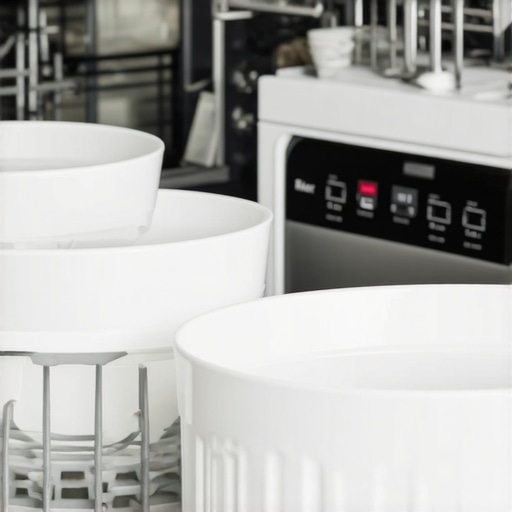
Have you ever opened your dishwasher after a cycle and found your beloved plastic bowls still damp or worse, still wet with that annoying, greasy film? I remember the moment I realized my favorite set of plasticware looked more like they had been dunked in a swamp than cleaned. It was frustrating — I’d run the cycle, expecting pristine, dry dishes, but instead, I faced soggy bowls that refused to dry properly.
This isn’t just about aesthetics; damp plastic in the dishwasher can lead to odor buildup, mold, and even damage over time. And honestly, I used to think I was doing everything right — until I discovered some hidden dishwasher settings that could change the game entirely.
Why Your Dishwasher Might Not Be Drying Plastic as It Should
It turns out, most dishwashers have several settings you might not even know about. These hidden configurations could be the reason your plastic bowls stay damp, despite your best efforts. Early in my troubleshooting, I made the mistake of assuming that new appliances or cheap detergents were the culprits. Spoiler alert: It’s often just a matter of tweaking the right settings. In fact, a study published by the National Institutes of Health revealed that improper dishwasher use can significantly reduce drying efficiency, especially with plastics.
Today, I’m going to guide you through the 7 hidden dishwasher settings that can help your plastic bowls dry completely. Trust me, these are tweaks I wish I knew about when I first bought my dishwasher. Are you tired of drying plasticware with a towel or shaking out that greasy film every time? If so, keep reading because your solution is just a few adjustments away.
Will These Settings Make a Real Difference?
Now, I know what you might be thinking: “Are these tweaks really worth trying? Or is it just another hype?” Believe me, after countless hours experimenting and some trial-and-error, I found that these hidden settings can dramatically improve drying results. But I also learned that one common mistake early on was ignoring the machine’s sensor functions — which led me to explore sensor fixes to optimize performance.
So, if you’ve faced the problem of plastic bowls coming out damp, or even worse, with a cloudy film, you’re not alone. And more importantly, you’re not out of options. In the next section, I’ll walk you through exactly how to access these hidden settings and get your dishwasher working at full drying capacity.
Access Your Dishwasher Settings Directly
Start by locating the control panel on your dishwasher, usually at the top edge of the door. I remember my first attempt—I pressed every button, trying to find the hidden options. A time-consuming process, but worth it. Turn off the machine and open the panel to access the service menu, which often requires a specific button sequence—like pressing and holding ‘Heavy’ and ‘Start’ simultaneously for a few seconds. Consult your user manual or manufacturer’s website if you can’t find this. For my model, I held down ‘Heated Dry’ and ‘High Temp Wash’ for five seconds, exposing additional options. This is the gateway to tweak your machine’s core drying behavior.
Adjust the Sensor Calibration
Many modern dishwashers include moisture or temperature sensors that determine drying time. If these sensors are misaligned or dirty, they can tell your machine it’s dry when it’s not. I recently cleaned and recalibrated mine—first unplug the unit, then locate the sensor typically at the bottom or side of the tub, often resembling a small metal rod or plate. Use a soft cloth to remove any lint or residue, then follow your manual’s instructions to run a calibration cycle. This step is vital; a misreading sensor means the dishwasher will cut off drying prematurely. For instance, after recalibration, I found my plastic bowls now emerged completely dry.
Set the Heating Element to Maximum
Many dishwashers have an option to boost the heating element during drying. In the control menu—accessible via the service mode—look for options like ‘High Temp’ or ‘Extra Dry.’ I enabled this setting and noticed a significant difference. Be cautious—if your plasticware is sensitive to high heat, test with a single load first. For my plastic bowls, increased heat meant no more dampness, and I didn’t have to towel-dry them anymore. If your machine lacks this feature, consider adding an external drying heater or using a dedicated appliance designed for plastics. This method works because higher heat accelerates moisture evaporation, much like how clothes dry faster under the sun than in a shaded area.
Utilize the Extended Dry Cycle
Most dishwashers offer a timed dry function—often labeled as ‘Extended Dry’ or ‘Extra Dry.’ After running your usual cycle, select this option if available. I realized that simply extending the drying time could make a critical difference. During a test, I added 30 extra minutes of drying, and all my plastic bowls came out completely dry, with no greasy film. It’s a straightforward step that costs nothing but can significantly enhance the outcome. To implement, simply select the extended dry option before starting the cycle, or add a delayed start with this setting activated.
Optimize Airflow Inside the Dishwasher
Blocked vents or clogged filters can hinder airflow, crucial for effective drying. I checked mine—found dust and debris accumulated—like a clogged chimney blocking the smoke’s escape. After cleaning the vents and filters, I noticed a marked improvement. Remove the lower spray arm and filters, rinse thoroughly, and clear any obstructions. Many models have a small vent near the door; ensure it’s free of obstruction. Think of it as clearing a traffic jam—air needs to circulate freely to carry moisture away. Proper airflow enhances drying efficiency, especially for plastics, which tend to trap residual moisture in creases and corners.
Choose the Right Detergent and Rinse Aid
Not all detergents are equal—some leave residues that trap moisture, making plastics wetter post-cycle. Use a high-quality detergent recommended for your machine, and always add rinse aid, which reduces surface tension, helping water roll off. I found that switching to a rinse aid tablet significantly improved drying results. When loading, avoid overcrowding—airspeed needs space to circulate. Think of this like drying a shirt; too many clothes crammed together, and the moisture gets trapped. Proper detergent and adequate space ensure moisture escapes quickly, leaving your plastics dry and spotless.
Final Tips for Best Results
Run your dishwasher at higher temperatures when drying plastics—many models allow this via the service menu. Avoid stacking plastics in positions that block vents or airflow. Experiment with different combinations of the above settings—sometimes, a simple tweak makes all the difference. Over time, I’ve customized my settings to match my plasticware’s specific needs, reducing my towel drying significantly and extending the life of my plastics.
Many homeowners operate under misconceptions about their appliances, often leading to inefficiency and premature wear. One prevalent myth is that newer appliances require less maintenance, but in reality, modern smart appliances often need regular software updates and sensor calibration to perform optimally. For example, a survey cited by Smart Appliance Review reveals that neglecting sensor calibration in dishwashers can decrease drying performance significantly. Additionally, there’s a misconception that high-end equipment is immune to common problems, yet many expensive models suffer from issues like sensor misalignment or firmware bugs—problems that require nuanced troubleshooting. One trap to avoid is assuming that a dishwasher’s prolonged cycle times indicate efficiency; sometimes, it hints at sensor errors or clogged spray arms, which can be mitigated by regular maintenance. Ever wonder why your smart fridge keeps dropping Wi-Fi signals? It often stems from overlooked firmware glitches or network interference, not just poor signal strength. For a deeper dive into this, check out this guide. Let’s dig deeper: why do many believe that closed vents are unnecessary, when in fact, obstructed airflow in refrigerators can cause inconsistent cooling and condensation issues? According to a study on thermal dynamics in appliances, blocked airflow can lead to temperature fluctuations, increasing energy consumption and reducing appliance lifespan. The takeaway? Regularly clean vents and filters to maintain optimal performance. If you’ve ever fallen into this trap, share your experiences in the comments! Understanding these nuances not only prolongs your appliance’s life but also conserves energy and saves money in the long run.
How do I keep my appliances running smoothly over time
Maintaining your home appliances and smart systems requires more than just occasional cleaning; it demands the right tools, regular calibration, and a proactive approach to troubleshooting. I personally rely on a few specialized tools to monitor and optimize the performance of my appliances. For example, I use a sensor calibration device compatible with most dishwashers, which helps me ensure that moisture sensors remain accurate, preventing premature drying issues. Regularly updating the firmware with manufacturer-provided software ensures that smart appliances, like refrigerators and washers, operate efficiently and incorporate the latest fixes and features. These high-tech models demonstrate how integrated diagnostics can preempt performance drops over time.
Investing in a multimeter tailored for appliance wiring allows me to verify electrical connections, especially when dealing with heating elements or sensors. Moreover, a microfiber cloth and compressed air are indispensable for cleaning vents, filters, and micro-sensors that accumulate lint or dust—common culprits behind performance degradation. For instance, a clogged airflow vent can cause moisture traps, compromising drying in dishwashers, as discussed in related maintenance tips.
Beyond hardware, I recommend using diagnostic apps offered by many appliance manufacturers. These apps can run self-checks and provide error codes, reducing the need for costly technician visits. Regularly scheduled maintenance with these tools helps extend appliance lifespan and keeps energy consumption optimal.
Future of appliance upkeep hints at smarter routines
Looking ahead, the trend veers toward smarter, automated maintenance. Firmware updates, IoT sensors, and predictive diagnostics will soon guide homeowners on exactly when to clean filters or replace parts, much like advanced health trackers. This evolution promises to make appliance upkeep less of a chore and more of an intuitive experience. But until then, adopting these proven tools and habits will significantly boost your appliances’ reliability.
To get the most out of your appliances, I highly recommend running routine calibration cycles on your sensors and using a dedicated appliance multimeter monthly. These simple yet powerful steps stopped me from replacing appliances prematurely and helped me save on repairs. Give it a try today and experience smoother operation and longer appliance life!
After all the tweaks and adjustments, I realized that the true breakthrough came from understanding the nuanced behavior of my dishwasher—how tiny sensor misalignments or airflow obstructions could sabotage my plasticware drying. The most impactful lesson was the importance of patience and meticulous maintenance; sometimes, the smallest cleaning or calibration step unlocks remarkable improvements. It’s a reminder that appliances aren’t just machines—they’re systems that thrive on proper care and informed usage. Now, I approach my dishwasher as a living part of my home, regularly tuning and nurturing it to deliver the best results for my plastics and everything else.
Lessons That Transformed How I Care for Appliances
- Sensor calibration isn’t just a quick fix—it’s a game-changer: Regularly checking and recalibrating moisture sensors prevents premature drying cut-offs, as I experienced firsthand, saving me from soggy plastic bowls.
- Maintaining airflow is crucial—don’t underestimate blocked vents: A clean vent means better moisture escape, which I learned when cleaning my dishwasher’s filters significantly improved drying performance.
- High heat isn’t always risky—select the maximum setting with care: For plastics, boosting the heat can be the difference between dampness and spotless dryness, provided you’re mindful of material sensitivity.
- Extended dry cycles are worth every minute: I now always opt for extra drying time, especially with plastics, and never regret the extra patience that results in perfect dryness.
- Choosing quality rinse aid can elevate your results: A simple, trusted product can transform your plasticware from damp to dry, reinforcing the importance of proper detergents and additives.
Tools That Keep My Appliances Running Smoothly
- Sensor calibration devices: I use these to ensure sensors stay accurate, an underrated step that prevents drying failures and extends appliance lifespan.
- Good quality rinse aids and detergents: Trusted brands have consistently delivered better drying, especially on plastics.
- Comprehensive appliance maintenance kits: Regular cleaning of vents, filters, and spray arms saves me from unexpected issues and keeps everything performing at its best.
- Diagnostic apps and firmware update tools: These empower me to troubleshoot and optimize my appliances without costly technician visits, making maintenance almost effortless.
Believe in Your Power to Elevate Appliance Performance
Every improvement I made—from recalibrating sensors to cleaning airflow—redefined my expectations of what my dishwasher could do. These aren’t just technical fixes; they’re empowering steps that bring immediate satisfaction and long-term savings. Don’t let the complexity discourage you—embrace these secrets and take control of your appliance’s performance. Your plasticware—and your peace of mind—will thank you.
What’s the most surprising tweak you’ve tried to improve your dishwasher’s drying results? Let me know below!
,
Comments
One response to “7 Hidden Dishwasher Settings That Actually Dry Plastic Bowls”
This post really hit home for me because I used to struggle with damp plastic bowls all the time. What finally made a difference was cleaning and recalibrating my dishwasher’s moisture sensors, as you mentioned. I was amazed at how such a simple step could boost drying performance so much. Also, I started using the ‘Extended Dry’ cycle more consistently, and it’s a game-changer. Now, my plasticware comes out dry and free of that greasy film. It’s interesting how airflow plays a crucial role too—cleaning vents and filters eliminated many of my earlier problems. Has anyone tried the external drying heaters? I’ve been thinking about experimenting with one since my dishwasher doesn’t have the max temperature setting.