
I stood in my laundry room last Tuesday, staring at my favorite black leggings, and I honestly wanted to cry. They were covered in these weird, ghostly white streaks that looked like I’d been rolling around on a chalkboard. I had just spent a small fortune on a high-end machine, and here I was, scrubbing my “clean” clothes by hand in the sink. It felt like a betrayal. I used to think that maybe my machine was just a lemon, but after a lot of trial and error (and a few ruined shirts), I realized the problem wasn’t the washer—it was me. Today, I’m going to help you solve this mystery once and for all so you never have to re-wash a “clean” load again.
Those White Lines Aren’t Actually Lint
Most of us see those pale marks and immediately blame the lint filter. I did the same thing for months. I’d obsessively clean the lint filter you didn’t know your washer had, thinking that was the culprit. But here’s the kicker: those streaks are usually a nasty cocktail of undissolved detergent and hard water minerals. If you’re seeing white streaks on dark clothes, your machine is likely struggling to rinse away the very stuff meant to clean them. I made the classic mistake of thinking more soap equals cleaner clothes. Spoiler alert: it doesn’t.
Is it really just too much soap?
You might be skeptical. After all, the “max fill” line on the dispenser is there for a reason, right? Wrong. I learned the hard way that your washer doesn’t need a whole cup of detergent to get things fresh. In fact, using too much soap in a modern high-efficiency (HE) machine is like trying to rinse a gallon of bubbles with a teacup of water. According to the experts at the American Cleaning Institute, using excess detergent can actually trap soils back into the fabric instead of washing them away. It’s a mess. Plus, that leftover residue is exactly what leads to that funky “old gym sock” aroma. If you’ve noticed that lately, you should check out why your high-efficiency washer smells like old gym socks. Have you ever pulled a load out of the drum only to find your favorite dark jeans looking like they survived a flour explosion? Let me know in the comments, because I felt so alone in this until I did the research. We’re going to look at how your water temperature and even your smart washer steam cycles play a role in keeping your wardrobe streak-free.
Cut Your Soap Habit in Half
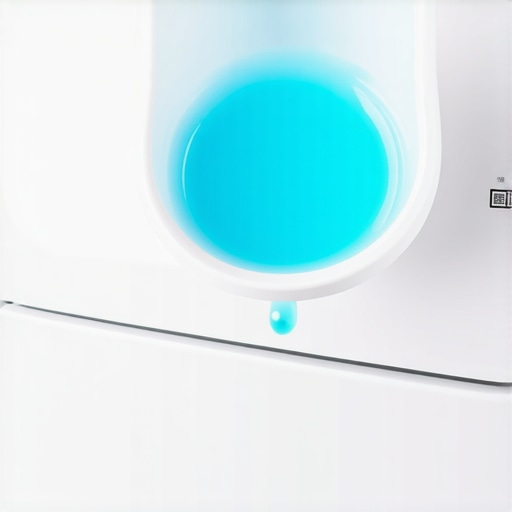
If you are filling that plastic cap to the brim, you are essentially sabotaging your wardrobe. Think of your high-efficiency (HE) washer like a high-performance engine; it only needs a specific amount of fuel to run perfectly. When you flood it with detergent, the machine’s sensors often get confused, and the low water levels simply cannot rinse away the excess suds. I used to think I was being thorough, but I was really just layering my clothes in a sticky film that attracted every speck of dust in the drum. Start by using only two tablespoons—yes, just two—for a normal load. I realized that your washer doesn’t need a whole cup of detergent to actually get things clean. Since I scaled back, the ‘crunchy’ texture of my jeans has completely vanished.
Why Frigid Water Ruins Your Darkest Darks
While we are often told that cold water saves energy and prevents fading, ‘tap cold’ water in the middle of winter can be a disaster for detergent solubility. If the water is too cold, the surfactants in your soap won’t activate, and they will settle onto your fabric as those dreaded white marks. If you’re seeing white streaks on dark clothes, try bumping the temperature up to ‘cool’ or ‘warm’ (around 60-80°F). This slight increase provides enough thermal energy to break down the detergent without shrinking your clothes. If you have a modern machine, you might even consider how to use steam cycles on your smart washer to help pre-dissolve cleaners before the main wash begins.
Don’t Overstuff the Drum
I’ll never forget the time I tried to be a ‘laundry ninja’ and crammed four pairs of heavy denim jeans and three thick hoodies into one ‘quick wash’ cycle using tap-cold water. I was in a rush for a dinner party. When the cycle finished, I pulled out my favorite black hoodie and it looked like it had been dusted with powdered sugar. The load was so packed that the water couldn’t circulate, leaving dry pockets of undissolved soap trapped in the folds. It is vital to remember that your high-efficiency washer doesn’t fill all the way to the top with water, so it relies on the clothes tumbling freely to get clean. Leave at least a hand’s width of space at the top of the drum so the water can actually reach every fiber.
Flush Out the Hidden Residue
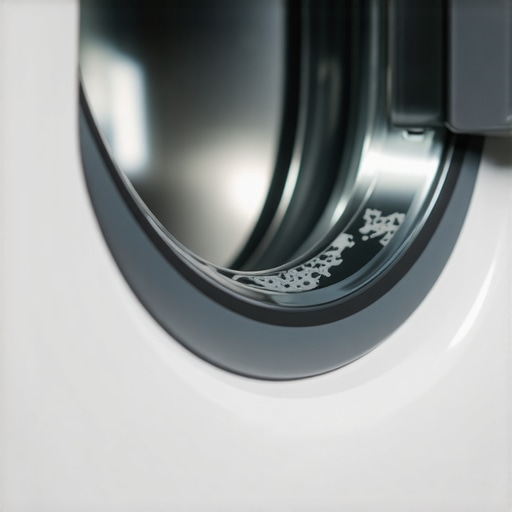
Sometimes the streaks aren’t from the current load—they are leftovers from the last one. Over time, a ‘biofilm’ of old soap and minerals builds up inside the outer drum and the rubber seal. This is often the reason your high-efficiency washer smells like old gym socks. Once a month, you must run a dedicated cleaning cycle. While you are at it, don’t forget to clean the lint filter you didn’t know your washer had. A clogged filter slows down the drainage process, meaning dirty, soapy water sits against your clothes longer than it should during the final spin. If you have a front loader, taking five minutes to learn the best way to clean a moldy front-load gasket can prevent that grey gunk from rubbing off onto your fresh laundry.
Let’s talk about a lie we’ve all been told: that washing everything on ‘Eco’ or ‘Tap Cold’ is the ultimate way to be a responsible, cost-saving homeowner. In reality, consistently running cold cycles is one of the fastest ways to build up a waxy sludge known as ‘scrud’ inside your drum. While you’re trying to be energy efficient, you’re actually creating a breeding ground for bacteria. This is often why your energy-efficient washer smells like damp. Even the Association of Home Appliance Manufacturers (AHAM) notes that modern detergents need specific temperature thresholds to fully activate and prevent fatty deposits from clinging to the outer tub. Without an occasional hot water blast, that residue eventually ends up back on your clothes as those mysterious streaks.
I see people falling into the ‘detergent pod’ trap every single day. They think these pre-measured packets are foolproof, but in high-efficiency machines with low water usage, the plastic casing sometimes fails to dissolve properly. I’ve seen countless cases where your dishwasher pod isn’t dissolving completely because of a blocked spray arm or a cycle that’s simply too short. It’s a mess that ends up as a chalky film on your plates or a sticky patch on your laundry. Have you ever fallen into this trap and found a half-melted pod stuck to your favorite mug? Let me know in the comments, because it’s more common than the manufacturers want to admit.
Does hard water render your high-end machine useless?
If you live in an area with high mineral content, your expensive smart appliance is fighting a losing battle from day one. Calcium and magnesium ions neutralize the cleaning agents in your soap, forcing the machine to work harder and wear out faster. It’s not just about the aesthetic spots on your glasses; it’s about the internal components. If you don’t use the best detergent for hard water that won’t kill your dishwasher, you’ll eventually hear that terrifying grinding noise as the pump struggles against scale buildup. You cannot treat a high-end machine with a budget water supply and expect it to last a decade.
The biggest ‘oops’ factor I encounter is the belief that smart sensors can magically fix a poorly loaded machine. Modern washing machines that save water use complex algorithms to balance the load, but they cannot bypass the laws of physics when you throw in a single heavy rug or a tangled ball of bedding. If you find your clothes are still sopping wet after the spin cycle, it’s usually because the machine’s safety protocol kicked in to prevent it from moving across the floor. We’ve reached a point where the tech is smarter than us, but it still requires a little common sense during the loading process.
It’s easy to get caught up in the shiny apps and Wi-Fi features, but at the end of the day, these machines are still mechanical beasts. I’ve learned that the fastest way to a service call is ignoring the physical grime that sensors simply cannot see. For instance, I used to ignore the bottom of my dishwasher until I realized it was literally gasping for water. You absolutely have to learn how to clean the hidden filter in your high-end dishwasher or you’ll find that even the most expensive AI-driven cycles start failing. The same goes for the fridge; if you don’t take ten minutes to locate and clear the secret drain filter at the bottom of your fridge you never knew existed, you’re basically asking for a puddle on your kitchen floor and a massive repair bill.
The Tools I Use to Keep My Kitchen Running
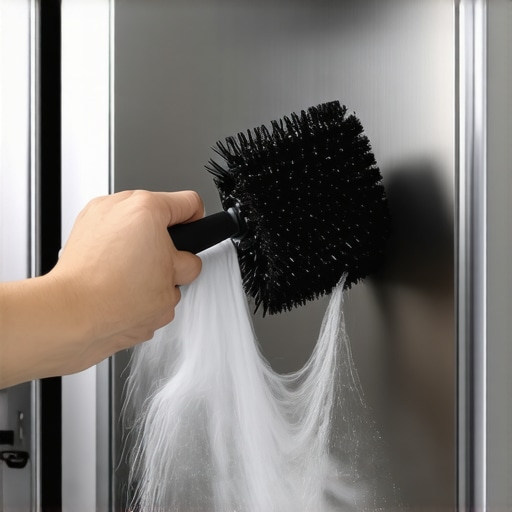
I don’t believe in buying every gadget on the shelf, but there are two things in my utility closet that have saved me thousands. First, a long, flexible condenser coil brush. According to technical guidelines from the U.S. Department of Energy (DOE), dusty condenser coils can increase refrigerator energy consumption by as much as 20% while putting unnecessary strain on the compressor. This is one of the major 5 mistakes that are shortening the life of your smart refrigerator. Second, I always keep a digital thermometer on hand. You would be shocked at how often factory settings are slightly off. Knowing how to calibrate your refrigerator thermometer without calling a pro ensures your milk stays at 37°F and your compressor doesn’t burn out from overworking.
How can I make my smart appliances last for a decade?
The secret isn’t just cleaning; it’s listening. I’ve started paying close attention to the ‘rhythm’ of my home. If the dishwasher sounds different, I check the spray arms for clogs immediately. If you hear a weird hum, you need to know why your new refrigerator is making a loud humming sound before it turns into a total cooling failure. Long-term success also means staying on top of the digital side. I make it a habit to check for software updates once a quarter. Learning how to update the firmware on your smart kitchen appliances can actually fix efficiency bugs that the manufacturer discovered after you bought the machine. It’s like giving your washer a free brain transplant.
The Future of Home Maintenance is Predictive
Looking ahead, I predict we are moving toward a ‘set it and forget it’ era where machines will diagnose themselves with 100% accuracy. Instead of wondering how to tell if your washer bearings are about to fail, your machine will likely send a push notification to your phone saying, ‘My left bearing is at 80% wear, would you like me to schedule a technician for next Tuesday?’ Until that becomes the standard for every household, we have to be the ones paying attention. Even the top smart appliances for a seamless home experience in 2025 require a human touch to stay in peak condition. My challenge for you this weekend: pull your fridge out, vacuum those coils, and check the internal temperature with a real thermometer. It is the highest ROI ten minutes you will spend on your home all month.
The Moment I Realized My Old Habits Were Actually Breaking My New Machines
It took a flooded laundry room and a few gray-streaked shirts for me to accept that more technology requires more intentionality, not less soap. First, I learned that ‘Eco’ modes are fantastic for the bill but terrible for long-term grease buildup; you need a hot cycle once in a while to keep the pipes clear. Second, your machine’s sensors are only as good as the ‘brain’ they connect to, so skipping a firmware update is like ignoring a check-engine light. Finally, I realized that the loudest sound an appliance makes is often a plea for a filter cleaning—usually one you didn’t even know existed. Modern high-efficiency machines are precision instruments, and understanding how smart washing machines can simplify laundry day depends entirely on following these new rules.
My Personal Survival Kit for a Low-Maintenance Smart Home
I don’t just rely on the manufacturer’s manual anymore. I’ve found that following an ultimate guide to smart home appliances for a modern living gives me a much broader perspective on how these devices interact. For my kitchen, I keep a dedicated digital thermometer to verify temperatures, especially after reading through choosing the right refrigerator tips from industry experts to ensure my food stays safe. I also swear by a long-reach condenser brush and a high-quality citric acid cleaner. If you’re overwhelmed by the smart appliances revolution how to choose the best dishwasher for your needs is much easier once you have these maintenance tools ready. I use these tools whenever I’m selecting the best energy saving modes on your new dishwasher to keep things running efficiently.
#IMAGE_PLACEHOLDER_E#
How You Can Finally Stop Worrying About Your Home Appliances
Your home should be a place of rest, not a source of constant maintenance anxiety. By making these small shifts in how you treat your machines, you’re not just saving money on repairs—you’re buying back your peace of mind. As we look toward the future of home appliances trends to watch in 2025, it’s clear that the ‘human element’ remains the most important part of the smart home equation. Take control of your chores today, and let your machines finally do the work they were designed for. Have you ever found a weird mystery residue on your ‘clean’ clothes even after trying everything? Let me know below.