
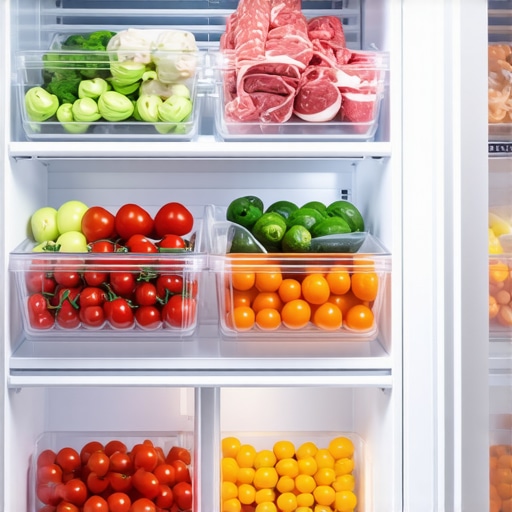
I once pulled a frost-covered, grey-ish brick from the back of my freezer that I’m ninety percent sure was chili from three years ago. Or maybe it was pulled pork? Either way, it went straight into the trash—along with about fifteen dollars of my hard-earned money. It’s a gut-punch we’ve all felt: that ‘freezer archaeology’ where you dig past the ice packs only to find a bag of peas that has literally turned into a solid block of ice. We buy in bulk to save money, but then we let the freezer consume the savings. It’s time to stop the cycle of waste.
Stop Treating Your Freezer Like a Graveyard for Leftovers
Even if you have one of those fancy refrigerators in 2025 with all the bells and whistles, a bad system will still eat your groceries alive. I used to be the worst offender. My early mistake was ‘the shove method.’ I’d just shove bags of frozen fruit on top of frozen meat and hope for the best. I didn’t use any refrigerator shelving hacks, and I certainly didn’t label anything. I assumed I’d remember. I never did. This lack of organization isn’t just a personal quirk; it’s a financial leak. According to data from the Natural Resources Defense Council (NRDC), Americans throw away roughly 25 percent of the food they buy. In the freezer, this usually happens because items get buried and succumb to freezer burn. Today, I’m going to show you how to turn that frozen abyss into a streamlined system that actually works for your life.
Is a Perfectly Organized Freezer Actually Realistic?
You might think this requires a label maker and three hours every Sunday. It doesn’t. We are looking for functional, not ‘Instagram-perfect.’ Have you ever had to throw out an expensive steak because it was buried under a bag of frozen corn for a year? Share your freezer horror stories with me—I need to know I’m not the only one who has failed at this before getting it right. You might even want to look into the best apps for tracking food expiration if you really want to level up, but first, we need to handle the physical layout.
Rip the Band-Aid Off and Audit Your Inventory
To fix a broken system, you have to see exactly where it failed. Pull everything out of your freezer and place it on the counter. If an item is covered in thick, white ice crystals or looks like a mummified remains of a prehistoric meal, toss it. This is the only way to reclaim your space. I remember doing this last year and finding three separate bags of half-eaten frozen peas—all from different brands. It was a clear sign that I had no idea what was actually in there. While you have it empty, it is the perfect time to look for maintenance issues. If you notice things are melting or too icy, you might need to learn how to calibrate your refrigerator thermometer without calling a pro.
Treat Your Freezer Zones Like a Parking Garage
Your freezer should not be a ‘first in, never out’ vault. Think of it as a parking garage with prime spots and long-term storage.
Prime Real Estate for Daily Essentials
Items you grab every single morning, like frozen fruit for smoothies or ice, should be right at the front or in the door bins. If you find your milk or liquids are turning into slush before you can use them, check out how to stop your refrigerator from freezing the milk on the top shelf to ensure your airflow is balanced. Even if you are using top smart appliances for a seamless home experience in 2025, physical placement still dictates how long your compressor has to run to keep things cold.
The Back Lot for Bulk Proteins
Raw meats and bulk purchases should go in the coldest part of the freezer—usually the very back or bottom. This prevents them from slightly thawing every time the door opens. Using the best refrigerator shelving hacks for more space can help you create ‘stalls’ for different meat types so a brisket never buries your chicken breasts again. 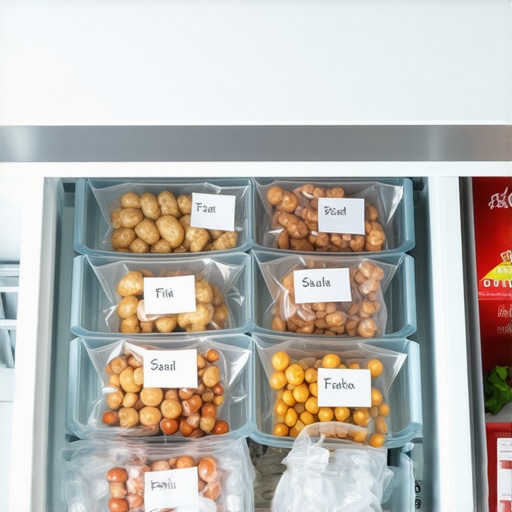
Stop Using Round Containers for Everything
Round Tupperware is the enemy of efficiency; it creates ‘dead air’ corners that waste up to 30% of your shelf capacity. Switch to square or rectangular bins to maximize every inch of space in a counter-depth refrigerator.
The Flat-Freeze Method for Soups and Stews
My biggest breakthrough came when I started using the ‘file system.’ Instead of freezing a giant pot of chili in a round bowl, I pour it into a heavy-duty freezer bag, squeeze the air out, and lay it flat on a cookie sheet to freeze. Once it’s a solid, thin plank, you can stand it up vertically in a bin. I once tried to shortcut this by stacking wet bags; they froze together into a single, inseparable ten-pound block of frozen meat sauce. I had to let the whole thing thaw just to get one portion out. Learn from my mess: freeze them flat first, then ‘file’ them away.
Maintain Your Seal and Settings
A perfectly organized freezer is useless if the machine itself is struggling. Check your gaskets for leaks. If you hear strange noises or the unit seems to be running constantly, it might be why your high-efficiency fridge runs more often than your old one, which is often normal, but ice buildup is not. Keeping a clean, organized space ensures that air circulates properly, which is the secret to preventing that dreaded freezer burn.Let’s dig deeper into why simply having a high-tech machine doesn’t solve your food waste problems. Everyone says you should just trust the factory settings on your new unit, but in my experience, those defaults are often tuned for energy ratings rather than long-term food texture. While you explore the future of home appliances trends to watch in 2025, remember that the hardware still follows the laws of thermodynamics. Have you ever fallen into the ‘set it and forget it’ trap? Let me know in the comments, because I spent years assuming my fridge was smarter than me, only to find my expensive groceries ruined by poor calibration.
Stop Obsessing Over the Coldest Possible Setting
The most common myth is that ‘the colder, the better.’ People crank their units down to the sub-zero basement thinking they are pausing time. In reality, extreme cold can cause your freezer to work overtime, leading to those 5 mistakes that are shortening the life of your smart refrigerator. According to the Food and Agriculture Organization (FAO), it isn’t the absolute temperature that preserves quality, but the stability of that temperature. Small fluctuations—the kind that happen when you leave the door open while browsing or when the unit struggles to hit an impossibly low target—are what cause moisture to migrate out of your steak and turn into frost. You are better off at a steady 0°F than a fluctuating -10°F.
Will smart sensors actually prevent my food from freezer burning?
Most people believe the ‘AI’ label on refrigerators in 2025 is just marketing fluff. However, these sensors are designed to detect humidity shifts before you even see the frost. But here is the ‘oops’ factor: if you block the sensor with a giant bulk-buy box of frozen waffles, the AI is flying blind. You might find why your modern fridge is making a clicking sound every ten minutes as it tries to recalibrate a micro-climate that it can’t accurately measure. This ‘sensor occlusion’ is the advanced mistake I see most often in modern kitchens. #IMAGE_PLACE_HOLDER_C#
The Energy Saving Trap That Ruins Your Ribeyes
Another nuance people miss is the trade-off between eco-modes and food longevity. If you use the hidden settings on your fridge that can save you money on utilities, you might inadvertently be lengthening the defrost cycle. During these cycles, the internal temperature rises slightly. For a delicate piece of fish, that slight rise is enough to start the recrystallization process. You also need to understand the difference between inverter and traditional refrigerator compressors. Traditional ones are all-or-nothing, while inverters ramp up and down. If you don’t keep your vents clear, you force an inverter to run at max speed constantly, which defeats the purpose of your high-efficiency upgrade. Treat your appliance like a partner, not a servant. I’ve learned the hard way that even top smart appliances for a seamless home experience in 2025 need a human touch once a month to ensure the seals are clean and the airflow isn’t restricted by a wall of frozen peas.
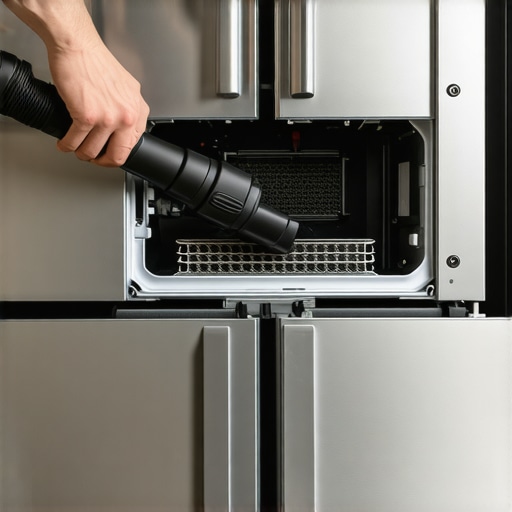
That human touch specifically involves the parts you cannot see on a sleek LED display. While we love the software, the hardware still relies on basic physics. For example, did you know about the secret drain filter at the bottom of your fridge you never knew existed? Most people ignore this until their kitchen floor is a lake. If that filter or the condenser coils behind the base grille are caked in dust and pet hair, your compressor has to work twice as hard. It is like trying to run a marathon while breathing through a thick wool blanket. I make it a point to vacuum that grille every six months; it is the single most effective way to ensure those expensive refrigerators in 2025 actually last until 2035.
How do I keep my smart home from becoming a graveyard of broken tech?
Maintenance in the digital age is two-fold: you have to care for the ‘meat’ of the machine and the ‘mind’ of the machine. When the software starts acting laggy, don’t panic and call a repairman immediately. There is often the hidden reset button on your smart refrigerator that fixes glitches that a simple power cycle won’t touch. I recently had to use this when my screen wouldn’t stop flickering, and it saved me a $150 service call. Similarly, for your cleaning appliances, keeping the sensors clear is vital. If you are using innovative dishwashers with ai technology you must know that the turbidity sensors—the ones that ‘see’ how dirty your water is—can get scaled over with hard water minerals. A simple monthly run with a citric acid cleaner keeps those sensors sharp so the AI doesn’t over-wash a clean load or under-wash a dirty one.
Beyond the physical, I have become a massive advocate for using external software to bridge the gap where built-in apps fail. I personally use the best apps for tracking food expiration in your smart fridge because they offer better notification customization than most factory software. These apps allow me to ‘file’ my flat-frozen soups and bulk meats by date, sending me a ping 48 hours before that steak hits its six-month freezer birthday. This level of granular control is exactly how you scale a busy household without losing hundreds of dollars to the trash bin. Even when looking at washing machines that save water expert advice for 2025, the best tool in your arsenal is a simple moisture-sensing alarm placed under the unit. Smart tech is great, but a ten-dollar water leak sensor is the ultimate backup for your multi-thousand-dollar investment.
Looking ahead, the future of home appliances trends to watch in 2025 suggests we are moving toward ‘self-healing’ diagnostics. We are seeing more units that can pinpoint exactly how to fix a dishwasher that wont drain completely 2 by sending a video tutorial directly to your smartphone. According to research from the Association of Home Appliance Manufacturers (AHAM), regular consumer-level maintenance can extend the life of high-efficiency compressors by nearly 25 percent. We are entering an era where the machine will tell you what it needs, but you still have to be the one to pick up the vacuum or the cloth. I challenge you to go check your fridge’s bottom grille right now—if it is dusty, vacuum it out and listen to how much quieter your kitchen becomes tonight.
Hard-Won Truths from My Kitchen Battles
After years of managing high-tech kitchens, I’ve realized that the ‘smart’ in smart appliances actually refers to the person using them. First, never trust the door alarm alone; if your gasket is slightly warped, the cold air escapes even if the door is technically shut. Second, you absolutely must how to clean the hidden debris under your refrigerator grille to prevent the compressor from burning out early. It’s the most neglected chore in the house. Third, those little plastic sliders aren’t just for show; knowing how to use your fridges humidity slides to keep produce fresh can double the life of your spinach. Finally, remember that even the most expensive unit is just a tool. If you treat it like a ‘set and forget’ box, it will eventually let you down. Stay proactive, and your wallet will thank you.
#IMAGE_PLACEHOLDER_E#
My Personal Strategy for a Low-Stress Kitchen
I don’t believe in buying every gadget on the market, but a few specific items make this whole system stick. I swear by using the best smart plugs for monitoring appliance energy use to see if my old secondary freezer is actually costing me more than the food inside is worth. For maintenance, I keep a dedicated ‘appliance kit’ that includes citric acid for innovative dishwashers with ai technology you must know and a simple soft-bristle brush for coil cleaning. I also recommend bookmarking the 5-minute fix for a dishwasher that wont start its cycle because it is always the small software glitches—not mechanical failures—that happen right before a big dinner party. Having these resources ready transforms a potential crisis into a minor inconvenience.
Take Control of Your Kitchen Future
Stepping away from ‘freezer archaeology’ and into a world of organized efficiency feels like a weight has been lifted. You no longer have to dread opening that door or wonder if your dinner is a three-year-old mystery block. By applying these small maintenance habits and organizational systems, you are turning your smart appliances into the high-performing assets they were meant to be. It takes a little effort up front, but the peace of mind—and the extra money in your bank account—is worth every second. What is the weirdest thing you have ever found at the bottom of your freezer? Share your ‘freezer archaeology’ stories in the comments below!