
It was 2:00 AM, and the only sound in my house should have been the dog snoring. Instead, I was standing in my kitchen, staring at my sleek, expensive refrigerator that had started making a rhythmic, metallic click every ten minutes like a nervous heartbeat. I thought for sure the compressor was toast. I spent half the night worrying about the hundreds of dollars in groceries that were surely about to spoil. That sinking feeling in your gut when a smart appliance starts acting dumb is something I know all too well. I have been there, and I have felt that panic. But before you start looking up the cost of a new unit, let’s look at why this happens and how we can fix it without a massive repair bill.
Stop Ignoring That Rhythmic Ticking Before It Costs You
If you are hearing that sound right now, take a deep breath. You are not necessarily looking at a dead fridge. We are going to walk through exactly why your modern unit is acting like a metronome and how you can silence it. Early in my journey with high-end tech, I actually called out a technician for a broken fridge that just needed a simple cleaning, which taught me that 5 mistakes that are shortening the life of your smart refrigerator often start with ignoring the small signs. Today, I will help you diagnose if it is a dirty condenser coil, a failing start relay, or just a normal part of the cooling cycle. Whether you are choosing the right refrigerator for the first time or maintaining a veteran machine, knowing the difference between a minor hiccup and a major failure is vital.
Is my fridge actually broken or am I just overreacting?
It is easy to get skeptical. Modern appliances are packed with sensors and boards, making us think every new noise is a catastrophic failure. Sometimes, though, that new refrigerator is making a loud humming sound or a clicking noise simply because it is working harder than it should. According to Consumer Reports, refrigerators are among the most used appliances in the home, often running 24/7, which means small components like the start relay can wear out after just a few years of constant cycling. Have you noticed your fridge clicking only during the hottest part of the day, or is it a constant annoyance for you too? Let me know in the comments because your specific timing can actually help narrow down the culprit.
The Reason Your Compressor is Struggling to Kick Over
When you hear that click, it is usually the start relay trying to jump-start the compressor. If the compressor cannot start, the relay clicks off to prevent overheating. It is a safety dance that can save your motor but drive you crazy. Whether you are looking at refrigerators in 2025 or nursing a current model, understanding this cycle is the first step toward a quiet kitchen. If your fridge feels warm or you see frost building up in odd places, it is time to move from listening to acting.
Get Down on the Floor and Clear Out the Dust
The most common reason for that rhythmic clicking is actually the simplest: your fridge is suffocating. Think of your refrigerator’s condenser coils like human lungs. If they are coated in dust, pet hair, or kitchen grease, they cannot “exhale” heat. When the heat builds up, the compressor works overtime until it literally hits a thermal limit and shuts down with a loud click. I remember one summer where my own fridge was clicking every five minutes. I was convinced I needed a new unit, but when I pulled it out, I found a literal sweater’s worth of Golden Retriever fur packed into the back. I felt like a fool, but ten minutes with a vacuum hose saved me $2,000.
Why dirty coils kill compressors
When the coils are blocked, the refrigerant cannot cool down properly before it returns to the compressor. This creates high pressure. To fix this, you need to find the access point. Most modern units have a grille at the bottom front or a panel at the back. You want to focus on how to clean the hidden debris under your refrigerator grille by using a long, thin vacuum attachment. If you have not done this in a year, you will likely see a thick grey mat. Once you clear that away, the compressor can finally breathe, and that clicking often disappears within one or two cooling cycles. 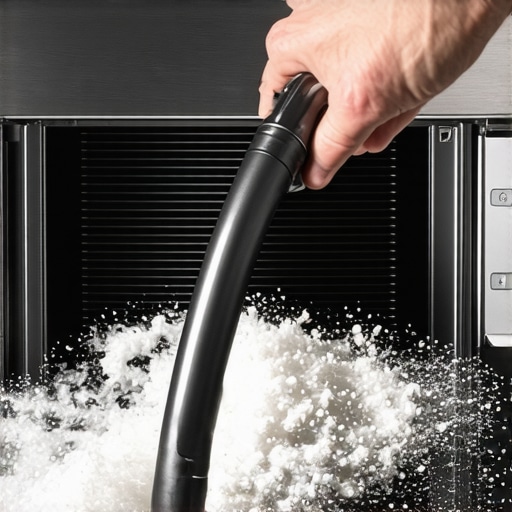
The Three-Dollar Part That Mimics a Total Failure
If the coils are clean but the clicking persists, the culprit is likely the start relay. This is a small plastic box plugged into the side of the compressor. It is the middleman that tells the compressor to kick on. Over time, the internal ceramic disk can shatter or burn out. When it fails, it tries to bridge the connection, fails, and clicks off to protect the circuit. It is a common point of failure in almost all home appliances that use motors.
The simple shake test for relays
The best part about this fix? It is incredibly cheap. You can usually find a replacement for less than the cost of a pizza. To diagnose it, unplug the fridge, pull off the relay (you may need to pop off a wire clip first), and give it a literal shake. If it sounds like a box of broken glass, it is toast. Understanding the difference between inverter and traditional refrigerator compressors is important here, as some newer inverter models use a more complex control board rather than a simple relay, but for 90% of household units, the shake test is your best friend.
Reset the System When the Brain Freezes
Sometimes the hardware is fine, but the software is caught in a loop. Smart refrigerators are basically giant computers that also happen to keep your milk cold. A power surge or a brief flicker in the grid can scramble the logic board’s instructions, causing it to cycle the compressor improperly or fire the relay at the wrong time.
Force a hard reboot of the control board
Before you start taking things apart, try a hard reset. Unplug the unit and leave it alone for at least ten minutes. This is not just about turning it off; it allows the capacitors on the control board to fully discharge and clear the short-term memory of the processor. Knowing how to reset your smart fridge after a power outage is a skill every homeowner needs in 2025. When you plug it back in, the system will run a self-diagnostic. If the clicking stops, you have just solved a software glitch with zero tools required. While you are at it, you might want to learn how to calibrate your refrigerator thermometer without calling a pro to ensure the new cooling cycle is actually hitting the right numbers and keeping your food safe.I used to think that buying a machine with ‘Smart’ in the name meant the machine would handle its own health. It is a common myth that advanced sensors can compensate for poor maintenance. In fact, it is the opposite. In my experience, the more ‘intelligent’ the appliance, the more sensitive it is to human error. Everyone says these machines are self-sufficient, but I have found they require a much more disciplined touch than the ‘dumb’ appliances our parents owned. While high-tech features offer convenience, they also introduce a layer of complexity where minor mistakes lead to major repairs. Have you ever fallen into this trap? Let me know in the comments because sharing these ‘oops’ moments helps us all keep our kitchens running.
The High Efficiency Trap That Actually Costs You More
The biggest mistake I see? Treating a high-efficiency (HE) motor like an old-school heavy-duty agitator. Most homeowners believe that if the clothes are extra dirty, they should just double the detergent. This is a catastrophic trap. Modern sensors measure the clarity of the water to determine if the load is clean. When you over-sud the drum, the sensors get ‘blinded,’ and the machine keeps rinsing and spinning indefinitely, leading to premature motor failure. I have learned the hard way that why your washer doesn’t need a whole cup of detergent to get clothes clean is the most important lesson for any modern laundry room. If you are seeing errors, it might just be why your high efficiency washer doesn’t fill all the way to the top—it’s trying to save itself from your soap. Over-detergent use creates a ‘scrud’ buildup—a waxy residue that traps bacteria and leads to that classic damp locker room smell.
Is Pre-Rinsing Actually Ruining Your Dishwasher’s Logic?
Here is a nuance that even the most tech-savvy users miss: your dishwasher is probably smarter than your sink. Modern units use soil sensors to detect how much food is in the water. If you pre-rinse every plate until it is spotless, the sensor assumes the load is light and runs a shorter, cooler cycle. This sounds efficient, but it actually prevents the detergent from activating correctly, leaving a film on your dishes. According to a study by the Association of Home Appliance Manufacturers (AHAM), modern dishwasher enzymes actually require food particles to latch onto to work effectively. By ‘helping’ the machine, you are actually sabotaging it. If your dishes are coming out cloudy, you might be falling for the truth about third racks or simply over-cleaning before the cycle starts. 
The Software Update Trap You Need to Avoid
We often treat our fridges and ovens like smartphones, but they have a physical soul that no app can fix. I have seen people spend hours trying to figure out how to update the firmware on your smart kitchen appliances when the real issue was a piece of literal grit in a drain line. It is easy to get distracted by the touchscreen and forget about the how to clean the hidden filter in your energy efficient dishwasher. Have you ever spent half a day troubleshooting an app only to realize a physical filter was the problem? If your laundry is starting to smell, don’t look for a software patch; look for the reason your high efficiency washer smells like old gym socks. The hidden nuance that many professionals won’t tell you is that ‘Smart’ features often mask mechanical degradation. While you are checking your fridge’s internal camera, the evaporator fan might be struggling or the coils might be caked in dust. Don’t let the shiny interface blind you to the basic sounds and needs of the motor.I have realized that the ‘smart’ in smart appliances does not just mean they have Wi-Fi; it means they have a higher standard of care. I keep a dedicated ‘tech-maintenance’ kit in my garage, and it is not full of iPads. It has a long-reach vacuum wand and a digital multimeter. You might think a multimeter is for electricians, but if you want to know why your oven isn’t heating or how to fix a dishwasher that wont drain completely, testing for continuity is the only way to be 100% sure before buying a part. According to the IEEE Standards Association, transient voltage surges are the number one cause of logic board death, which is why I also use the best smart plugs for monitoring appliance energy use—they act as a secondary fuse for my sensitive boards.
How do I keep my high-tech kitchen running like new for a decade?
The secret is a scheduled ‘Appliance Sunday’ once every quarter. I do not just wipe the handles. I pull the units out to check the hoses and vents. Vibration is the enemy of modern sensors; if you notice why your washing machine is moving across the floor during the spin, you need to level the legs immediately before the internal harness shakes itself loose. I also make sure to clear the secret drain filter at the bottom of your fridge you never knew existed, as a clog there can lead to water pooling and rust in places you will never see until it is too late. 
Your fridge will eventually tell you when it is going to break
Looking at the future of home appliances, I predict that ‘predictive maintenance’ will soon be standard. We are moving away from reactive repairs. Soon, your washing machine’s vibration sensor will notice a small increase in wobble and automatically order new bearings before the old ones even start to squeak. This ‘self-healing’ ecosystem is coming, but until then, we have to be the eyes and ears for our machines. Try this right now: Go to your fridge and check the seal with a dollar bill. If you can pull the bill out easily when the door is closed, your seal is leaking cold air, forcing your compressor to run much longer than it should. It is a five-second test that could save your motor.
The Hard Truth About Owning High Tech Gear
After years of tinkering, I have realized that smart appliances are not actually more fragile; they are simply more communicative. When a 1990s fridge failed, it just died silently. When a 2025 model fails, it tells you exactly what hurts through a series of clicks or error codes. The biggest lightbulb moment for me was realizing that most ‘broken’ boards are actually just victims of poor airflow or loose connections caused by vibration. If you can master the basic maintenance of top smart appliances for a seamless home experience in 2025, you effectively double their lifespan and save thousands in unnecessary replacements.
Tools Every Modern Homeowner Should Keep Handy
You do not need a degree in robotics to fix these machines, but you do need a better toolkit than a single rusty screwdriver. I personally swear by a digital multimeter; it is the only way to find out how to diagnose a faulty lid switch on your top loader without expensive guessing games. I also recommend a high-quality long-neck vacuum attachment for those tight fridge coils and the best smart plugs for monitoring appliance energy use to protect your boards from the ‘dirty’ power spikes of the grid. These small investments prevent the panic of a five-hundred-dollar service call. If you are struggling with tech integration, learning how to fix a smart oven that refuses to connect to your Alexa is often just a matter of having the right diagnostic mindset.
#IMAGE_PLACEHOLDER_E#
Build a Kitchen That Lasts a Lifetime
Your journey with home tech should not be a cycle of fear every time you hear a new noise. By taking twenty minutes a month to check seals, clear filters, and manage software updates, you turn a potential disaster into a minor household task. Referencing an ultimate guide to smart home appliances for a modern living can help you stay ahead of the curve. Take charge of your kitchen and enjoy the convenience you paid for without the headache of constant repairs. What is the most annoying sound your fridge or washer has ever made, and did you manage to fix it yourself? Let me know in the comments below!