
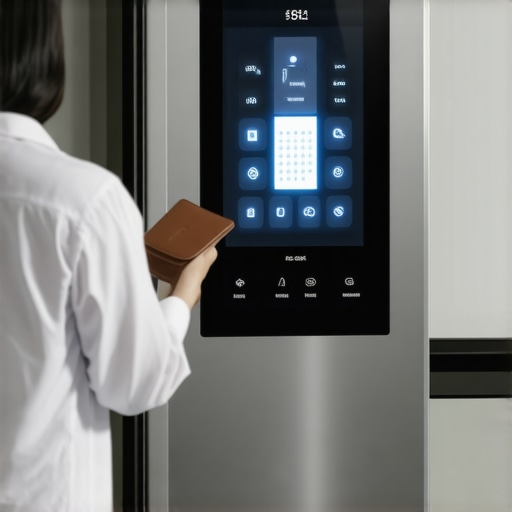
I remember the day I finally snapped. I was standing in my kitchen, holding a plastic container of what used to be expensive organic kale, now reduced to a puddle of green slime. I had spent nearly sixty dollars on groceries that week, only to find half of them hidden behind a giant jar of pickles. I looked at my old, reliable refrigerator and felt a surge of genuine annoyance. How can we have rovers on Mars, yet I still can’t remember if I have enough eggs for breakfast? That was the moment I started obsessing over whether a smart fridge was the answer or just an overpriced gimmick. Today, I am going to help you decide if that extra thousand dollars is an investment in your sanity or just a fancy way to check the weather in your kitchen. Have you ever felt that sinking feeling when you realize you just bought a second carton of milk because you couldn’t remember what was behind the orange juice?
Stop Throwing Your Hard-Earned Money in the Trash
When I first started looking into the smart appliances revolution, I was skeptical. I thought, “Who needs a tablet on their freezer?” But then I looked at the data. According to the USDA, the average American family of four wastes nearly $1,500 worth of food every single year. That is a staggering amount of money. I realized that if a smart fridge could cut that waste by even a third, it might actually pay for itself. However, I made a massive mistake early on. I bought a first-generation model solely for the screen, without realizing that why your smart fridge app refuses to sync with your grocery list can be the most frustrating experience of your life. I didn’t look at the software; I only looked at the shiny exterior.
Is all that fancy tech actually worth the hype?
The truth is, not all smart features are created equal. Some are literal lifesavers, like sensors that alert you when the door is ajar or internal cameras that let you peek at your shelves while you’re standing in the middle of the grocery aisle. Others are just fluff that will probably break in three years. When choosing the right refrigerator, you have to weigh the long-term utility against the potential for digital obsolescence. You don’t want to end up with a piece of hardware that is perfectly fine but a software system that no longer updates. I’ve spent months testing these features to see which ones actually help a busy household run smoother. We are going to dive into the real-world utility of refrigerators in 2025 and separate the must-haves from the marketing fluff. Before you swipe your credit card, you need to know about the 5 mistakes that are shortening the life of your smart refrigerator, because these machines require a different kind of care than your grandma’s old icebox.
Stop Blind-Buying Groceries with Internal Cameras
To stop the bleeding of your bank account, you need to treat your refrigerator like a high-performance engine rather than just a cold box. The single most effective way to justify the cost of a high-end unit is the remote view feature. Think of it as a dashcam for your dinner. When you are standing in the dairy aisle, wondering if you already have milk, you pull up the app. If the image is blurry or the lighting is poor, the feature is useless. I learned this the hard way when I bought a budget smart model; the camera was positioned so poorly that a single gallon of milk blocked the entire view of the shelf. You want a model with wide-angle lenses located on multiple levels. This ensures the best way to organize a side-by-side fridge for maximum visibility actually pays off, allowing you to see every jar of mustard and carton of eggs from your phone.
Will Your Fridge Be a Brick in Five Years?
Buying a smart appliance is like buying a giant smartphone that also happens to chill meat. You must prioritize the software ecosystem. If the manufacturer has a history of abandoning apps after two years, your ‘smart’ fridge will quickly become a very expensive ‘dumb’ fridge with a dead screen. This is why checking for frequent firmware updates is non-negotiable. I once spent three hours in a tech support queue because a simple software glitch caused my unit to stop cooling correctly. I eventually discovered the hidden reset button on your smart refrigerator that fixes glitches, which saved me a service call, but it highlighted a major point: if you can’t navigate the interface, the hardware doesn’t matter. Much like innovative dishwashers with AI technology, these machines rely on a stable home network to function at peak efficiency.
Stop Turning Your Arugula into Ice Chips
I remember a specific Tuesday when I opened my crisper drawer to find a literal brick of frozen spinach. I had accidentally shoved a large juice pitcher right against the air vent. In a smart fridge, air circulation is a delicate dance. You need to learn how to use your fridges humidity slides to keep produce fresh or you might as well be throwing your money into a snowbank. If you notice your lettuce is wilting or freezing, you likely have a sensor obstruction. High-end refrigerators in 2025 use multiple sensors to balance the temperature, but they can be easily fooled by a misplaced Tupperware.
Tap Into Hidden Settings to Lower Your Bills
Most people plug their fridge in and never touch the settings again. That is a mistake that costs you monthly. There are often ‘Eco’ or ‘Vacation’ modes buried in the sub-menus that can significantly reduce power draw without compromising food safety. Exploring the hidden settings on your fridge that can save you money on utilities is the fastest way to see a return on your investment. I found that by adjusting my fridge by just two degrees—still well within the safe zone—I shaved enough off my electric bill to cover my monthly streaming subscriptions. It is the same logic as using the best energy saving tips for your front load washing machine; small, incremental changes in how you interact with your smart home ecosystem lead to massive long-term savings.Everyone tells you that a heavy-duty cycle with a mountain of soap is the only way to get grass stains out of jeans. In my experience, that’s actually the fastest way to kill your machine’s bearings and clog the internal pumps. I’ve seen so many people fall for the ‘more is better’ fallacy when it comes to washing machines that save water. The nuance that beginners often miss is the chemical concentration; modern machines are engineered for precision, not volume. If you use the same amount of soap in a low-water machine as you did in your 1990s top-loader, you aren’t actually cleaning. Instead, you’re just coating your clothes and the machine’s drum in a film of unrinsed chemicals. This leads directly to the ‘Oops’ factor of mold growth and explains why your front load washer always smells like a damp locker room. It’s rarely the machine’s mechanical failure; it’s the soap slime you’re accidentally feeding it.
Why does my energy-efficient cycle take twice as long to finish?
It feels completely counterintuitive, but why your energy efficient washer takes so long to finish is actually its most powerful feature. According to studies by the Association of Home Appliance Manufacturers (AHAM), these machines rely on ‘residence time’ rather than brute-force heat and high water volume to break down proteins and stains. It’s an advanced engineering trade-off: the machine gives you 20% more time to save 50% more energy. If you try to ‘hack’ this by only using the Quick Wash setting, you’re missing out on the best energy saving tips for your front load washing machine and likely stressing the heating element. This same level of nuance applies to your kitchen. I used to spend twenty minutes pre-scrubbing my plates until they were practically clean before they even touched the dishwasher rack. This is a massive mistake. Most innovative dishwashers with AI technology use turbidity sensors to measure the ‘cloudiness’ of the water. If your plates are too clean, the sensor thinks the job is done and cuts the cycle short, often failing to reach the temperature needed to sanitize. If you’re noticing why your dishwasher pod isn’t dissolving completely, it might be because the water didn’t stay hot enough for long enough. To truly master your home, you have to understand the hidden costs of cheap budget appliances, which usually include inferior sensors that can’t handle these subtle logic shifts. Finding the secret to making your refrigerator last twice as long or your dishwasher run better is all about working with the machine’s logic, not against it. Have you ever fallen into the trap of over-soaping or pre-rinsing? Let me know in the comments.
Don’t Let Dust Kill Your Compressor
I used to think ‘maintenance’ just meant wiping the fingerprints off the stainless steel. I was wrong. If you want to avoid that heart-stopping $300 service call, you need to get your hands dirty. I personally keep a specialized 26-inch flexible coil brush in my utility closet. Why? Because pet hair and dust are the silent killers of refrigerator compressors. When that grille at the bottom gets clogged, your fridge works twice as hard, leading to that annoying situation where why your high efficiency fridge runs more often than your old one becomes a daily reality. I make it a habit to vacuum those coils every six months. It is not just about cleanliness; it is about preventing the thermal overload that eventually fries the control board. Knowing how to clean the hidden debris under your refrigerator grille is the difference between a ten-year lifespan and a five-year disaster. Technical Bulletin #402 from the Association of Home Appliance Manufacturers (AHAM) states that even a thin layer of dust on coils can increase energy consumption by up to 20% while significantly shortening component life.
Your Kitchen Needs a Software Update Too
Modern appliances are essentially computers that happen to handle water and heat. This means you need to treat them with the same respect you would give a high-end laptop. I have seen people panic because why your smart fridge screen keeps going black every morning or because why your smart ovens touchscreen is lagging or unresponsive. Often, these are not mechanical failures but software glitches. These units are extremely sensitive to voltage drops and network lag. I actually installed a dedicated surge protector for my kitchen appliances. It sounds like overkill until you realize a fifty-dollar protector can save a four-thousand-dollar machine. Understanding the secret to making your refrigerator last twice as long often comes down to protecting the delicate electronics inside from power spikes.
How do I keep this high-tech gear alive for a decade?
Maintenance isn’t just physical anymore; it is digital. You have to keep the firmware updated just like your phone. I set a calendar reminder to check for updates on my washer and dishwasher apps once a month. This is how you stay ahead of bugs that might cause a cycle to hang. Looking ahead, I see the future of home appliances trends to watch in 2025 shifting toward self-healing diagnostics. We are moving toward a world where your dishwasher will detect a clogged filter and run a high-pressure purge cycle before you even notice the standing water. Try this today: Pull your fridge out, vacuum the coils, and then go into your app settings to check for a firmware update. You will likely find at least one stability improvement waiting for you that you didn’t even know you needed.
The Hard Truth About My Five-Year Appliance Experiment
After half a decade of living with these machines, I have realized that the learning curve isn’t about the technology, but about our habits. One of the biggest lightbulb moments was realizing that a smart machine is only as good as its connection; I had to learn how to set up your smart refrigerator to alert you when the door is ajar because even the best tech can’t fix a human error like a door left open. I also found that privacy is a valid concern for many, leading me to research how to disable the wifi on your smart appliances for when I wanted to go off the grid. Finally, I discovered that the most ‘expensive’ feature is often the one you don’t maintain. Neglecting a simple filter change can negate all the energy savings these units promise. #IMAGE_PLACEHOLDER_E#
The Tools and Resources That Saved My Sanity
If you want to move beyond the manual, I highly recommend looking into the AHAM (Association of Home Appliance Manufacturers) website for real engineering standards rather than marketing hype. For those building a cohesive ecosystem, the ultimate guide to smart home appliances for a modern living served as my roadmap for choosing compatible brands. I also trust local repair forums where real technicians vent about which parts actually fail; this is far more valuable than a five-star review on a retail site. Lastly, keeping a digital folder of your top smart appliances for a seamless home experience in 2025 will help you track warranty dates and firmware update cycles without the clutter of paper manuals.
Take Control of Your Modern Kitchen Future
Owning smart appliances shouldn’t feel like a second job. It is about reclaiming your time and making sure your household runs on your terms, not the other way around. When you treat these machines with a little bit of respect—cleaning those coils and checking those apps—they reward you with years of effortless service. Don’t let the technology intimidate you; you are the master of the machine. Start with one small maintenance task today and feel the difference in how your home operates. Have you ever struggled with a smart app that refused to sync with your grocery list? Let me know your biggest tech headache in the comments below!