
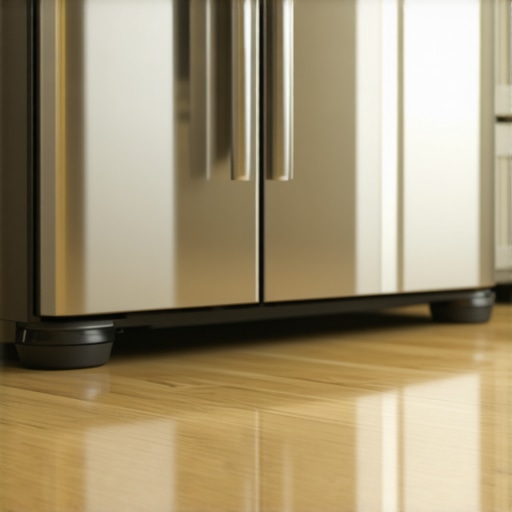
I stood there, sweating, staring at the deep, jagged gouge in my brand-new cherry wood flooring. I’d just tried to “scoot” my old fridge a mere three inches to clean behind it. That single, impatient tug cost me a $400 floor repair and a weekend of regret. If you’ve ever felt that pit in your stomach when you hear a sharp skreeeee against your linoleum or hardwood, you know exactly why I’m obsessed with doing this the right way. Moving a refrigerator shouldn’t feel like a high-stakes gamble with your home’s value.
Why You Shouldn’t Just Muscle It Through
Moving a 300-pound appliance is an art, not a feat of strength. I used to think I could handle anything with a bit of grit, but after seeing the damage a heavy compressor can do, I changed my tune. [image_placeholder] Modern refrigerators are packed with tech, making them heavier than the basic boxes our parents owned. According to research by Consumer Reports, many modern French door models exceed 300 pounds even before you stock them with milk and leftovers. When you try to move these beasts, the pressure on those tiny plastic wheels is immense. My biggest mistake early on was ignoring the leveling legs. If you don’t adjust the feet on your refrigerator properly before a move, they act like chisels on your floor.
Is all this prep really worth the hassle?
You might be tempted to just grab a piece of cardboard and hope for the best. I get it; you want the job done. But “quick and easy” is how I ended up with a permanent scar in my kitchen. Whether you are choosing the right refrigerator for a new home or just deep cleaning, the floor protection is your most important tool. Have you ever tried to move an appliance and felt that sickening ‘crunch’ of debris under the wheels? It is a nightmare! In the next section, I’ll show you exactly how to prep the path so you can glide that fridge like it’s on ice. Knowing the secret to making your refrigerator last includes moving it safely for maintenance without destroying your kitchen’s foundation.
Clear the Way Before You Push a Single Inch
Before you even think about putting your weight behind that unit, you need a clear runway. Think of it like a plane taking off; any pebble on the tarmac can cause a disaster. I learned this the hard way when a tiny bit of dried dog food got trapped under a slider and acted like a piece of coarse sandpaper. You have to clean the hidden debris under your refrigerator grille first because that dust and grit will inevitably migrate under your protection and scratch your finish anyway. Use a long-reach vacuum attachment or a coil brush to get every last bit of pet hair and kitchen crumbs out of there.
Lay Down the Protection That Actually Works
Cardboard is better than nothing, but it is not the gold standard. For heavy appliances, I swear by 1/8-inch Masonite or hardboard sheets. They provide a rigid surface that distributes the weight of the compressor, so those tiny plastic wheels don’t create permanent ‘trenching’ in your wood or vinyl. If you are dealing with refrigerators in 2025 that have ultra-heavy glass doors and massive built-in screens, you cannot afford to have the floor flex under the weight. I once tried to move a high-end French door model using only thin plastic sliders; the floor didn’t scratch, but the pressure actually dented the wood because the weight was so concentrated. 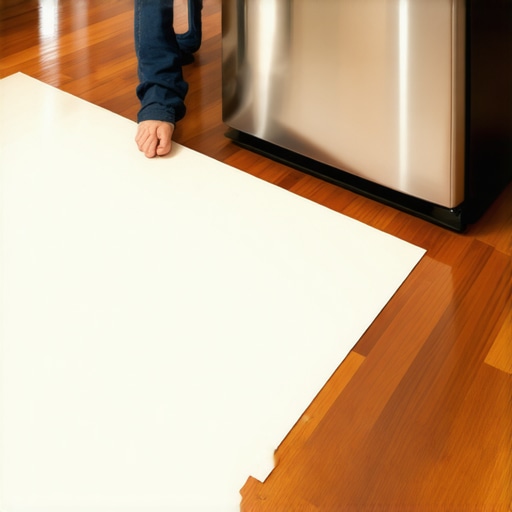
Manage the Water Line Before the Flood Starts
Most modern fridges are hooked up to a water line for ice and filtered water. If you pull the fridge too far without disconnecting, you will rip the copper or plastic tubing right out of the wall. To prevent this, pull the fridge out just a few inches—very slowly—and check the tension. This is also a great time to see if you need to stop your fridge water dispenser from dripping while the back is accessible. I usually use a small bucket to catch the ‘lifeblood’ of the fridge as I unscrew the compression nut.
The Glide and Slide Strategy
Moving a fridge is about physics, not brute force. You want to reduce friction to near zero. If you don’t have Masonite, use ‘Air Sleds’ or professional-grade glides designed for heavy loads. Think of it like a slow, heavy dance where your floor is the partner you don’t want to step on. If you are using an appliance dolly, always load it from the side to keep the center of gravity low.
Retract those Leveling Legs Fully
This is the step most people skip because it requires getting on your hands and knees. Those front legs are designed to keep the fridge stable, not to help it move. If they aren’t fully retracted, they will snag on every transition between rooms. You need to adjust the feet on your refrigerator so they are tucked up as high as they can go. I remember a move where I thought I had retracted them enough, only to have the leg catch on a door threshold. It jerked the whole unit forward, and I almost took a face-full of freezer door. It was messy and totally avoidable.
Tape the Doors or Face the Consequences
Don’t assume the magnetic seal will keep the doors shut during a tilt or a turn. Use high-quality painter’s tape to secure the doors and any drawers. This is especially vital if you have invested in seeing if a smart fridge is really worth the extra money, as those front panels and tablets are incredibly sensitive to impact. When I moved last year, the freezer drawer slid open mid-turn, nearly tipping the entire appliance onto my toes. Tape is cheap; a new smart screen is not.Once the fridge is finally in place and the tape is removed, many homeowners assume the hard part is over. But this is exactly where the ‘sophisticated’ mistakes begin. Most people think that because they bought a top-tier model, it can handle any amount of work. I have seen folks dump a literal cup of soap into their new high-efficiency (HE) washers, thinking more bubbles means more clean. In reality, why your washer doesn’t need a whole cup of detergent to get clothes clean is a matter of chemistry, not volume. Excess suds actually cushion the clothes, preventing the mechanical friction needed to scrub out stains, and can lead to a ‘suds lock’ error that shuts down the machine entirely.
The Efficiency Trap That Destroys Modern Compressors
The biggest myth I encounter is that ‘new machines do not use enough water to get things clean.’ This is a classic misunderstanding of why your high-efficiency washer uses barely any water. These units are designed to saturate fabric with concentrated detergent rather than drowning it in a tub of liquid. If you try to ‘trick’ the sensor by adding extra water manually, you actually dilute the cleaning agents and risk burning out the motor by forcing it to spin a weight it wasn’t calibrated for. This imbalance is often the reason your high-efficiency washer smells like old gym socks because the excess moisture and undissolved soap never fully drain from the outer tub.
Why Does My 2025 Model Run Three Times Longer Than My 1995 One?
It feels like a downgrade when a modern cycle takes two hours instead of forty minutes. However, expert data from Energy Star confirms that longer cycles are actually more efficient because they use lower temperatures and less water while relying on extended ‘soak’ and ‘tumble’ times to achieve the same results. It is the difference between a quick rinse and a deep marination. 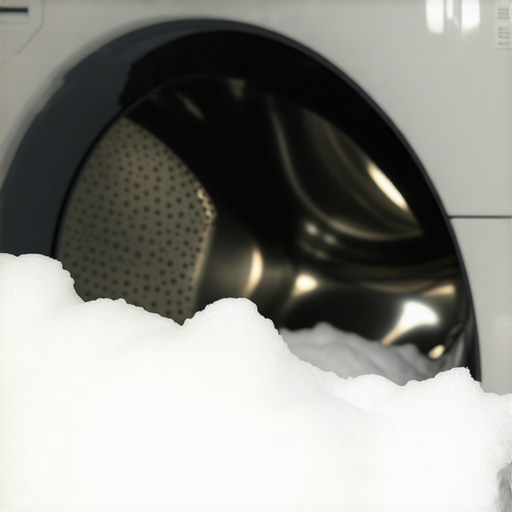 This shift is a core part of the future of home appliances trends to watch in 2025. We are moving away from brute force toward precision engineering. Whether you are still debating is a smart fridge really worth the extra money or just trying to keep your current gear alive, you must learn to trust the sensors. Have you ever fallen into this trap of ‘helping’ your machine by adding more water or soap? Let me know in the comments.I used to think a toolkit was just for fixing things that were already broken. I was wrong. In the world of high-end appliances, your toolkit is actually your insurance policy against a $2,000 repair bill. If you want to master the secret to making your refrigerator last twice as long, you need to stop reaching for the screwdriver only when the ice maker stops. I personally keep a 24-inch flexible condenser coil brush in my utility drawer. Why? Because a standard vacuum attachment can’t reach the back corners of the cooling rack where pet hair turns into a thick, insulating felt. This ‘felt’ forces your compressor to run 30% harder, leading to the exact scenario where your new refrigerator is making a loud humming sound before eventually giving up the ghost.
Keep those coils breathing or pay the price
I make it a point to pull my unit out every six months—using the floor protection methods we discussed earlier—to give it a deep clean. If you are noticing that your fridge is freezing everything on the top shelf, it might not be a broken thermostat; it’s often just restricted airflow from dust buildup. According to technical documentation from the Appliance Service Training Institute (ASTI), nearly 40% of ‘no-cool’ service calls are solved simply by restoring proper airflow to the condenser. 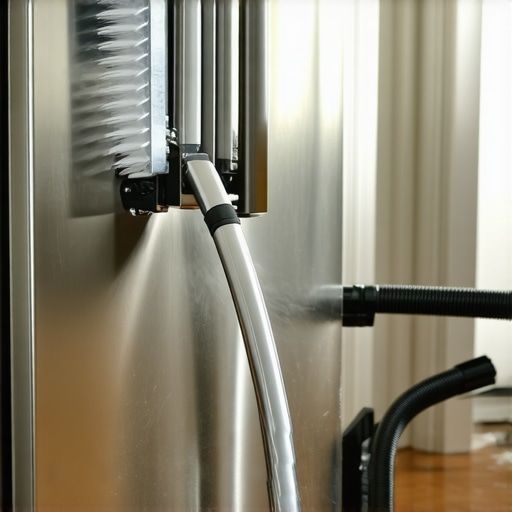
How do I maintain my high-tech appliances over time?
Consistency beats intensity every single time. For my dishwasher, I’ve stopped using those harsh chemical cleaners. Instead, I’ve found the best ways to clean a smelly dishwasher without using bleach involve a simple cup of white vinegar on a hot cycle once a month to break down the limescale that clogs the spray arms. If you ignore this, you’ll eventually find your dishwasher isn’t cleaning the top rack properly because the pressure sensors are confused by the mineral buildup. For those of us leaning into the future of home appliances trends to watch in 2025, maintenance is becoming digital. I now spend ten minutes a month checking for firmware updates. It sounds ridiculous to ‘update’ a fridge, but these patches often recalibrate sensor sensitivity to prevent 5 mistakes that are shortening the life of your smart refrigerator.
The hidden software updates your fridge needs
We are entering an era where your appliance is more of a computer than a mechanical box. I’ve seen cases where a simple Wi-Fi handshake issue caused a control panel to lag, making owners think the hardware was failing. Knowing how to sync your smart kitchen appliances to one app isn’t just about convenience; it’s about receiving real-time diagnostic alerts before a small leak becomes a flood. I predict that by late 2025, ‘Self-Healing’ AI will become standard, where the machine automatically adjusts its motor speed to compensate for wear. Until then, you need to be the brain. I highly recommend you how to calibrate your refrigerator thermometer without calling a pro this weekend. It takes five minutes with a glass of ice water and can save your motor from running a grueling, unnecessary schedule. Give that coil brush a try—your utility bill will thank you immediately.
What My Scratched Floors Taught Me About High-End Tech
Looking back at that $400 gouge in my wood, I realized the biggest mistake wasn’t the “push”—it was the impatience. Modern machines are sensitive, and I’ve learned that the real secret to longevity isn’t a special chemical; it’s simply being observant. For instance, I spent years ignoring the base of my unit, only to discover the secret drain filter at the bottom of your fridge you never knew existed. Finding that clogged filter was a lightbulb moment—it’s often the small, hidden parts that cause the biggest headaches. Another lesson? Don’t fight the software. When I first got a smart unit, I was annoyed by the “unnecessary” pings. But once I realized those alerts were trying to prevent a thaw-out disaster, I started listening. It’s better to spend five minutes on a calibration than five hundred dollars on a technician. Trust the sensors, but verify them occasionally yourself.
The Small Gear That Saves Big Money
I don’t believe in buying every gadget on the shelf, but there are three things I never live without now. First, a high-quality flexible coil brush. It is the only way to keep the “lungs” of your fridge clear and prevents the motor from overheating. Second, a simple bottle of white vinegar—it’s the MVP for keeping your dishwasher gasket from rotting without using harsh chemicals. Finally, I always keep a reliable digital probe nearby so I can calibrate your refrigerator thermometer without calling a pro. These tools turn you from a passive owner into a proactive caretaker who knows exactly how their system is performing.
Take Control of Your Kitchen’s Future
We are living in an incredible era where our home appliances are getting smarter every single day. While it can feel overwhelming to keep up with the latest tech, the core principles of care remain the same: keep it clean, keep it level, and keep it updated. By taking these small steps now, you’re not just saving money; you’re ensuring your home runs smoothly for years to come. The future of home appliances trends to watch in 2025 points toward even more automation, but nothing replaces the watchful eye of an informed owner. Have you ever had a “near-miss” while moving a heavy appliance, or a maintenance tip that saved your bacon? Let me know in the comments below!