
I’ll never forget the eerie silence that filled my laundry room last Tuesday night. One second, my washer was humming along in its vigorous wash cycle, and the next—total darkness. The power grid had flickered out, leaving me with a drum filled with forty gallons of lukewarm, soapy water and a load of my favorite white towels. If you’ve ever been there, you know that sinking feeling in your gut. You can’t just leave it; that stagnant water starts to smell like a swamp faster than you’d think. In fact, if you don’t act quickly, you’ll eventually be searching for [the only way to get that weird smell out of your front loader](https://smartappliancereview.com/the-only-way-to-get-that-weird-smell-out-of-your-front-loader). Today, I’m going to walk you through exactly how to drain that beast manually without ruining your floors or your lower back. We aren’t just talking about theory here; I’m giving you the ‘I’ve been in the trenches’ guide to saving your laundry. Have you ever been stuck with a half-washed load during a sudden blackout? [image_placeholder]
Get That Water Moving Before the Mildew Sets In
Most people panic and try to force the door open, which is the fastest way to turn your laundry room into a swimming pool. I made that mistake once in my early twenties, and let’s just say my landlord wasn’t thrilled about the ‘water feature’ I installed in the kitchen. Modern machines, especially [washing machines that save water](https://smartappliancereview.com/washing-machines-that-save-water-expert-advice-for-2025), are designed to keep that water locked tight until a pump pushes it out. But when the pump has no juice, gravity is your only friend. You have to understand that a stalled washer is an incredibly heavy object. According to the Water Education Foundation, a single gallon of water weighs approximately 8.34 pounds. This means a full drum could be holding over 300 pounds of dead weight that your floor—and your plumbing—wasn’t meant to hold indefinitely. If you’ve noticed [why your clothes are still soaking wet after the final spin cycle](https://smartappliancereview.com/why-your-clothes-are-still-soaking-wet-after-the-final-spin-cycle) during normal use, the manual drain process is actually quite similar to fixing a standard clog. You’ll need to locate the emergency drain hose, usually tucked away behind a small panel at the bottom of the machine. It’s a tedious process, but it’s the difference between a simple delay and a $500 repair bill.
Is manual draining actually worth the mess?
You might be tempted to just wait for the electric company to get their act together. I get it. It’s messy, it’s cold, and it’s frustrating. But leaving damp clothes in a sealed, airtight drum is a recipe for disaster. That moisture trapped in the fabric will begin to breed bacteria in as little as 24 hours. If you have a front-load model, you’re at an even higher risk because of how those gaskets trap moisture, which is often [the reason your high-efficiency washer smells like old gym socks](https://smartappliancereview.com/the-reason-your-high-efficiency-washer-smells-like-old-gym-socks). Taking thirty minutes now to drain the tub into a shallow pan or a shop vac will save you from having to re-wash that load five times just to get the funk out. If you’ve ever had to [clear a blocked pump on your front load washing machine](https://smartappliancereview.com/how-to-clear-a-blocked-pump-on-your-front-load-washing-machine), you already have the skills needed for this emergency. Grab some old towels, find a low-profile bucket, and let’s get to work.
Kill the Electricity Before You Start
Before you even touch a wrench or a bucket, you must unplug the machine. It sounds like common sense, but when you are knee-deep in a laundry crisis, it is easy to forget. Even if the power is out in your neighborhood, you do not want to be elbow-deep in water when the grid suddenly surges back to life. If you cannot reach the plug, flip the breaker in your electrical panel. This is about more than just safety; many people find that once they restore power, they need to know how to reset the error codes on your modern smart washer because the sudden stop confused the onboard computer. Think of the water in your drum like a held breath; the machine is under pressure, and you are about to give it an outlet.
Open the Front Service Door
On almost every front-load machine, there is a small rectangular or circular door near the bottom right or left corner. Use a flathead screwdriver or a coin to pop it open. Inside, you will see two main components: a small, flexible hose and a large circular dial, which is the pump filter. This is the same place you would go if you needed to learn how to clean the lint filter you didn’t know your washer had. The hose is your primary tool here. It is designed to let water out slowly and under control, rather than all at once.
Empty the Tub One Tray at a Time
This is where the ‘trenches’ part of the guide really starts. I remember the night I had to do this with my own front loader. I grabbed a standard five-gallon bucket, thinking I was prepared, only to realize there was only about two inches of clearance between the floor and the drain hose. A bucket was useless. I ended up raiding the kitchen for my largest rimmed baking sheets. I would fill a sheet, slide it out carefully to avoid spilling, and have my partner slide a second sheet in while I ran the first to the sink. It was a rhythmic, exhausting dance that took nearly forty-five minutes, but it kept my hardwood floors from warping. If you are dealing with a different appliance, you might notice that the steps on how to manually drain a dishwasher when the pump fails follow a very similar logic of containment and patience.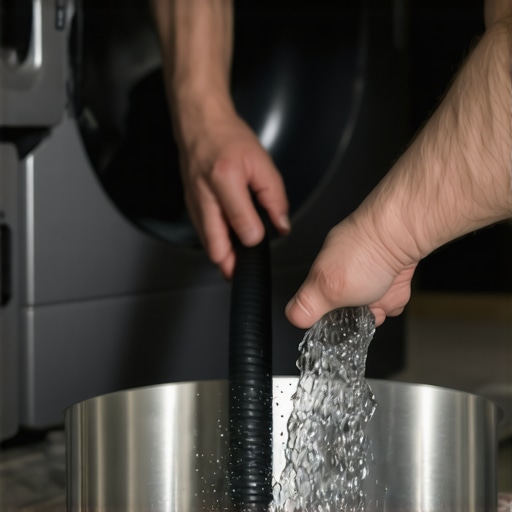
Pull the Clogs Out of the Pump Filter
Once the small hose stops trickling, you aren’t quite finished. There is usually still about a quart of water sitting in the pump housing. Lay a heavy towel directly under the large circular dial and slowly unscrew it counter-clockwise. Be prepared for a small gush. When you pull that filter out, you will likely find the culprit of why your machine might have been struggling before the power even went out. I’ve found everything from loose change and hair ties to pet hair mats that explain why your energy efficient washer takes so long to finish its cycles. Clearing this debris is a critical step because if the pump is blocked, the machine won’t restart properly even when the lights come back on. Clean the filter under warm water and check the housing for any stray debris that could catch on the impeller blades. This small bit of maintenance is the same process used when you need to how to clear a blocked pump on your front load washing machine to prevent future floods.
Once that filter is clean and the water is finally off your floor, you might feel like an appliance expert. But here is the hard truth: most people are accidentally sabotaging their machines every single day without realizing it. We have been conditioned by decades of old-school top-loaders to think that more is better—more water, more soap, and more heat. In my experience, that is exactly how you end up with a dead pump and a damp mess. The biggest myth I encounter is the ‘cleaner is soapier’ fallacy. I have seen countless DIYers wonder why your washer doesn’t need a whole cup of detergent to get clothes clean, only to find out that the excess suds were actually acting as a lubricant, preventing the clothes from scrubbing against each other. If you see bubbles during the rinse cycle, you have already used too much.
Stop Drowning Your Laundry in Excess Soap
In high-efficiency (HE) machines, detergent is the number one silent killer. When you over-pour, the machine’s sensors get confused, leading to extra rinse cycles that wear out the motor. This is also the reason your high-efficiency washer smells like old gym socks; that unrinsed soap creates a biofilm that feeds mold. A study by the American Cleaning Institute (ACI) confirms that using concentrated HE detergents in the wrong proportions is the leading cause of mechanical strain in modern units. I always tell my friends: treat your detergent like a powerful chemical, not a splash of perfume. Also, why you should never use too much fabric softener in your smart washer is equally important, as it coats the moisture sensors in a waxy film that ruins the ‘auto-dry’ accuracy. Have you ever fallen into this trap? Let me know in the comments.
Why Less Water Actually Means a Deeper Clean
Another common point of confusion is the water level. I get emails constantly from people worried about why your high-efficiency washer uses barely any water. It feels counterintuitive, but these machines are designed to use a concentrated ‘slurry’ of soap and water. If you try to ‘trick’ the machine by adding extra water through the drawer, you are actually diluting the chemical energy of the detergent. This results in those mysterious white streaks on your dark clothes. Instead of fighting the machine, focus on the best energy saving tips for your front load washing machine to let the internal logic do the work for you. Modern tech is about precision, not volume.
Can you ever be too careful with smart appliance sensors?
While we want to protect our machines, there is a ‘trap’ of over-maintenance. I have seen homeowners use harsh industrial descalers every single week, which can actually eat away at the rubber gaskets and lead to the very leaks they were trying to prevent. The nuance lies in balance. Use your how smart washing machines can simplify laundry day features like self-clean cycles, but do not feel the need to scrub the drum with steel wool. The goal is to remove the debris, not the finish. If you stay within the manufacturer’s guidelines and avoid the ‘more is better’ mindset, your machine will easily outlast its warranty. Have you been over-cleaning your washer, or are you a ‘set it and forget it’ type of person?
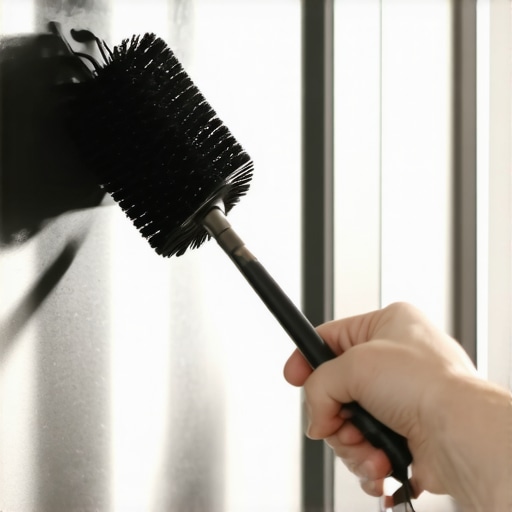
Once you’ve mastered the art of less-is-more with detergent, the next step in the longevity game is physical maintenance. I’m a huge advocate for the long-handled condenser coil brush. It costs about ten bucks, but it’s the only way to reach the pet hair and dust that eventually chokes your compressor. If you skip this, you will definitely find yourself wondering why your new refrigerator is making a loud humming sound. I personally pull my fridge out every six months to brush those coils and check the secret drain filter at the bottom of your fridge you never knew existed. It’s usually a bit grimy, but cleaning it prevents that mysterious musty smell that can haunt even the cleanest kitchens.
Give Your Fridge Room to Breathe
According to technical documentation from the Association of Home Appliance Manufacturers (AHAM), dirty condenser coils are the primary cause of compressor failure, which is often the most expensive part to replace. If you want to know the secret to making your refrigerator last twice as long, it’s all about heat dissipation. When the coils are caked in dust, the motor has to work twice as hard to keep your milk cold. While you are back there, take a second to ensure you know how to adjust the feet on your refrigerator to stop it from rocking. A level fridge isn’t just about aesthetics; it ensures the coolant flows correctly and the door seals stay airtight.
How can I keep these machines running like new for a decade?
The answer lies in a combination of hardware care and software management. For your laundry room, I highly recommend investing in high-quality rubber vibration pads. They are a game-changer if you need to how to level a washing machine on an old slanted floor and will prevent the internal tub from banging against the frame. This also helps how to stop your washer from beeping for no apparent reason, as many modern sensors are sensitive to excessive movement. On the digital side, don’t ignore those firmware updates on your smart panel. Manufacturers often release patches that improve energy efficiency and sensor accuracy. If you are just starting your journey, my ultimate guide to smart home appliances for a modern living covers why keeping your software synced is just as vital as cleaning a filter.
The Future of Smart Maintenance is Predictive
Looking ahead, I predict that by late 2025, we will see a massive shift toward AI-driven predictive maintenance. We aren’t just talking about a beep when the door is open; we’re talking about machines that can listen to the frequency of their own motors and alert you to a bearing failure weeks before it happens. This is one of the key future of home appliances trends to watch in 2025. We are moving away from the ‘repair when broken’ model and toward a ‘fix before failure’ reality. My advice? This weekend, grab that coil brush and give your fridge’s rear panel a good cleaning. It’s the single most effective thing you can do right now to save your wallet in the long run.
Why My Machines Last Twice as Long as My Neighbors’
After a decade of tinkering with these units, I’ve realized that 90% of failures are preventable. The first lesson is that noise is data. If your machine starts sounding like a jet engine, don’t ignore it; check for leveling issues or trapped debris immediately. Second, treat your gaskets like gold. Wiping down the rubber seal on your front loader after the final cycle prevents that swamp smell better than any chemical cleaner ever could. Finally, stop the ‘overload’ madness. Cramming that extra blanket into the drum puts a strain on the bearings that no smart sensor can fully mitigate.
My Go-To Maintenance Kit for a Worry-Free Home
You don’t need a professional tool chest, but a few basics change everything. I swear by my long-handled condenser brush for the fridge and a dedicated shop vac for those ’emergency drain’ scenarios we discussed. For the digital side, I highly recommend reading through the ultimate guide to smart home appliances for a modern living to understand how your software interacts with the hardware. If you are looking to upgrade, I’ve compiled a list of the top smart appliances for a seamless home experience in 2025 that prioritize ease of repair. [image_placeholder] Trusting these resources has saved me thousands in unnecessary service calls by teaching me how to sync your smart kitchen appliances to one app for better diagnostic tracking.
Take Charge of Your Home’s Pulse
Owning modern home appliances doesn’t have to be a source of anxiety. Once you understand the basic mechanics of drainage, airflow, and chemistry, you stop being a victim of the ’emergency repair’ cycle. You become the master of your own domain. Start small this weekend—clean one filter or brush one coil—and watch how much smoother your household runs. Have you ever found a weird object like a Lego or a wedding ring in your pump filter? Let me know your funniest discovery in the comments below!