
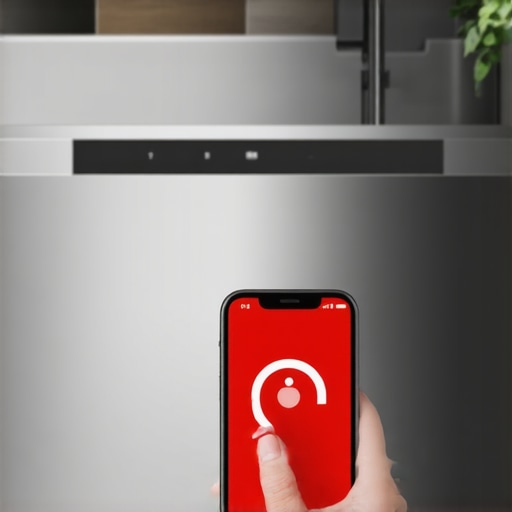
I remember the exact moment my kitchen turned into a collection of very expensive paperweights. It was a Tuesday evening, I had guests coming over, and I tried to remote-start the dishwasher from the grocery store. My phone just spun its little loading circle forever. When I got home, the machine was perfectly fine, but the app insisted it didn’t exist. It is incredibly frustrating when the tech we pay a premium for decides to go on a silent strike. I was standing there with a bag of groceries in one hand and a useless smartphone in the other, feeling like I had been sold a futuristic lie.
My Dishwasher Went Ghost and Yours Might Too
We have all been there. You bought into the dream of innovative dishwashers with AI technology, thinking life would be a breeze. Instead, you are looking at a Server Connection Error while hand-scrubbing a lasagna pan. I used to think it was always my internet, but after trying to sync my smart kitchen appliances to one app for the tenth time, I realized the problem is often deeper than a weak Wi-Fi signal. According to research from the IEEE, the high concentration of metal and water in kitchen environments creates a natural barrier for 2.4GHz signals, making the kitchen one of the hardest rooms in the house to keep connected. I once spent three hours factory resetting my router when the issue was actually just a firmware mismatch inside the dishwasher itself. It was a rookie mistake that cost me a whole Saturday morning. Today, we are going to fix that connection loop and get your appliances talking again without you having to call a technician or lose your mind.
Is this smart stuff actually worth the constant upkeep?
It is a fair question to ask when you are staring at a spinning wheel. I have even considered how to disable the wifi on my appliances just to stop the annoying notifications. But when it works, it is brilliant. The key is knowing how to handle the inevitable digital hiccups. Sometimes it is a simple 5-minute fix for a dishwasher that seems dead, and other times it is about understanding why the handshake between your router and your rack failed. Have you ever found yourself shouting at your dishwasher because the app says it is offline while it is literally standing right in front of you? I want to hear your horror stories in the comments below. Let us dive into the actual reasons your dishwasher has decided to go dark and how we can force a reconnection that actually sticks.
Fix Your Router Before You Blame the Dishwasher
When your appliance won’t connect, your first instinct is to assume the machine is broken. Most of the time, the dishwasher and the router are just speaking different languages. Think of your Wi-Fi like a highway: the 5GHz band is a high-speed lane for your laptop and 4K TV, but your smart appliances are the slow-moving tractors that prefer the 2.4GHz backroads. If your router is trying to force your dishwasher into the 5GHz lane, it’s going to crash every single time. I learned this the hard way when I couldn’t figure out how to connect your smart washer to your home wifi in minutes until I manually split my router bands. If your dishwasher or washer is acting up, check your router settings and ensure your ‘IoT’ devices are isolated on that 2.4GHz frequency.
Force a Fresh Digital Handshake
Sometimes the software just gets stuck in a loop, like a record player with a scratch. This is where the ‘soft reset’ comes in. It is not enough to just turn the power button off and on. You need to perform a full power cycle. This is the tech equivalent of a nap and a strong coffee for your machine. Unplug the unit for exactly sixty seconds—no less. While you wait, clear the cache on the manufacturer’s app on your phone. When you plug it back in, the machine will initiate a new handshake with your network. I used this exact method when I had to how to reset the error codes on your modern smart washer that was refusing to drain. It felt like magic, but it was just clearing out the digital cobwebs that were clogging the processor. 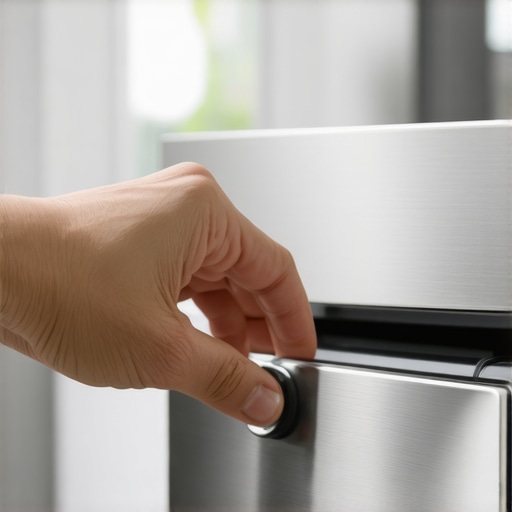
Find the Secret Hardware Reset
If the soft reset fails, you have to go deeper. Manufacturers love to hide physical reset buttons in the most obscure places. I remember a specific Tuesday when my smart fridge screen kept going black every morning. I was convinced the panel had burned out and I was looking at a four-figure repair bill. I spent forty minutes on hold with a support agent who eventually told me to look behind the top hinge cover. There it was—a tiny red button no bigger than a pinhead. One press, and the whole system rebooted, fixing the grocery sync issue immediately. You should always check your manual for the hidden reset button on your smart refrigerator that fixes glitches or your dishwasher’s specific button combo. Usually, it involves holding down the ‘Start’ and ‘Delay’ buttons simultaneously for three to five seconds.
Clean Up Your App and Account Sync
We often forget that the app on our phone is just as likely to be the culprit as the appliance itself. If you find that your smart fridge app refuses to sync with your grocery list, or your dishwasher shows as offline while it is running, the bridge between your account and the device is broken. Log out of the app entirely, delete it, and reinstall it. This forces the app to pull the latest security certificates from the server. It is a tedious step, but it solved my issue when I was trying to figure out how to fix a smart oven that refuses to connect to your alexa. After the reinstall, the voice commands worked instantly. If you have multiple brands in one kitchen, the conflict between different apps can also cause lag, so always ensure each one is updated to the latest firmware version through the settings menu.You might think you are helping your dishwasher by pre-rinsing every plate until it shines, but you are actually sabotaging the very AI you paid for. Most modern units use turbidity sensors to detect how dirty the water is; if the water stays clear because you have already scrubbed the plates, the machine assumes the load is clean and cuts the cycle short. This leads to food particles redepositing on your glasses later. It is a classic case of ‘over-parenting’ your tech. In my experience, scrape the solids, but leave the grease. This allows the enzymes in your detergent to actually have something to latch onto. Speaking of detergent, we need to talk about the biggest mistake people make in the laundry room. Everyone thinks more soap equals cleaner clothes, but in a high-efficiency environment, it is the kiss of death. I see people constantly wondering why your washer doesn’t need a whole cup of detergent to get clothes clean, and the answer is simple: oversudsing. Excessive foam cushions the clothes, preventing the mechanical friction needed to lift stains. Even worse, it creates a biofilm inside the drum. If you have ever wondered about the only way to get that weird smell out of your front loader, the secret isn’t just bleach—it is stopping the soap addiction that fed the mold in the first place.
Why does my ‘Eco’ cycle take three hours to do nothing?
It is the most common complaint for owners of washing machines that save water. The logic seems backwards: how does running a motor for three hours save energy? According to the Association of Home Appliance Manufacturers (AHAM), the majority of energy used by an appliance goes toward heating the water, not turning the drum. By using lukewarm water over a longer period, the machine achieves the same cleaning results with a fraction of the electricity. But here is the trap: if you only ever use Eco modes with cold water, you aren’t hitting the temperatures necessary to kill bacteria or dissolve fat. You have to run a ‘Sanitize’ or ‘Heavy’ cycle at least once a month just to keep the internals from gunking up.  I once ignored this and ended up with a dishwasher that smelled like a swamp, despite it being a top-tier model. Have you ever fallen into this trap of over-cleaning or over-soaping? Let me know in the comments. We also need to address the physical side of things. If your machine is smart but the installation was lazy, you are going to have issues. If you have noticed why your washing machine is moving across the floor during the spin, it is usually not a software glitch, but a leveling issue that confuses the internal load-balancing sensors. When the sensors detect an imbalance, they slow the spin speed, which is the real reason your clothes still feel damp after the cycle. Similarly, if the fact that why your high-efficiency fridge runs more often than your old one is bothering you, remember that modern inverter compressors are designed to run at 20% power for 100% of the time rather than 100% power for 20% of the time. It is more efficient, but it sounds like a constant, low-level groan that drives people crazy. People think it is broken, but it is actually peak performance. The ‘trap’ here is trying to insulate the fridge to quiet it down, which restricts airflow and can eventually kill the compressor. Trust the tech, but verify the environment.If you want to avoid a service call, you need to get comfortable with the guts of your machines. For my refrigerator, the single most important tool I own isn’t a smart app—it’s a ten-dollar flexible condenser coil brush. According to technical data from the Department of Energy, dirty coils can increase energy consumption by as much as 30 percent, forcing your compressor to work overtime until it eventually burns out. I make it a habit to clean the hidden debris under your refrigerator grille every six months because it is the secret to making your refrigerator last twice as long. When pet hair and dust build up down there, the heat cannot escape, and that is when you start hearing those expensive-sounding groans. If you are serious about building a high-performance kitchen, you should check out the ultimate guide to smart home appliances for a modern living to see how to integrate these maintenance habits into a daily routine.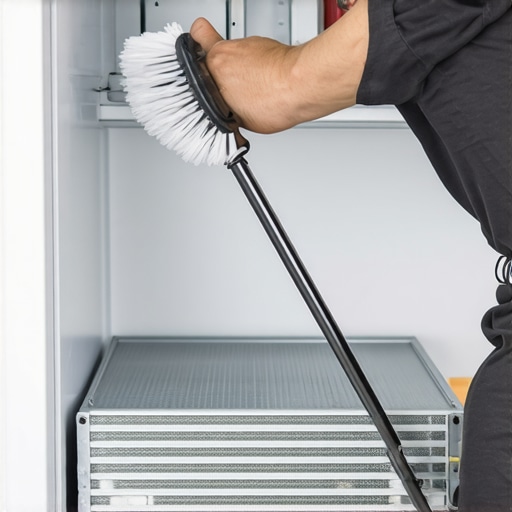
How do I keep my smart appliances running for a decade?
It comes down to proactive care rather than reactive repairs. For your dishwasher, stop waiting for it to smell before you deep clean the gasket on your dishwasher to prevent leaks. I personally keep a bag of food-grade citric acid in my laundry room. It is far more effective than vinegar for breaking down the mineral scale that builds up on the internal heating elements of your washer. Looking ahead, the future of home appliances trends to watch in 2025 suggests we will soon see more ‘self-healing’ software, where the machine runs its own deep-cleaning cycles and alerts you to part failures before they happen. But until that day comes, you are the primary technician in charge.
The One Tool Every Smart Home Owner Needs
I recommend every homeowner invest in a basic digital multimeter. It sounds intimidating, but learning how to check for continuity on a dishwasher heating element or a thermal fuse saved me from buying an entirely new unit last winter. It is an incredibly empowering feeling to realize that a ‘broken’ machine just needed a twenty-dollar part and thirty minutes of your time. My favorite trick for refrigerators is to use a simple laser thermometer to calibrate your refrigerator thermometer without calling a pro. This ensures your smart sensors aren’t lying to you about the actual internal temperature. If you haven’t done it this year, I want you to go pull your fridge away from the wall right now, vacuum the back panel, and check those coils. It is the single most effective way to prevent a mid-summer meltdown.
Hard Truths About Living with Silicon and Steel
After years of tinkering, I have realized that a truly smart home is built on a foundation of basic common sense. The biggest “lightbulb moment” for me was accepting that your own senses are more reliable than any app notification. If your refrigerator feels warm to the touch, do not wait for the Wi-Fi alert to tell you something is wrong. Another lesson? The paper manual is not trash; the physical error code table is often the only thing that saves you when the cloud goes down. I also discovered that 5 mistakes that are shortening the life of your smart refrigerator usually involve ignoring the physical environment for the digital one. Keep your machines clean, and they will stay smart.
Gear That Actually Keeps Your Kitchen Running
I have narrowed my maintenance kit down to a few essentials that have saved me thousands in repair bills. I never go a month without using food-grade citric acid to strip mineral buildup from my heating elements. For anyone wanting to dive deeper into system integration, I highly recommend the ultimate guide to smart home appliances for a modern living as a permanent reference. I also swear by a high-quality surge protector for every major unit; modern control boards are far more delicate than the “dumb” appliances of the past. As we track the future of home appliances trends to watch in 2025, these physical safeguards remain your best investment.
#IMAGE_PLACEHOLDER_E#
Take Back Control of Your Smart Home
Your home is supposed to serve you, not provide a second job managing technical glitches. By setting a monthly schedule for physical inspections and mastering the art of the router reset, you turn a frustrating gadget into a reliable tool. If you are planning your next upgrade, take a look at the top smart appliances for a seamless home experience in 2025 to find models that prioritize user-friendly connectivity. Don’t be afraid to dive into the settings and make these smart appliances work for your specific lifestyle. Which piece of tech in your kitchen gives you the most trouble during the initial setup? Share your “smart” horror story in the comments below!